Budapest hides its art in plain sight. This tour is an on-foot street-art lesson in District VII, run by ET, where you learn what the murals, stickers, and street pieces are saying to the neighborhood. I love that you get the meaning behind the artwork, not just the visuals, and I love the small group of eight so you can ask questions without feeling rushed. One catch: it’s mostly walking, so plan on wearing solid shoes and taking it at an easy pace.
You start at Telep-Art GalériaBudapest (Madách Imre út 8) and end at Szimpla Kert (Kazinczy u. 14), a place many visitors use as a relaxed final stop and locals treat as a symbol of the city. The tour runs in English, uses a mobile ticket, and has a vibe that leans discussion-heavy—politics, culture, and the changing feel of the area all come up while you’re moving through the streets.
In This Review
- Key points before you go
- Street art in Budapest that actually talks back
- Price and value for $36.20 in two hours
- Starting point at Telep-Art GalériaBudapest: what you’ll be looking for
- A slow walk on tiny streets (and why the pace matters)
- The street-art styles you’ll spot along the way
- Understanding the meaning behind murals and messages
- District VII from a local angle, not a tourist shortcut
- Ending at Szimpla Kert: a practical finish with real atmosphere
- Who should book this street art walk
- Tips to get the most from your 2-hour walk
- Should you book this street art tour in Budapest?
- FAQ
- How long is the Budapest street art tour?
- What does the tour cost?
- What language is the tour offered in?
- How big is the group?
- Where does the tour start and end?
- Do I get a mobile ticket?
- Is confirmation provided after booking?
- Are service animals allowed?
- Is the meeting area near public transportation?
- Can I cancel for a refund?
Key points before you go
- Limited to 8 people, which keeps the pace comfortable and questions welcome
- ET’s focus is the message, not just the artwork styles
- A mix of street-art types, from stickers to large murals and even bronze-style pieces
- District VII on foot, including small lanes tourists often miss
- Easy ending at Szimpla Kert, a classic ruin-bar stop right near the route finish
- Most people can join, and it’s offered in English
Street art in Budapest that actually talks back
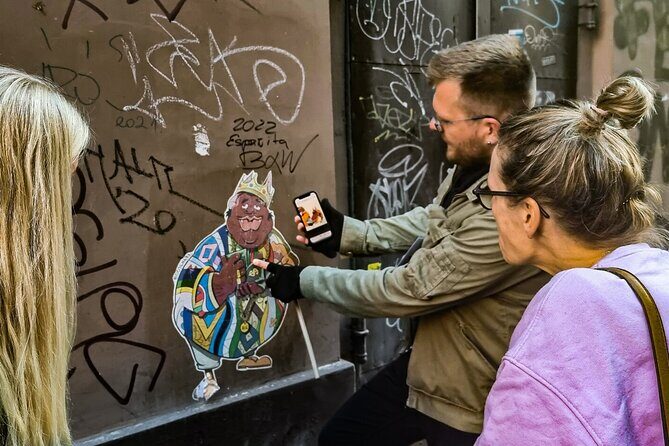
If you only look at street art like decoration, you’ll miss the point. On this tour, I like how ET treats the walls like public conversations: each piece is responding to something—politics, everyday life, identity, or the mood of the neighborhood. You’re not just walking from mural to mural. You’re learning how to read the city.
ET also tends to connect the local scene to broader European street-art culture. That matters because it gives you context for why certain styles show up here and why artists use the same visual “languages” to talk about similar issues. By the end, you’ll probably find yourself slowing down on your own after the tour, because you’ll know what details to notice.
One more practical reason this works: the group stays small. When you can actually see and talk about what’s in front of you, the tour stops feeling like a slideshow and starts feeling like a guided walking chat.
You can also read our reviews of more tours and experiences in Budapest



Price and value for $36.20 in two hours
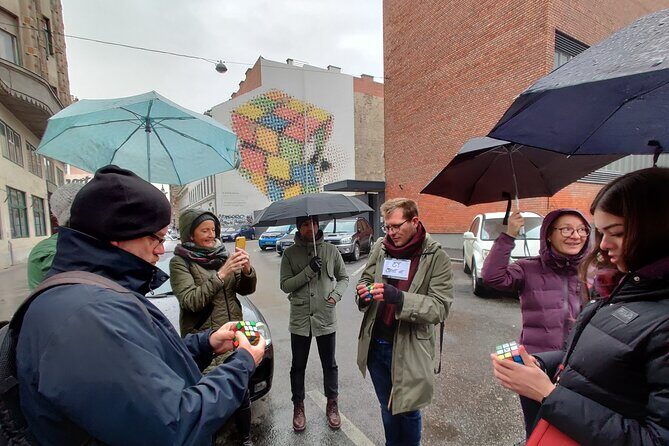
At $36.20 per person for about 2 hours, this isn’t expensive compared with many city walks—especially because the tour is capped at eight travelers and led by a guide who speaks in English. You’re paying for interpretation, not just exercise.
Here’s the value logic I’d use: you’re getting (1) a guided route through a specific part of Budapest, (2) time spent explaining the meaning behind the street works, and (3) enough small-group attention that you can ask what something means if it’s not obvious. If you like street art and political culture, it’s a strong deal. If you want a “see famous landmarks” tour, you’ll likely feel the time is better spent elsewhere.
Starting point at Telep-Art GalériaBudapest: what you’ll be looking for
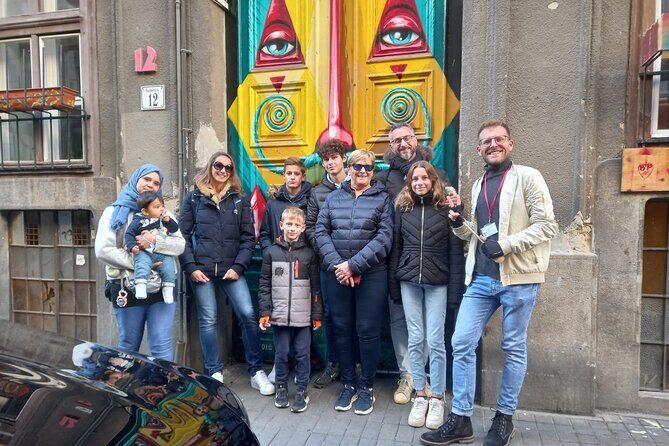
The tour meets at Telep-Art GalériaBudapest, Madách Imre út 8 (1075). That area is a smart starting spot because it puts you into the “street culture” mindset right away. Instead of treating street art like an optional extra, ET frames it as part of how locals understand the world around them.
Expect an early shift in your attention. ET shows you how to look past the first impression—whether the piece is a large mural, a smaller sticker, or something more unusual in form. From the reviews, it’s clear the tour includes multiple styles, including stickers, smart-art images, large-scale wall art, and even bronze sculpture–style pieces you may not expect to see in an everyday neighborhood walk.
Practical tip: if you’re the type who takes lots of photos, start with a lighter touch here. Learn what to look for first, then photograph with purpose.
A slow walk on tiny streets (and why the pace matters)
The heart of the experience is the walking. ET keeps the pace slow and focused, guiding you through thin streets where street art is easier to miss if you’re moving fast or only scanning the obvious walls.
This matters more than it sounds. Street art is often placed where you’d never stop on purpose: behind corners, along less-trafficked stretches, or in spots that blend into the neighborhood. A slow pace lets you (1) actually see the details and (2) hear the explanation before your brain files the artwork away as “cool” and forgets it.
Also, the tour’s structure supports a real conversation. Reviews describe it as interactive, with questions and group discussion happening naturally. In a small group, that kind of back-and-forth can turn into a mini lesson: you might learn why a symbol matters, or how an artist’s message changes depending on the time and place.
Wear shoes you can walk in comfortably for the full two hours. If you’re sore easily, plan a light rest of your day after.
The street-art styles you’ll spot along the way
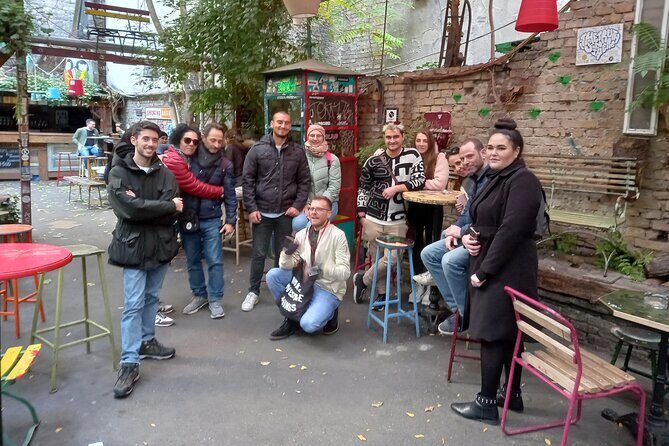
One thing I’d call out: this tour isn’t limited to murals. You’ll get a broader view of what street art looks like in Budapest, including types like:
- Sticker-based art, often used for sharp, quick statements
- Smart-art images, where the “read” matters as much as the visuals
- Large wall works, which tend to carry stronger narratives
- Bronze sculpture–style street pieces, which feel like unexpected public installations
Having multiple formats is part of the value. Different street-art media behave differently: a sticker can be temporary and everywhere, while a bigger mural tends to feel more “anchored” in the neighborhood. When ET talks about these differences, you start noticing why an artist might choose one approach over another.
And yes, politics comes into it. One review highlights street art as a critical way of looking at the world, not a neutral decoration. If you enjoy art that argues back—politely, angrily, or with humor—this is your lane.






Understanding the meaning behind murals and messages
A good street-art tour teaches you where to look. This one goes further: it teaches you how to interpret.
ET explains what the artwork is communicating—how the message shows up in the imagery, the symbols, the tone, and the context around it. That’s especially useful if you don’t speak Hungarian well (or if you don’t know the local references). Even when words are limited, you’ll learn what other cues to trust.
Another thing you’ll likely appreciate: ET brings in background on the area and how it’s changing. The point isn’t to turn District VII into a lecture. It’s to help you understand why a neighborhood’s mood shows up in its street art. A wall piece can feel like a diary entry, a protest poster, or a snapshot of community concerns—and those stories make the city feel more alive.
From the reviews, ET also shares resources—things like follow-up pages and Instagram-style leads—so you can continue exploring the scene after the walk. That’s great value if you want more than a single afternoon.
District VII from a local angle, not a tourist shortcut
Budapest’s District VII is where the tour concentrates, and it’s an excellent choice for people who want something beyond the classic sightseeing circuit. This isn’t about sweeping “greatest hits.” It’s about getting close to what’s happening on street level.
In a small group, you’ll move through corners you might never notice on your own. The street art isn’t presented like random graffiti. It’s treated like a layered part of the neighborhood’s identity, shaped by culture and history and—very specifically—by how artists respond to the world around them.
If you’re visiting Budapest for the first time, I’d still book this early in your trip. You’ll learn the habits of looking that make the rest of your stay more fun. After the tour, you’ll notice details in the city that you’d normally walk past without a second thought.
Ending at Szimpla Kert: a practical finish with real atmosphere
The tour ends at Szimpla Kert, Kazinczy u. 14 (1075). This is a classic ruin-bar setting, and it’s a practical place to stop because you can keep your evening flexible—grab a drink, meet friends, or just decompress.
Even if you don’t plan to stay long, the ending point is useful. You don’t have to think too hard about where to go next; you’re already in a lively area where it’s easy to continue exploring.
For planning: give yourself a buffer after the tour. You’ll likely want time to look around a bit longer, especially if you start spotting street pieces on your walk toward dinner.
Who should book this street art walk
This is a great fit if you:
- Like street art with meaning, not just aesthetics
- Enjoy politics, culture, and art as commentary
- Want a small-group experience that leaves room for questions
- Prefer walking through real neighborhoods instead of only landmark hopping
It’s also a solid pick for families, since one review calls out the experience as working well across ages. Art has a way of being understandable without a full lecture—especially when you’re guided slowly and clearly.
What might make it less ideal: if you hate walking, or if you only want famous monuments, you may find the focus too “local” and not “iconic.”
Tips to get the most from your 2-hour walk
- Bring comfortable shoes; the tour is paced for slow viewing, but it’s still walking
- If you have specific interests (politics, design, typography, protest art), mention them early to ET so he can guide your attention
- After the tour, keep your eyes open: the skills you learn make street art feel readable across the city
And one more thing: keep your phone charged. Even if you’re photographing less than usual, you’ll want to capture a few pieces you don’t want to forget.
Should you book this street art tour in Budapest?
Yes—if you want a different Budapest, you’ll likely love this. For the money, you get a small-group walking experience with real interpretation, led by ET, focused on what street art means in District VII. The ending at Szimpla Kert makes it easy to turn the afternoon into a bigger outing.
I’d skip it only if you’re looking for mostly landmark sightseeing, or if long walking sounds unpleasant. Otherwise, this is one of those tours that changes how you look at the city—so your extra time in Budapest doesn’t feel wasted.
FAQ
How long is the Budapest street art tour?
It runs for about 2 hours.
What does the tour cost?
The price is $36.20 per person.
What language is the tour offered in?
The tour is offered in English.
How big is the group?
The tour has a maximum of 8 travelers.
Where does the tour start and end?
It starts at Telep-Art GalériaBudapest, Madách Imre út 8, 1075 Hungary and ends at Szimpla Kert, Kazinczy u. 14, 1075 Hungary.
Do I get a mobile ticket?
Yes, it includes a mobile ticket.
Is confirmation provided after booking?
Confirmation will be received at the time of booking.
Are service animals allowed?
Yes, service animals are allowed.
Is the meeting area near public transportation?
The tour is noted as being near public transportation.
Can I cancel for a refund?
Free cancellation is available if you cancel up to 24 hours in advance for a full refund. If you cancel less than 24 hours before, the amount paid will not be refunded.