REVIEW · BUDAPEST
Budapest: Street Art and Underground Movements Walking Tour
Book on GetYourGuide →Operated by ET Alternative · Bookable on GetYourGuide
Walls talk in Budapest, if you slow down. This 2-hour street art walking tour pairs an English guide (ET or Suzie) with an art detective mindset, starting at Telep-Art Galéria. I like how the guide connects murals to real social and political themes, and I like the small group size that makes it easy to ask questions.
One possible drawback: if you’re only chasing the classic, postcard-style sights, this route can feel more random on purpose, because the focus is spotting street art in everyday streets rather than lining up landmark after landmark.
In This Review
- Key highlights at a glance
- Street art in Budapest: politics on the wall
- Telep-Art Galéria start: the meeting point that sets your brain to notice mode
- The interactive walk: how the guide makes you see corners differently
- Secret stop and underground culture: learning the why behind the walls
- Ending near Központ: wrapping up with a summary you can use
- Price and group size: what $27 buys you in real value
- Who should book this Budapest street art tour
- Should you book ET Alternative’s street art walk?
- FAQ
- How long is the Budapest street art walking tour?
- Where do we meet, and where does it end?
- Is the tour in English?
- How large is the group?
- Is it wheelchair accessible?
- Is food included, and can I cancel?
Key highlights at a glance
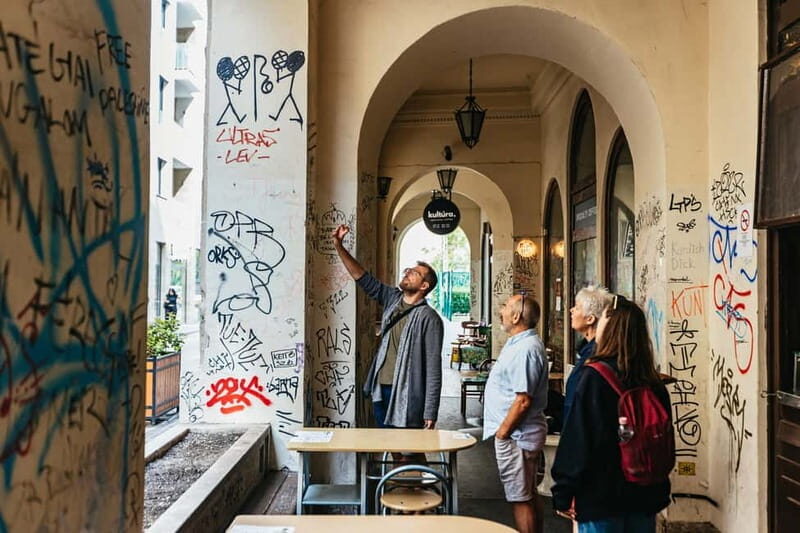
- Telep-Art Galéria start point in a sticker-covered bar that sets the vibe fast
- Street art with political and social context so you understand the why, not just the what
- Interactive walk with a small group (limited to 8) and lots of time for questions
- Underground culture explained clearly through stories, techniques, and movement history
- A tour summary after the walk so you can keep the insights and keep exploring
Street art in Budapest: politics on the wall
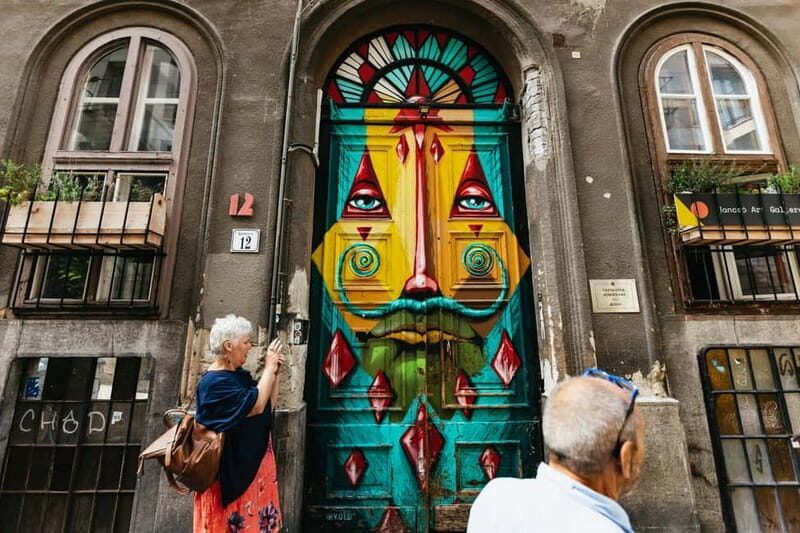
Budapest has the usual layers you’d expect from a major European city, but street art adds a different filter. Here, the art isn’t just decoration. It’s communication—social, cultural, and political messages sent in public, then reinterpreted by whoever walks by.
What I like about this tour approach is that it teaches you how to look. Instead of treating walls like background noise, the guide slows everything down and points out details you’d miss at normal walking speed: how artists use style to carry a message, why certain themes show up, and how the city’s history echoes through contemporary work.
The underground angle matters too. You’re not only seeing art; you’re learning about the subculture around it—people, spaces, and attitudes that keep street art alive even when official life moves on. It’s a smart way to get the “other Budapest,” especially if you already did the big sightseeing circuit.
You can also read our reviews of more walking tours in Budapest



Telep-Art Galéria start: the meeting point that sets your brain to notice mode
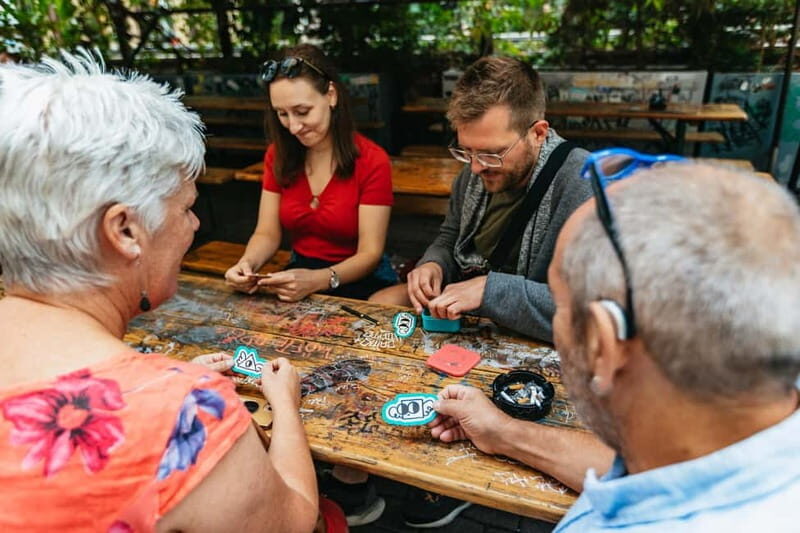
You meet at Telep-Art Galéria, a cool bar that’s covered in stickers. That detail sounds small, but it’s actually the perfect opener. The place primes you to spot the tiny stuff—layers of messages, tags, stickers, and ongoing changes that make street art feel alive instead of museum-static.
You don’t need special gear. Just show up ready to walk and ready to look sideways. The guide’s first comments usually help you calibrate fast: how to read a wall like a timeline, how to tell when something is local versus part of a wider street art conversation, and what kinds of messages you’ll likely encounter as you move through the city.
Also, the group size being limited helps here. In a larger crowd, you’d spend the whole time trying to keep up. In a smaller group, you can hear the story and still get a good look at the artwork without rushing.
The interactive walk: how the guide makes you see corners differently
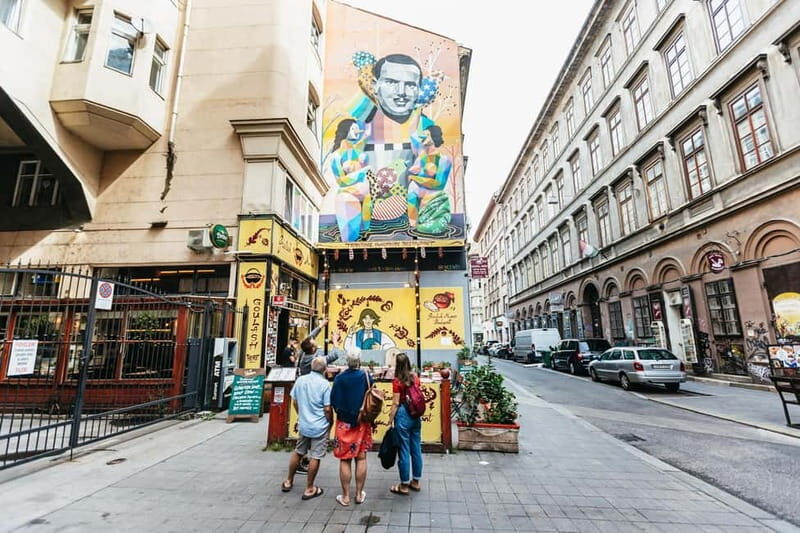
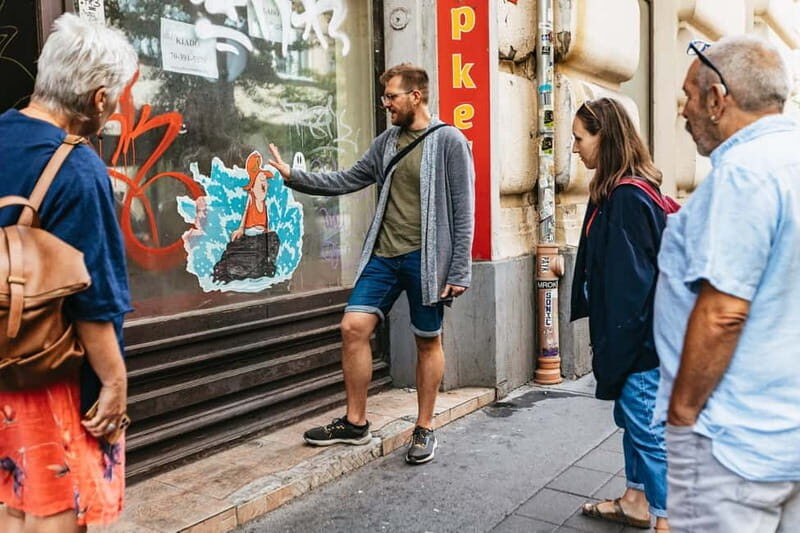
This is a live guided experience in English, designed as an active hunt rather than a slideshow. You’ll spend about two hours moving between places, with the guide stopping frequently to explain what you’re looking at and why it matters.
Here’s what you should expect in practice:
- You’ll be encouraged to ask questions and slow down when something grabs your attention.
- The guide explains stories, techniques, and cultural messages, not just names and dates.
- The pace is built for noticing—on more than one corner, you’ll feel that moment of realization where you suddenly spot something you walked past before you understood what it was.
The best street art tours don’t just point; they teach you a method. This one aims for that. By the time you reach the more “secret” type of stop, you’ll already know what to scan for: symbolism, repetition, style choices, and how an artist’s choices communicate beyond the paint.
And since the tone is friendly and question-friendly, you don’t need to be a hardcore street art fan. Even if you started thinking, I’m not really into murals, the point is to help you connect them to human stories and local context.
Secret stop and underground culture: learning the why behind the walls
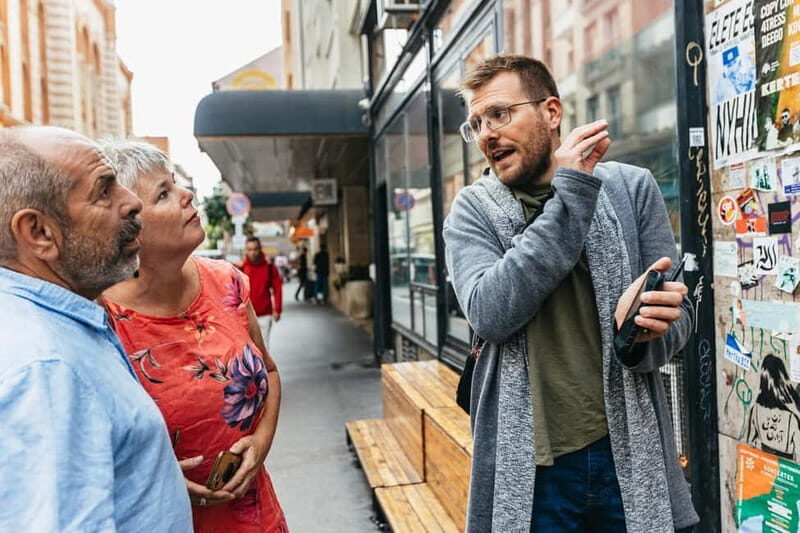
At some point in the walk, you’ll hit a secret stop. That’s where the tour shifts from “cool art spotting” to “this is how underground culture works.” The guide connects the artwork to broader movements and the social environment around it—why certain ideas show up, how public walls become platforms, and how street art can function like a community bulletin.
This is also where the tour earns its alternative reputation. Instead of treating Budapest like a finished museum, you see it like a conversation—art changing as neighborhoods change, messages updated as politics shift, and symbols picking up new meanings as they get recontextualized by viewers.
One bonus you might appreciate if you like a break in the flow: some tours include a stop at a ruin bar area during the experience. If that happens on your departure, it’s a fun cultural add-on because it matches the same theme as street art—alternative spaces, creative survival, and local scenes that aren’t centered on official tourist routes.
Ending near Központ: wrapping up with a summary you can use
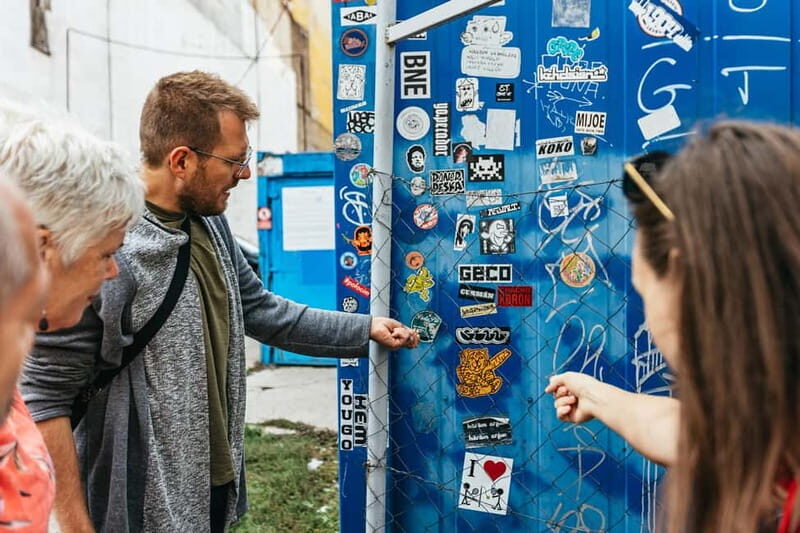
The walk ends back near where you started, and the finish point is listed as Központ. In practice, plan on finishing close to your meeting area so you can continue on your own right away.
A nice touch here is that you get a summary after the tour. That matters more than it sounds. When you’re looking at lots of walls and stories in a short span, it’s easy for names, themes, and symbolism to blur together. A recap helps you keep track and makes it easier to revisit the city with better eyes.
If you’re the type who likes to keep a city map mental rather than on paper, that post-tour summary is a big help. You’ll be more likely to recognize street art later, not just remember the route.
You can also read our reviews of more tours and experiences in Budapest




Price and group size: what $27 buys you in real value
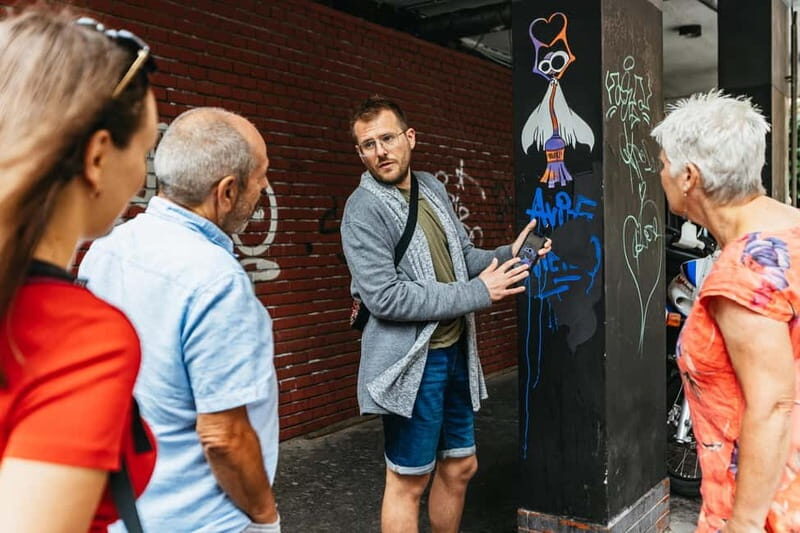
At $27 per person for about two hours, this tour is priced like something that respects your time. It’s not a long multi-stop odyssey, and it’s not trying to cram in major monuments. You’re paying for focus: a small group, live guide storytelling, and the kind of attention you can’t get from wandering alone.
The small-group limit (up to 8) is a real value factor. It lets the guide respond to questions and spend time on the artwork. In a bigger group, street art becomes a blur. Here, it stays readable.
It also has flexibility. You can book it as a private experience if your group wants a more tailored pace or fewer questions to manage. For couples and small groups who don’t want to wait for others, private can be a practical upgrade.
Two practical notes to keep your day smooth:
- Food and drinks aren’t included, so don’t build your schedule as if you’ll be fed during the walk.
- You’ll be walking city streets, so comfortable shoes matter.
Who should book this Budapest street art tour
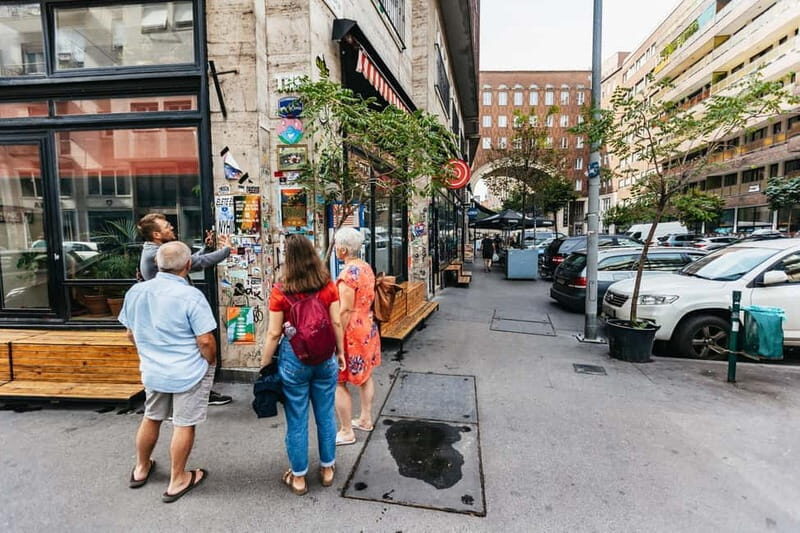
This tour fits best if you want Budapest from a newer angle. Here’s who tends to enjoy it most:
- You like art, even if you’re not an art historian.
- You enjoy learning how culture and politics show up in everyday spaces.
- You want a break from the usual “big monuments only” walking itinerary.
- You’re traveling with family, since the experience is interactive and works well with curious kids and teens.
It can be a mismatch if your top priority is ticking off major tourist landmarks. This walk is about walls, stickers, and the underground culture behind them, not about lining up famous facades.
On the logistics side, it’s wheelchair accessible, and it runs in English, which makes it easier for international visitors to relax and follow the explanations without guessing.
Should you book ET Alternative’s street art walk?
If you want to see Budapest as a living city with messages on its walls, I think this is an easy yes. For the price, you get a tight two-hour experience with a small group, a real guide-led story, and enough interaction to make you feel like you’re learning a way to watch the city—not just passing time.
Book it especially early in your trip if you want your street-art “radar” switched on for the rest of your days in Budapest.
FAQ
How long is the Budapest street art walking tour?
The tour lasts 2 hours.
Where do we meet, and where does it end?
You meet at Telep-Art Galéria. The tour finishes back at the meeting point, with the listed finish point also given as Központ.
Is the tour in English?
Yes. The live tour guide speaks English.
How large is the group?
The group is kept small, limited to 8 participants.
Is it wheelchair accessible?
Yes, it is wheelchair accessible.
Is food included, and can I cancel?
Food and drinks are not included. Free cancellation is available up to 24 hours in advance for a full refund, and there’s also a reserve now & pay later option.