REVIEW · BUDAPEST
Rise Against the Soviet: The 1956 Revolution – Private Tour
Book on Viator →Operated by Fungarian · Bookable on Viator
Budapest turns tense history into walkable streets. This private tour stitches together the causes and consequences of the 1956 uprising using the actual locations people fought, hid, and begged help from.
I especially like that it’s not just dates and slogans. You’ll hit landmark places tied to specific events, including student protests and resistance fighting, then connect them to what came before and after. Second, I like the human scale: the route is built for personal testimonies and a story you can feel in your legs as you move around the city.
One watch-out: the theme is huge, and the tour lasts about 3 hours. If you already know a lot about 1956 and you want a long, ultra-focused deep dive, this can feel a bit short.
In This Review
- Key highlights worth your attention
- Why the 1956 Revolution feels different in Budapest
- Private tour value: price, group size, and pickup that saves time
- Stop-by-stop: what each location teaches you (and what to watch for)
- Kossuth Lajos Square and the crackdown at the parliament
- Margaret Bridge area: the communist Party HQ and Imre Nagy’s shadow
- Bem Square and Bambi Eszpresszó: students, rallying, and an intellectual refuge
- Sándor Petőfi statue: where revolutionary words turned into arrests
- Radio Budapest on Sándor Bródy Street: begging for help from the world
- Corvin Cinema and Corvin köz: resistance, stolen weapons, and Molotov cocktails
- What you get with the handouts and souvenir
- Pacing and transportation: how the 3 hours is likely to feel
- Who should book this tour—and who might want a different fit
- Should you book Rise Against The Soviet? My take
- FAQ
- Is this tour private, and how many people are in a group?
- How long is the tour, and is it only about the 1956 Revolution?
- What’s included in the price?
- Is pickup available in Budapest?
- Are there food or drinks included?
- What is the cancellation policy?
Key highlights worth your attention
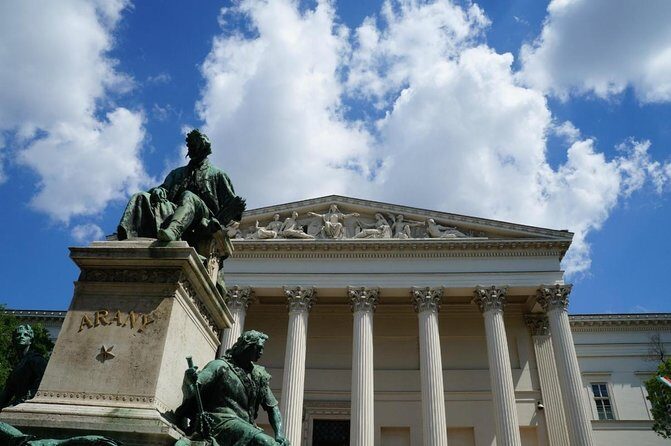
A tight route with big stakes: 6 major stops tied to the revolt, from Kossuth Lajos Square to Corvin Cinema.
No entry tickets required: the stops listed are admission ticket free, so you can focus on the story, not extra costs.
Private group setup: up to 5 people, and it’s your group only, which makes questions easier.
Personal context, not just facts: expect links to later repression and the long road to communism’s end.
Built-in take-home materials: you get handouts plus a communism-related souvenir.
Why the 1956 Revolution feels different in Budapest
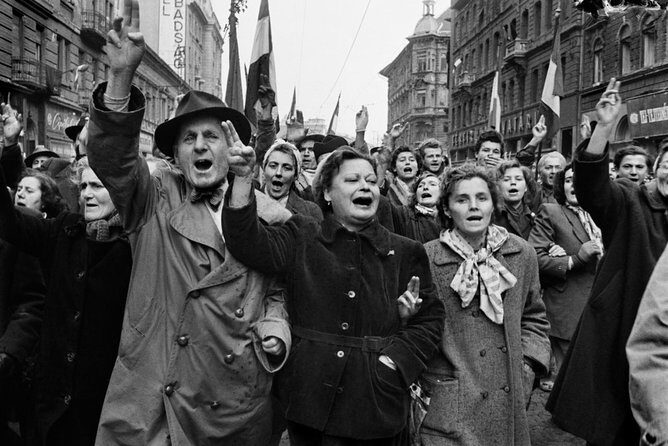
The best thing about this tour is how quickly it moves from abstract ideology to everyday reality. In 1956, people weren’t arguing in textbooks—they were taking risks on streets, in squares, and inside buildings that became symbols overnight.
You also get a sense of timing and cause-and-effect. A good guide will connect the uprising to longer Hungarian tensions and then carry the story forward to what communism’s collapse meant in the real world. That “before and after” lens matters, because 1956 isn’t just a standalone event—it’s a turning point with leftovers that lasted for decades.
And then there’s the emotional pace. One moment you’re looking at the official face of the state; the next, you’re standing near places where people tried to resist tanks or call for outside help. History sticks better when your body is doing the walking.
You can also read our reviews of more private tours in Budapest



Private tour value: price, group size, and pickup that saves time
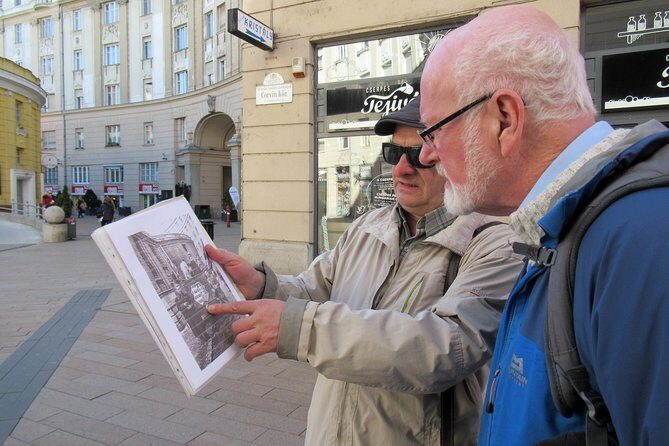
This is priced per group at $228.66, up to 5 people, for about 3 hours. For two people, that can be a strong deal compared with paying separate fares for a bus tour. For a family or small friend group, it’s even better because you spread the cost and keep the conversation tight.
You also get pickup in Budapest—either from your hotel or a central meeting point you agree on. That’s a big deal if you want to avoid the “figuring it out” tax when you’re tired, jet-lagged, or just trying to get moving fast on day one.
Booking tends to happen fairly soon (on average about 5 days in advance), so if you’re traveling in peak periods, I’d lock it in early. You’ll receive confirmation at the time of booking and get a mobile ticket, which makes last-minute logistics easier.
Stop-by-stop: what each location teaches you (and what to watch for)
Kossuth Lajos Square and the crackdown at the parliament
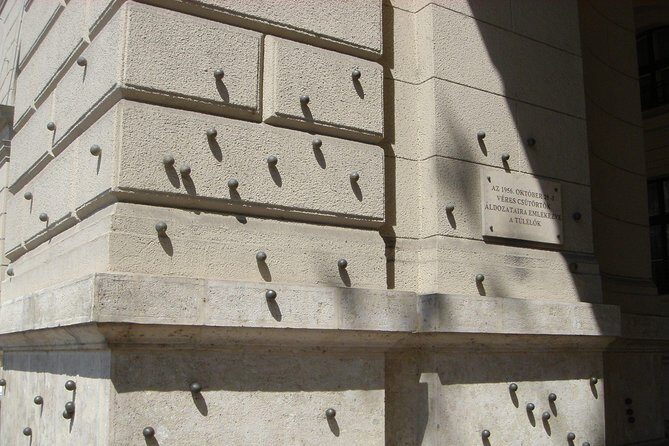
Kossuth Lajos Square is your first reality check. You’ll stand by the Hungarian Parliament and learn how, after a mass demonstration in 1956, dozens were massacred by the government.
This stop works because it frames power. The square isn’t just pretty architecture—it’s where state authority met street pressure, and the outcome was brutal. When your guide puts the names and sequence of events on top of what you see, the politics stop being abstract.
Tip: take a minute just to look around before the story starts. The open space makes the scene feel larger, and that helps you understand the scale of what happened.
Margaret Bridge area: the communist Party HQ and Imre Nagy’s shadow
Near the Danube, you’ll visit the building that communist authorities nicknamed The White House. It served as the Party HQ of the Hungarian communist government, so you’re looking at the machinery of control—not just the slogans.
From there, you’ll also look at the statue of Imre Nagy, Prime Minister in 1956, who was later murdered. This is where the tour’s emotional temperature rises without needing extra theatrics. A statue is quiet, but the story around it isn’t.
One practical note: this area is a good place to pause and take photos, but don’t let your camera steal your attention. The point is to connect the physical site to the moral stakes.


Bem Square and Bambi Eszpresszó: students, rallying, and an intellectual refuge
Bem Square is tied to student action on a huge scale—200,000 Hungarian students protesting Soviet rule in 1956. The rally was originally organized to support Polish workers, which is a reminder that solidarity across borders mattered, even during the Cold War.
You’ll also spend time at Bambi Eszpresszó. It’s described as a shelter for Buda-side intellectuals in Frankel Leó utca, and it’s been going strong since the 1960s with the same kind of atmosphere and interior design. That detail matters. It shows how ideas survived even when public politics were restricted.
If you like history with texture—smells, surfaces, and ordinary places—this is a smart pivot. A revolution doesn’t only happen at barricades. It also happens in conversation.
Sándor Petőfi statue: where revolutionary words turned into arrests
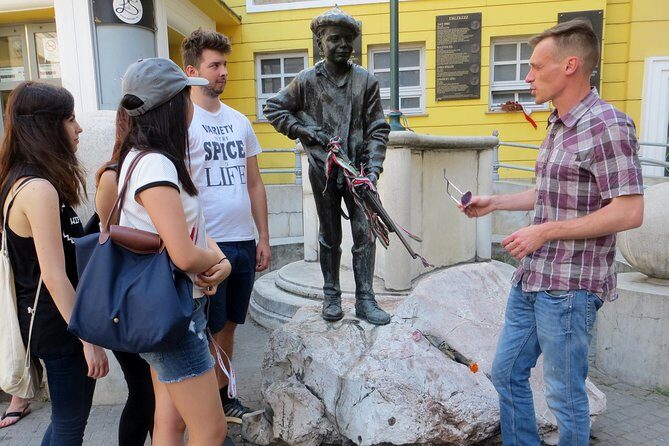
Sándor Petőfi is the key figure in Hungary’s 1948 revolution, and the statue became a meeting point for political events and protesters even after 1956. This stop tells you how symbols get reused. People reach for the past when they need courage in the present.
A memorable detail here: actor Sinkovits Imre recited words of Petőfi in 1956 that incited revolution, and he was arrested and imprisoned afterward. It’s a reminder that art, speech, and public performance were not “safe” things to do.
Watch for one thing during this stop: notice who gathers around statues and why. Even today, this is framed as a place for events, so it connects past action to ongoing civic energy.
Radio Budapest on Sándor Bródy Street: begging for help from the world
Budapest’s Magyar Rádió Building, also known as Radio Budapest, sits along the tiny one-way Sándor Bródy Street. It feels tucked away compared with major avenues, which helps you picture how easily a crucial place could be missed if you only follow the main sights.
This is one of the most powerful stops because it puts you near an epicenter of fighting in 1956. From here, revolutionaries reportedly begged for help from the world at large. That single fact changes how you understand the conflict. It wasn’t only local; it was also a plea for international attention.
Because the location is a bit more secluded, it’s a good moment to slow down. Let your guide’s timeline land. Radio, messages, and communication were part of the struggle, not just background noise.
Corvin Cinema and Corvin köz: resistance, stolen weapons, and Molotov cocktails
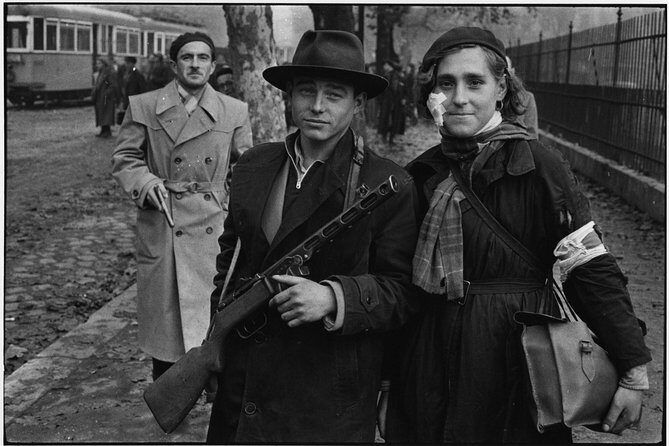
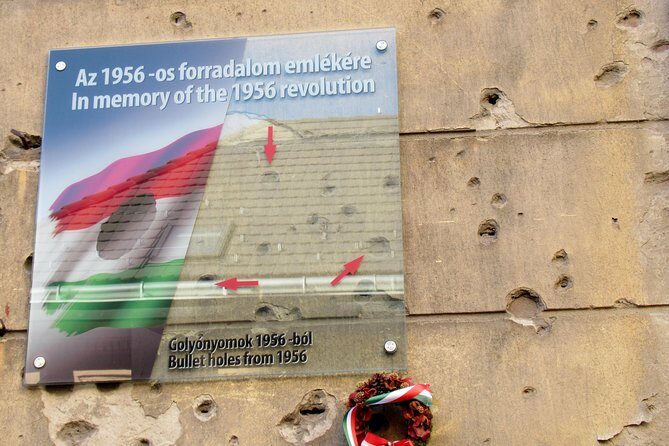
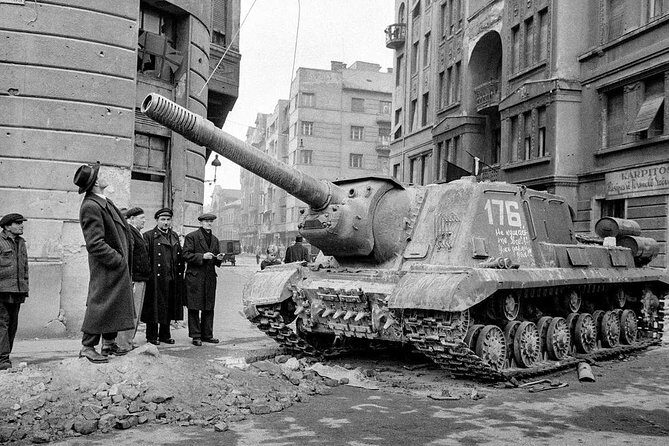
Corvin Cinema, at Corvin köz, is your finishing punch. This area is described as a major resistance center, where local youngsters fought invading Russians with Molotov cocktails and guns they stole from soldiers to fight Soviet tanks.
This stop is not about abstract heroism. It’s about improvisation under pressure—using what you can grab, turning fear into motion, and refusing to go quietly. You’ll look at reminders of the battles here and talk through the invasion in 1956 and the aftermath.
If you’re short on time in Budapest, this is the kind of stop that makes the whole day feel worth it. It ties the revolution to action you can picture.
What you get with the handouts and souvenir
You’ll receive handouts and a communism-related souvenir. I like this combo because it gives you two ways to process what you heard: a quick reference for later and something physical that helps the story stick.
The handouts matter most if you’re the type who wants to follow up after the tour—maybe you’ll read more about Imre Nagy, Radio Budapest, or the student protests. Even if you don’t, you’ll still walk away with a cleaner timeline.
This isn’t a “take a photo and go” tour. The materials are there so you can keep the details from blurring after you’ve moved on to the next neighborhood.
Pacing and transportation: how the 3 hours is likely to feel
The tour duration is about 3 hours, and it covers a route that starts in central locations and then works toward Buda-side sites and down to Corvin Cinema. Plan on short walks plus city movement, and bring shoes you trust on uneven sidewalks.
The stops are spaced so you can hear the story without the guide talking over you the whole time. Still, this isn’t an all-day museum marathon. It’s a guided route designed to hit the key points with enough context to make them meaningful.
If you’re with someone older or you move more slowly, it’s worth messaging before you go. One of the strongest themes in participant comments has been guides adjusting pace to keep everyone with them.
Who should book this tour—and who might want a different fit
This tour is ideal for anyone who wants real communist-era context in Budapest, not just a single monument. History buffs will like the specificity—places tied to specific actions, like the student rally at Bem Square and the resistance at Corvin köz.
It’s also a good option if you’re the kind of traveler who likes questioning the past. A solid guide will show you how the seeds were planted earlier, and how the story moved through repression and eventually toward 1990. That broader arc is one reason this tour can work even if you already know some Hungarian 20th-century history.
Who might not love it? If you want a long, single-topic focus on the military side of 1956, or you want every site connected to the uprising covered in exhaustive detail, you may find the tour short. The route touches a lot, which is great—but it means you won’t linger for hours at each place.
Should you book Rise Against The Soviet? My take
Book it if you want a clear, story-driven route through the 1956 Revolution using the actual places where events unfolded. The combination of specific sites, personal human context, handouts, and the private-group feel is strong value—especially for couples or small groups.
Skip it or pair it with something else if you’re already extremely deep in 1956 research and crave more time per location. In that case, you might feel the pacing before the story has fully settled.
If your goal is to understand what happened and why it mattered, you’ll get your money’s worth in a few packed hours.
FAQ
Is this tour private, and how many people are in a group?
Yes. It’s a private tour/activity, and the group size is up to 5 people. Only your group will participate.
How long is the tour, and is it only about the 1956 Revolution?
The tour is about 3 hours. It focuses on the 1956 Revolution sites, but you’ll also get context that connects earlier tensions and the later aftermath.
What’s included in the price?
Handouts and a communism-related souvenir are included. Admission is free for the listed stops.
Is pickup available in Budapest?
Pickup is offered. You can meet your guide at your hotel in Budapest or at a central point you agree upon.
Are there food or drinks included?
No. Other drinks or food are not included, and you should plan on handling meals separately.
What is the cancellation policy?
Free cancellation is available. You can cancel up to 24 hours in advance for a full refund, and cancellations made less than 24 hours before the start time aren’t refunded.