REVIEW · BUDAPEST
The beginner’s guide to Budapest – Budapest Sightseeing Tour
Book on Viator →Operated by Budapest Urban Walks · Bookable on Viator
Budapest clicks fast on foot. This beginner-friendly tour stitches together the city’s top landmarks with enough local context to make them feel connected, not random. You start at the Hungarian State Opera area and finish back where you began, with a guide keeping the day moving.
I love that public transport tickets are included, so you ride instead of just staring at streets. I also like the built-in break for coffee and cake at a local café, which keeps the pace from turning into a nonstop shuffle.
One thing to consider: some major sights have admission costs on your own, and with about 3.5 hours total, you’re not going to do long museum-style visits everywhere.
In This Review
- Key Highlights You Can Expect
- Start at the Hungarian State Opera House: a smart meeting point
- Heroes’ Square: monuments you can read in 20 minutes
- Széchenyi Baths and Pool: the biggest thermal-bath flex in Europe
- Vajdahunyad Castle: a photo stop with a story behind it
- Andrássy Avenue and the Opera street: Budapest’s grand boulevard moment
- St. Stephen’s Basilica and Liberty Square: look for the clues
- Parliament and the Danube crossing: power and perspective in one loop
- Shoes on the Danube Bank: a quiet end with real weight
- What the $94.63 price buys you (and why it can be worth it)
- Who this Budapest beginner’s guide is best for
- Should You Book This Tour?
- FAQ
- How long is the Budapest Sightseeing Tour?
- Where does the tour start and where does it end?
- Is the tour offered in English?
- Is this tour a small group?
- Are public transport tickets included?
- What food and drinks are included?
- Is admission included for Széchenyi Baths?
- Do I need tickets for Vajdahunyad Castle, St. Stephen’s Basilica, or the Parliament Building?
- Does the tour run in bad weather?
- Can I cancel for a refund?
Key Highlights You Can Expect
- Public transport tickets included so you can hop between neighborhoods without stress
- Coffee and cake at a local café plus snacks to keep energy up
- Small group of max 15 with room to ask questions
- Széchenyi Baths stop included (admission ticket free for that stop)
- Powerful Danube finale at Shoes on the Danube Bank
- A handy souvenir map to keep your bearings after the tour
Start at the Hungarian State Opera House: a smart meeting point
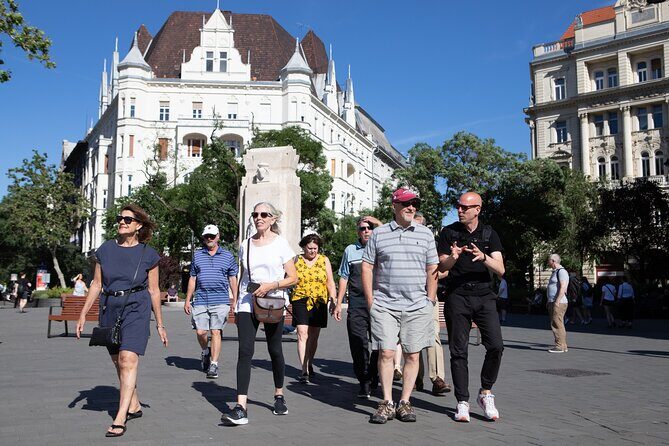
You kick off at Hungarian State Opera (Magyar Állami Operaház) on Andrássy út. It’s a great start because it sits on the city’s grand boulevard, where Budapest really shows off its 19th-century ambition. If you like stepping into a place and figuring out the map as you go, this meeting point helps a lot.
A small group matters here. With a maximum of 15, the guide can slow down when you ask something, instead of rushing everyone like a human conveyor belt. That question-friendly vibe is exactly what guides like Ferenc and Fanni were praised for, with Ferenc noted for pacing well while still making space for questions.
You’ll also get a mobile ticket and some practical planning tools. Expect a souvenir map plus extra recommendations, which is handy when you want to keep exploring after the tour ends.
You can also read our reviews of more guided tours in Budapest



Heroes’ Square: monuments you can read in 20 minutes
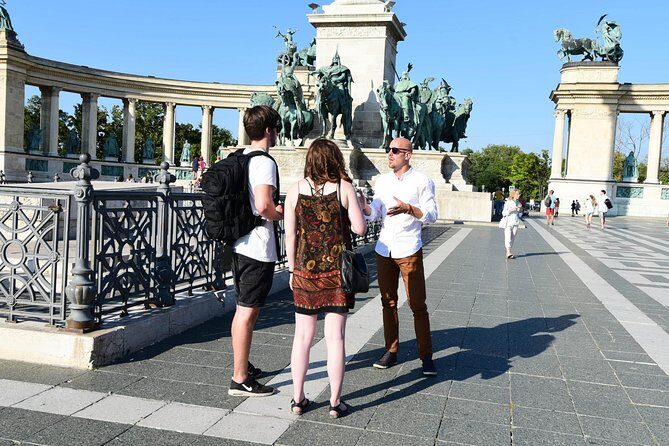
First stop is Heroes’ Square (Hősök tere), one of Budapest’s big identity markers. The statue complex is the headline: you’ll see the Seven chieftains of the Magyars along with other key Hungarian national leaders. It’s one of those places where you realize you can’t just look. You have to know what you’re looking at.
There’s also the Memorial Stone of Heroes, which is often mistakenly called the Tomb of the Unknown Soldier. Your guide points out that mix-up, so you leave with a clearer mental picture instead of a fuzzy caption.
This is a good stop for photos, but it’s also a good stop for orientation. The square sits in a way that makes the city’s “who we are” story feel visible, even if it’s your first day.
Széchenyi Baths and Pool: the biggest thermal-bath flex in Europe
Next you head to Széchenyi Medicinal Bath and Pool, with admission ticket listed as free for this stop. This is a short stop by design, but it’s enough to understand why Széchenyi is famous.
Széchenyi uses thermal water from two springs, at 74°C (165°F) and 77°C (171°F). That temperature detail sounds basic until you picture soaking in it. The guide helps you connect the science to the experience, even if you’re just taking in the setting rather than staying in the water for hours.
One practical note: in a baths stop, your time often depends on what you plan to do. You might just walk through and look, or you might want a quick dip. Either way, dress sensibly for the conditions and be ready for that mix of indoor and outdoor “Budapest weather” energy.
Vajdahunyad Castle: a photo stop with a story behind it
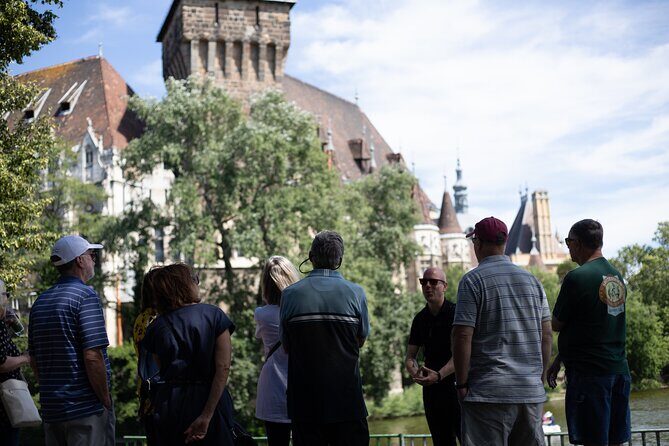
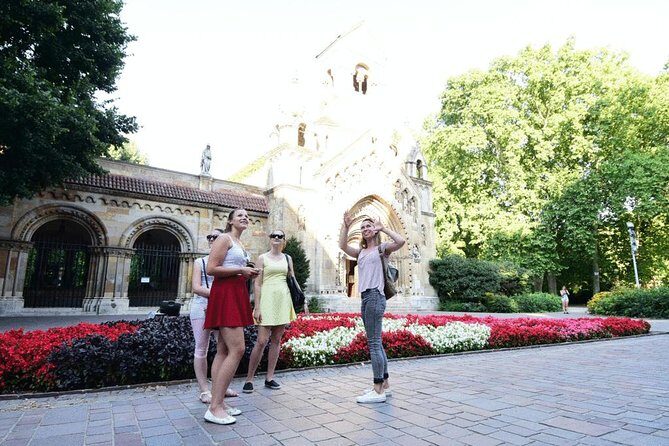
Then you swing by Vajdahunyad Castle in City Park. The castle has an official built-in-context reason to exist: it was constructed in 1896 for the Millennial Exhibition celebrating 1,000 years of Hungary since the Hungarian Conquest in 895.
Admission for this stop is listed as not included, so you’ll want to treat it like a look-see moment unless you already planned to spend extra money on an interior visit later. Still, even from outside, it’s worth it. The architecture is theatrical, and it helps you see why City Park feels like a stage set for Budapest identity.
The best part of stopping here on a walk tour is that it breaks up the heavier historical landmarks. You get a different mood without losing the thread of the day.
Andrássy Avenue and the Opera street: Budapest’s grand boulevard moment
You spend time on Andrássy Avenue (Andrássy út), a boulevard dating back to 1872. It connects Erzsébet Square with Városliget, and the buildings along it are the reason it’s one of the most photographed streets in the city.
This avenue is a World Heritage Site (recognized in 2002). Your guide points out the Neo-renaissance mansions and townhouses, and you start noticing details you’d otherwise miss while walking alone.
And because the route also ties in the Opera House (originally known as the Hungarian Royal Opera House and designed by Miklós Ybl), you end up seeing the boulevard through both a streetscape lens and a landmark lens. If you’re the type who likes buildings but hates museum fees on day one, this portion gives you a lot of payoff without locking you into an indoor ticket.





St. Stephen’s Basilica and Liberty Square: look for the clues
Then you reach St. Stephen’s Basilica (Szent István-bazilika). Admission is listed as not included, so expect mainly a viewing and orientation moment rather than a full church visit unless you choose to add time and money on your own.
Still, the basilica has a detail you’ll remember: it’s named for Stephen, the first King of Hungary, and the right hand of Stephen is housed in the reliquary. That kind of specific detail helps you look at the building with more than just, wow, it’s big.
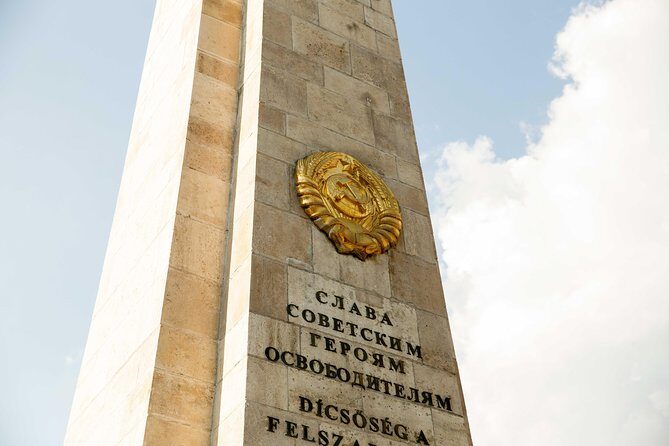
After that comes Szabadság tér (Liberty Square). This square is famous for two memorials that cover painful parts of Hungarian and European modern history. One commemorates Hungarian Jewish victims of the Holocaust. Another remembers Soviet soldiers who liberated Budapest from the Nazis in 1945.
The rest of the square includes major institutions nearby, including the United States Embassy in Hungary and the historicist headquarters of the Hungarian National Bank. It’s a strong reminder that Budapest’s famous sights are not only pretty. They carry messages, even when you’d rather just keep walking.
Parliament and the Danube crossing: power and perspective in one loop
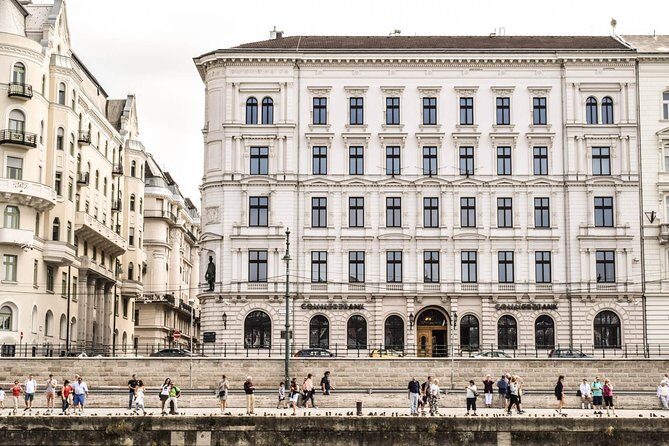
Next up, you get close to the Hungarian Parliament Building (Országház). This stop is listed with admission ticket not included, so treat it as a landmark moment unless you plan a separate visit.
What you take away here is what the building represents: it’s the seat of Hungary’s National Assembly, and it’s one of the country’s most recognizable symbols. Even without going inside, the scale helps you understand why it’s such a magnet for first-timers.
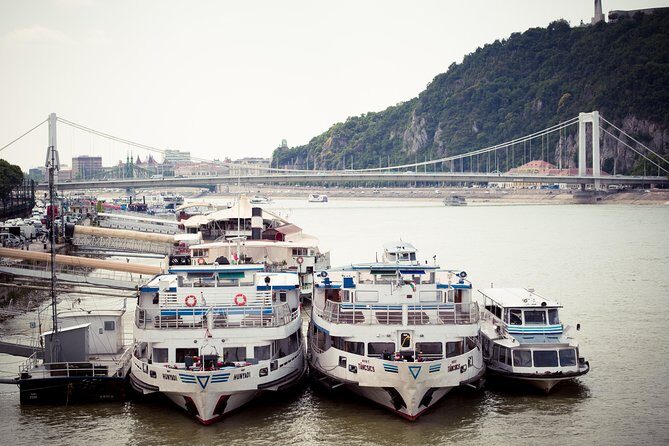
From there, the route heads to Széchenyi Chain Bridge (Széchenyi lánchíd). This chain bridge spans the Danube between Buda and Pest. The bridge is the kind of photo stop that works for almost everyone, because the view changes as you move and because it frames the river like a divider you can cross mentally.
If you want a simple rule: don’t just shoot one photo. Walk a few steps in different spots so the city looks different in each frame. That’s where the bridge earns its keep.
Shoes on the Danube Bank: a quiet end with real weight
Finally, you arrive at Shoes on the Danube Bank. This memorial honors the Jews massacred by fascist Hungarian militia associated with the Arrow Cross Party during World War II.
It’s short in time, but it’s not a throwaway stop. The idea is visual and direct: it forces you to slow down for a moment and think instead of just snapping a picture. If your day has been mostly statues and grand buildings, this is the emotional gear shift.
You end back at the meeting point, with the whole day feeling like a guided “from power to people” story across the city.
What the $94.63 price buys you (and why it can be worth it)
At $94.63 per person for about 3 hours 30 minutes, the value comes from what’s included rather than what you might see.
Here’s what helps the price make sense:
- Public transport tickets included. Budapest isn’t hard to navigate, but tickets and routes add friction on a first day.
- Coffee and cake at a local café, plus snacks. That’s not a small thing when you’re walking and learning.
- Map and recommendations. This turns the tour into planning fuel for the rest of your trip.
- A small group up to 15. More attention from the guide usually means you spend less time guessing and more time understanding.
Some sights have admission not included, like Vajdahunyad Castle, St. Stephen’s Basilica, and the Parliament Building stop. That’s normal for this kind of guided overview. The key is that you still get the orientation and context, and you can decide afterward what’s worth paying extra money to do in depth.
Who this Budapest beginner’s guide is best for
This tour fits you if you want a guided “first connection” to Budapest. It’s especially good for people who:
- like walking but still want a route plan,
- want to reduce decision fatigue on day one,
- enjoy history details tied to visible landmarks,
- prefer small groups.
It also helps if you’re interested in both grand architecture and the serious memorial context that shapes how the city remembers the 20th century.
It may be less ideal if you want a long, inside-the-building day. This is built for moderate physical fitness and for moving through major highlights at a steady pace. If you want lots of entry tickets and slow wandering, you’ll likely want a separate day for specific museums or churches.
One more practical reality: it runs in all weather conditions, so you should dress accordingly. Budapest can swing between mild and wet fast, and there’s no option to swap it for a couch day.
Should You Book This Tour?
Book it if you want to get your bearings fast and you like learning what you’re seeing as you walk. The included transport tickets, the café break, and the small group size make it a practical way to cover a lot without feeling rushed.
Skip it only if you already have a strong game plan for each major site and you’re determined to do long indoor visits during this half-day. In that case, you might prefer a self-guided route plus targeted ticket buys.
FAQ
How long is the Budapest Sightseeing Tour?
It runs for approximately 3 hours 30 minutes.
Where does the tour start and where does it end?
The meeting point is Hungarian State Opera, Budapest, Andrássy út 22, 1061 Hungary, and the tour ends back at the same meeting point.
Is the tour offered in English?
Yes, it is offered in English.
Is this tour a small group?
Yes. The tour has a maximum of 15 travelers.
Are public transport tickets included?
Yes. Tickets for public transport are included.
What food and drinks are included?
Coffee and cake at a local café are provided, along with snacks and coffee and/or tea.
Is admission included for Széchenyi Baths?
Yes. The Széchenyi Baths and Pool stop lists the admission ticket as free.
Do I need tickets for Vajdahunyad Castle, St. Stephen’s Basilica, or the Parliament Building?
Admission tickets for Vajdahunyad Castle, St. Stephen’s Basilica, and the Hungarian Parliament Building are listed as not included.
Does the tour run in bad weather?
Yes, it operates in all weather conditions, so dress appropriately.
Can I cancel for a refund?
Yes. You can cancel for a full refund up to 24 hours in advance of the experience’s start time.