REVIEW · BUDAPEST
Private Jewish Heritage Tour of Budapest with Local Expert
Book on Viator →Operated by Friendly Local Guides · Bookable on Viator
Budapest tells stories with every street corner. This private walk threads Jewish Quarter landmarks with synagogue stops, WWII ghetto reminders, and a food break built around flódni at Fröhlich. It’s a tight 2.5 hours that helps you connect the dots between architecture, community life, and what happened here during World War II.
What I like most is the way the tour turns names on a map into real places you can stand in front of—Herzl Square, Dohány Street, and the quieter memorial moments that actually land. I also really value that you’re not doing this on your own: one guide I saw mentioned, Miklos, was praised for being on time, clear, and never rushing, even when time was limited. Private format is a big deal here because you can ask what you’re curious about and get local context without feeling lost.
The main drawback to consider is pacing: it’s many stops in a short window, and several are listed as admission-free, which often means you’ll be observing from close by rather than spending long hours inside. If you want slow, in-depth time in one building, you may feel a little compressed.
Key highlights worth your attention
- Private 2.5-hour route through the 7th district with only your group
- Dohány Street Synagogue area with context on Europe’s largest synagogue
- WWII ghetto of 1944 landmarks plus a respectful stop at the Carl Lutz Memorial
- Flódni and other Jewish pastries at Fröhlich, with coffee/tea included
- Synagogue architecture variety from Moorish Rumbach to Art Nouveau Kazinczy
- Photo-worthy Jewish ritual sites like Castle Garden’s traditional baths
In This Review
- Why This Budapest Jewish Heritage Walk Works
- Price and Logistics: What $220 Covers (and What It Doesn’t)
- Pace, Fitness, and the Real Comfort Details
- Stop-by-Stop: From Herzl Square into the Jewish Quarter
- Dohány Street Synagogue: The Main Anchor of the Route
- Rumbach and Kazinczy: Moorish Elegance Meets Art Nouveau Faith
- Carl Lutz Memorial: When the Tour Turns Reflective
- Erzsébetváros and the Former Ghetto Streets: City Within a City
- Castle Garden and the Ritual Baths Photo Moment
- Finishing Stroll Through the Jewish Quarter and Former Ghetto Streets
- The Guide Experience: Miklos, Timing, and Why It Matters
- Who This Tour Suits Best (and Who Might Want Something Else)
- Should You Book This Private Jewish Heritage Tour?
- FAQ
- How long is the Private Jewish Heritage Tour of Budapest?
- Is the tour private or do I join a group?
- Is pickup offered?
- What’s included in the tour price besides the guide?
- Is Flódni included?
- Are entrance tickets included?
- What kind of walking is involved?
- Is the tour near public transportation?
- Can I cancel for a full refund?
Why This Budapest Jewish Heritage Walk Works
This tour is built for people who want more than a quick “seen it, done it” visit. You get a sequence of stops tied to specific places—squares, synagogues, memorials, and the streets of the former ghetto area. That matters because Budapest’s Jewish story isn’t one monument. It’s a neighborhood, a community, and a set of streets where life continued even through catastrophe.
I like that the route starts with the Jewish Quarter and then keeps moving outward in an organized way. You’ll see the area described as a sort of city within a city—full of synagogues, pray houses, and Jewish landmarks—and you’ll also get a clear connection to the WWII period. The Carl Lutz Memorial, specifically, is one of those stops that shifts the mood from “architecture and community” to “remembering and responsibility.”
And because it’s private, it’s easier to follow. You’re not scanning a group behind you or trying to hear over footsteps. A good guide can explain why Herzl Square matters, why the Dohány Street synagogue is such a focal point, and why a memorial like Carl Lutz is named the way it is.
Price and Logistics: What $220 Covers (and What It Doesn’t)
At $220 per person, you’re paying for a private walking tour with a local expert, plus included extras like a notebook, souvenir pen, visual handouts, and coffee and/or tea. You also get the convenience of a mobile ticket and multiple start times, and pickup is offered.
Here’s the practical angle: for a private tour in central Budapest, the value often comes from the guide’s ability to save you time and help you make sense of what you see. This one is timed tightly (about 2 hours 30 minutes), so you’re getting a “guided route” rather than a slow wander. The stops are also described as admission-free, which suggests you likely won’t be budgeting for entrance fees during the tour itself.
Still, the tour lists entrance tickets as not included. So if you have a strong desire to go inside any specific synagogue building for a longer visit, plan for the possibility that you might need extra arrangements outside the tour. The good news is that even without long interior time, the locations themselves are central and meaningful—especially the big synagogue landmarks and the ghetto streetscape story.
Also, one clue about demand: booking tends to happen about 36 days in advance on average, so if your dates are fixed, I’d lock it in early.
You can also read our reviews of more private tours in Budapest


Pace, Fitness, and the Real Comfort Details
This is a private walking tour designed for people with moderate physical fitness. That doesn’t mean it’s a hike, but it does mean you should wear comfortable walking shoes and be ready for multiple short segments. Many stops are 10–20 minutes, which keeps the momentum going and helps you cover a lot.
A helpful detail: you’re near public transportation, and service animals are allowed. Pickup is offered too, which can take the stress out of getting started in the Jewish Quarter area.
You’ll also get coffee and/or tea as part of the experience, plus handouts and a notebook. That’s not just “nice to have.” On a tour where you’re hearing several names and time periods, having something to jot down makes the story stick.
The one pacing drawback I’d flag: it’s not built for a relaxed “hang out here for an hour” style. The itinerary is structured, so if you’re the type who wants to linger at every corner for photos, you might feel slightly on a clock.
Stop-by-Stop: From Herzl Square into the Jewish Quarter
The tour begins in the heart of Budapest’s Jewish Quarter with Herzl Square and the Great Synagogue. This start is smart because it sets the stage immediately. The 7th district is described as a place where Jewish culture flourished for over 200 years, and today it’s home to one of the most active Jewish communities in Eastern Europe. In other words, you’re not starting at a random landmark—you’re starting in the neighborhood identity itself.
From there, you’ll take a guided walk through the Jewish Quarter and get major landmarks tied to the World War II ghetto of 1944. This part is the emotional backbone of the tour. Even if you’ve read about the era before, it hits differently when you’re standing in the district where the events unfolded. The guide’s job here is key: you want clear, grounded explanations that connect the WWII references to what you’re seeing on the street.
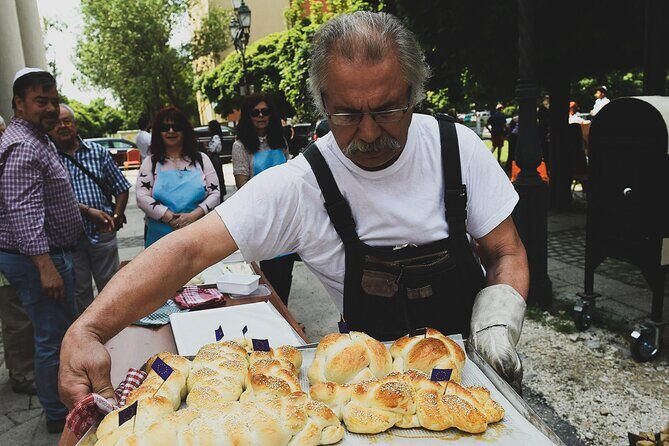
Then comes the food. At Fröhlich Patisserie, you’re set up for a tasting of flódni, described as an iconic modern Jewish delicacy. The practical idea here is that you get a taste right when your head is full of history. Food is a reset button that keeps the experience from feeling like a nonstop classroom lecture.
One more detail I appreciate: the tour is structured so you don’t have to figure out where to eat or what to order. The guide handles it, and you know the food stop is part of the timeline.
Dohány Street Synagogue: The Main Anchor of the Route
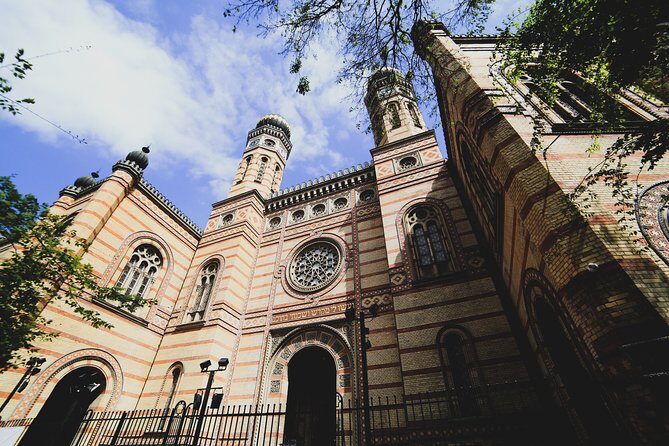
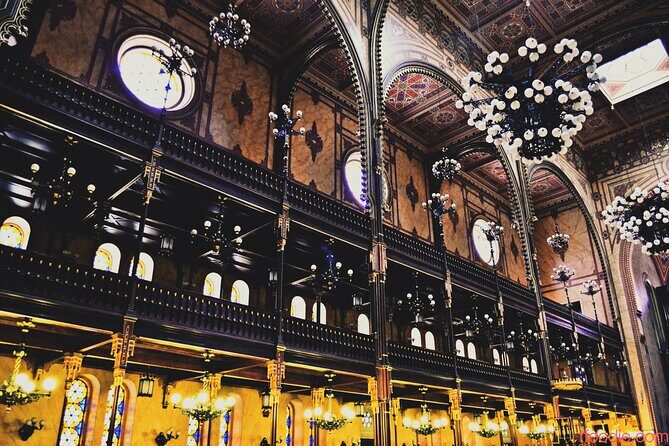
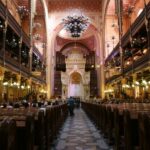
Dohány Street Synagogue is the big headline stop in this itinerary. You’ll visit the vicinity of the synagogue on Dohany Street, which is described as the largest in Europe and the second largest in the world.
This stop works well even if you don’t spend long hours inside, because the setting alone helps you understand why the synagogue is a landmark beyond the Jewish community. It’s the kind of place that becomes a point of reference—people orient themselves around it, and the neighborhood story makes more sense once you’ve seen it.
I also like that the tour doesn’t stop at “this is big.” You’re getting context from the guide so the size and scale connect to meaning: community presence, identity, and how a major institution shaped daily life here.
If your goal is to connect the history dots fast, this is where it starts clicking.
Rumbach and Kazinczy: Moorish Elegance Meets Art Nouveau Faith
After Dohány Street, the tour shifts into architecture and style, which is a nice break from heavier history topics.
On Rumbach Street, you’ll see the Rumbach Sebestyén utca Synagogue, with interior decorations described as glowing in graceful light. Even when you’re looking nearby, the focus on design helps you understand that these synagogues weren’t only places of worship—they were also expressions of creativity and identity.
Next is Kazinczy Street Synagogue, listed as an Orthodox synagogue in an Art Nouveau style and described as one of the largest functioning Orthodox synagogues in Europe. This contrast—Moorish-inspired details at one stop and Art Nouveau at another—gives your eyes variety while your guide keeps the story unified.
A fun practical bonus: you also receive local tips about beer ruins and nightlife, along with street art and other secrets. The honest way to use this is simple: ask your guide what’s nearby and easy to reach afterward, then keep your plans flexible. The tour gives you leads so you can continue the evening without guesswork.
You can also read our reviews of more historical tours in Budapest




Carl Lutz Memorial: When the Tour Turns Reflective
Carl Lutz Memorial is one of those stops that doesn’t need extra scenery. It’s dedicated to Carl Lutz, described as one of the Righteous Among the Nations of the World—also known as the Hungarian Schindler.
This is where the tour’s WWII story becomes specific and grounded in individual courage. The site name does a lot of work: it points you to a person and a moral category, and it nudges you to think past general tragedy toward rescue, risk, and choices.
If you’re someone who wants history explained in a humane way—not just facts but meaning—this stop is a strong reason to book. It also balances the synagogue-focused portion with a reminder that action mattered, not only worship and community life.
Erzsébetváros and the Former Ghetto Streets: City Within a City
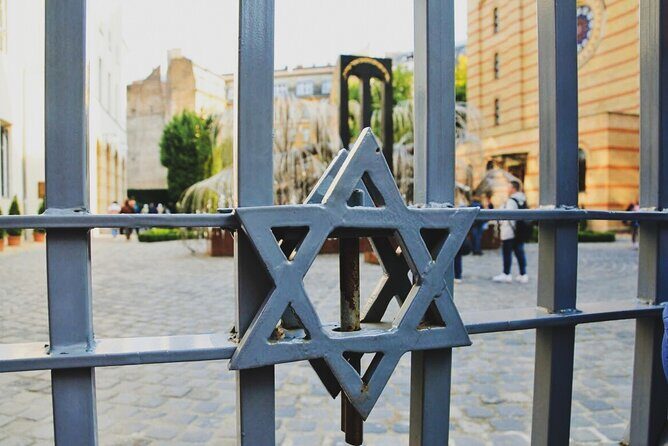
The tour then moves into Erzsébetváros, which is where you hear about Budapest’s dense concentration of Jewish landmarks. The description you’ll get is striking: only in Budapest there are 24 synagogues and pray houses. You’ll also hear about monuments of Jewish history, culture, and religion.
What I like about this portion is that it doesn’t feel like a museum walk. It’s built around a neighborhood feel—streets, institutions, and everyday life elements like kosher restaurants and kosher shops that are still part of the area’s identity.
Kazinczy Street is revisited here as well, including the central Kazinczy area described as resembling a wine cellar with kosher wine of high quality. There’s also mention of the Passage to the State Courses, which adds a sense of place and how commerce and community used to flow through the district.
And yes, you get another Jewish food moment at the Fröhlich confectioner stop on Dob Street. The tour lists treats like chanukkai donut and Purim Haman’s ears, in addition to flódni and other Jewish delicacies. Come hungry enough to enjoy it, but not so hungry that you feel rushed chewing between stops. Coffee/tea earlier helps with this.
Castle Garden and the Ritual Baths Photo Moment
Toward the end, you’ll reach Castle Garden for a photo stop connected to the oldest traditional Jewish baths used for ritual purposes. This kind of stop is useful because it shows religion and daily practice weren’t separate from the physical city. You’re not just hearing about past events; you’re learning how tradition had infrastructure in the neighborhood.
It also makes a good reset before the final stroll, because the pace shifts back to walking and looking.
Finishing Stroll Through the Jewish Quarter and Former Ghetto Streets
The end of the tour brings you back into the Jewish Quarter for a stroll through streets linked to the former ghetto—areas where synagogues, monuments, kosher restaurants, and kosher shops show up in the same visual mix.
This last stretch is where you start making your own connections. After seeing the anchor synagogues and memorial, the streets feel like a map of the story. Your guide’s local stories about Budapest help you interpret what you’re seeing now, not only what happened then.
In the best tours, this is where everything clicks: you stop thinking of it as “a list of attractions” and start thinking of it as a lived neighborhood with layers.
The Guide Experience: Miklos, Timing, and Why It Matters
One name that stands out from feedback is Miklos. He’s described as exceptional and a gentleman, and praised for being on time, clear, and taking time to provide a lot of information without rushing. That’s exactly what you want from a private tour with a dense itinerary—clarity plus a steady pace.
At the same time, the risk with any private experience is that schedules depend on the human side of things. There’s at least one account of the tour being canceled due to the guide getting sick, followed by a refund after outreach attempts. That’s not something you can control, so I’d build in a little buffer on your calendar and keep your confirmation details handy.
Who This Tour Suits Best (and Who Might Want Something Else)
This tour is a great fit if you:
- Want a structured, walkable route through major Jewish sites in Budapest’s 7th district
- Care about WWII ghetto context and a memorial stop like Carl Lutz
- Enjoy food that connects directly to Jewish culture, including flódni and seasonal treats at Fröhlich
- Prefer private pacing, with time for questions instead of following a big group
It may be less ideal if you:
- Want long, slow visits inside a synagogue building as the main event
- Don’t like walking for 2.5 hours with multiple short stops
- Prefer a purely architectural tour with little focus on WWII storytelling
If you’re unsure, think of this as a “guided overview with meaningful stops,” not a deep archival experience.
Should You Book This Private Jewish Heritage Tour?
If you’re visiting Budapest for the first time or you want your Jewish Quarter experience to feel organized and personal, I think this is a strong choice. You get a mix of iconic landmarks (Dohany Street, Great Synagogue area), architectural variety (Rumbach and Kazinczy), and a respectful WWII connection through the ghetto of 1944 plus the Carl Lutz Memorial.
The best part for me is the balance: history and architecture, then food at Fröhlich, then back to streets where you can still see Jewish life in the present day. For $220 per person, the value is mostly about having a guide translate the neighborhood for you while you walk through it.
Just book it with the right mindset: you’ll cover a lot in 2.5 hours, so wear good shoes, come ready to listen, and don’t plan heavy add-on activities immediately afterward.
FAQ
How long is the Private Jewish Heritage Tour of Budapest?
It runs about 2 hours 30 minutes.
Is the tour private or do I join a group?
It’s a private tour/activity. Only your group participates.
Is pickup offered?
Yes, pickup is offered.
What’s included in the tour price besides the guide?
Fees and taxes are included, along with a notebook and souvenir pen, visual handouts, and coffee and/or tea. Flódni and other specified Jewish delicacies at Fröhlich are included as well.
Is Flódni included?
Yes. Flódni is specifically included as part of the stops at Fröhlich.
Are entrance tickets included?
Entrance tickets are listed as not included. The itinerary also labels many stops as admission ticket free, so you should still confirm what, if anything, requires a ticket on the day.
What kind of walking is involved?
The tour is designed for people with moderate physical fitness. It’s a walking route with multiple stops and short time at each one.
Is the tour near public transportation?
Yes, it’s near public transportation.
Can I cancel for a full refund?
Yes. You can cancel up to 24 hours in advance for a full refund.
If you tell me your travel dates and whether you prefer more synagogue time versus more street walking, I can help you decide if this pacing matches your style.