REVIEW · BUDAPEST
8-hour private Budapest city tour by car / minivan
Book on Viator →Operated by Private Sightseeing Tours in Budapest and in Hungary · Bookable on Viator
A one-day drive ties Budapest together. I like the door-to-door private car and the way guides like Gergő (Gregory) make Hungary’s history feel clear at each stop. I’m also a fan of the Danube memorials, especially Shoes on the Danube Bank. The only real drawback: several top churches and viewpoints have extra entry fees (St. Stephen’s Basilica and Matthias Church are common add-ons).
This tour works best when you want the big Budapest hits without spending your day stuck in transit or slowly marching uphill. You’ll cover major sights with short walks and plenty of get-out-and-look moments, plus enough flexibility to adjust what you do inside (and what you skip).
In This Review
- Key highlights worth booking for
- Private 8-hour Budapest by car: why this route works
- Pickup, timing, and how to plan your day without losing it
- Andrássy Avenue and Heroes’ Square: Budapest’s grand opening act
- Széchenyi Baths and Vajdahunyad Castle: spa time meets Millennium storytelling
- House of Music Hungary and the Opera House: modern culture in a heritage city
- St. Stephen’s Basilica, Liberty Square, and Parliament: big interiors cost extra, but the scenes are worth it
- Chain Bridge and Shoes on the Danube Bank: the river view with a hard edge
- Matthias Church, Fisherman’s Bastion, and Buda Castle: the castle district in big chunks
- Citadella lookout on Gellért Hill: your final wide-angle payoff
- Price and value for up to three people
- The human factor: guides who explain, tailor, and keep you moving
- Should you book this private Budapest highlights tour?
- FAQ
- What is the duration of the private Budapest city tour?
- How many people are in each group?
- What does the tour include?
- Is pickup included, and where does it start?
- What language is the guide?
- Is this a private tour?
- Are entrance fees included?
- Is lunch included?
- Will I spend a lot of time walking?
- Can I get a full refund if I cancel?
Key highlights worth booking for
- Private car, short walks: you cover serious distance without turning your legs into sad pasta.
- Pest + Buda in one day: you get the grand city scenes and the castle district without guesswork.
- The Danube’s hardest stop: Shoes on the Danube Bank gives historical weight to a postcard river view.
- Thermal bath time if you want it: Széchenyi Baths are a major option, but admission isn’t included.
- Buda Castle District viewpoints: Fisherman’s Bastion and the castle complex bring the skyline factor.
- A guide who can steer: at least one guide has tailored the day and even helped find a good lunch spot.
Private 8-hour Budapest by car: why this route works
A private, car-based day is one of the fastest ways to understand Budapest. The city is split across the Danube, and the best sights aren’t all in one tight circle. With a sedan or minivan, you get to move between areas without losing your whole day to transfers, traffic, and parking stress.
This setup also changes the feel of your visit. Instead of rushing from one entrance to the next, you can pause when a view hits, linger near a facade you like, or move on when you’re done. The tour is built around light walks, not marathon sightseeing. That matters if it’s your first day, you’re traveling with limited mobility, or you just want your energy for the moments you’ll remember.
And because it’s private, your guide can also adjust the tone. Some guides focus on buildings and architecture. Others focus on how Hungary’s history shows up in street-level details. Either way, you’re not stuck with a generic script.
You can also read our reviews of more city tours in Budapest


Pickup, timing, and how to plan your day without losing it
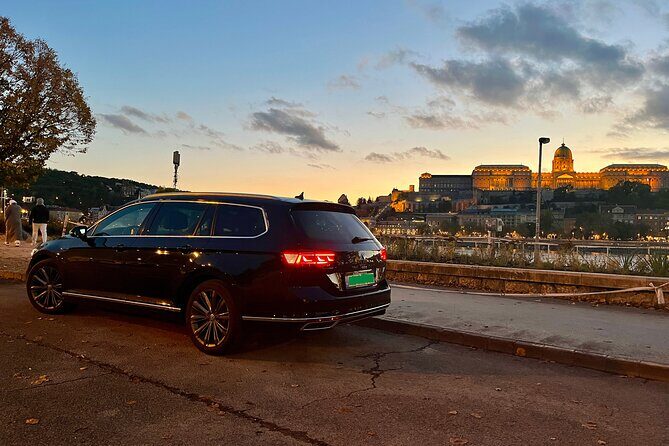
Pickup is offered from any hotel or other accommodation in Budapest, and private transport takes care of the driving and parking fees. That’s a big value piece you don’t always notice until you try to coordinate a similar route yourself.
You’re looking at about 8 hours, and the itinerary is dense. You’ll spend time at major landmarks—usually 10 to 45 minutes per stop—so it’s smart to think in two modes:
- quick look + photos (often 15–30 minutes)
- optional interior time (only for the places where you pay entrance separately)
If you plan to do more interiors than the typical “walk in and out,” you might end up shortening other stops. The tour does give you time and the option for an on-site lunch break, but lunch itself isn’t included. My practical advice: eat something simple and plan to treat lunch as fuel, not a long sit-down.
Also, this is a mobile-ticket experience with confirmation at booking. If you like having things set in advance, it fits that style.
Andrássy Avenue and Heroes’ Square: Budapest’s grand opening act
You start on Andrássy Avenue, a boulevard dating back to 1872 that links the city center to Heroes’ Square. It’s a UNESCO World Heritage Site (recognized in 2002) and known for its Neo-Renaissance mansions, townhouses, and the mix of cafes, restaurants, theatres, embassies, and luxury boutiques.
This stop isn’t just pretty architecture. It’s a good “orientation anchor.” You can see the city center’s formal side—then your guide can connect that style to how Budapest grew, what different eras emphasized, and why certain streets became power corridors.
Heroes’ Square is next, and it’s one of Budapest’s clearest visual statements of national identity. The statue complex features the Seven chieftains of the Hungarians, plus a Memorial Stone of Heroes. The square also has cultural institutions attached, including the Museum of Fine Arts and the Art Gallery, and it has played a role in modern political moments—one key example is the reburial of Imre Nagy in 1989.
There’s a practical benefit here: you get a big landmark, a strong visual memory, and then you move on. That helps the rest of the day click into place instead of becoming disconnected stops.
Széchenyi Baths and Vajdahunyad Castle: spa time meets Millennium storytelling
Széchenyi Medicinal Bath is the big wellness option on the route. It’s described as the largest medicinal bath in Europe, fed by two thermal springs with temperatures listed at 74°C (165°F) and 77°C (171°F).
Even if you don’t go inside, it helps to see where Budapest’s bathing culture sits in the city. If you do go in, keep your expectations realistic: the tour allocates about 10 minutes at the baths area, and admission isn’t included. So this is best for a quick stop or a short taste of the place—not a full soak.
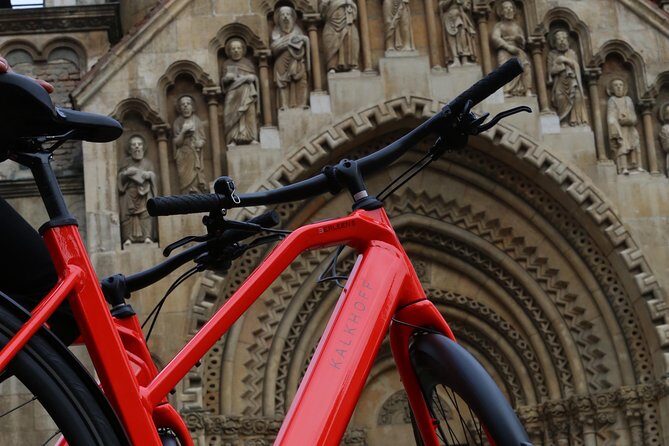
Then you head to Vajdahunyad Castle in City Park. This castle matters because it’s tied to the Millennial Exhibition in 1896, celebrating 1000 years since the Hungarian Conquest of the Carpathian Basin in 895. The building was designed with copies of landmark structures from different parts of the Kingdom of Hungary.
That design idea is fun for visitors: it turns a short visit into a mini “history map” you can walk through. The 20-minute timing works well if you want the feel of the park and the castle silhouette without sacrificing the rest of the day.
House of Music Hungary and the Opera House: modern culture in a heritage city
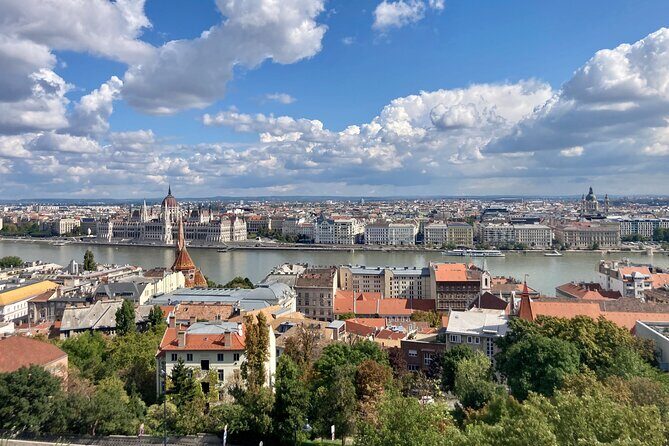
Budapest has a habit of surprising you with what it builds next to what it preserves. House of Music Hungary is the modern stop on this day, opened in January 2022. It’s described as a unique complex for musical initiation, and it hosts the country’s first comprehensive exhibition presenting the history of music.
The building itself drew major attention: it was selected from 170 international projects, and after winning the architectural competition, it became a talking point in professional circles. If you like architecture and design trends, this is a worthwhile contrast after older grand boulevards and historic churches.
Right near the action on Andrássy Avenue is the Hungarian State Opera House (Magyar Állami Operaház), a neo-Renaissance opera house. The tour includes a brief stop here (admission isn’t included).
In a car-based highlights day, these kinds of stops are about context. They help you see Budapest isn’t just old stone and views. It’s still actively shaping culture—and doing it in a big, public way.
You can also read our reviews of more private tours in Budapest






St. Stephen’s Basilica, Liberty Square, and Parliament: big interiors cost extra, but the scenes are worth it
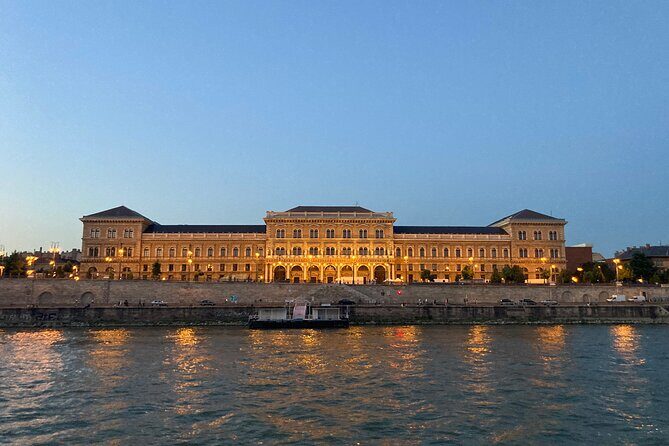
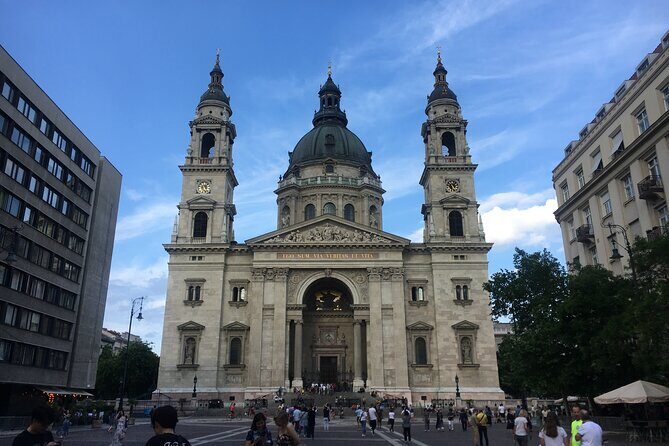
St. Stephen’s Basilica is one of those landmarks you see from far away and still want to get close to. The tour schedules about 30 minutes here, and it notes that entrance fee isn’t included. The basilica is named for Stephen, the first King of Hungary, and the description highlights that his right hand is housed in the reliquary. It’s also described as the third largest church building in present-day Hungary.
Even if you don’t go inside, the basilica is a strong visual “center of gravity” for the day. If you do go in, budget extra time for waiting and the practicalities of checking policies.
Liberty Square is another quick hit at about 20 minutes. The square sits in Lipótváros, mixing business and residential buildings. The US Embassy in Hungary and the historicist headquarters of the Hungarian National Bank sit along the west side. Some buildings are also designed in Art Nouveau style. This stop works well if you want a reminder that Budapest’s modern institutions live right beside older city forms.
Finally, there’s the Hungarian Parliament Building on Kossuth Square, in the Pest side by the Danube. It’s described as the seat of Hungary’s National Assembly and the largest building in Hungary. The tour gives about 20 minutes here, and admission isn’t included.
If you want to photograph Parliament well, your advantage is not just the timing—it’s the private nature. A guide can set you up for the best angles and keep you moving when the light or crowd flow changes.
Chain Bridge and Shoes on the Danube Bank: the river view with a hard edge
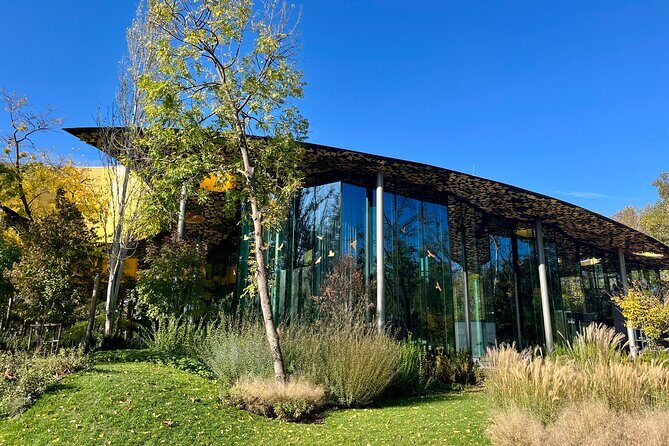
Budapest’s Danube crossings are some of the most memorable moments in the whole city, and this tour hits them directly.
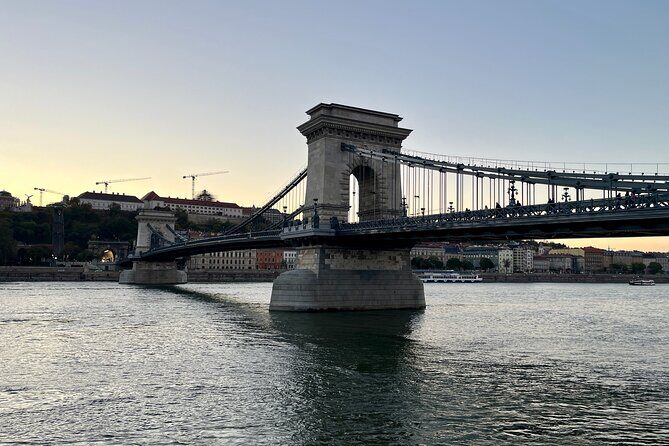
First is the Széchenyi Chain Bridge. It spans the Danube between Buda and Pest and was the first permanent bridge across the Danube in Hungary. It was opened in 1849 and designed by English engineer William Tierney Clark, with construction credited to Scottish engineer Adam Clark. That mix of international engineering history fits Budapest’s long-standing role as a crossroads city.
Then comes Shoes on the Danube Bank, a memorial created by film director Can Togay with sculptor Gyula Pauer. The description makes the purpose unmissable: it honours Jews killed by fascist Arrow Cross militiamen during World War II. This is the kind of stop that changes how you see the water. You’re still standing by a beautiful riverfront, but you’re also facing one of the city’s real moral history moments.
Other bridge stops include Margit Bridge, described as the second oldest bridge in Budapest (1876), connecting Pest and Buda and linking to Margaret Island. The tour also includes the Zero Kilometre Stone—an approximately 3 m high limestone sculpture marking the point from which road distances to Budapest are measured, with an inscription reading KM.
These stops are short, but they’re smart. You’re not just collecting views—you’re learning the city’s “story geography,” where infrastructure and memory share space.
Matthias Church, Fisherman’s Bastion, and Buda Castle: the castle district in big chunks
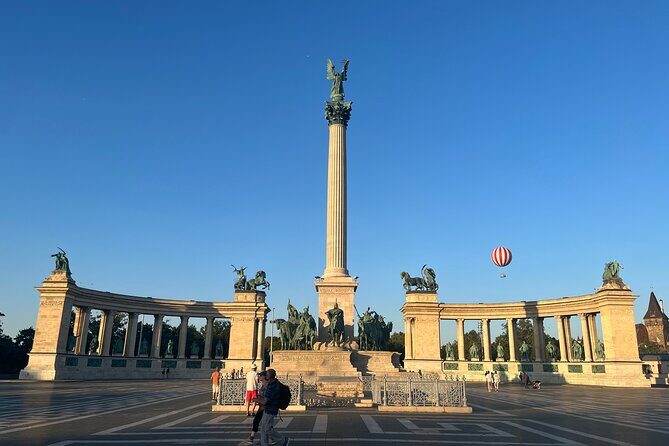
If you’re doing a one-day highlights tour, the Buda Castle District is where the day becomes unforgettable.
Matthias Church (Church of the Assumption of the Buda Castle) is about 30 minutes on the schedule. The current building is described as late Gothic with florid details, constructed in the second half of the 14th century and restored in the late 19th century. Admission isn’t included, so if you want to go inside, plan for extra fees.
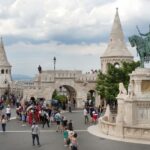
Next is Fisherman’s Bastion, also about 20 minutes. It’s described as one of the best known monuments in Budapest, built between 1895 and 1902 on the base of a stretch of Buda Castle walls. The main façade parallel to the Danube is approximately 140 meters long. The main reason people come is the panorama from the neo-Romanesque lookout terraces. Admission isn’t included.
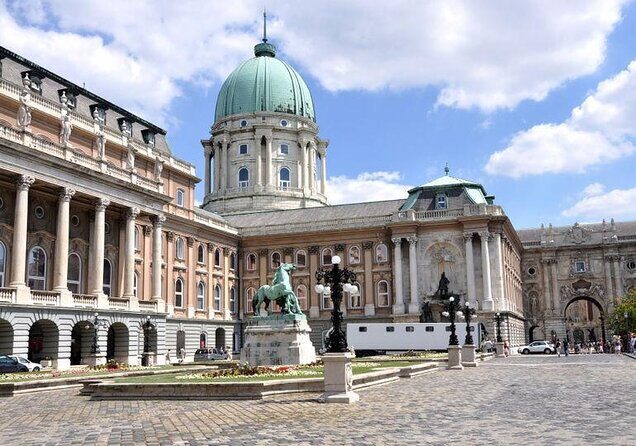
Then you reach Buda Castle, the historical palace complex of Hungary’s kings. The site dates back to 1265, but the Baroque palace that dominates today was built between 1749 and 1769. It’s also part of the Budapest World Heritage Site, declared in 1987. You’re given about 45 minutes here, with admission listed as free.
This cluster works well because it gives you three different “layers” of the district:
- a church with a specific medieval-to-restoration story
- a viewpoint structure built at the turn of the 20th century for dramatic sightlines
- a palace complex that anchors the area as a former royal power center
Even with limited time, it’s enough to understand why the castle district is the most photographed part of Budapest.
Citadella lookout on Gellért Hill: your final wide-angle payoff
End with Citadel Lookout at Gellért Hill (Citadella). The fortification was built in 1851 by Julius Jacob von Haynau, described as a commander of the Austrian Empire.
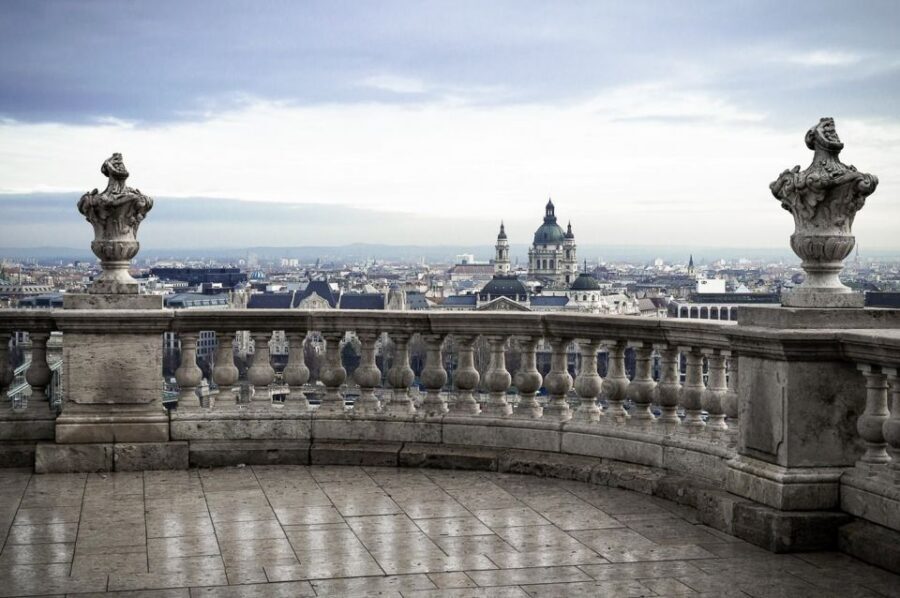
This is listed as an especially spectacular viewpoint with about 30 minutes allotted. If you’ve spent the whole day bouncing between major monuments, this final stop gives you something different: a big overview moment. It’s where you can connect the Danube, the bridges, and the hilltop city forms you’ve been seeing all day.
Price and value for up to three people
The price is $505.73 per group (up to 3), for an 8-hour private tour. On paper, that number may look “high” if you’re thinking like a single traveler. But think like a small group: you’re paying for private guiding, private transport, and parking fees and taxes.
Here’s what you get that’s harder to replicate cheaply:
- a professional guide working just for your group
- car/minivan transport covering distances
- door-to-door pickup from your Budapest accommodation
- a route designed to hit top sights with less walking
What you don’t get (so you can budget ahead):
- entrance fees for some interiors (examples given include St. Stephen’s Basilica, Matthias Church, and the upper floor of Fisherman’s Bastion)
- lunch (there’s time to stop, but you pay on-site)
If you’re traveling as a couple plus one friend (or with a parent), this can be strong value because you’re splitting the group cost. If you’re traveling solo, it may still be worth it if you value the time-saving and the guide’s explanations—but it’s a different deal than traveling as a small group.
The human factor: guides who explain, tailor, and keep you moving
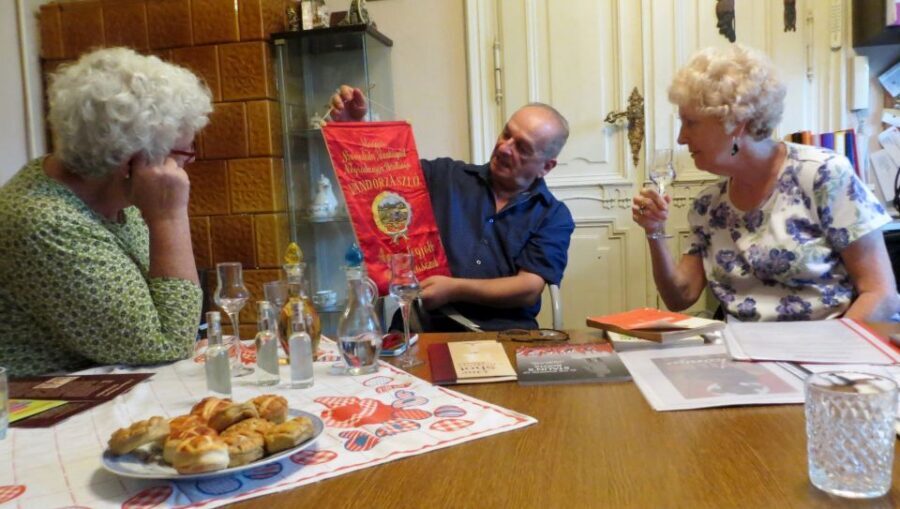
The top praise in the reviews centers on one theme: the guide makes the day feel personal. Names that come up include Gergő (Gregory), Gergely, Greg, and Gabriel—and the common thread is enthusiasm plus strong city context.
One review describes a focus on Hungary’s story as a chain of changing eras: wealth and strength, Communist occupation, and how politics look today, including Hungary’s EU membership alongside an anti-EU government situation that creates a divide between city and countryside voting patterns. You don’t have to memorize it all. The value is that you get a framework for why certain buildings and public spaces matter.
Another review highlights how the guide can customize the route to your needs, avoid crowds where possible, and even recommend a good lunch spot that fits your day instead of tossing you into whatever looks open.
For you, this is the practical takeaway: if you care about history, architecture, or simply not wasting time, choose this style of private tour. A good guide makes the difference between seeing Budapest and actually understanding what you’re looking at.
Should you book this private Budapest highlights tour?
Book it if you:
- have limited time and want to see major Budapest sights in one day
- prefer short walks and car transfers instead of long self-planned logistics
- like having a guide explain how Hungary’s history shows up in the city’s monuments
- are traveling in a group of up to three to get better value on the per-group price
Consider skipping (or adjusting expectations) if you:
- want a long, slow, inside-heavy museum day rather than quick landmark stops
- don’t want to pay extra for interiors, since several key churches/viewpoints have entry fees not included
- plan to treat thermal baths as a full relaxation session (this day gives limited time there)
If you want the classic Budapest highlights—Pest grandeur, Danube memory, and castle-district views—without the stress, this is a very sensible way to do it.
FAQ
What is the duration of the private Budapest city tour?
The tour runs for approximately 8 hours.
How many people are in each group?
The price is per group, for up to 3 people.
What does the tour include?
It includes private tour guiding by a professional guide, door-to-door service, private transportation, covering distances by car and taking light walks, plus parking fees and taxes.
Is pickup included, and where does it start?
Pickup is offered from any hotel or other accommodation type in Budapest.
What language is the guide?
The tour is offered in English.
Is this a private tour?
Yes. It’s a private tour/activity, and only your group will participate.
Are entrance fees included?
No. Entrance fees are not included for some optional interior visits, including St. Stephen’s Basilica, Matthias Church, and the upper floor of the Fisherman’s Bastion. Széchenyi Baths admission is also not included.
Is lunch included?
Lunch is not included. There is time and an option for an optional lunch break, but meals are paid on-site.
Will I spend a lot of time walking?
Most of the distance is covered by car, with light walks at stops.
Can I get a full refund if I cancel?
Yes. Free cancellation is available up to 24 hours in advance for a full refund.