REVIEW · BUDAPEST
Alternative Budapest Walking Tour
Book on GetYourGuide →Operated by Absolute Tours · Bookable on GetYourGuide
Budapest’s street art is the real map. I like how this tour turns street art into a story you can actually read, with explanations of local graffiti writers and street artists. I also like the small-group size, which leaves room for real questions instead of a rushed herd. The one drawback: it’s a proper walking tour and it’s not set up for mobility impairments or wheelchair users.
You’ll move between Buda and Pest, but the heart of the walk is the city’s alternative energy—especially in the Jewish district. Expect stops that feel like current culture, from squats and cultural centers to abandoned synagogue spaces, plus galleries, live music venues, and hipster stores. You’re not just collecting sights; you’re picking up a local lens for how Budapest reinvented itself, including the ruin bar scene.
Logistics are straightforward: meet in front of the Lutheran Church (pale yellow) on the church steps. The tour runs in English, usually around 2.5 hours (it’s also described as roughly 3 hours), and the group is limited to 10 people, so you won’t spend the whole time straining to hear over strangers.
In This Review
- Key things you’ll notice on this Alternative Budapest walk
- Why this tour feels different from the usual Budapest highlights
- Meeting at the pale yellow Lutheran Church and the walking reality
- Street art stops: more than murals on a wall
- The Jewish Quarter: squats, cultural centers, and abandoned synagogue spaces
- Ruin bars and creative courtyards: where Szimpla Kert fits
- Shops and galleries you’ll only find with a local guide
- The guides matter: names you may hear on the route
- Price and timing: is $67 worth it for Budapest’s alternative side?
- Who should book this walk, and who should skip it
- Should you book the Alternative Budapest Walking Tour?
- FAQ
- How long is the Alternative Budapest Walking Tour?
- Where is the meeting point?
- What is the group size?
- What language is the tour in?
- Is food or drinks included?
- Is the tour wheelchair accessible?
- What does the tour cost?
Key things you’ll notice on this Alternative Budapest walk
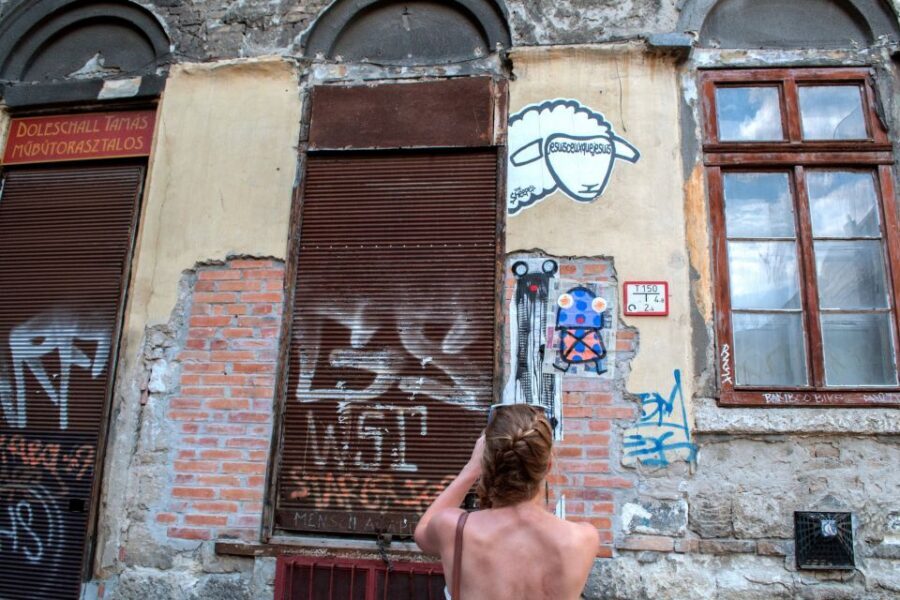
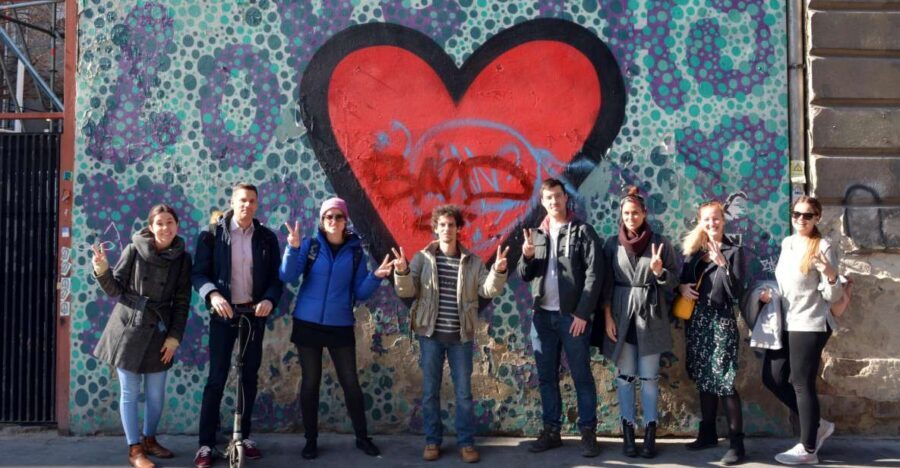
- Small group pace: up to 10 people, built for asking questions and getting recommendations
- Street art with context: not just photos—who made it and why it matters in Budapest
- Jewish Quarter as a culture engine: squats, cultural centers, art spaces, and nightlife history
- Ruin bars as community hubs: places that mix music, social life, and local creativity
- A guide who updates you: you leave with ideas for what to do after the walk
Why this tour feels different from the usual Budapest highlights
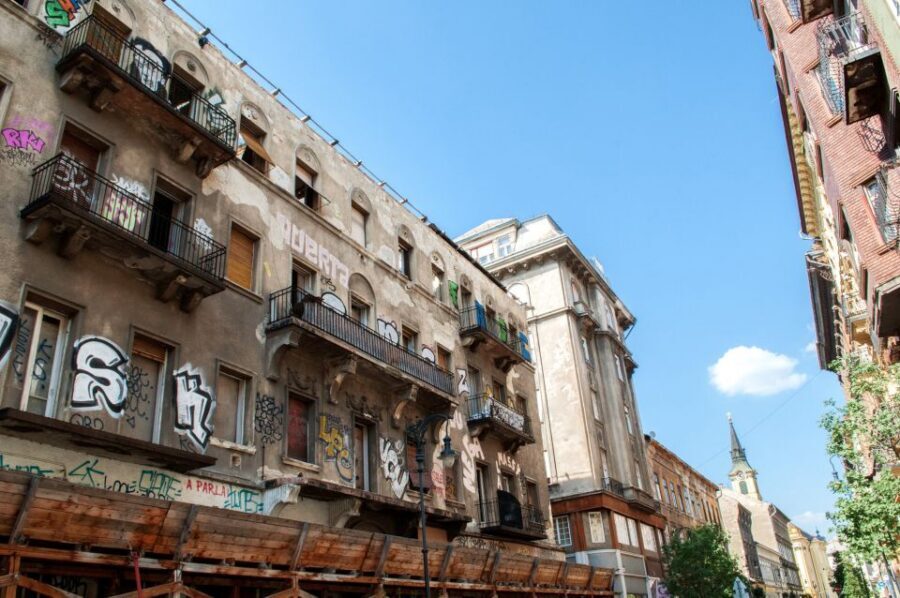
If you’ve done the classic Budapest route, you’ll know the pattern: postcard views, big names, quick stops, then back to the same streets everyone else uses. This alternative walking tour flips that. The focus is on what’s happening now—underground music, fashion, art scenes, and the creative way people repurpose old spaces.
That’s the big value for you: you don’t need to be an expert to enjoy it. You just need curiosity. The tour is designed to help you look at the city differently, seeing street corners and buildings as part of a living culture—not just scenery.
It also pays off later in your trip. A good alternative-city tour doesn’t only show places; it gives you a better set of instincts for where to go next. The guide’s “brain” is specifically meant for that—what’s worth checking out after, what’s changed recently, and where to spend your time if you want something more local than sightseeing.
You can also read our reviews of more walking tours in Budapest


Meeting at the pale yellow Lutheran Church and the walking reality
You meet your guide in front of the Lutheran Church (pale yellow), on the church steps. If you have trouble spotting them, the local partner can help you find the group.
From there, the whole experience is built around being outside and on foot. That matters for your comfort and for timing. Bring comfortable shoes and dress for weather, because you’ll be moving across neighborhoods and stopping to look closely at what’s on walls, in shop windows, and around the courtyards where alternative culture tends to happen.
Also note what you’re (and aren’t) paying for. The tour includes the walking tour and a professional English-speaking guide. It does not include entrance fees or any food and beverages. So if you want a coffee stop or a beer stop, think of it as a choice you can make along the way, not a guaranteed included meal.
Street art stops: more than murals on a wall
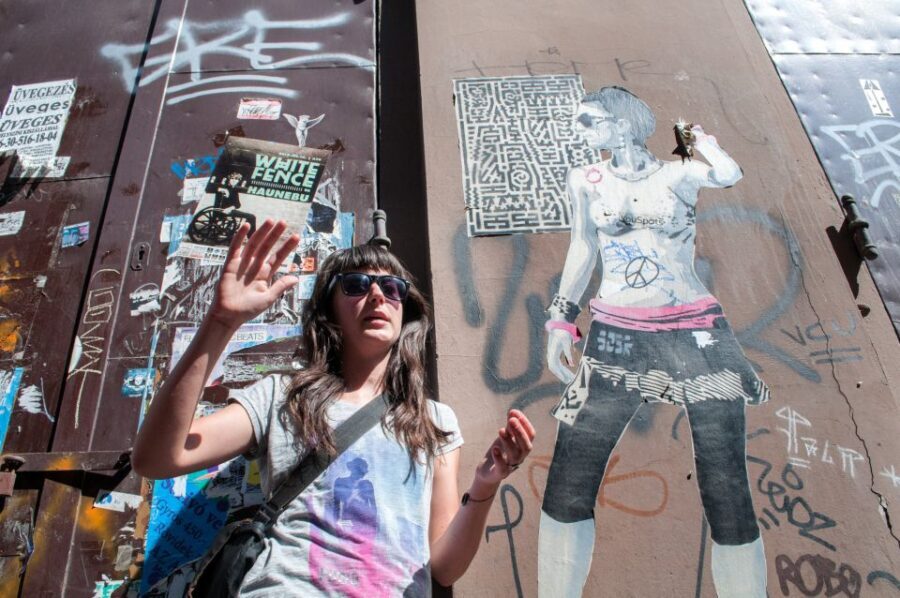
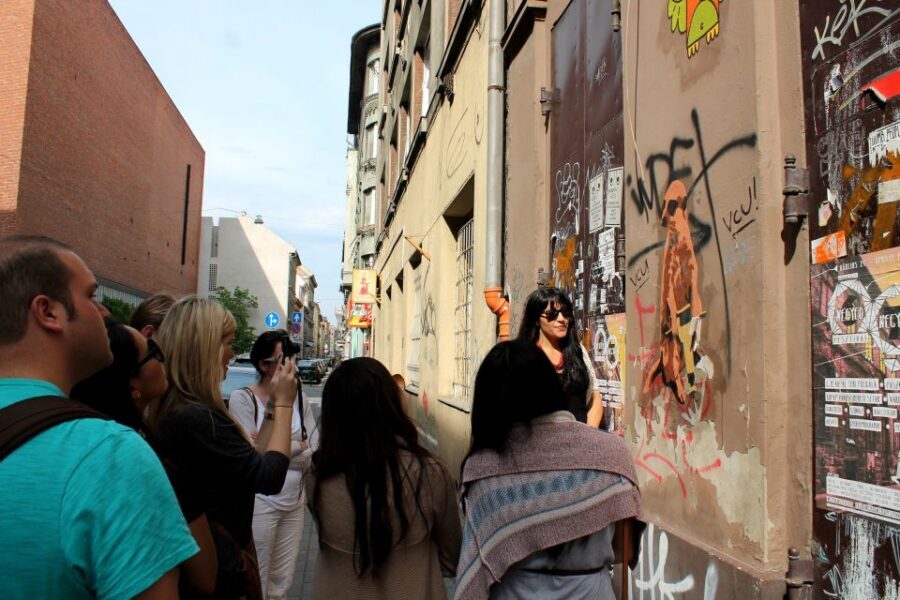
The tour’s headline theme is street art and alternative culture, and it doesn’t treat street art like random decoration. You’ll learn how local graffiti writers and street artists fit into Budapest’s identity—how the city’s street language reflects social changes, creative communities, and even the way neighborhoods get reimagined over time.
One of the most useful parts for you is that it teaches you how to look. Instead of only asking What is this?, you’ll start thinking Who is behind it? and What’s the story in the neighborhood? That changes how you experience Budapest on your own after the tour.
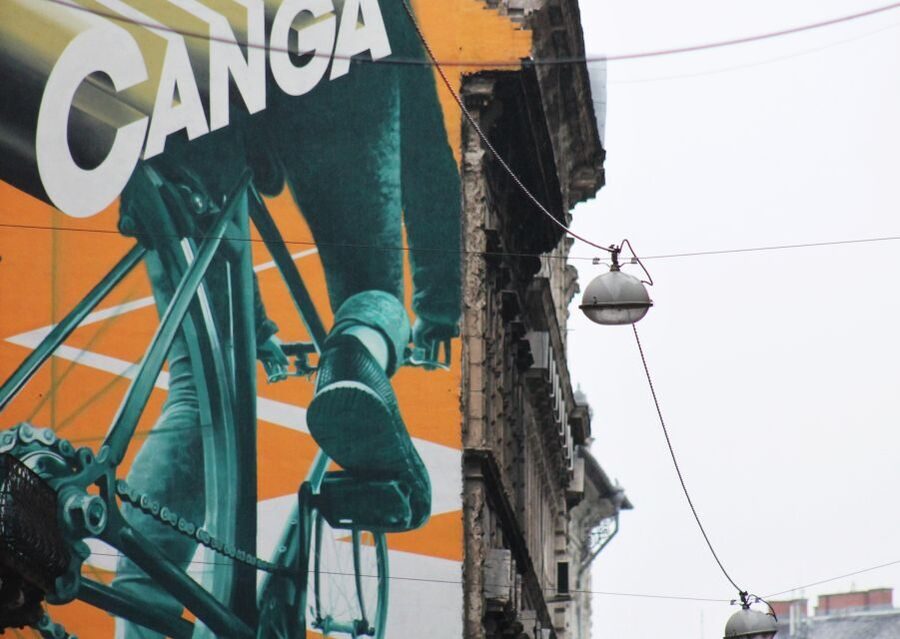
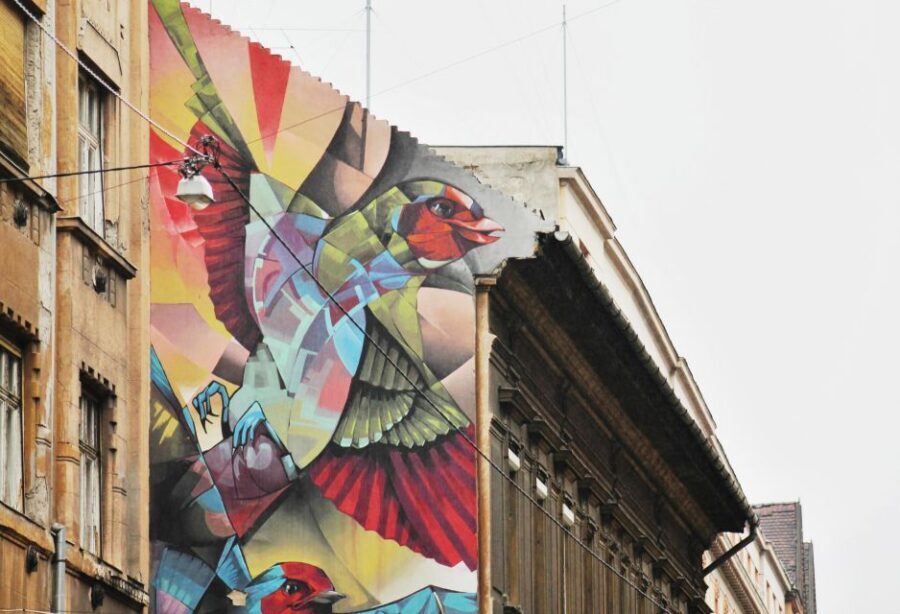
A small detail matters here: architecture and city surfaces in Budapest can feel playful or unexpected, and the guide may explain why you’ll notice paint and markings in places that tourists usually ignore. Once you know to look, the city gives you more clues.
If you already love street art, you might still enjoy it because the tour doesn’t only show works—it connects them to people and place. If street art isn’t your thing, the good news is that the tour uses street art as a doorway into music venues, design shops, studios, and coffee culture too.
The Jewish Quarter: squats, cultural centers, and abandoned synagogue spaces
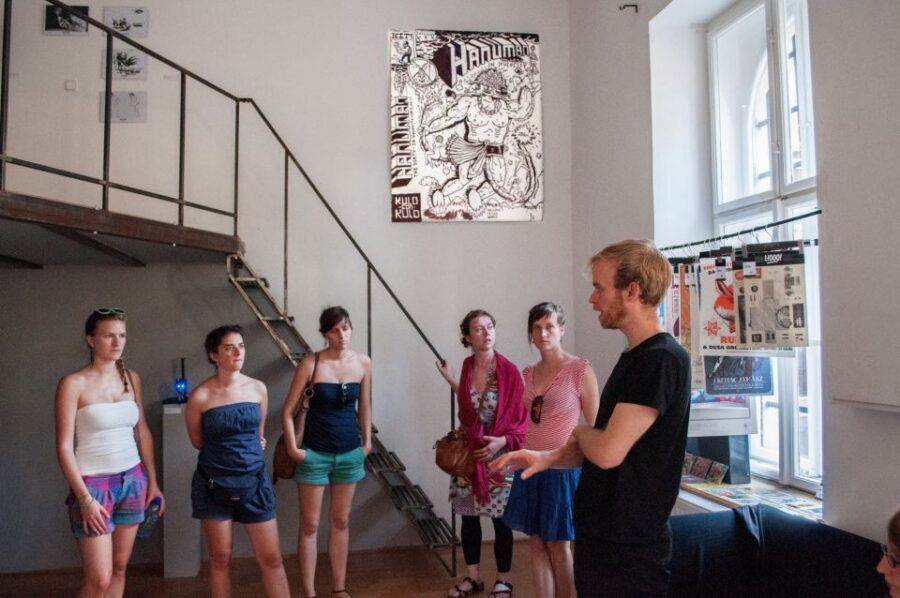
The walk heads toward the Jewish district area, and this is where the alternative scene feels like it has momentum. The tour explains how parts of Budapest that used to be neglected started becoming places people want to visit—an idea compared to East Berlin after the wall, where the underused spaces turned into magnets for art and nightlife.
Expect the walk to connect history and the present. You may see or discuss squats and cultural centers, plus art galleries tied to this scene. You may also pass through places associated with abandoned synagogue spaces—exactly the kind of location that helps you understand Budapest’s layered past and its shift toward the creative now.
The practical payoff: this isn’t just theory while you stare at buildings. You’ll have chances to stop, ask questions, and get a human explanation for why certain spaces matter. In a city where layers overlap so much, that kind of guidance helps you avoid wandering with a half-understood map.
This is also where a coffee stop or beer stop can make sense, because you’re transitioning from the external look (walls, buildings, streets) into the internal culture (how locals socialize and create). The tour mentions an art-and-coffee collective setup, and the idea is simple: you rest your feet and soak up the neighborhood vibe at the same time.
Ruin bars and creative courtyards: where Szimpla Kert fits
Ruins bars are basically Budapest’s shorthand for alternative nightlife, but on this tour they’re treated as more than party locations. You’ll see how ruin bars can function as community spaces—places where music, conversation, and local creativity share the same rooms.
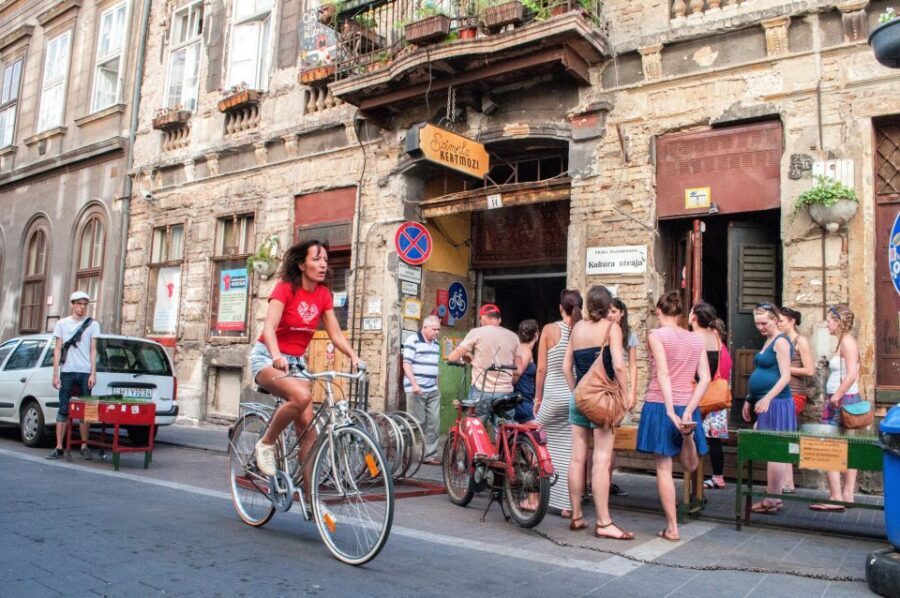
One of the most frequently named spots tied to this kind of experience is Szimpla Kert. The tour flow may lead you there (especially as a natural endpoint for a street-art-plus-nightlife route). If you’re the type who likes getting your bearings with one famous anchor spot before you branch out, this is a good fit.
But the tour’s broader promise is not only to go to a ruin bar—it’s to point out what else is around it. You might hear about how these spaces tie into live music venues, analogue photography galleries, and even bike workshop culture. That mix is the reason the walk works: it shows you that alternative Budapest isn’t one single scene. It’s a web.
If you’re food-and-drink focused, keep your expectations realistic. The tour doesn’t include drinks or meals. You’re paying for the walk and the guide, so you’ll choose your own stops. If you do want the best value, plan to pay attention to what the guide recommends and then follow their logic: where a drink makes sense, where it’s worth lingering, and where to go next.






Shops and galleries you’ll only find with a local guide
Part of why small-group walking works is that it turns window-shopping into education. This tour is built around finding places you might miss if you only follow the tourist grid: design shops, studios, galleries, and hipster stores that fit the neighborhood’s creative identity.
You might hear specific references like the Printa eco design shop, where the guide can point out the kind of creative thinking that shows up in everyday places. You might also encounter a book shop café along the route. These stops are valuable because they connect the street-art story to real commerce—how ideas become objects, prints, books, and everyday culture.
This is also where you’ll often get practical advice for the rest of your stay. Since the tour is designed to lead you through the present and future scene—not only the past—the guide can recommend what’s open now and what kind of scene matches your interests. It can save you from spending your last day guessing at opening hours and trends.
The guides matter: names you may hear on the route
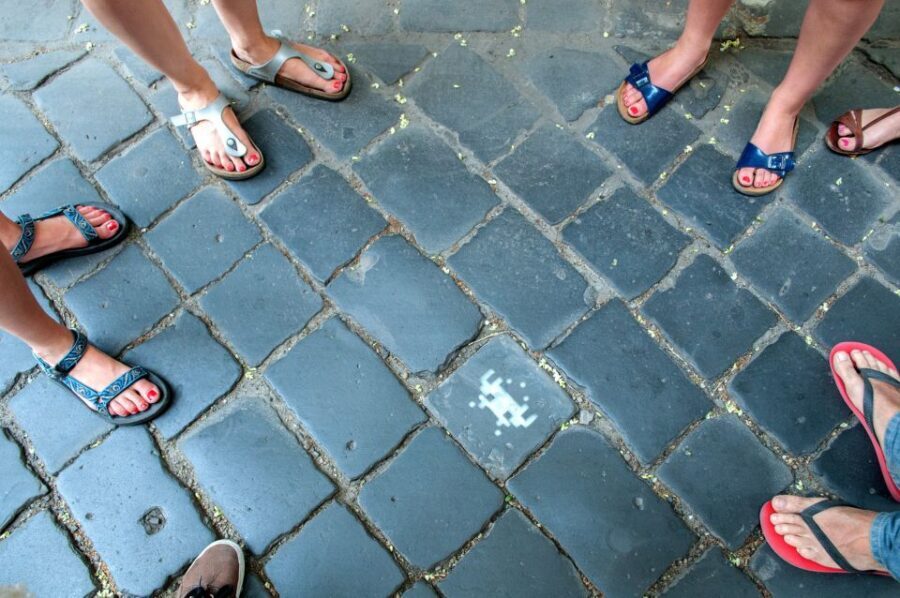
This is one of those tours where the guide can make or break your experience. The good sign here is that you’ll meet different guides over time, but they’re consistently described as engaged and willing to talk.
Some names that show up in guides leading this walk include Petra, Raymond (Ray), Krisztián, Cristian, Anna, Lauren, Antonia, Bogata, Bella, Zsophia, and R (and you may see other similar variations). Even when the style differs, the tour’s promise stays the same: you get a guide who explains what you’re seeing, answers questions, and then sends you off with ideas you can actually use.
One of the strongest benefits for you: flexibility. The small group size and the focus on discussion means you can ask “Why here?” and “What should I do next?” and get answers that connect to what you just walked past.
If you’re the kind of traveler who likes conversation, this matters. If you prefer pure sightseeing with minimal talk, you might still enjoy it—but you’ll likely notice you’re in a chatty, story-focused format.
Price and timing: is $67 worth it for Budapest’s alternative side?
The price is listed at $67 per person, with a duration of 2.5 hours. In the experience description, it’s also described as a roughly 3-hour small group walking tour, so treat it as an estimate rather than a stopwatch promise.
For value, here’s the key comparison: you’re not paying for a museum ticket, and you’re not paying for a private car. You’re paying for:
- a guide who can connect street art, design culture, and nightlife to the neighborhood story
- the small-group format (limited to 10)
- time-saving direction away from tourist clutter
That can be good value if you care about local culture and you want to spend your time efficiently. It can feel pricey if you only want landmark photo stops or if you’re mainly chasing big-ticket sights. One review notes the tour felt slightly overpriced, and that’s a fair consideration if your goal is classic Budapest sightseeing.
My practical advice: treat this tour as your culture orientation. If you do it early in your trip, you’ll use the guide’s recommendations to get more out of your remaining days. That’s when the $67 usually stops feeling like a standalone cost and starts acting like an investment in how you explore.
Who should book this walk, and who should skip it
Book it if you:
- like street art, graffiti culture, and understanding the people behind it
- want to see Budapest’s Jewish district alternative scene and how it changed over time
- care about live music, analogue photography, design shops, and ruin bar culture
- enjoy talking with a guide and asking questions while you walk
Skip it (or adjust expectations) if you:
- want only the most famous landmarks and views
- need an accessible route due to mobility limitations (the tour isn’t suitable for wheelchair users)
- prefer long indoor stops or guaranteed included food/drinks
Also, if you’re sensitive to cold or rain: the tour is walking-first. The good news is that it’s built for stops and short rests, but you still need to dress right for the weather.
Should you book the Alternative Budapest Walking Tour?
Yes, if you want Budapest with a pulse. This tour is best viewed as a filter for your whole trip: it helps you move past the tourist route and see how street art, creative shops, and ruin bars fit together as part of Budapest’s present-day identity.
I’d especially recommend booking it early. You’ll likely leave with clear ideas for where to spend your next evening, what kind of venues to look for, and which neighborhoods feel most “you.” If you’re planning only a short stay, this is also one of the more efficient ways to get a contemporary feel for the city in a few hours.
Just go in with the right mindset: wear good shoes, expect walking, and be ready to look closely at walls, courtyards, and side streets.
FAQ
How long is the Alternative Budapest Walking Tour?
It’s listed as 2.5 hours. The experience description also describes it as roughly 3 hours, depending on how the walk unfolds.
Where is the meeting point?
Meet your guide in front of the Lutheran Church (pale yellow) on the church steps.
What is the group size?
It’s a small group limited to 10 participants.
What language is the tour in?
The live tour guide speaks English.
Is food or drinks included?
No. Food and beverages are not included.
Is the tour wheelchair accessible?
No. It’s not suitable for people with mobility impairments and wheelchair users.
What does the tour cost?
The price is $67 per person, and the tour includes the walking tour and a professional guide (entrance fees are not included).