REVIEW · BUDAPEST
Budapest: Jewish Heritage Walking Tour with Historian Guide
Book on GetYourGuide →Operated by Kálmán Dániel - Walk with a Historian · Bookable on GetYourGuide
Budapest’s Jewish streets hit hard and fast. This 2-hour walking tour focuses on real places and stories, from historic synagogues to Holocaust memorial sites, guided by historian Kálmán Dániel in English. Two things I especially like: you visit two historic synagogues (including Rumbach Street Synagogue), and you also see on-the-ground Holocaust reminders like the Carl Lutz Memorial and the Memory Wall.
The one drawback to factor in: the Kazinczy Street Synagogue may be temporarily closed for restoration, so you’ll view it outside only and you won’t get its interior entry ticket.
If your idea of a great Budapest day is walking the streets and understanding what happened there, this tour is built for you. And with a small group capped at 10 participants, you’ll have room to ask questions instead of just following the crowd.
In This Review
- Key highlights worth planning for
- Where the tour starts: Deák Square, then straight into Jewish Pest
- Rumbach Street Synagogue: the art and the atmosphere of a working landmark
- Walking Jewish District streets: why the streets matter as much as the buildings
- Gozsdu Passage and Gozsdu Udvar: Budapest’s lively public face with a deeper backstory
- Holocaust memory on the pavement: ghetto wall remnant, Carl Lutz Memorial, and Memory Wall
- Kazinczy Street Synagogue: what you see when entry is limited
- The historian factor: how Kálmán Dániel makes the route cohere
- Price and value: is $62 for 2 hours worth it?
- Who this walking tour fits best
- Should you book this Budapest Jewish heritage walking tour?
- FAQ
- How long is the Budapest Jewish Heritage Walking Tour?
- What is the price per person?
- Where do I meet the guide?
- What language is the tour offered in?
- Is this a small group?
- Which synagogues are included?
- Are Holocaust memorial sites included?
- What’s included in the ticket price?
Key highlights worth planning for
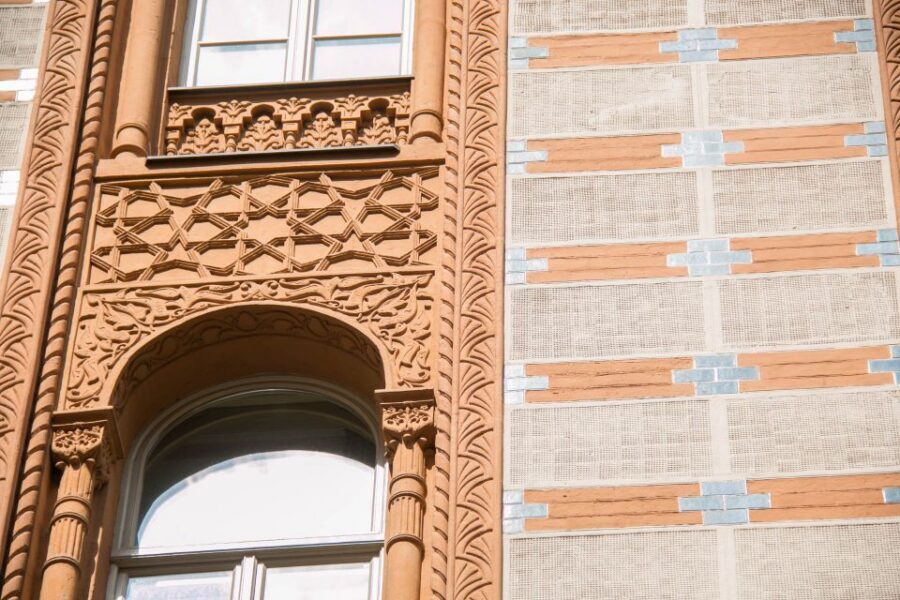
- Rumbach Street Synagogue visit with an entry ticket and time to notice the art-historical details
- Kazinczy Street Synagogue outside view if it’s still under restoration
- Carl Lutz Memorial and Memory Wall to connect the Holocaust story to specific places
- Ghetto wall memorial remnant for a tangible, street-level reminder of the past
- Gozsdu Passage and Gozsdu Udvar stops that show how Jewish life shaped the area
- A historian guide who ties architecture, street stories, and community history together
Where the tour starts: Deák Square, then straight into Jewish Pest
I like tours that start with an easy meeting point and get moving quickly, and this one does. You meet at the entrance of the Lutheran church at Deák Square (Deák téri evangélikus templom), not far from the M2 metro entrance. It’s a practical spot: you can use the metro to get there without hunting.
From there, the pace stays walkable and focused. The goal isn’t to tick off landmarks. It’s to understand how the Jewish community on the Pest side grew from the 18th century onward, and how it changed through the mid-20th century. Your guide frames this as a lived neighborhood story—who lived here, which streets matter, and why some places survived while others disappeared.
What I found helpful is that the tour doesn’t treat history like an abstract lesson. The route keeps bringing you back to physical cues: synagogue façades, the layout of streets, and how memory is marked when buildings are gone.
You can also read our reviews of more walking tours in Budapest

Rumbach Street Synagogue: the art and the atmosphere of a working landmark
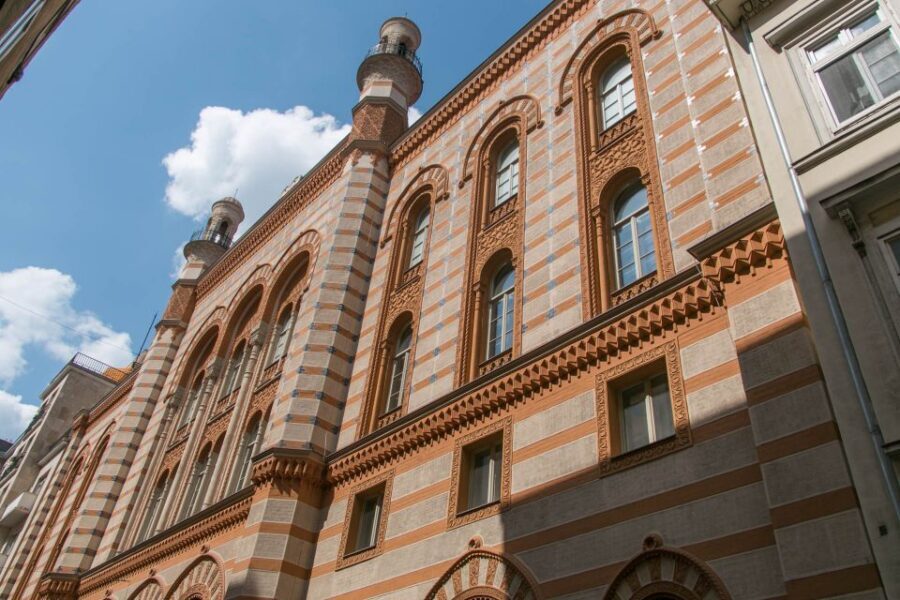
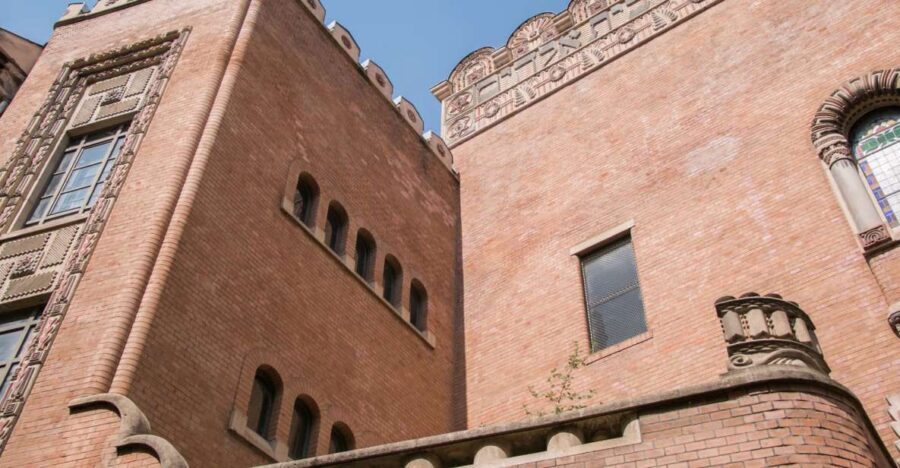
Your first major anchor is the Rumbach Street Synagogue. You get both time and access here, including an entry ticket. This matters, because for synagogue architecture, seeing the interior details is usually where the meaning comes from—not just the outer look from the sidewalk.
What I enjoy about visiting a historic synagogue on foot in Budapest is that you’re not just looking at an old building. You’re seeing a community landmark in its real street context. Your historian guide helps you connect the architecture to its era—how this place functioned, what it represented, and why it still matters as a cultural reference point today.
You’ll also get a photo stop element built into this segment. That’s not just for pictures. It gives you a moment to slow down and actually notice proportions, entrances, and how the synagogue sits among other buildings along the same urban corridor.
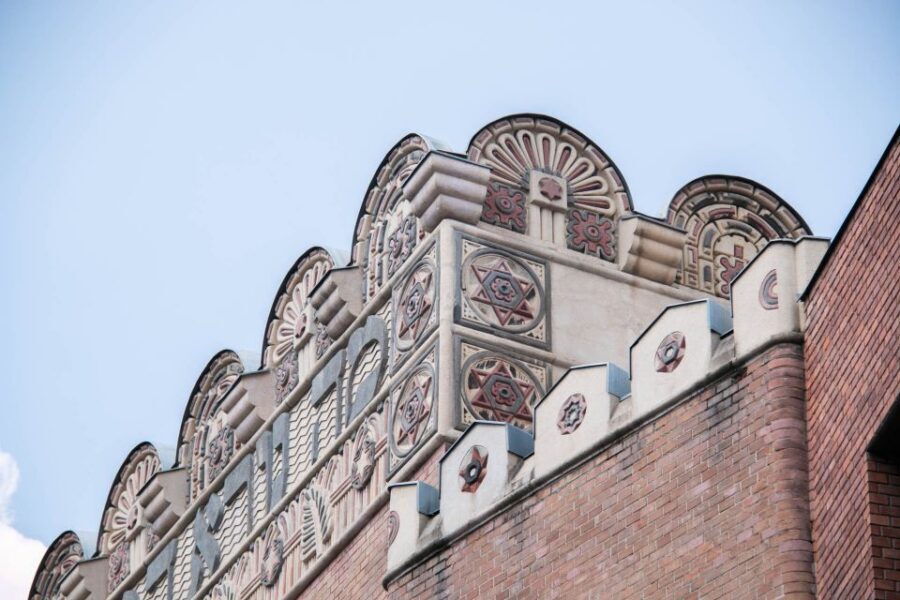
Tip: bring a little patience for the visual details. Synagogues are often designed to communicate identity and faith through patterns, forms, and symbolism. With a guide, you’ll know what to look for, which makes your time inside feel more purposeful.
Walking Jewish District streets: why the streets matter as much as the buildings
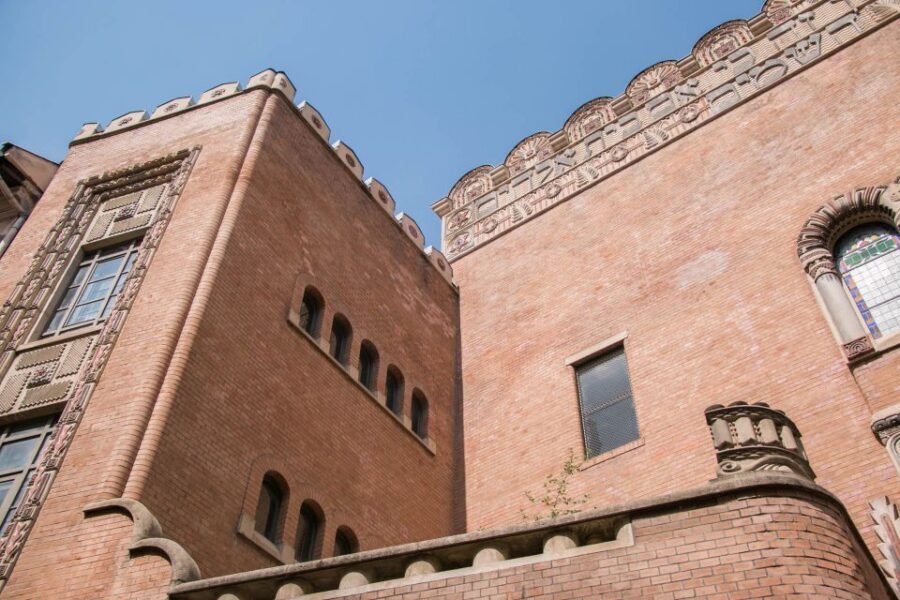
Between synagogue stops, you’ll walk through the Jewish Quarter area and hear street-focused stories. This is one of the best ways to understand Budapest: the past isn’t only on plaques. It’s in street patterns and in what’s left after so much change.
You’ll learn how this neighborhood became one of the most flourishing Jewish communities in the region from the 18th century until the mid-20th century. Your guide also points out how the streets themselves hold memory—what roles they played, who would have moved through them, and why certain locations carried particular importance.
One of the more interesting themes you’ll hear is about what used to be there but isn’t anymore. Your route includes the question of where two other synagogues once stood in the district and were demolished by the 1930s. Even if you never get the full mental map on your first pass, the point lands: this was not a static place. It was rebuilt, altered, and at times forcibly erased.
This segment is also where you can feel the value of a small group. With up to 10 participants, you’re less likely to get stuck behind someone who doesn’t hear the explanation. You can keep up with the historian’s timing and questions.
Gozsdu Passage and Gozsdu Udvar: Budapest’s lively public face with a deeper backstory
You’ll make a stop around Gozsdu Passage, including Gozsdu Udvar as a photo and sightseeing pause. The name alone makes you think of a commercial corridor now, and that’s true—but the tour uses it to show layers.
This isn’t a “look at shops” stop. You’re meant to connect how Jewish life shaped the area with what you see in front of you today. Public spaces like arcades and courtyards often outlive the institutions that first built their purpose. So even if the function has shifted, the bones of the neighborhood still tell you something.
If you like city walks where you’re constantly asked to read the urban layout, this is a good part of the route. You’ll get enough time to take photos and orient yourself without feeling like you’ve been dropped into a crowd with no context.
Holocaust memory on the pavement: ghetto wall remnant, Carl Lutz Memorial, and Memory Wall
The emotional center of this tour comes when you move into the Holocaust memorial portion. You’re not just passing by history. You’ll see physical remnants and memorials that help anchor the story in specific places.
You’ll encounter a remnant of the ghetto wall, along with the Carl Lutz Memorial and the Memory Wall. These stops are built to do something important: connect the broader tragedy to names, actions, and specific forms of remembrance that exist in Budapest today.
What I appreciated most is how the tour frames these memorial sites. It doesn’t only list events. It talks about survival stories and the people who helped others—what your guide describes as miracle-making efforts and survival assistance. That kind of emphasis changes how the memorials land in your mind. You remember not only loss, but also what human beings managed to do inside a system designed to destroy them.
This is also where you’ll likely feel the tour’s historian format pay off. You’re hearing context at the moment you’re standing near the monument, rather than trying to piece together meaning later from what you remember on a phone screen.
Consideration: If you’re sensitive to Holocaust subject matter, plan your day around this moment. Don’t schedule something intense right after if you know you’ll need quiet time afterward. A 2-hour walk can still leave a strong emotional footprint.
You can also read our reviews of more guided tours in Budapest






Kazinczy Street Synagogue: what you see when entry is limited
The tour ends with a look at the Kazinczy Street Synagogue. Here’s where you need to be flexible. The synagogue is temporarily closed due to restoration, so you visit it outside only. The tour data specifically notes that the entry ticket to Kazinczy may not be included for the closed period.
So what’s the point of this stop if you can’t go inside? For me, the answer is the street-level context. You still get the chance to see the building’s exterior character and understand how it belongs to the wider network of synagogue landmarks in the district. And because your guide is tying together why these buildings mattered historically, you’re not left feeling like you missed out—you’re given a place in the larger story.
If you already love architecture, it still counts. You’ll notice form, location, and style from the outside. But if your top priority is interiors and interior details, then you should treat Kazinczy as a “come back if it reopens” item.
The historian factor: how Kálmán Dániel makes the route cohere
This is a guided walk led by Kálmán Dániel, and that matters more than people realize. Jewish heritage sites can be powerful on their own. But what transforms the experience is how the guide connects threads.
You’ll hear the tour framed as Pest-side community history: flourishing Jewish life from the 18th century onward, then the ruptures and losses that followed through the mid-20th century. And you’ll also hear how that history shows up in two categories at once: religious architecture (like synagogues) and public memory (like Holocaust memorials).
The other place where a historian guide pays off is in the “why this street” moments. Your route includes less-known interesting sights and discussions of streets themselves—so you leave with more than a list of stops. You leave with a better sense of how Budapest’s Jewish district functioned as a real neighborhood, not just a museum map.
Small group size helps too. Limited to 10 participants, the pace stays conversational and you can ask follow-up questions if something clicks.
Price and value: is $62 for 2 hours worth it?
At $62 per person for a 2-hour tour, the price might look like “just a walk with a guide” until you connect it to what’s actually included.
You’re paying for:
- a field expert historian guide (English),
- entry ticket to Rumbach Street Synagogue,
- entry ticket to the Ghetto Wall Memorial, and
- a structured route that includes multiple major sites on foot.
You’re also getting the kind of context that normally takes effort to find afterward—stories tied to specific places, plus explanations for why some locations were demolished by the 1930s and how surviving memory is marked now.
The only value dip is the Kazinczy element, since it may be outside-only when restoration is ongoing. But even with that, the tour still offers a strong package: two synagogue experiences, Holocaust memorials, and the street-level history that makes the city feel intelligible.
For many visitors, the “value” part is simple: you save time and guesswork. Instead of researching which synagogues are open and how memorials connect to the ghetto story, you follow a guide who already built the narrative for you.
Who this walking tour fits best
This is a strong match if you:
- want a structured Jewish heritage experience rather than a self-guided checklist,
- enjoy seeing history through specific places (not just general facts),
- like asking questions and keeping your group small,
- want both architecture (synagogues) and memory (Holocaust memorials) in one walk.
It’s also a good choice if you’re the type of traveler who likes to understand a neighborhood’s “before and after” story. The tour’s route is basically designed to show you the long arc: community growth, tragedy, and the way Budapest marks survival and loss today.
If you’re strictly uninterested in Holocaust memorial topics, then this tour won’t be your best day. But if you’re ready for a respectful, place-based experience, it’s well tailored.
Should you book this Budapest Jewish heritage walking tour?
I’d book it if you want something more meaningful than a quick overview. This tour gives you access where it counts—Rumbach Street Synagogue and the ghetto wall memorial—and it places Holocaust remembrance in the middle of the walk, not as an afterthought.
Just go in with one expectation set: Kazinczy Street Synagogue might be outside-only due to restoration. If that would disappoint you, consider timing your trip when restorations might be finished. If not, you’ll still come away with a clear sense of how Budapest’s Jewish district evolved, and how memory is held in street form.
Bottom line: for first-timers who want a focused, historian-led route through Jewish heritage and Holocaust memorial sites on the Pest side, this is a solid use of two hours.
FAQ
How long is the Budapest Jewish Heritage Walking Tour?
The tour lasts 2 hours.
What is the price per person?
The price is $62 per person.
Where do I meet the guide?
Meet right at the entrance of the Lutheran Church at Deák Square (Deák téri evangélikus templom), near the M2 metro entrance of Deák Square.
What language is the tour offered in?
The tour is offered in English.
Is this a small group?
Yes. The group is limited to 10 participants.
Which synagogues are included?
You visit Rumbach Street Synagogue. Kazinczy Street Synagogue is included outside only because it may be temporarily closed due to restoration.
Are Holocaust memorial sites included?
Yes. You visit memorials including the Carl Lutz Memorial and a Memory Wall, plus a remnant of the ghetto wall and the Ghetto Wall Memorial entry is included.
What’s included in the ticket price?
Included: a historian guide (English), entry to Rumbach Street Synagogue, entry to the Ghetto Wall Memorial, and visiting the synagogues as described (Kazinczy may be outside only). Not included: entry to Kazinczy Street Synagogue if it is closed, plus food and drinks.