REVIEW · BUDAPEST
Budapest: Jewish History Guided Walking Tour with Historian
Book on GetYourGuide →Operated by Budapest Explorers · Bookable on GetYourGuide
Budapest’s Jewish streets land fast. In 2.5 hours, you’ll walk the 7th District’s synagogue-lined lanes with a historian guide and hear the stories behind what happened here during the 1940s. You’ll also stop for a local Jewish cake, flódni, so the tour doesn’t stay heavy the whole time.
I especially like how the guide connects the neighborhood to big history without turning it into a lecture. I also like the way you get real visuals on the street: Dohány Street Synagogue outside, plus two other major synagogues, and the surrounding streets that still show the area’s layers. The small group size (limited to 10) makes it easier to ask questions and keep the pace comfortable.
The main drawback is expectation-setting: the tour covers synagogues from the outside only, and entry isn’t included. If you’re hoping to tour interiors, you’ll need a separate ticket plan.
In This Review
- Key highlights that make this walk worth your time
- Starting at Kempinski Corvinus: how to meet up without stress
- The 7th District Jewish Quarter: where the story grew for 200 years
- Three synagogue exteriors: Dohány, Kazinczy, and Rumbach in context
- Dohány Street Synagogue: scale you can feel from the sidewalk
- Kazinczy Street Orthodox Synagogue: a specific flavor of tradition
- Rumbach Street Neolog Synagogue and Otto Wagner’s mark
- Former ghetto streets: walking the timeline that hurts
- WWII rescue memorials: Wallenberg and Carl Lutz, winter 1944/45
- Coffee and flódni: a local Jewish dessert that resets the mood
- Gozsdu Passage, ruin pubs, and Elizabeth Town street art secrets
- Price and value: $63 for a 2.5-hour historian walk
- Pace, group size, and what makes the guide a big deal
- Who should book this tour
- Should you book this Budapest Jewish history walking tour?
- FAQ
- Is this tour inside the synagogues?
- How long is the walking tour?
- What do I eat during the tour?
- Where do I meet the guide?
- What language is the tour in?
- How big is the group?
- Does the tour run in bad weather?
- Can I access the tour area using public transport?
- Is there a cancellation refund?
- Is pay later an option?
Key highlights that make this walk worth your time
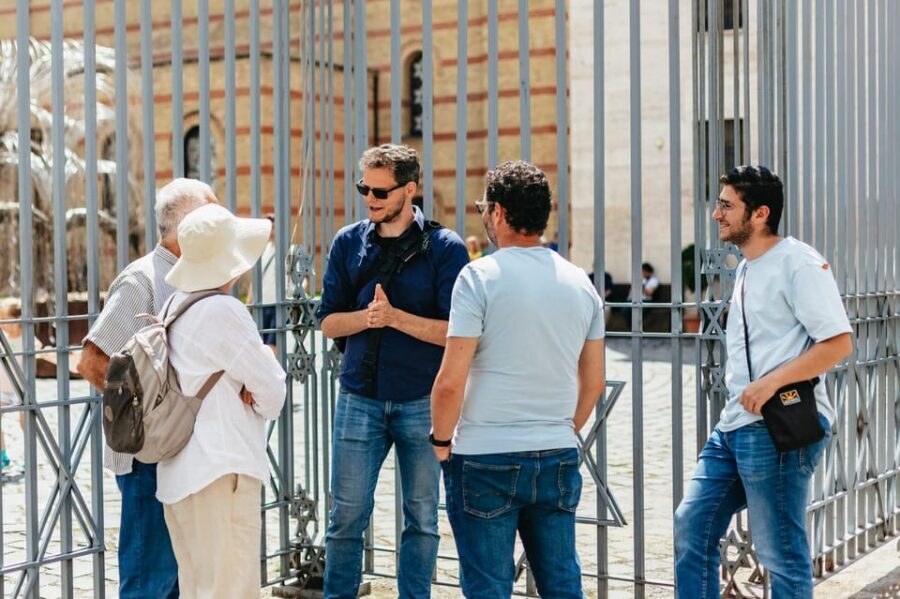
- A historian guide, not just a script: You get local context on Budapest’s Jewish community and how events in Hungary shaped daily life.
- Three synagogue exteriors in one route: Dohány Street, Kazinczy Street, and Rumbach Street give you a quick, clear visual map of the area.
- WWII rescue stories with real names: You’ll visit memorials connected to Raoul Wallenberg and Carl Lutz, both recognized as Righteous Among the Nations.
- A coffee-and-flódni break: After the darker parts of the story, you’ll get a sweet reset with flódni and a drink at a local café.
- Street art and nightlife pointers: You’ll pass Gozsdu Passage and get local tips about ruin pubs, plus notes about the street art scene around Elizabeth Town.
- Small-group Q&A energy: With a max of 10, you can slow the guide down when something sparks a question.
Starting at Kempinski Corvinus: how to meet up without stress
You meet in front of the Kempinski Hotel Corvinus Budapest, facing the Ferris wheel on Erzsébet Square. It’s a handy landmark, because you can orient quickly before your walk begins. If you’re using the metro, you can reach the area via lines M1, M2, or M3, and get off at Deák Ferenc tér.
This matters more than it sounds. Good walking tours start on time because the meeting point is easy to find. With this one, the start location keeps you from spending your limited vacation time wandering around comparing maps to street corners.
Bring a layer. The tour runs in all weather conditions, so plan for rain or chilly wind off the Danube side. In winter or shoulder seasons, I’d rather you show up a bit over-prepared than feel cold halfway through the 2.5 hours.
You can also read our reviews of more walking tours in Budapest


The 7th District Jewish Quarter: where the story grew for 200 years
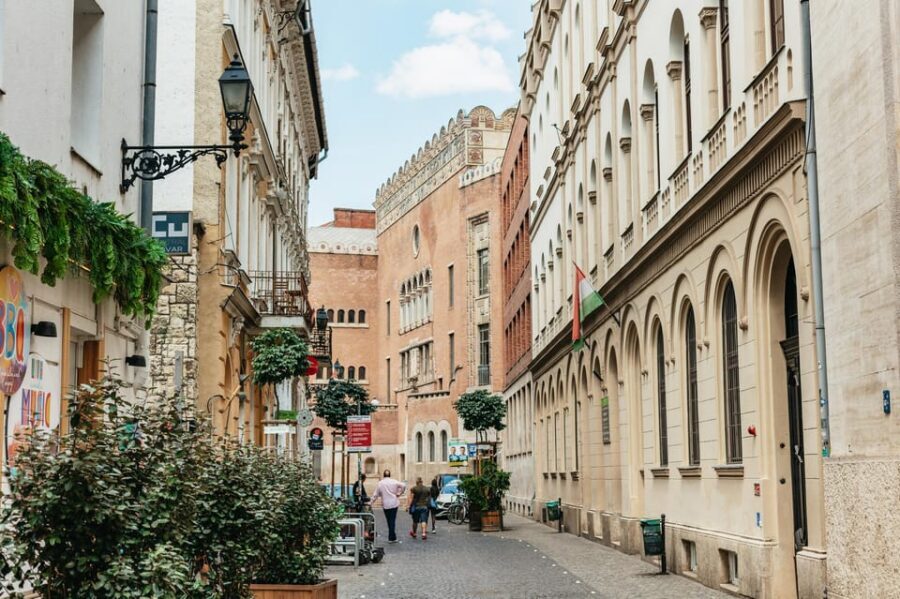
The heart of the experience is Budapest’s 7th District, where Jewish culture has been part of city life for over 200 years. You’ll see why this neighborhood wasn’t just a backdrop; it became a living community with synagogues, kosher restaurants, kosher shops, and public landmarks that still shape the streets today.
What I like about this kind of setup is how it helps you “read” the area. When you walk, you’re not only looking at buildings. You’re noticing how the Jewish Quarter functions as a real district, not a museum set.
You’ll also hear what you might call the neighborhood’s “good and bad and ugly” timeline: times of growth and community life, and then the violent disruption that reaches its peak in the WWII years. A historian guide keeps that sequence clear, so you don’t leave with a handful of random facts.
Three synagogue exteriors: Dohány, Kazinczy, and Rumbach in context
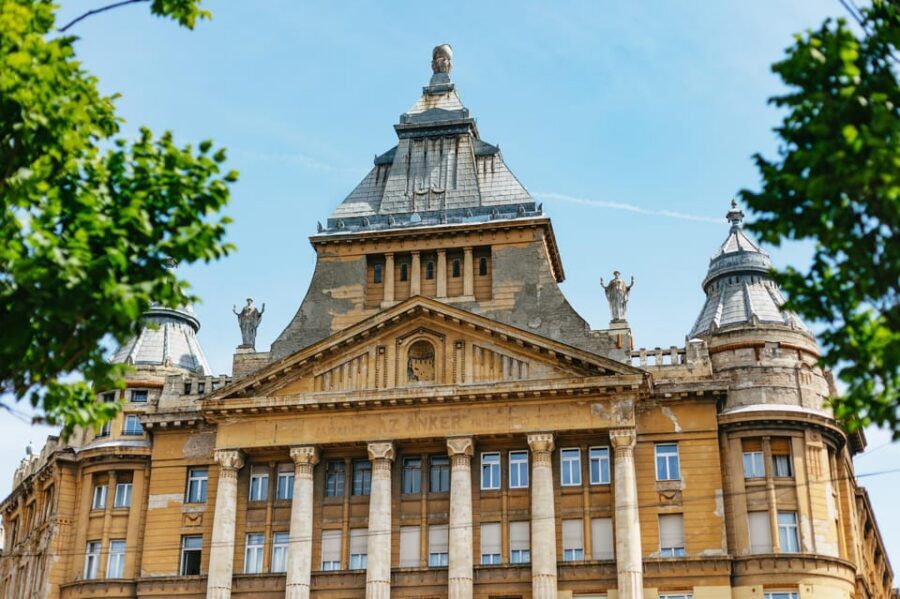
This tour gives you three big synagogue exteriors, which is a strong strategy for first-time visitors. You get different architectural statements and different community identities, all within a compact walking route.
Dohány Street Synagogue: scale you can feel from the sidewalk
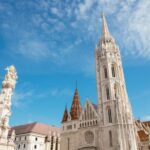
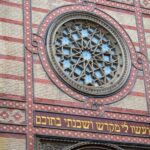
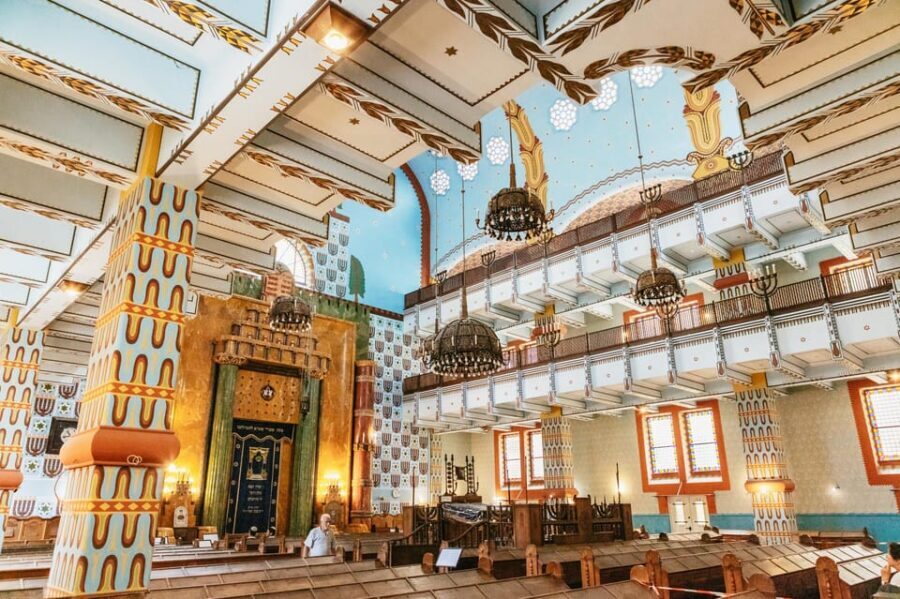
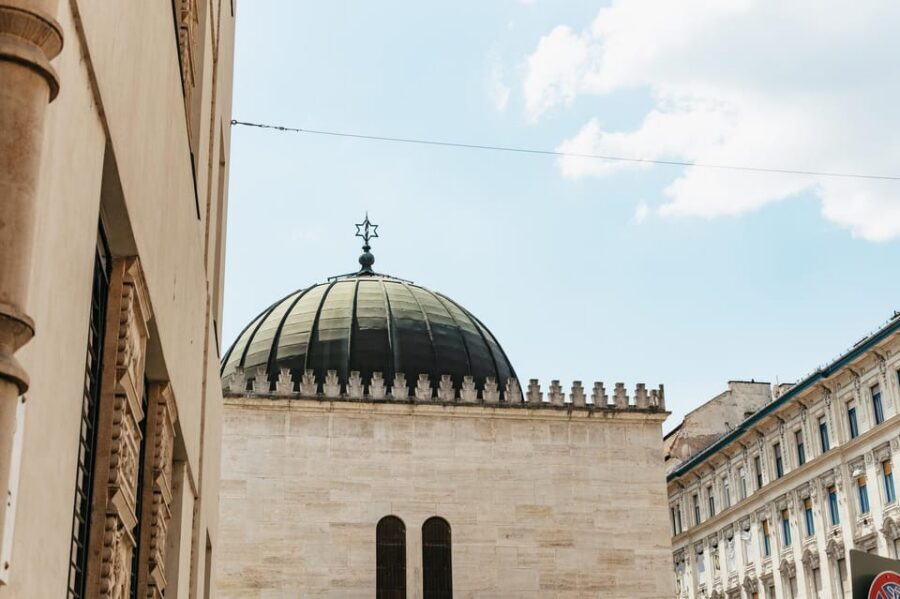
You’ll marvel at the exterior of the grand Dohány Street Synagogue, described as the largest synagogue of Europe. Even without going inside, the building communicates importance through its presence. That’s useful if you’re coming to Budapest for the first time and want a high-impact visual anchor.
Kazinczy Street Orthodox Synagogue: a specific flavor of tradition
You’ll also see the Kazinczy Street Orthodox Synagogue from the outside. The point isn’t just sightseeing. It’s that the neighborhood held multiple expressions of Jewish life, and the architecture helps you understand the community’s variety.
You can also read our reviews of more guided tours in Budapest






Rumbach Street Neolog Synagogue and Otto Wagner’s mark
The Neolog Rumbach Street Synagogue is another outside stop, built in 1872 by Viennese architect Otto Wagner. That detail matters because it connects Budapest to wider Central European artistic and cultural trends. It’s one of those “how did this influence reach here?” moments that makes the city feel bigger than one neighborhood.
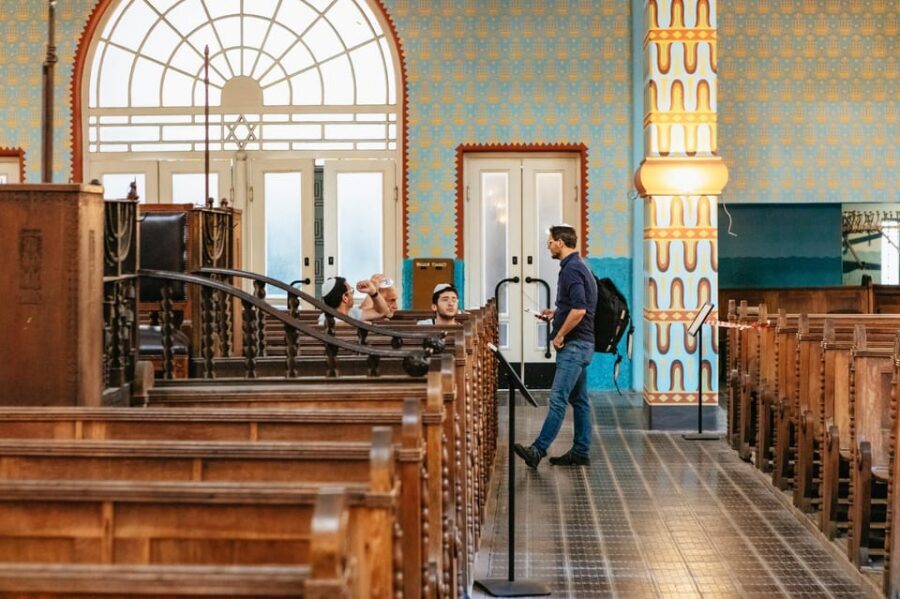
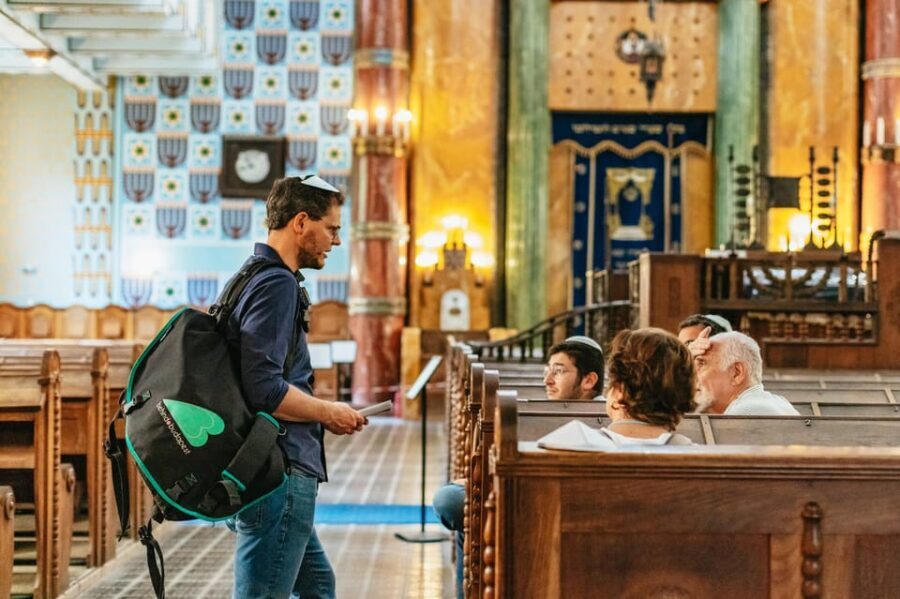
A small note: the tour is outside-only. Entry to any synagogue isn’t included, so treat these stops like exterior orientation landmarks rather than interior museum visits.
Former ghetto streets: walking the timeline that hurts
After the synagogues, you’ll stroll through the Jewish Quarter and along streets tied to the former Ghetto area. This is where the tour can feel emotionally sharp. There are monuments, synagogue buildings, and commerce that show continuity—but the street-level storytelling makes it clear what was taken away and what people fought to survive.
You may learn about the ghetto wall, including the startling fact that it existed for less than two months. That’s a gut-level reminder that atrocities can move fast. A good guide won’t soften that; they’ll place it in a timeline that makes the events easier to follow.
Practical takeaway: wear comfortable shoes and pace yourself. This part of the walk is emotionally demanding, and you’ll likely want a few extra moments at certain corners. With a small group, you’re not stuck staring at the back of someone else’s head.
Also, you’ll pass places where Jewish life is visible today—synagogues, kosher dining, and kosher shops. That contrast isn’t meant to erase the pain. It helps you see survival as an ongoing reality, not just a chapter in the past.
WWII rescue memorials: Wallenberg and Carl Lutz, winter 1944/45
One of the strongest parts of the experience is the focus on people who saved Jewish lives during the winter of 1944/45. You’ll learn about Raoul Wallenberg and Carl Lutz at their respective memorials.
The guide’s job here is crucial. Without context, names can become postcards. With context, you understand why these individuals mattered—because they are among those recognized as Righteous Among the Nations. That title is the backbone of their legacy, and the tour makes sure you don’t treat it as trivia.
If you want to know why this is more than “a dark-history walk,” it’s because the story is anchored in action. You’re seeing evidence that individuals can influence events, even when systems are designed to destroy.
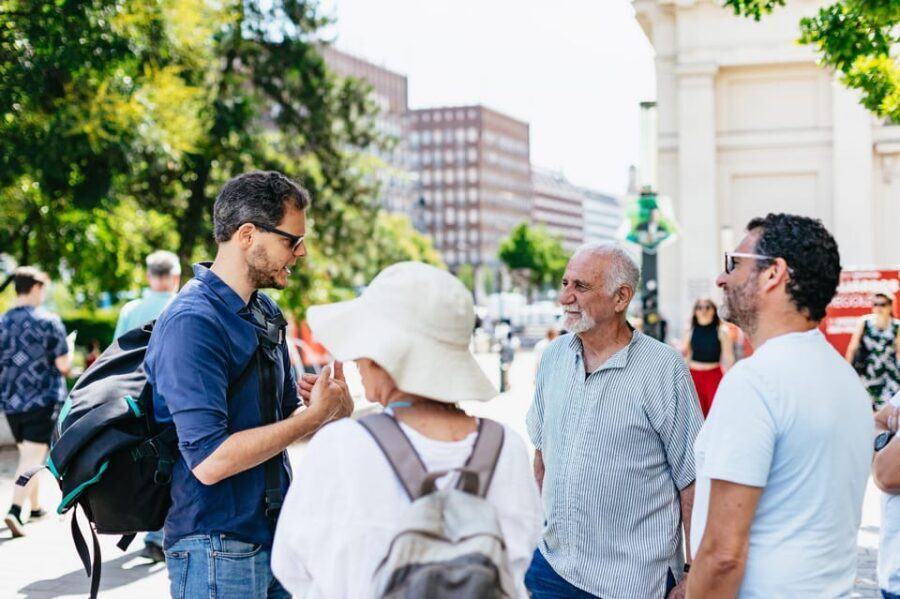
Guides you might encounter—like Andrea, András, Noémi, or Gábor in past groups—are often praised for keeping the narrative organized and answer-friendly. You’ll likely get clear explanations, and you should feel comfortable asking follow-up questions if something doesn’t click.
Coffee and flódni: a local Jewish dessert that resets the mood
About 15 minutes are set aside for coffee and dessert at a local café. You’ll get flódni, a local Jewish cake, paired with coffee or a soft drink.
I like this timing. It’s not a random food break. It comes after the heavy history, so it gives your brain room to breathe without ignoring the significance of what you just learned.
This stop also helps you experience the neighborhood as living culture. You’re not only seeing buildings. You’re tasting something local and specifically Jewish in identity, which is a different kind of understanding than photos and facts.
If you have dietary needs, you might want to plan ahead. The tour data only guarantees the cake and coffee/soft drink, not specific alternatives, so it’s worth asking when you book.
Gozsdu Passage, ruin pubs, and Elizabeth Town street art secrets
After the memorial and synagogue focus, the tour turns outward to Budapest’s current street life. You’ll pass Gozsdu Passage, a lively area, and you’ll also get tips about the famed ruin pubs and nightlife.
This is valuable because it gives you a next step after the tour. When you leave, you won’t just know what happened here. You’ll also know where to go on a free evening, and you’ll understand how the neighborhood’s energy fits into the city now.
The tour also points out street art and other secrets of Elizabeth Town. Since Budapest’s street art scene changes fast, having a guide’s local eye helps you notice work you’d otherwise miss.
This part isn’t pretending to be history. It’s showing you the city’s present-day personality, which is part of why the Jewish Quarter still matters.
Price and value: $63 for a 2.5-hour historian walk
At $63 per person for 2.5 hours, this is a mid-range walking tour price that feels fair for the content. You’re paying for a historian guide, a structured walking route, and an included café stop with flódni plus coffee/soft drink.
Where the value shows up is in the density of stops:
- Three major synagogues, seen clearly from the outside
- Ghetto-area streets and key neighborhood landmarks
- Memorials connected to Wallenberg and Carl Lutz
- A practical tasting moment with flódni
You’re also getting a small group capped at 10 participants, which can matter in a topic-heavy tour. If a guide only has time for one line per stop, the experience becomes shallow. When the group stays small, the guide can slow down for questions.
What you should weigh: you aren’t paying for synagogue interiors. Since entry isn’t included, compare this tour to options that offer inside access if that’s a priority for you.
Pace, group size, and what makes the guide a big deal
A 2.5-hour guided walk can go two ways: either it’s structured and smooth, or it turns into a rushed slideshow. This tour is designed to avoid the rushed version by using a small group format and keeping stops meaningful.
In past groups, guides like Barbara, Gábor, and Zsolt have been praised for staying engaging and funny while still handling sensitive content with respect. Other guides—Andrea, András, and Noémi among them—have been noted for packing in lots of facts and strong storytelling.
So if you’re the kind of person who likes asking questions, you’ll probably enjoy the setup. Several guides are described as handling questions well without losing the flow.
A realistic consideration: this is a lot to cover in a limited time. If you want extra time at a single spot, you may wish the tour had more room for questions. That’s not unusual for a 2.5-hour format, but it’s worth keeping in mind.
Who should book this tour
I think this tour fits best if you want:
- A first, clear orientation to the Jewish Quarter
- WWII rescue stories tied to specific places in Budapest
- A guide who can connect the neighborhood’s architecture to community identity
- A guided route that reduces decision fatigue when you’re short on time
You might especially like it if you’re visiting Hungary for the first time and want the historical backbone early in your trip. Several guides are noted for starting with a wider European Hungary timeline so you understand why certain events happened.
If you’re only interested in synagogue interiors, you may feel under-served. Since this tour keeps visits outside-only and entry isn’t included, make sure you pair it with another plan if you want inside access.
Should you book this Budapest Jewish history walking tour?
Book it if you want a focused, historian-led walk that gives you both place and meaning. You’ll see three major synagogue exteriors, walk relevant ghetto-area streets, and learn why Wallenberg and Carl Lutz still stand as names tied to lifesaving action. Add flódni and coffee, and you get a balanced rhythm instead of an all-dark schedule.
Skip it or pair it if you mainly want indoor synagogue access. This is a sidewalk-to-history experience, not an inside-the-buildings tour.
If your goal is to understand Budapest’s Jewish Quarter in a way that sticks, this is a strong choice.
FAQ
Is this tour inside the synagogues?
No. The tour visits the three main synagogues from the outside only. Entry to any synagogue is not included.
How long is the walking tour?
It runs for about 2.5 hours, including a short café stop for coffee and dessert.
What do I eat during the tour?
You’ll have coffee or a soft drink plus a local Jewish cake called flódni at a local café.
Where do I meet the guide?
Meet the guide in front of the Kempinski Hotel Corvinus Budapest, facing the Ferris wheel on Erzsébet Square.
What language is the tour in?
The tour is in English.
How big is the group?
It’s a small group, limited to 10 participants.
Does the tour run in bad weather?
Yes. The tour starts in all weather conditions, so dress accordingly.
Can I access the tour area using public transport?
Yes. You can reach the meeting area via metro lines M1, M2, or M3, and get off at Deák Ferenc tér.
Is there a cancellation refund?
Yes. Free cancellation is available up to 24 hours in advance for a full refund.
Is pay later an option?
Yes. You can reserve now and pay later to keep your plans flexible.