REVIEW · BUDAPEST
Budapest: Guided Downtown Electric Bike Tour
Book on GetYourGuide →Operated by Bike Tour Kft · Bookable on GetYourGuide
Pedal less, see more in Budapest. This 3.5-hour downtown e-bike tour is a fast, friendly way to get your bearings across Pest and up to Buda, with stops timed for views and stories. You start on Andrássy Avenue, then work through the Jewish Quarter, Parliament, Chain Bridge, and the Castle Hill outlook.
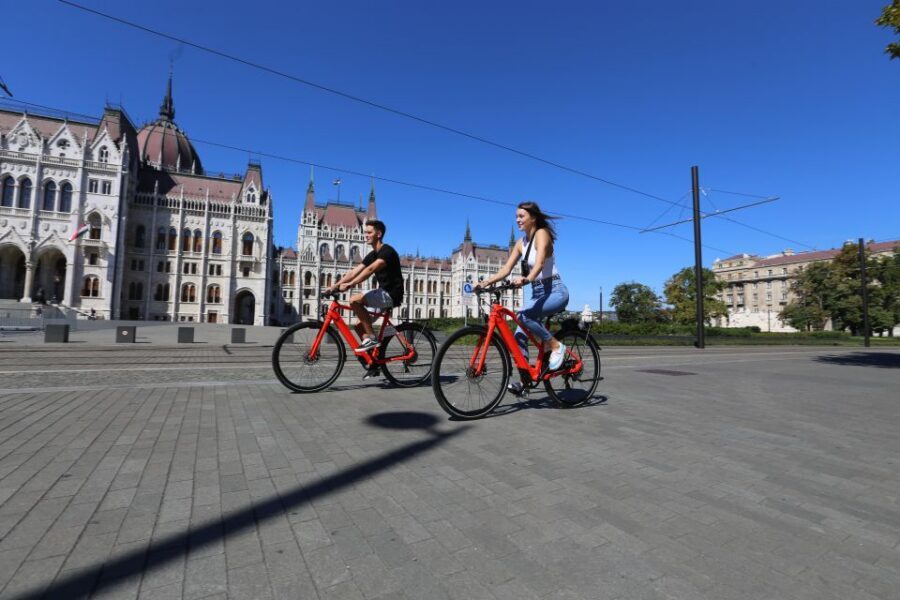
Two things I really like: the way the route strings together big landmarks without feeling rushed, and the storytelling from guides like Ollie and Katy, who manage to keep the pace lively while still explaining what you’re looking at. The electric assist is the real cheat code—hills are handled without drama, and you still pedal.
One possible drawback: it’s sightseeing from the street. You don’t enter the landmarks on this tour, so if you’re hoping for museum or church interiors, you’ll want to plan separate time for that.
In This Review
- Key highlights to watch for
- Start at Bike & Relax: the easy launch point in the Jewish Quarter
- Andrássy Avenue to Heroes’ Square: Budapest’s grand opening scene
- City Park and Vajdahunyad Castle: the fun stop before the thermal-bath sights
- Downtown rhythms: Basilica, Liberty Square, Parliament, and the Jewish Quarter
- Danube River and Chain Bridge: the view that makes Budapest feel like Budapest
- Castle Hill: the climb you’ll actually enjoy
- Rudas and Gellért Baths: seeing thermal-bath culture from the street
- Central Market Hall and the Hungarian National Museum area
- Dohány Street Synagogue: a powerful ending point
- E-bike reality check: what the ride is like
- Price and value: is $63 worth it?
- Who this tour suits best (and who should skip it)
- Quick decision: should you book this Budapest e-bike tour?
- FAQ
- How long is the Budapest guided e-bike tour?
- Where do I meet for the tour?
- Is hotel pickup included?
- What exactly is an e-bike on this tour?
- Does the tour include entrance to the attractions?
- What’s included in the price?
- What languages are the live guides?
- What should I bring, and what can’t I bring?
Key highlights to watch for
- Andrássy Avenue start: a classic grand boulevard opening act with major photo stops.
- Castle Hill without the suffering: electric support makes the climb feel manageable.
- Danube viewpoints that actually matter: you’ll see the river-and-city angles that define Budapest.
- Iconic Jewish Quarter + synagogues area: history in the streets, not behind a ticket gate.
- Packed route for the time: you cover a lot of ground in about 3.5 hours with a small group.
Start at Bike & Relax: the easy launch point in the Jewish Quarter
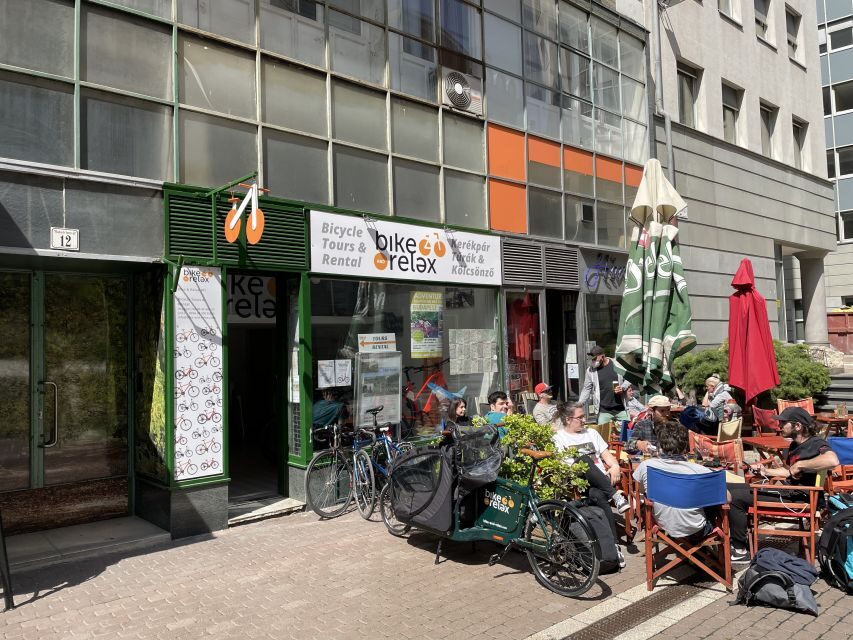
Your tour begins at Bike & Relax, right in the center of the Jewish District, near the connection between Madach Ter Square and Gozsdu udvar court. Find it beside Cafe Hivatal. If you’re using public transit, Deák Ferenc tér is the main hub (M1/M2/M3 plus trams 47, 48, 49, and the Airport bus 100E).
This matters because you’re not starting in some remote park-and-ride spot. You roll out from a neighborhood that’s already full of life, murals, courtyards, and places where you can easily continue exploring after the tour ends.
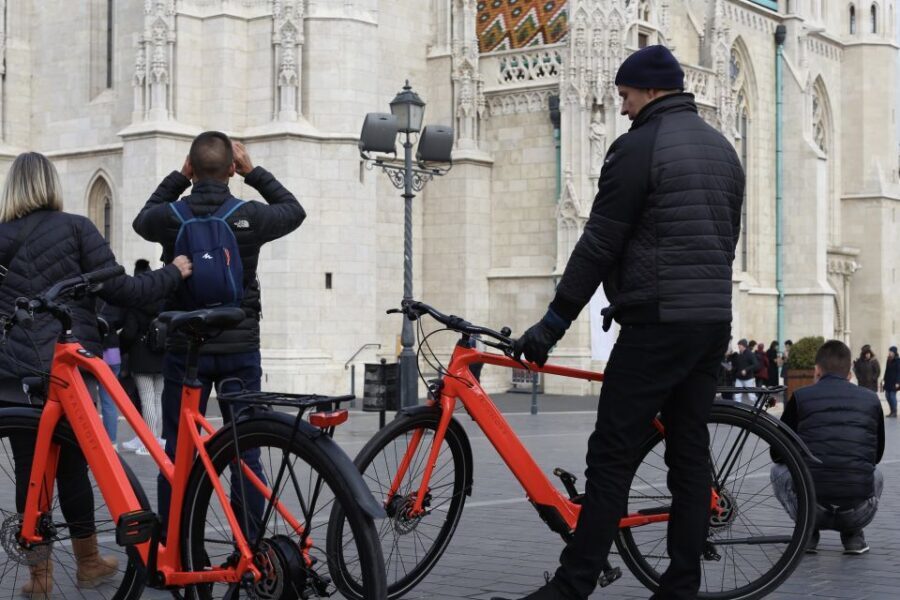
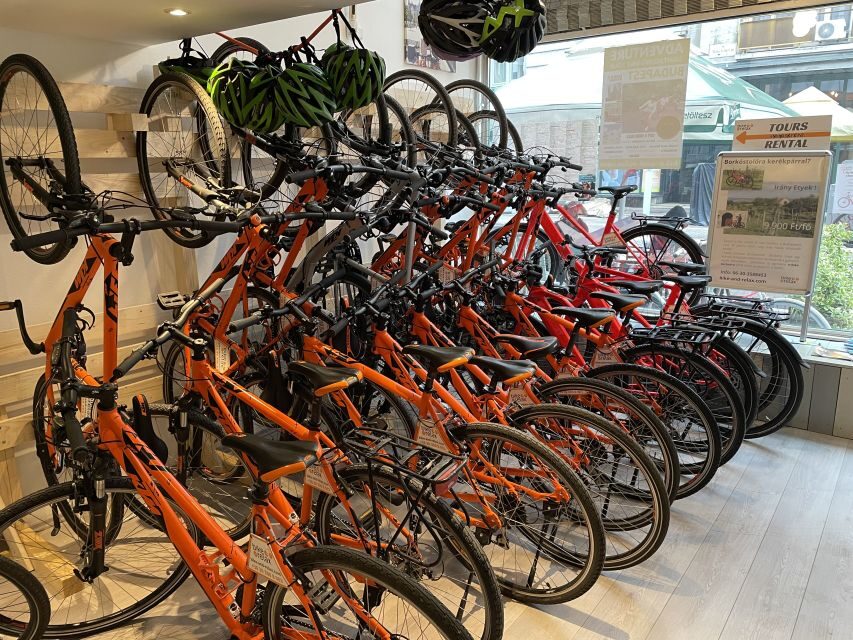
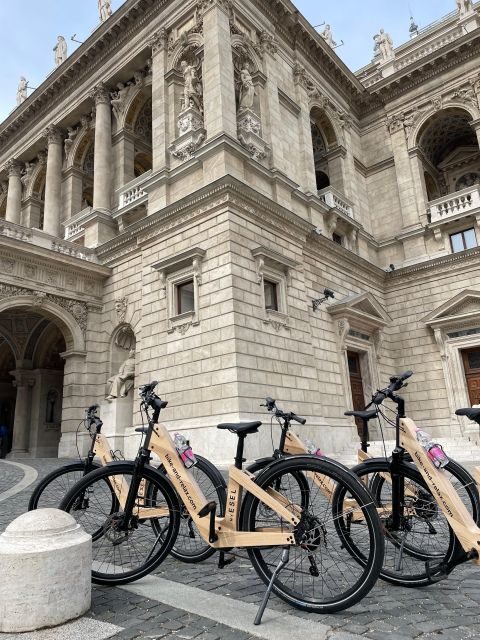
You’ll be assigned one of two e-bike styles: wood-frame my-esel bikes or Kalkhoff Berleen e-bikes. This is a small detail, but it helps you feel set up fast—good bikes, straightforward controls, and the sort of comfort that keeps you focused on the scenery instead of your back.
You can also read our reviews of more cycling tours in Budapest



Andrássy Avenue to Heroes’ Square: Budapest’s grand opening scene
The ride kicks off along Andrássy Avenue, one of the city’s signature streets. You’ll cruise the full length and take in landmarks including the Hungarian State Opera House, then continue toward the House of Terror area before reaching Heroes’ Square.
Why this works well on an e-bike: Andrássy is wide enough to ride comfortably, yet central enough that you’re seeing “wow” architecture without spending half your time dodging slow pedestrians. Also, it sets the tone. You start with the Budapest that looks cinematic even before you hit the older streets.
At Heroes’ Square, you get a proper “pause and look” moment for photos, plus the guide’s stories that connect what you’re seeing to the bigger political and cultural shifts behind the monuments. The tour isn’t only about taking pictures; it’s about understanding why these statues and avenues are here.
City Park and Vajdahunyad Castle: the fun stop before the thermal-bath sights
From Heroes’ Square you move into Budapest City Park, where the tour turns a little playful. You’ll pass the fake castle in the park—Vajdahunyad Castle—and you’ll also see the Széchenyi Thermal Bath.
You won’t go inside, but this is still useful. It gives you the “map” of where the bath complex sits and what it looks like from street level—exactly the kind of thing that helps later when you’re choosing where to spend a rainy afternoon.
One small practical note: City Park can mean patches of smoother paths and shaded areas. If it’s a hot day, this section is a good reset. If it’s wet, it’s still usually manageable on an e-bike, and the operator has handled rain gear in at least some tours (rain ponchos were mentioned in the feedback).
Downtown rhythms: Basilica, Liberty Square, Parliament, and the Jewish Quarter
After City Park, the route pushes into the downtown spine. You’ll pass major touchpoints such as the Liszt Ferenc Academy of Music, then head through the Jewish Quarter area and toward St. Stephen’s Basilica.
Even from outside, St. Stephen’s Basilica is a visual anchor. It’s the kind of landmark you can spot across the city, so seeing it early helps you build your own mental navigation.
Next comes Liberty Square, where the guide talks about bloody history and a disputed Holocaust memorial. This is heavy subject matter, but it fits the tour format because you’re in the right locations to understand why these memorials exist.
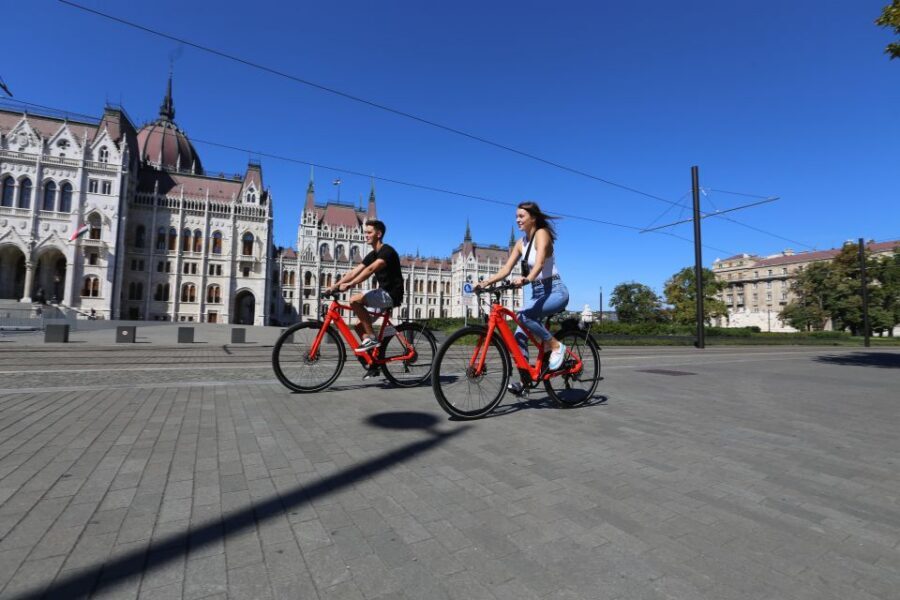
Then you reach the Hungarian Parliament Building, a stop that naturally turns into a slow-look photo moment. You’ll see it from a distance, not from behind ticket lines, but you’ll leave with the right angles to plan a return if you want a closer look later.
Danube River and Chain Bridge: the view that makes Budapest feel like Budapest
Then comes one of the best payoffs: the Danube River viewpoint. You’ll pass the Monument of the Shoes, though note that direct access isn’t always granted.
Crossing the Chain Bridge is a key part of the feel-good momentum. The bridge is described as newly renovated and closed for private cars, which typically makes for a calmer cycling experience than you might fear in a busy city center.
From here you’re heading into Buda, and that’s when the e-bike starts earning its keep. The ride shifts from “easy cruise” to “real city hill,” and the electric support helps you climb Castle Hill without arriving at the top sweaty, exhausted, or cranky.
You can also read our reviews of more guided tours in Budapest






Castle Hill: the climb you’ll actually enjoy
The tour is built around the big Buda payoff: Castle Hill. Even if you’re not a confident cyclist, the e-bike support helps you keep control and steady speed. Reviews repeatedly mention how the climb feels easy, and you can treat that as a real advantage if you’re traveling with mixed fitness levels.
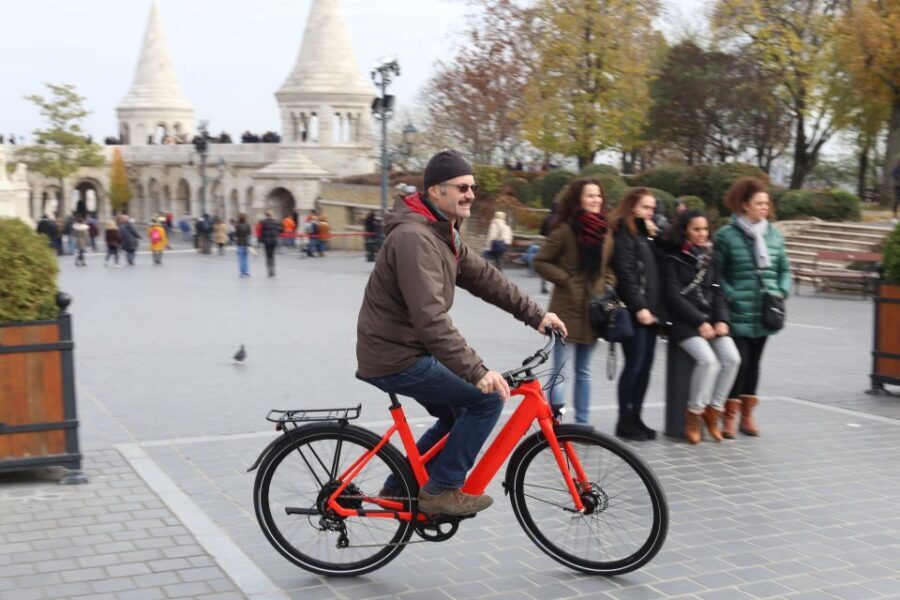
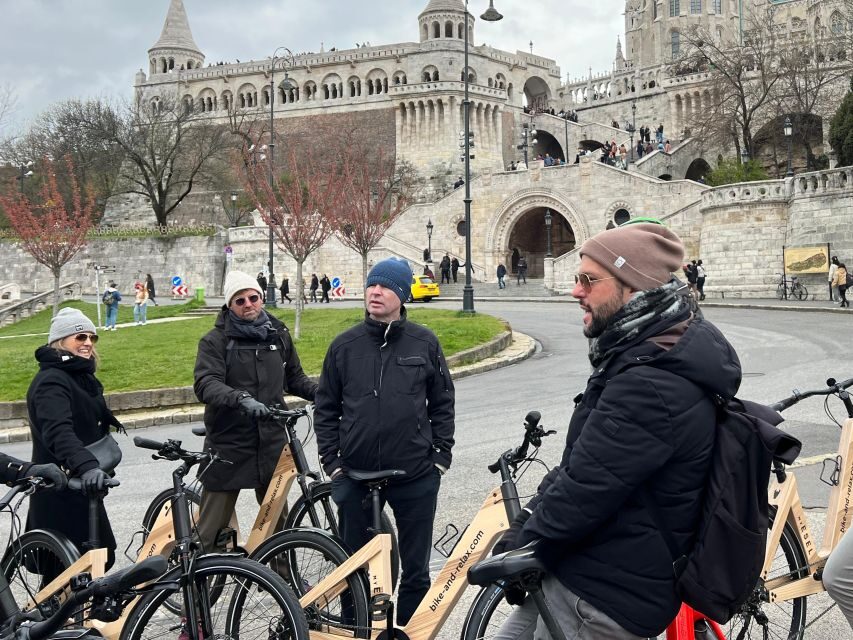
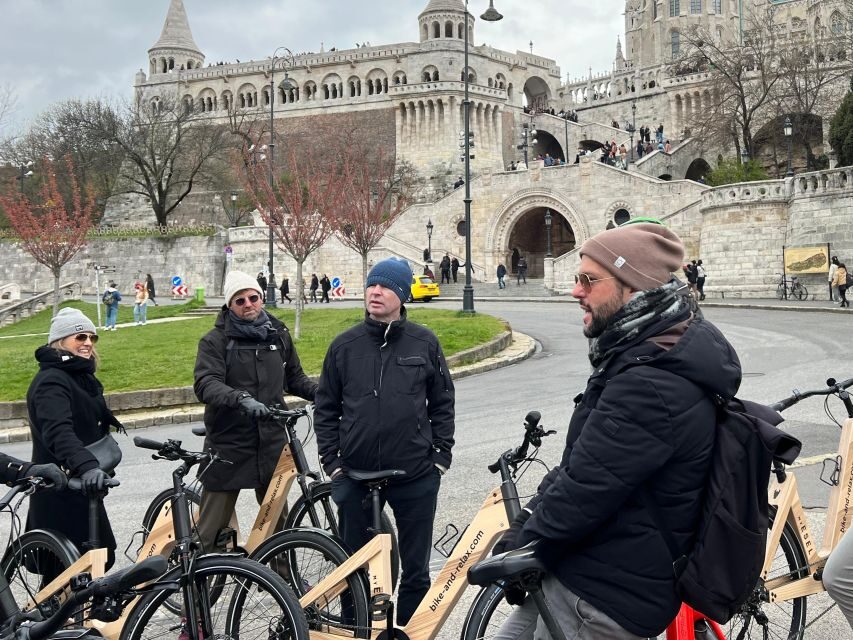
Once you’re up, you’ll admire Matthias Church and Fisherman’s Bastion. These are the classic “postcard” stops, but on a bike you get more than a single angle. You can move your position as the group rides through, and your guide can point out what to notice—rooflines, towers, and the way the river and Pest skyline frame the view.
This is also where the tour’s pacing shines. You’re not just rushing from one photo to the next; there are enough stops that you can step off, look around, and take in the city’s scale.
Rudas and Gellért Baths: seeing thermal-bath culture from the street
After the Castle Hill area, the route heads back toward the river and passes Rudas Bath. Then you’ll continue toward Gellért Hill, where you’ll see the Gellért Thermal Bath, and ride across Liberty Bridge back toward Pest.
You won’t enter these baths on this tour. Still, it’s smart to see them from the outside first. Budapest’s thermal-bath scene is a huge part of the city’s identity, and street-level orientation makes it much easier to decide later whether you want a relaxing soak, a quick dip, or a more practical option on your itinerary.
On this part of the route, the bike feels especially efficient: you’re connecting big districts quickly while still seeing the riverbank views and the way the city climbs and drops with the landscape.
Central Market Hall and the Hungarian National Museum area
As you head deeper back into Pest, the tour reaches Central Market Hall. This is one of those places you can’t fully appreciate from a quick peek, but the stop still helps. You’ll see what the market looks like and where it sits, and it becomes a “return later” target if you want food, paprika, and souvenirs the right way.
You’ll also pass near or stop by the Hungarian National Museum area. This is useful for context. The building and its surroundings give you a sense of where Budapest places its cultural identity, and your guide’s stories help turn a big façade into something more meaningful.
Dohány Street Synagogue: a powerful ending point
The final major stop is Dohány Street Synagogue, finishing with a strong punctuation mark to the tour. Seeing it as the last highlight works because by now you’ve already spent time in the Jewish Quarter and heard the context behind what you’re seeing.
This tour format keeps it practical. You’re not spending your time in long entry lines. Instead, you’re gaining a clear mental map of where the key sights are, what they look like up close, and which ones are worth booking separately for interior visits.
Then you head back to the starting point at Bike & Relax to wrap the loop.
E-bike reality check: what the ride is like
This is not a “stand there while someone else does the work” kind of tour. An e-bike means electric support while you still pedal. So you’re not totally hands-off, but you are protected from the most punishing hills.
A few practical points that help you enjoy it more:
- The bikes have open chains, and they can touch your clothes. Wear something you don’t mind getting a little close to machinery.
- Helmet is optional, but helmets are available. If you like extra safety, take one.
- Your group is small, limited to 10 participants, which helps with turning, pacing, and not getting strung out.
If you’re wondering about comfort: one comment mentioned the bike seat wasn’t ideal for them, but most feedback praised the bikes as easy to ride and comfortable for the route length.
Price and value: is $63 worth it?
At $63 per person for about 3.5 hours, the value comes from two things: coverage and effort saved. You’re crossing major districts, riding the Danube corridor, and climbing into Castle Hill—all of which would be slow on foot and exhausting on a normal bike.
Also, the guide time is real. You get consistent storytelling across many stops, not just a few obvious highlights. Guides like Ollie, Thomas, Katy, Katalin, and Balint were repeatedly praised for making the stops feel connected, not like a random checklist.
Where the price might feel less “worth it” is if you’re the type who wants museum interiors and long entry experiences. This is a smart orientation tour. It helps you plan the rest of your Budapest trip.
Who this tour suits best (and who should skip it)
This tour is a great fit if:
- you want a first-stop overview to decide what to return to later
- you can ride a bike and you want help on hills (the e-bike support does the heavy lifting)
- you like history and stories tied directly to what you’re seeing outside
It’s not a fit if:
- you can’t ride a bike or you’re unsure you can keep balance
- you have mobility impairments or you’re traveling with significant physical limitations
- you’re under 13, pregnant, or outside the height/weight limits listed (under 160 cm, over 110 kg, etc.)
- you’re bringing luggage or large bags (not allowed)
Quick decision: should you book this Budapest e-bike tour?
If you want an efficient, high-impact look at Budapest in one outing, I’d book it. The route hits the city’s big “shape”—Andrássy Avenue, Parliament area, the Danube, Castle Hill, and the Jewish Quarter—without forcing you to spend your whole day in transit.
Book it especially early in your trip. The tour is built for getting oriented fast, then using that knowledge to pick where you’ll return on foot or with tickets. If you’re more interested in interiors and guided museum time, consider pairing this with other experiences rather than expecting those doors to be part of this ride.
FAQ
How long is the Budapest guided e-bike tour?
It runs for about 3.5 hours, though the exact timing can vary depending on day conditions.
Where do I meet for the tour?
Meet at Bike & Relax in the center of the Jewish District, by Cafe Hivatal near the shop beside it, around the corner from Gozsdu udvar Court and Deák ter Square.
Is hotel pickup included?
No. Hotel pickup and drop-off are not included.
What exactly is an e-bike on this tour?
These are bicycles with electric support, meaning you’ll still pedal, but the motor helps, especially on hills.
Does the tour include entrance to the attractions?
No. You won’t enter the listed landmarks during the tour.
What’s included in the price?
You get e-bike rental and a tour guide. Helmets are optional and available if you want one.
What languages are the live guides?
The guide is available in German, French, and English.
What should I bring, and what can’t I bring?
Bring comfortable shoes and comfortable clothes. Luggage or large bags are not allowed.