REVIEW · BUDAPEST
Buda Castle Walking Tour: A Kingdom of Many Nations
Book on Viator →Operated by Insight Cities · Bookable on Viator
Castle Hill can feel like a whole country inside one hill. This small-group walk connects UNESCO-protected streets, royal buildings that have been rebuilt again and again, and those Danube views people travel for. I love the small group size (often just a handful of people) and the way the guide turns stone and facades into a clear story of Hungarian history. The main drawback to plan for: you’ll pay separate entrance fees for Matthias Church and Fisherman’s Bastion.
Expect a smart, stop-by-stop pace over about three hours, with a guide who can match your interests (and yes, you’ll get lots of details worth knowing before you wander on your own). I also like that the route mixes big-name sights with the presidential neighborhood around Sándor Palace, so you’re not stuck only in the usual photo spots. Consider comfortable shoes and a bit of stair climbing, since the Castle District is steep and cobbled in places.
In This Review
- Key Things That Make This Tour Work Really Well
- A Castle District Walk That Feels Like a Living Timeline
- Start at Buda Castle: Where Power Survived Fire, War, and Rebuilds
- Why this opening matters
- The Palace Story: Fortress to Court to Empire (and Back Again)
- Sándor Palace: A Quick Stop That Adds Real-World Context
- Practical note
- Matthias Church: The Beauty Moment (Bring Extra Time to Look Up)
- Budget tip
- Fisherman’s Bastion: The Views You’ll Actually Remember
- Budget tip
- Vienna Gate Finish: A Long Look Toward Roman Obuda (Aquincum)
- How the Small-Group Format Improves the Whole Day
- Price and Value: What $126.15 Buys You (and What You’ll Still Pay)
- Who This Tour Suits Best
- Should You Book This Buda Castle Walking Tour?
- FAQ
- How long is the Buda Castle walking tour?
- How many people are in the group?
- What language is the tour offered in?
- What’s included in the price?
- What tickets do I need to pay for separately?
- Do they pick you up from your hotel?
- Where does the tour start?
- Does the tour have morning and afternoon departures?
- If I book and plans change, can I cancel?
Key Things That Make This Tour Work Really Well

- Max six people per booking for a calmer walk and more time for questions
- Castle Hill history with real timelines, from Béla IV to Renaissance Hungary to later rulers
- Matthias Church as the architectural and interior highlight, with tickets not included
- Fisherman’s Bastion viewpoints for Danube, Pest, Margaret Island, and Gellért Hill angles
- A finishing point at Vienna Gate, with sightlines toward Obuda (Aquincum)
A Castle District Walk That Feels Like a Living Timeline
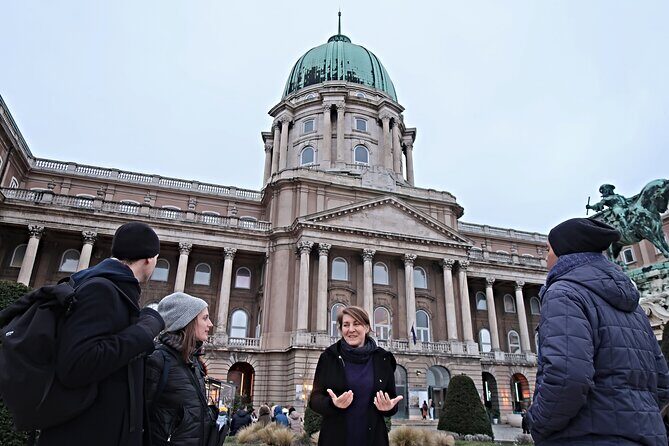
Budapest’s Castle Hill isn’t just one attraction. It’s a whole layer cake of eras—fortress, royal court, foreign rule, rebuilding after destruction, and the post–World War II shape you see today. The value of this tour is how it gives you a “mental map” so the buildings stop feeling random and start feeling meaningful.
I also like that this doesn’t try to cram you into museums for hours. You’re outside, walking the old streets, looking up at facades, then pausing where the story matters. You come away with a clear sense of why this part of Budapest is UNESCO-protected and why it draws so many artists, kings, and empire builders.
And because it’s a small group, you’re not competing for the guide’s attention. Many of the guides operating this walk (names you might hear in different groups include Peter, Kata, Marianna, and Runa) are the type to answer follow-up questions patiently, and that changes the whole experience.
You can also read our reviews of more walking tours in Budapest



Start at Buda Castle: Where Power Survived Fire, War, and Rebuilds
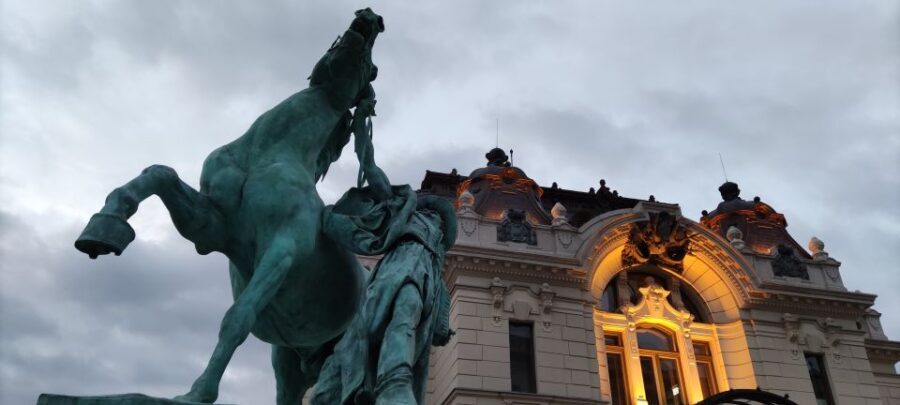
You begin around Buda Castle on Castle Hill, one of the oldest quarters of Budapest. The area is full of dramatic angles—narrow lanes and cobblestones, plus facades that swing between different architectural styles. Even before you get any history, you can feel that this was once the “top of the city,” built for defense and authority.
One of the first things you’ll notice is the contrast between major castle massing and the more delicate, colorful presence of Matthias Church nearby. That’s not just visual—it helps you understand how the royal complex and the religious center worked together in the city’s power structure.
Then the guide brings in the big timeline. This palace site wasn’t stable for centuries; it was rebuilt and extended multiple times. You’ll hear how it started as a fortress built around 1250 by King Béla IV after Mongol invasion devastation. Later, King Matthias turned the court into one of the most famous in Europe in the late 1400s.
Why this opening matters
If you only visit Castle Hill on your own, you may see great views and impressive buildings but still miss the “why.” Starting here gives you the logic behind what you’re looking at—royal power, shifting rulers, and repeated reconstruction after major breaks in history.
The Palace Story: Fortress to Court to Empire (and Back Again)
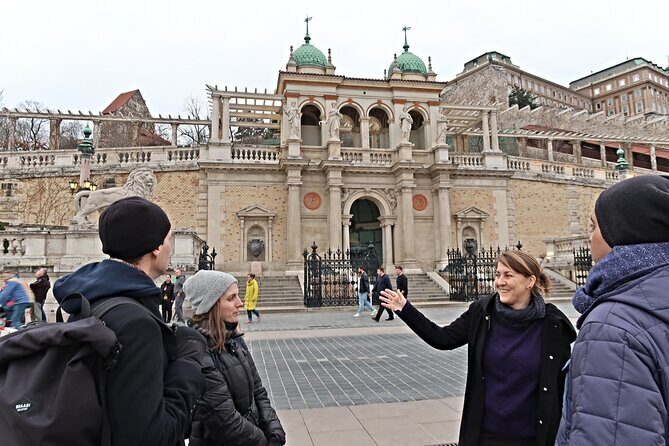
From the first castle buildings, you shift into the heart of the history lesson. You’ll hear about how the palace function changed over time. It went from a strategic fortress to a Renaissance court center, then moved into the long era of Ottoman/Turkish rule (including the Turkish pashas for over 150 years). After that, Hapsburg emperors followed, continuing the pattern of new power layers stacked over old foundations.
You also get an important detail about the modern look: today’s eclectic appearances came only after World War II, when major restoration reshaped what survived and what was rebuilt. That helps a lot if you’re wondering why some parts of the architecture feel like a mix rather than one pure style.
This is the part of the tour where the best guides really earn their fee. When the guide is local, or at least has a deep personal connection to the area, you tend to get small human details too—like story-based explanations of building usage and local context rather than just dates. Names you may see associated with past groups include Gergely (Gregory) and Veronica, both noted for turning a large area into something understandable.
Sándor Palace: A Quick Stop That Adds Real-World Context

Next comes Sándor Palace, the official residence of the President of Hungary. It has been the President’s seat since 2003, and it also houses the Office of the President. That’s a strong “right now” connection in the middle of all the medieval and empire history.
The guide also points out that the palace’s original design was Neoclassical, commissioned in 1806 by Count Vincent Sándor, an aristocrat and philosopher of the Austro-Hungarian Empire. Even if you don’t see a grand interior (and you’re mostly viewing from outside as you walk), this stop helps you anchor the Castle Hill story in the modern political life of Hungary.






Practical note
This is a short moment on the route, so if you’re the type who wants deep photo time, you’ll want to use the guide’s pace as your cue. Ask where to stand for a clean shot, then move on with the group before you get stuck in one spot.
Matthias Church: The Beauty Moment (Bring Extra Time to Look Up)

Now the tour hits a big emotional note: Matthias Church. You’ll spend focused time here because it’s one of the signature sights on Castle Hill, famous for its decorated roof and the striking interior.
What makes it especially interesting is that the church you see today is a Neogothic reconstruction from the end of the 19th century. That doesn’t make it less impressive. If anything, it explains why it feels so intentional and visually rich compared with more plain medieval structures you might expect.
Budget tip
Matthias Church tickets are not included in the tour price. If you want the inside view, plan to pay separately. The good news: the tour route is designed so you arrive with context, which makes the church feel more than a quick stop for photos.
In past groups, guides like Kata and Veronica have been singled out for being especially strong at making the story click—linking architecture to Hungarian kings, religious power, and national identity. If you care about history that feels connected to what you’re actually looking at, this stop usually delivers.
Fisherman’s Bastion: The Views You’ll Actually Remember

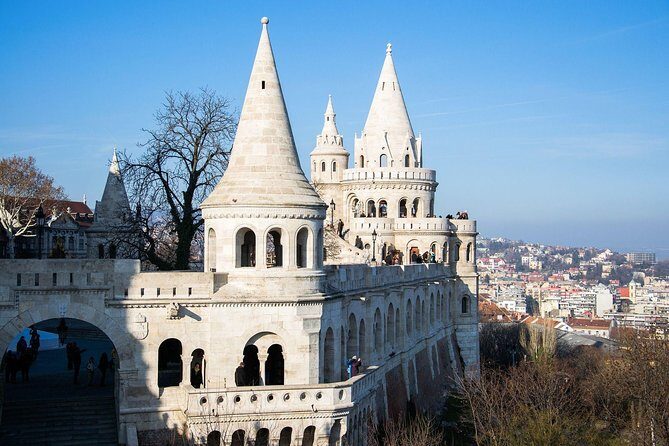
After Matthias Church, you head toward Fisherman’s Bastion for the panorama side of Budapest. This place was built between 1895 and 1902, and it’s a designed “architectural fantasy” in neo-Gothic and neo-Romanesque styles.
The seven towers matter beyond aesthetics. They represent the seven Magyar tribes that settled in the Carpathian Basin around the end of the 9th century. You’ll get that explanation on the way, which helps you see the view as part of a larger story, not just a backdrop.
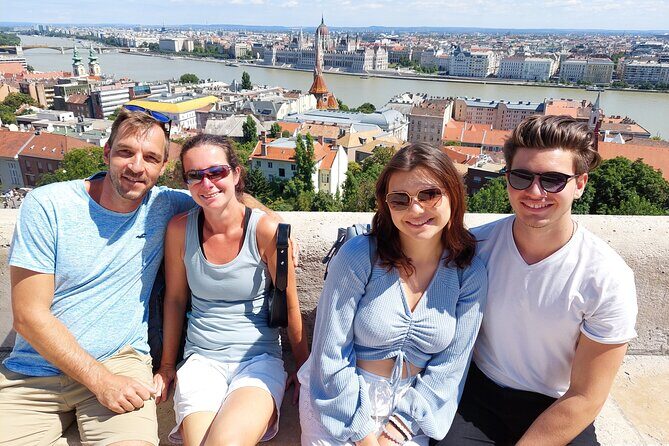
From the terraces, you get one of the best sets of sightlines over the city: the Danube, Margaret Island, Pest, and Gellért Hill. This is where you’ll slow down, check your photos, and maybe do that classic traveler thing: stand silently and point out landmarks to whoever you’re traveling with.
Budget tip
Fisherman’s Bastion entry is also not included. Plan for that expense. It’s worth it if you want terrace time rather than just a quick exterior glance.
Vienna Gate Finish: A Long Look Toward Roman Obuda (Aquincum)
The final stop is Vienna Gate. It’s a good ending point because it pulls your attention outward. From here you can see toward Obuda (Old Buda), where the Romans founded the city called Aquincum.
Ending with a sightline like this changes how you feel leaving Castle Hill. Instead of thinking you just saw buildings and views, you realize you’re part of a much longer story. This is the trick good guides use: they don’t only show history in place; they show how far back the same geography goes.
How the Small-Group Format Improves the Whole Day
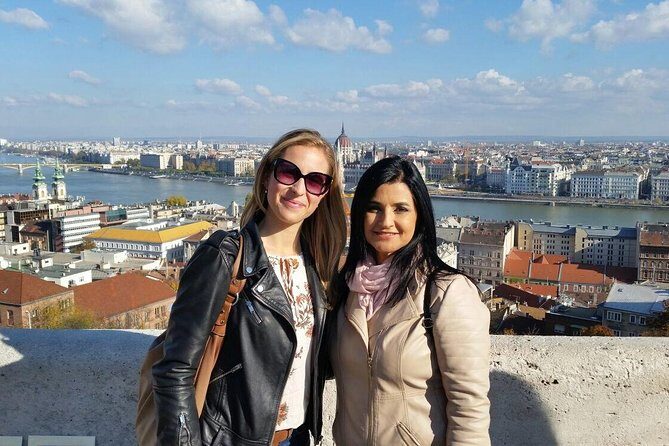
This tour caps groups at six people per booking (with a maximum of eight travelers), which is a sweet spot. You’re not stuck following someone who moves 10 steps per minute. You can stop, ask questions, and keep up without the feeling that you’re holding up a big herd.
In the feedback for this walk, a recurring theme is guides who adapt. One group highlighted Peter being able to tailor the tour to interests. Another group raved about Judith helping them figure out public transport. I love that kind of practical generosity. It means you’re leaving with not only memories, but better next steps for the rest of your Budapest time.
If you want a walk that feels like history with a live narrator—and not history as a lecture—this format is a real advantage.
Price and Value: What $126.15 Buys You (and What You’ll Still Pay)
At $126.15 per person for about three hours, you’re paying for a professional guide, a tight route through Castle Hill’s key points, and the benefit of small-group pacing. You’re also not paying for every ticket inside the sightseeing cluster.
Not included are the entrances for Matthias Church and Fisherman’s Bastion. So your total cost will be a bit higher once you add those. But if you were already planning to visit both, the math usually works in the tour’s favor—because the guide helps you get more meaning out of your paid time.
Also worth noting: this walk is often booked ahead. If you’re traveling in high season or want a specific departure window (morning or afternoon), it pays to lock it in early.
Who This Tour Suits Best
I’d point you toward this tour if you:
- Want a guided history walk through Castle Hill’s main icons
- Prefer small groups over crowded bus-style tours
- Enjoy architecture and want it explained in plain terms
- Want the best viewpoints without spending hours building your own route
It may not be your best choice if you want a long, slow “wander wherever you want” day with no structure. This is guided and focused. You’ll cover key stops in a set time, and you’ll move on.
That said, the tour gives you what you need to wander afterward with better instincts—especially around the palace area.
Should You Book This Buda Castle Walking Tour?
If your goal is to understand Castle Hill instead of just snapping photos, I think you’ll be happy you booked. The blend of royal history, a modern political anchor at Sándor Palace, and the “wow” factor at Matthias Church and Fisherman’s Bastion is a strong mix for first-timers and repeat-ers alike.
I’d book it if you’re willing to pay separate tickets for Matthias Church and Fisherman’s Bastion and you’re comfortable with a walking pace on steep streets. If you’re on a strict budget that can’t flex for two paid sights, you might consider visiting those places on your own with a free-route plan.
Either way, if you like getting your bearings fast and making Budapest feel less like a collection of monuments and more like one story, this walk is a solid choice.
FAQ
How long is the Buda Castle walking tour?
The tour runs about 3 hours (approx.).
How many people are in the group?
It’s a small-group tour with a maximum of six people per booking, with an overall maximum of eight travelers.
What language is the tour offered in?
The tour is offered in English.
What’s included in the price?
You get a 3-hour guided walk with a professional guide.
What tickets do I need to pay for separately?
Matthias Church and Fisherman’s Bastion tickets are not included. The Buda Castle and other noted stops are listed as admission-free for the tour.
Do they pick you up from your hotel?
No. Hotel pickup and drop-off are not included.
Where does the tour start?
The start point is Budapest, Országház u. 31, 1014 Hungary.
Does the tour have morning and afternoon departures?
Yes. It runs with morning or afternoon departure depending on the day.
If I book and plans change, can I cancel?
Yes. You can cancel for a full refund up to 24 hours in advance of the start time. Cancellation after that window isn’t refunded.