REVIEW · BUDAPEST
Jewish Heritage in Hungary with a Historian
Book on Viator →Operated by Budapest Explorers · Bookable on Viator
Budapest tells its Jewish story street by street. This small-group walk mixes key sites like Dohány Street area synagogues and Szimpla Kert, with a historian explaining how the community shaped Pest over centuries. I especially like the focus on people, not just dates, and the included snack stop at Solinfo Café. One thing to plan for: two synagogue areas have tickets not included, and the biggest one is viewed from outside.
You get a practical route with short stops and time to ask questions, and the group stays tiny (up to 10). The format works well if you want context without getting stuck in a museum for hours. If you expect inside access to every synagogue, adjust your expectations ahead of time, since the Great/Central Synagogue interior is not visited.
In This Review
- Key Points You Should Know Before You Go
- Why This Jewish Heritage Walk Works in Real Life
- Price, Duration, and the Logistics That Matter
- Route Breakdown: Erzsébet ter to Raoul Wallenberg’s Statue
- Szimpla Kert and Gozsdu Udvar: Where Modern Budapest Fits the Story
- Synagogues on the Map: Kazinczy and the Great/Central Exterior
- Kazinczy Street Synagogue stop
- Great/Central Synagogue (Nagy Zsinagóga) area
- Why this approach can still be worth it
- Solinfo Café and Flódni: The Tastiest Part of the History
- Budget Reality: What You’re Paying For (and What You Might Add)
- Who This Tour Is Best For
- Should You Book This Jewish Heritage Walk?
- FAQ
- How long is the Jewish Heritage in Hungary tour?
- What time does the tour start?
- Where do you meet and where does the tour end?
- What group size should I expect?
- Is the tour offered in English?
- What is included in the price besides the guide?
- Are synagogue admission tickets included?
Key Points You Should Know Before You Go
- Historian-led pacing that connects major Jewish sites across the city
- Small group size (max 10) for questions and real conversation
- Szimpla Kert stop that ties modern Budapest culture to older urban roots
- Raoul Wallenberg’s statue as a central moral anchor in the narrative
- Synagogue stops with clear ticket expectations (some are not included, and one is exterior-only)
- Flódni at Solinfo Café included, a classic Hungarian Jewish cake you can actually taste
Why This Jewish Heritage Walk Works in Real Life
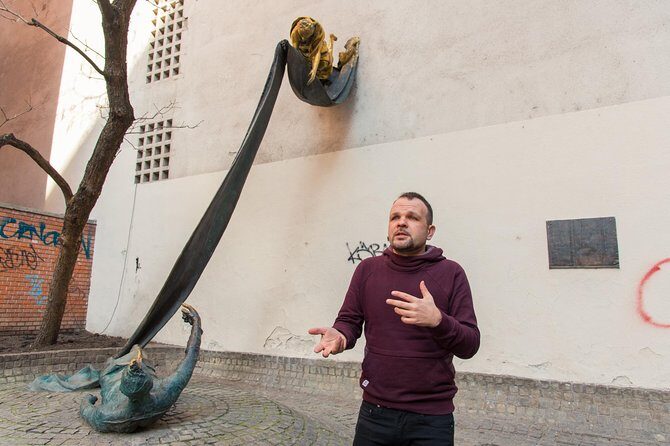
Jewish Heritage in Hungary with a Historian is the kind of tour that helps you read Budapest instead of just looking at it. You’ll move through a stretch of Pest where the Jewish story shows up in street names, building shapes, and the way the city remembers (or forgets) things over time.
What makes it click is the combination of major landmarks and breathing room. The route uses frequent short stops, so you’re never stuck listening for too long in one place. And because the guide is a historian, the tone stays grounded: you get the human side of the past, including the good, the complicated, and the tragedies that defined the 20th century.
I also like that it feels modern in the best way. Szimpla Kert, the famous ruin bar, isn’t treated like a random nightlife detour. It’s used to talk about how Budapest’s spaces change function over time, and how memory can survive inside the everyday.
One practical note: this is not a deep museum tour where you enter every building. You’ll get strong context at key synagogue sites, but you should come ready for “see and learn” rather than “walk into everything.”
You can also read our reviews of more historical tours in Budapest



Price, Duration, and the Logistics That Matter
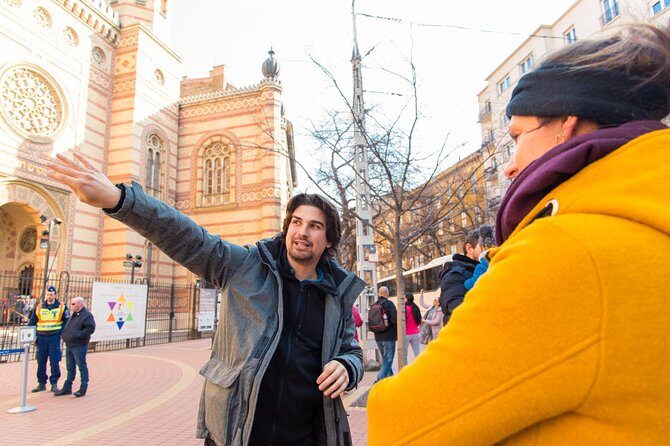
The cost is $64.71 per person for about 2 hours 30 minutes. That may sound straightforward, but value is really about what you get inside that time window.
Here’s what the price covers in a tangible way: the guided walk, mobile ticket access, and an included tasting at Solinfo Café (you’ll try flódni). Several other stops are admission ticket free. The synagogue-related parts with possible entry or specific access are clearly labeled as not included—so you won’t get surprised later if you’re planning to go inside specific sites on your own.
Group size is capped at 10, which is a big deal for a topic like this. With fewer people, the guide can slow down, answer follow-ups, and adjust the pace. In the same way you’d rather have a friend explain a city than a loud lecture, that small-group format keeps the tour personal.
It also runs in English, starts at 10:00 am, and is set up with proximity to public transportation. The meeting point is the Kempinski Hotel Corvinus Budapest area at Erzsébet tér 7-8, and the tour finishes outside Dohány Street Synagogue at Wesselényi utca 1.
If you’re traveling with mobility limits, the tour is described as suitable for most travelers, and service animals are allowed. The route is still a walking tour, so wear comfortable shoes and plan for city sidewalks and stops.
Route Breakdown: Erzsébet ter to Raoul Wallenberg’s Statue
The tour starts in Pest at Erzsébet ter, a medieval market square that has become one of the main squares of the area. This first stop is a smart warm-up. You’re not yet at the heavy sites, but you’re already learning the basic geography of Pest, which makes later synagogue locations easier to track mentally.
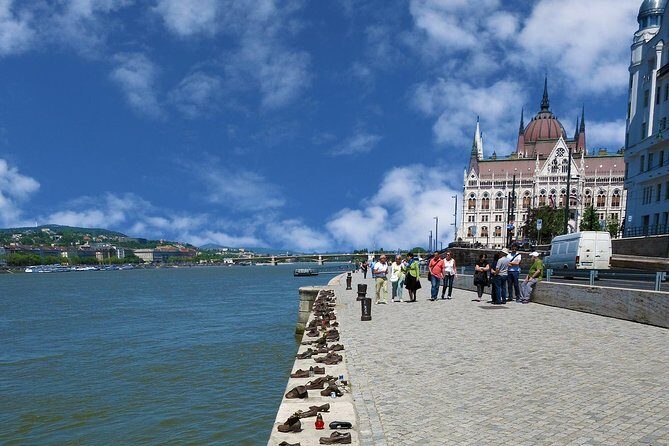
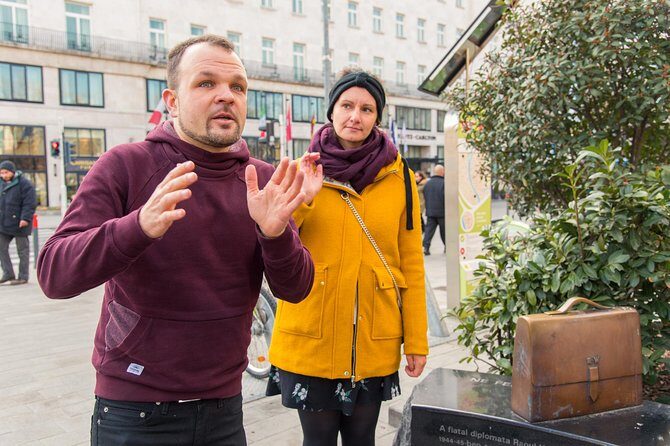
From there, the route moves to a statue of Raoul Wallenberg. This isn’t just a name-drop. It’s used as a human anchor in the story of saving Jewish lives. Even if you already know Wallenberg, it helps to hear how his legacy is framed within Budapest’s broader Jewish history and wartime context.
Timing here is light: you’ll spend about 10 minutes at the statue, then shift on to the next cultural stop. That short length matters. It keeps the tour from dragging while still giving the story a moral center before the route turns toward architecture and neighborhood life.
Szimpla Kert and Gozsdu Udvar: Where Modern Budapest Fits the Story
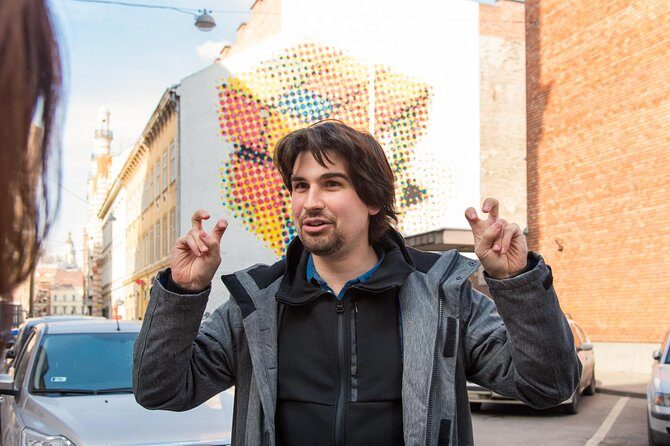
After the Wallenberg stop, you’ll reach Szimpla Kert, often described as the first ruin bar in Budapest and tied to the wider ruin-bar trend. For many visitors, this is the moment the tour stops feeling like a history lecture and starts feeling like a real walk through the city’s layers.
A “ruin bar” sounds like nightlife first, but on this tour it becomes a lesson in reuse and survival. The idea isn’t that every moment is cheerful. It’s that buildings and neighborhoods can be altered, repurposed, and still hold memory. You’re learning how post-war and post-change Budapest transformed spaces, and how people created a new social life inside old urban bones.
The tour time at Szimpla Kert is about 20 minutes. That’s long enough to walk the area slowly, take in the atmosphere, and connect it back to the historian’s narrative.
Next comes Gozsdu Udvar, known for being one of Budapest’s more international streets. This stop gives you a feel for how the area became cosmopolitan and how different communities and cultures overlapped in the city center. It’s brief—around 10 minutes—but it helps you understand that Jewish life in Budapest didn’t exist in isolation. It interacted with the rest of the city’s rhythms.
If you’re the type who likes context, this middle section is a good pressure release. It breaks up the heavier synagogue stops with something lighter to see and easier to photograph.
Synagogues on the Map: Kazinczy and the Great/Central Exterior
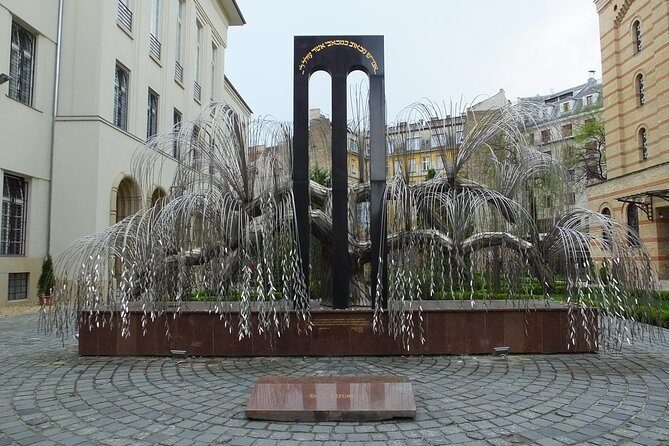
This is the heart of the tour, and it’s where you should pay close attention to what is included versus not included.
You’ll pass major synagogue-area sites connected to Rumbach Street, Kazinczy Street, and the Dohány Street area. Even when you’re not inside, the historian’s explanation helps you understand what you’re looking at—especially in a city where the architecture itself tells part of the story.






Kazinczy Street Synagogue stop
On the route, you’ll stop at Kazinczy Street Synagogue for about 20 minutes. This is framed around the Orthodox Jewish community, and it’s a chance to learn how different Jewish religious life took shape in Budapest. Admission isn’t included here, so this is mainly a learning and orientation stop rather than a guaranteed interior visit.
If you want to go inside specific synagogue buildings on your own time, plan on getting tickets separately.
Great/Central Synagogue (Nagy Zsinagóga) area
You’ll spend about 45 minutes around the Great/Central Synagogue. Here’s a key detail: the tour does not visit the Great Synagogue interior. So you’ll get the size, historical significance, and context, but you won’t do the inside experience through the tour.
This matters because people sometimes assume a “Jewish heritage” tour automatically includes interiors. In this case, you’re getting strong historical storytelling focused on the last roughly 200 years and the synagogue’s role in Jewish public life—but from outside the building.
Also, since admission tickets for this are not included, if you want interior access, you’ll need to plan a separate visit.
Why this approach can still be worth it
You might wonder why a tour would skip the interior. The upside is time and focus. By keeping the stops outdoors or near the sites, the historian can connect the architecture to the surrounding streets and the bigger narrative, without rushing inside and out. It also keeps the flow moving through the neighborhood, which is often where the city makes its strongest impression.
Solinfo Café and Flódni: The Tastiest Part of the History
The tour ends with a snack stop at Solinfo Café (about 20 minutes). You’ll try flódni, a Hungarian Jewish cake that’s often a favorite for both Jewish and non-Jewish visitors.
This is not an afterthought. It’s the kind of food stop that makes history feel lived-in. You’re tasting something tied to local Jewish culinary tradition, which turns the story from buildings and statues into everyday life.
Practical tip: if you’re sensitive to certain ingredients or have dietary restrictions, ask staff about specifics. The tour data only says the flódni is included, not ingredient details, so it’s smart to double-check if you need to.
Also, take a moment during your café break to compare how you feel after the synagogue stops. Food is a reset button. It lets the story settle instead of just passing through your day.
Budget Reality: What You’re Paying For (and What You Might Add)
At $64.71 for 2.5 hours, you’re paying for a historian guide, a tight route, and an included taste of flódni. Several stops are admission ticket free, which helps your overall day stay predictable.
What could change your personal budget is synagogue entry. Kazinczy Street Synagogue and the Great/Central Synagogue are marked as admission tickets not included. And since the Great/Central interior is not visited on the tour, you’re only likely to add extra spending if you decide you want interior access on your own later.
If you’re trying to keep costs down, you can treat the tour as an exterior-and-story experience: you’ll still get a lot, especially if you enjoy guided context. If you love interiors and want the full visual impact inside major synagogues, you’ll likely want to budget for separate tickets outside the tour.
Who This Tour Is Best For
This is a strong fit if you want more than Holocaust history. The tour’s framing covers Jewish presence in Hungary across a long timeline and includes the good, the complex, and the painful parts. The historian approach keeps it from feeling like a one-note march.
It’s also a great choice if you like asking questions. With a group capped at 10, the guide can respond directly instead of rushing everyone through a script.
Language and accessibility work in your favor too: English is offered, and the tour is described as suitable for most travelers, with service animals allowed.
If you’re the type of visitor who wants to take home a mental map, you’ll also like the way the stops are spaced: market square first, then a moral anchor, then modern Budapest culture, then the synagogue area.
Should You Book This Jewish Heritage Walk?
Yes, if your goal is to understand Budapest’s Jewish story in a city-walk format that feels human and not rushed. The combination of a historian guide, small group size, synagogue-area context, and an included flódni tasting makes it good value for a half-day slot.
Book it especially if:
- You want historical context with time for questions
- You’re traveling with limited time and want a focused route
- You like cultural stops that connect past to present, like Szimpla Kert
Skip it or adjust expectations if:
- You’re specifically hoping for interior access to every synagogue on the route
- You prefer a longer, museum-style visit rather than short street stops
If you do book, come with two small habits: wear comfortable shoes, and be ready to ask questions. This tour works best when you treat it like a conversation with Budapest’s history instead of a checklist.
FAQ
How long is the Jewish Heritage in Hungary tour?
The tour is approximately 2 hours 30 minutes.
What time does the tour start?
It starts at 10:00 am.
Where do you meet and where does the tour end?
You meet at Kempinski Hotel Corvinus Budapest, Erzsébet tér 7-8, and you end outside Dohány Street Synagogue at Wesselényi utca 1.
What group size should I expect?
The tour has a maximum of 10 travelers.
Is the tour offered in English?
Yes, it is offered in English.
What is included in the price besides the guide?
Flódni at Solinfo Café is included. Other stops shown as free admission do not require additional tickets for those specific stops.
Are synagogue admission tickets included?
No. Admission tickets are not included for Kazinczy Street Synagogue and for the Great/Central Synagogue. Also, the tour does not visit the Great Synagogue inside.