REVIEW · BUDAPEST
Original Budapest Walking Tour
Book on Viator →Operated by Original Budapest Tours · Bookable on Viator
Budapest’s best stories start on foot. This Original Budapest Walking Tour strings together major sights with guide-led stories so you get your bearings fast and understand how the city grew. I like that it’s priced like a tip ($2.88), yet still runs long enough to feel like a real city primer, not a quick drive-by.
I love the free-flowing city context you get at each landmark, especially the human stories that make places feel more real than photos. I also like the chance to ask questions and get practical recommendations for getting around once the walk ends. One possible drawback: on at least one departure, the timing skewed toward Pest rather than fully covering the Buda side, so don’t schedule a tight visit to Buda Castle immediately after.
In This Review
- Key highlights to watch for
- A 3.5-hour Budapest walking tour that gives you a plan
- Price and value: what $2.88 really buys you
- Route overview: how this walk strings Pest and Buda together
- Hungarian Parliament Building: the grand start with real context
- Széchenyi Chain Bridge: why crossing matters in Budapest
- Buda Castle and Matthias Church: the Castle District, in human terms
- St. Stephen’s Basilica: your start point, your later payoff
- Fisherman’s Bastion: the viewpoint stop you’ll remember
- Liberty Square and Andrássy Avenue: Pest’s grand boulevard energy
- Ferris Wheel of Budapest: the view concept, explained
- Shoes on the Danube Bank: a memorial that changes how you look at the river
- Margaret Island: a city break between river views
- Gellért Hill: the hill viewpoint that ties the story to the skyline
- Széchenyi Square: a final landmark with a time-travel detail
- What makes this tour work: guide style, pace, and smart questions
- Who should book this Budapest walking tour, and who should skip it
- Should you book this tour?
- FAQ
- How much does the Original Budapest Walking Tour cost?
- How long is the tour?
- Is the tour offered in English?
- Where does the tour start?
- Is bottled water included?
- Are admission tickets included for the stops?
- What group size can I expect?
- What is the weather situation like?
- Can I cancel for free?
Key highlights to watch for

- A near-free Budapest intro at $2.88, with an English local guide and a long 3.5-hour format
- Story-based stops at big-ticket sights like the Parliament Building, Chain Bridge, Matthias Church, and St. Stephen’s Basilica
- City-navigation payoff so you can map where things are and plan your next moves
- Riverside emotion with purpose at the Shoes on the Danube memorial and Danube viewpoints
- Great-looking panoramas timed through places like Fisherman’s Bastion and Gellért Hill
- Small-group energy on some dates even though the official cap is 100 travelers
A 3.5-hour Budapest walking tour that gives you a plan
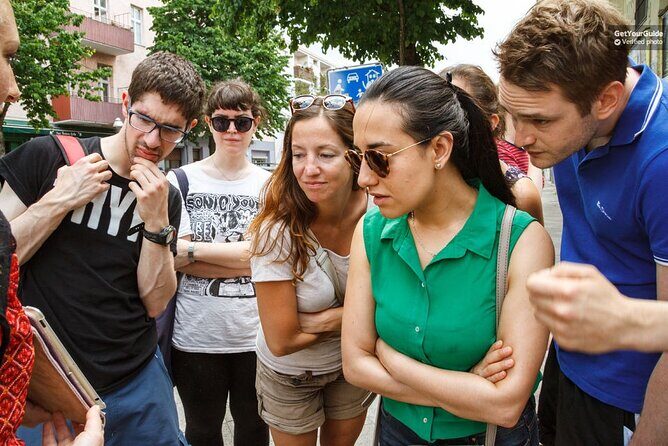
This is the kind of tour that works well when you’re in Budapest for just one full day or when you want a smart first morning. You start at St. Stephen’s Basilica (Szent István tér 1), then your guide leads you through a route packed with recognizable landmarks—so even if you’re jet-lagged, you’ll still understand what you’re looking at.
The price is the big headline. At $2.88 per person, you’re paying for the guide and the wayfinding. Most of the value comes from what you learn while walking: where key buildings sit in relation to the Danube, why certain places were built, and how the city’s two halves connect—socially and historically.
The pacing also matters. It’s not framed as a sprint. You’ll get stop time at each major point (often around 10–20 minutes), which is long enough to take photos, catch the main story, and move on without feeling dragged.
You can also read our reviews of more walking tours in Budapest



Price and value: what $2.88 really buys you
Let’s talk value in plain terms. You’re getting a local guide (included), a 3 hours 30 minutes guided walk (approx.), and an English tour, plus free admission tickets listed for the stops on the route.
Now, can you see Budapest’s highlights on your own? Sure. But you’ll miss the “why” that helps you remember what you saw. Also, a guided route saves time. You don’t waste your morning guessing which street to turn into for the best angle on Parliament, or how to connect the river sights to the inner city boulevards.
This tour is especially good if you’re the type who wants to know where to go next right after you finish. Some guides also share food, transport, and what to book next—useful when your day is already tight.
Route overview: how this walk strings Pest and Buda together
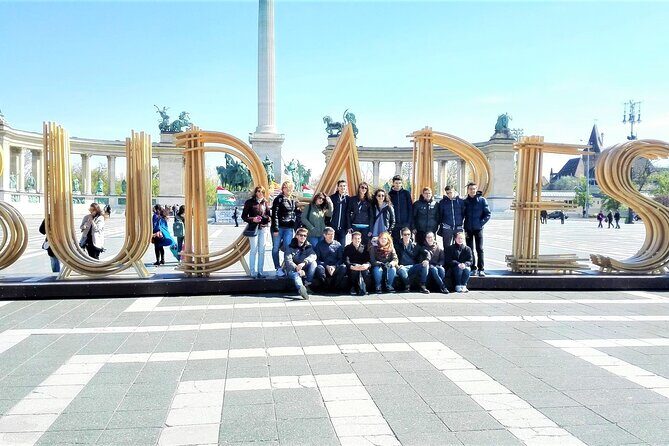
Budapest is split by the Danube into two personalities: Pest (often flatter, more city-center) and Buda (the hillier side with the Castle District). This tour gives you a guided backbone across both sides.
You begin with the Parliament area, then move toward the Chain Bridge so you’re understanding the city’s spine early. After that, you’re in the Castle-world and the viewpoints zone, then back toward central Pest and down to the river memorial and Danube islands. The last stretch brings you back to classic city stopping points and a hill viewpoint.
That structure matters because it teaches you the city geography in the order you’ll actually use it later. By the end, you’re not just tired—you’re oriented.
Hungarian Parliament Building: the grand start with real context
Your first major stop is the Hungarian Parliament Building, the seat of Hungary’s National Assembly. It’s a top landmark and a magnet for photos, but the real value of starting here is scale and position. The Parliament sits right in the Danube corridor, so it becomes your reference point for everything that follows.
Expect an exterior-focused visit with time for orientation—this isn’t the kind of stop where you only look for a pretty angle. Your guide’s job is to connect the building to modern identity and national symbolism, so you recognize it immediately when you pass it later.
If you’re the kind of traveler who wants to understand architecture without becoming a critic, this is where the tour clicks. You’ll walk away knowing what you’re looking at and why this site carries weight beyond tourism.
Széchenyi Chain Bridge: why crossing matters in Budapest
Next comes Széchenyi Chain Bridge. It’s one of those places where you don’t have to convince people it’s important. It’s a Budapest icon and—more importantly—it was the first bridge to connect Buda and Pest on foot.
That’s the key story. When you walk across, you’re not just taking in river views. You’re physically passing through the idea of a connected city. It also helps that the bridge links the earlier Parliament area with what comes next, so your sense of direction locks in.
Even if you don’t love big crowds, this stop is usually worth it because you’re learning Budapest’s “front of house” geography: river width, sightlines, and the way the hill side rises behind the Castle District.






Buda Castle and Matthias Church: the Castle District, in human terms
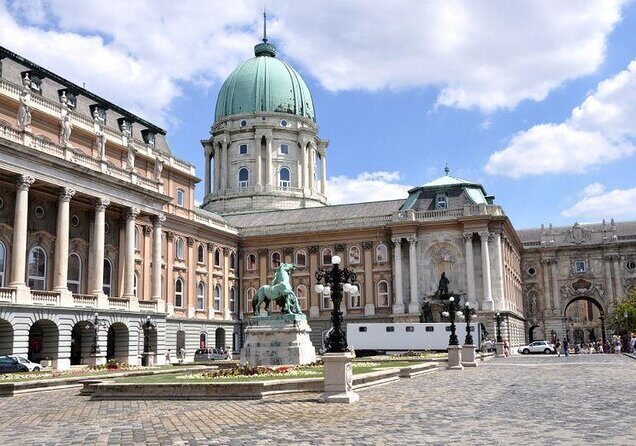
You spend time in the Buda Castle complex, first completed in 1265. The present Baroque palace portion was built much later (between 1749 and 1769), so this site is a layered timeline rather than one single era.
Your guide should help you see the complex as a history map. When you learn that it was once referred to as the Royal Palace or Royal Castle, it stops feeling like a museum label. It becomes a power center that kept shifting across centuries.
Then you move to Matthias Church (the Church of the Assumption of the Buda Castle), located at Holy Trinity Square, right in the heart of the Castle District area. It’s Roman Catholic and often connected to Hungary’s ceremonial past, including coronation history. The church also relates to King Stephen through a reliquary associated with his right hand.
Here’s the practical takeaway: once you understand that this is a “district of religious and royal meaning,” you’ll notice details faster—towers, squares, and how the buildings frame each other from different angles.
St. Stephen’s Basilica: your start point, your later payoff
St. Stephen’s Basilica is also a central stop on the route. It’s a Roman Catholic basilica named after Stephen, the first King of Hungary, and it’s known for a reliquary holding his right hand.
Even if you’re meeting here at the start time (11:00 am), you’re not just passing through. You’ll come back for guided time, so you get a chance to connect what you saw earlier from the outside to the meaning behind the site.
This stop is also useful for first-time visitors because it anchors you in the city’s religious architecture. When you later see smaller chapels or square churches on your own, you’ll recognize the style cues your guide highlights.
Fisherman’s Bastion: the viewpoint stop you’ll remember
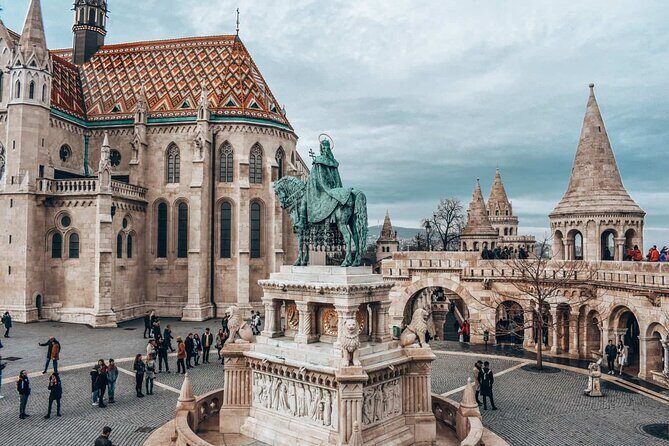
Fisherman’s Bastion (Halászbástya) is near Buda Castle and has that famous panorama reputation for a reason. It’s known for its Neo-Romanesque lookout terraces, and your guide will point out how to use the views to understand the city layout.
If you’ve ever felt like Budapest photos all look similar, this is where they stop feeling generic. From here, you can connect the hills, the river curve, and the flat stretch of Pest so your brain finally builds a map.
The slight caution: this is a popular viewpoint zone. Plan for some foot traffic around the terraces, and keep your pacing steady so you don’t end up sprinting for the best angle.
Liberty Square and Andrássy Avenue: Pest’s grand boulevard energy
After the river and castle viewpoints, the tour turns toward central Pest.
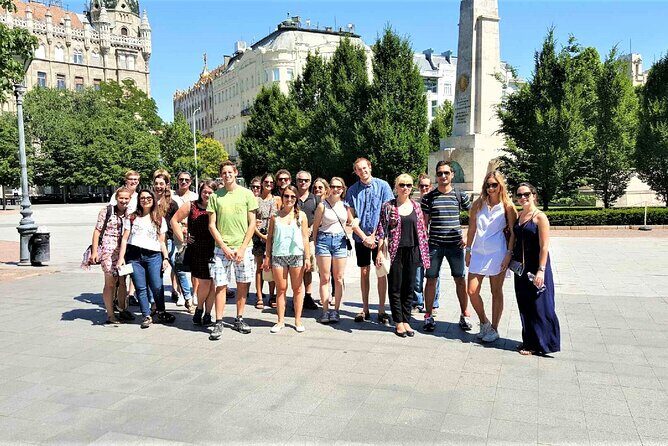
Liberty Square (Szabadság tér) is in the Lipótváros neighborhood. It’s a mix of business and residential, with landmark neighbors like the United States Embassy and the Hungarian National Bank headquarters. You’ll also see Art Nouveau touches on some buildings.
From there, you head to Andrássy Avenue. This boulevard dates to 1872 and links Erzsébet Square with Városliget. It’s lined with Neo-renaissance mansions and townhouses, and the avenue was recognized as a World Heritage Site in 2002.
This part of the walk is great if you like city texture: street-level detail, building facades, and the feeling of walking through a more formal, historic urban corridor. It’s also an efficient way to learn where major squares connect.
Ferris Wheel of Budapest: the view concept, explained
You also stop near the Ferris Wheel of Budapest, nicknamed the Eye of Budapest. The promise here is panoramic perspective—views across the Danube, toward Buda Castle, and out toward the temple towers of Pest.
Even if you don’t ride, the guide time is meant to help you understand how the city layers look from height. That knowledge makes your later self-guided sightseeing easier—when you see the skyline from a bridge or viewpoint, you’ll know what you’re looking at.
Shoes on the Danube Bank: a memorial that changes how you look at the river
The Shoes on the Danube Bank memorial is one of the most powerful stops on the route. It honors people who lost their lives during the Arrow Cross rule. The memorial was erected on April 16, 2005 and created by film director Can Togay and sculptor Gyula Pauer.
The sculpture is 60 pairs of shoes cast in iron and anchored to the ground. It’s simple. That’s why it hits.
If the earlier stops feel like architecture and panorama, this is where the tour turns serious. Your guide should give you enough context to understand that you’re not just looking at river art. You’re facing a history marker, placed exactly where the river would have been part of the tragedy.
Plan to spend your full stop time here. Don’t rush it, because rushing is how the message gets lost.
Margaret Island: a city break between river views
Margaret Island is a tranquil getaway within the city, located in the Danube between Buda and Pest. The tour includes a stop in this green zone where you can reset after the more intense sights.
You’ll pass or learn about pedestrian promenades around parkland, an art nouveau water tower, and ruins of a 13th-century Dominican convent. There’s also mention of a musical fountain and a small zoo, plus jogging tracks and even thermal spas and swimming pools.
In summer, the island can include pop-up bars and restaurants with live music. Even when it’s not summer, the value of this stop is that it gives your feet a softer landing. You’re not constantly climbing or looking for the next monument—you’re switching from “major sightseeing mode” to “walk-and-breathe.”
Gellért Hill: the hill viewpoint that ties the story to the skyline
Gellért Hill overlooks the Danube from about 235 meters high. It’s in the 1st and 11th districts and carries the story of Saint Gerard, who was thrown to death from the hill.
This stop pairs well with everything you learned earlier. After the river memorial and the island, you’re ready to look outward instead of inward. The hill viewpoint helps you see how Budapest’s two halves feel from above—where the river bends, how the Castle District sits, and how the skyline rises in stages.
If you’re traveling with older family members or you’re short on energy, this is still manageable, but wear shoes with grip. Hill views are worth it, but the approach matters.
Széchenyi Square: a final landmark with a time-travel detail
The route ends around Széchenyi Square. You’ll see the statue of Széchenyi that has been in place since 1880, far predating Roosevelt’s presence.
That one detail is a good example of what the tour does: it gives you a date anchor. Once you start looking at monuments with timelines in mind, the city stops feeling like a collection of pretty buildings and starts feeling like a place with eras you can actually track.
It also helps that Széchenyi Square is a practical place to finish. You’re near major city connections, so it’s easier to continue your day rather than being dropped somewhere awkward.
What makes this tour work: guide style, pace, and smart questions
The best part of this kind of walking tour isn’t the list of famous stops. It’s how the guide turns those stops into street-level understanding.
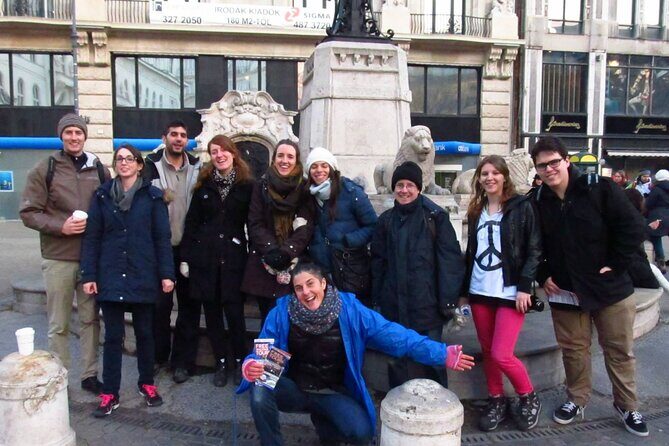
On this tour, the tone tends to be friendly and engaging, with guides sharing stories you won’t usually find in guidebooks. You may even get trivia-style questions and small surprises for correct answers—one guide has been associated with a fun, reward-based approach for participants.
I also like that the guides answer questions and help you plan what to do next. That’s how this tour becomes more than a walk. It becomes your day’s decision engine.
If you want a smoother experience, bring your curiosity. Ask where to eat, what Hungarian dishes to try, and how to move efficiently afterward. The tour is designed to leave you with the confidence to navigate on your own.
Who should book this Budapest walking tour, and who should skip it
Book it if:
- You want a cheap, guided introduction to Budapest’s biggest sights
- You’re visiting for a limited time and need city orientation fast
- You like your sightseeing with stories, not just photos
- You want a route that covers both Pest and the Castle District viewpoints
Skip it if:
- You expect every departure to perfectly match your ideal Buda-and-Pest timing window
- You want a long, deep visit inside major monuments without walking transitions
- You hate any memorial stop that deals with difficult history (the Shoes on the Danube memorial is part of the route)
Should you book this tour?
Yes, if you want a value-packed first pass through Budapest. At $2.88, you’re paying for guidance, context, and a walkable route that helps you understand what you’re seeing—fast. The only real decision point is scheduling: give yourself buffer time so a shorter-than-expected Buda-side stretch doesn’t force you to rush later.
If you’re the type who enjoys learning while moving, this tour is a solid starting move. Then you can spend the rest of your day choosing what you truly want to linger over.
FAQ
How much does the Original Budapest Walking Tour cost?
It costs $2.88 per person.
How long is the tour?
The duration is about 3 hours 30 minutes.
Is the tour offered in English?
Yes. The tour is offered in English.
Where does the tour start?
The meeting point is St. Stephen’s Basilica, Budapest, Szent István tér 1, 1051 Hungary.
Is bottled water included?
No, bottled water is not included.
Are admission tickets included for the stops?
Admission tickets are listed as free for the stops on the route.
What group size can I expect?
The tour has a maximum of 100 travelers.
What is the weather situation like?
The experience requires good weather. If it’s canceled due to poor weather, you’ll be offered a different date or a full refund.
Can I cancel for free?
Yes. You can cancel up to 24 hours in advance for a full refund.