REVIEW · BUDAPEST
Private Walking Tour in The Jewish District Budapest
Book on Viator →Operated by Snurk.Travel · Bookable on Viator
Budapest’s Jewish District hits you fast. In 2 hours 30 minutes, you’ll connect major ideas like Zionism and the Holocaust to the streets where Jewish life continues today. I especially liked how the guide brings the history alive with storytelling and local perspective, and I also loved getting oriented at the standout Dohány Street Synagogue before moving on to smaller stops.
You’ll walk through real neighborhood landmarks, including recently restored Moorish-style architecture and places tied to everyday Jewish routines. One watch-out: synagogue admission tickets aren’t included, so your total cost can rise once you pay entry fees for Dohány and any other synagogues that require tickets.
In This Review
- Key highlights at a glance
- Why this walk works in Budapest (and not just as history)
- Price and what you really get for $228.29 per person
- Meeting point, end point, and a simple way to prepare
- Stop 1: Dohány Street Synagogue and the stories tied to it
- Stop 2: Rumbach Street Synagogue and Moorish-style architecture
- Stop 3: Szimpla Kert and the logic of ruin pub culture
- Stop 4: Wesselényi utca 21 and the feel of the historic quarter
- Stop 5: Kazinczy u. 55 and the mystery of a two-story façade
- Stop 6: Kóser Piac (Kosher Market) for Shabbat essentials
- Stop 7: District VII today, plus what you learn about Orthodox Judaism
- What you’ll hear: comic and tragic stories you can actually follow
- Who this tour suits best (and who might want something else)
- Should you book this private Jewish District walking tour?
- FAQ
- How long is the Private Walking Tour in The Jewish District Budapest?
- How much does the tour cost?
- Is this tour private?
- What language is the tour offered in?
- Where does the tour start?
- Where does the tour end?
- Are synagogue tickets included in the price?
- Are there free stops during the tour?
- Can I cancel for free?
- Will I receive confirmation and a ticket format?
Key highlights at a glance
- Zionism and the Holocaust explained on the ground, not in a classroom
- Big visual impact at Dohány Street Synagogue (a major stop even if you know little going in)
- Rumbach Street Synagogue’s Moorish-style look, plus the story behind its renovation
- Modern Jewish life right on the route, including kosher shopping and Orthodox-leaning context
- A guide who invites questions, with a mix of heart-warming, comic, and tragic stories
Why this walk works in Budapest (and not just as history)
This tour is built for people who want more than dates and stone facts. You’ll get the origin stories behind key Jewish movements, then you’ll see how those ideas played out through the 20th century and beyond. What makes it feel different is the pacing: you’re walking the district while the guide keeps tying the big themes back to specific streets and buildings.
I also like that it’s not only about “then.” You spend time on how people live in this area today, and you get context on the different branches of Judaism and what practicing Orthodox Judaism can look like day to day. That shift matters because it stops the whole experience from feeling like a single-theme memorial walk.
Finally, because it’s a private tour, you’re not stuck matching your pace to a large group. If you’re curious, you can ask follow-ups without turning it into a rush.
You can also read our reviews of more walking tours in Budapest


Price and what you really get for $228.29 per person
At $228.29 per person for a private walking tour, you’re paying primarily for one-on-one guiding time and a carefully planned route through emotionally heavy and visually important stops. The real value is the guide’s ability to connect multiple subjects—Zionism, Holocaust history, synagogue culture, and modern Jewish life—without turning it into a lecture.
Two cost notes you should plan for:
- Synagogue entry tickets (especially Dohány Street Synagogue) aren’t included. The price range you may pay is €12–€45 per person depending on the site.
- Admission fees can add up if more than one building requires paid entry during your walk.
So think of the $228.29 as the guiding and route cost, and the synagogue tickets as the add-on for the days you step inside. If you want maximum value, arrive with flexible time and a mindset that you’re paying to go beyond the street-level view.
Meeting point, end point, and a simple way to prepare
The walk starts at Dob u. 1, 1072 Hungary and ends at Shoes on the Danube Bank, 1054 Hungary. That end point is a strong closing moment because it ties the whole district story into the wider city landscape—good for reflection if you’re ready for it.
You should also plan for a short stretch of decision-making at the start: confirm you understand which synagogue entrances require tickets on the day of your tour. The tour includes a guide and is offered in English, with a mobile ticket provided. It’s also described as near public transportation, which helps when you’re building a day around other Budapest sights.
One more practical point: since this is a private tour, your timing matters. If you’re planning to visit other museums the same day, leave enough buffer so you don’t feel rushed.
Stop 1: Dohány Street Synagogue and the stories tied to it
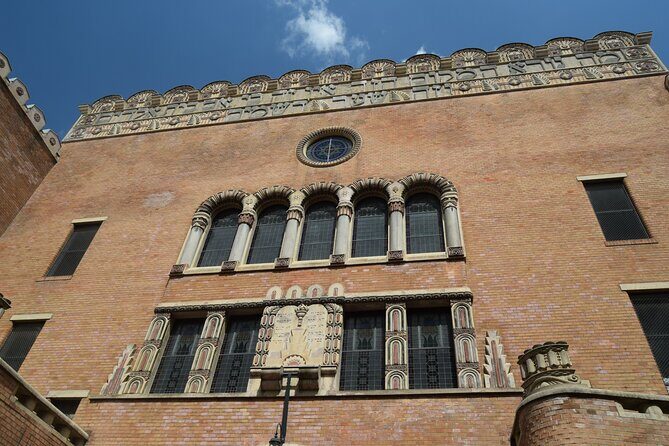
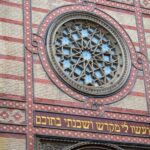
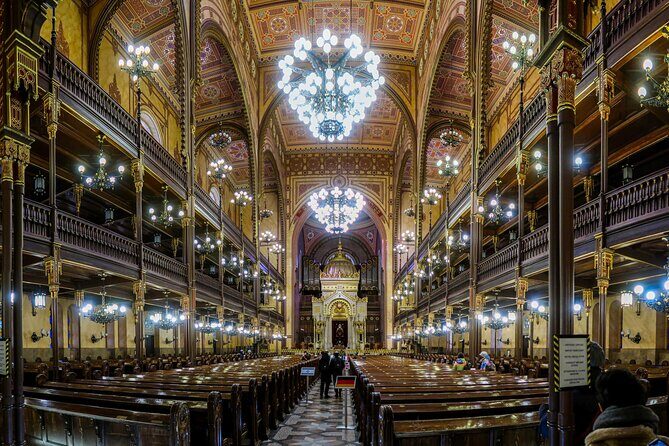
Your first major landmark is Dohány Street Synagogue (Dohány Street Synagogue). It’s described as the biggest in Europe and the second in the world, and that reputation is part of why it’s such a good opener. Big scale helps you understand why this place became a central symbol for Jewish communal life.
The guide also uses this stop to frame major ideas like the origins of Zionism and the Holocaust—less as abstract history, more as cause-and-effect that connects people, beliefs, and politics. You’ll likely leave this first stop with a clearer mental map of what you’re seeing later in the district.
Ticket reality check: you’ll need to budget extra because admission isn’t included. If you want to avoid last-minute stress, plan for purchasing or paying on arrival depending on how the day runs. Also, if entry conditions change (like closures or limited access), you can still get value from the surrounding area and the guide’s points.
Stop 2: Rumbach Street Synagogue and Moorish-style architecture
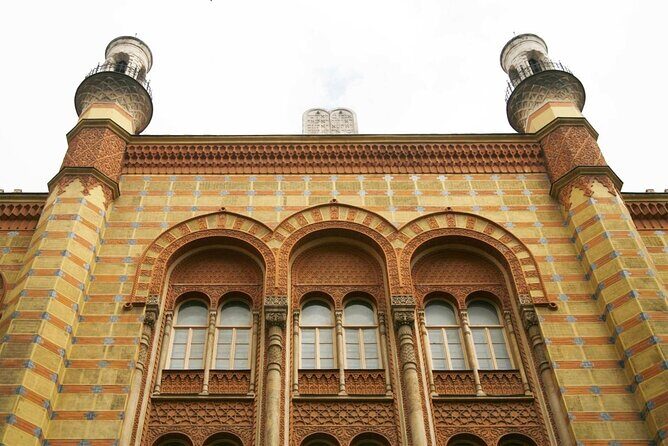
Next comes Rumbach Street Synagogue, known for Moorish-style architecture. The striking part here is the restoration story: it was recently renovated after 60 years of being abandoned. That kind of pause-and-return gives the building a different emotional weight. Instead of viewing architecture as static, you understand it as something tied to disruption and recovery.
This is also a shorter stop (about 15 minutes), so think of it as a focused “visual plus meaning” moment. The guide will point out details you might miss if you were just walking by—how the design language works, why this style is significant in the context of a synagogue, and what it suggests about identity and community expression.
As with Dohány Street Synagogue, plan for the possibility that access could be affected by what’s going on at the site that day. Even if you don’t get the full interior experience, you still get a better read on the exterior and the restoration context.
You can also read our reviews of more private tours in Budapest






Stop 3: Szimpla Kert and the logic of ruin pub culture
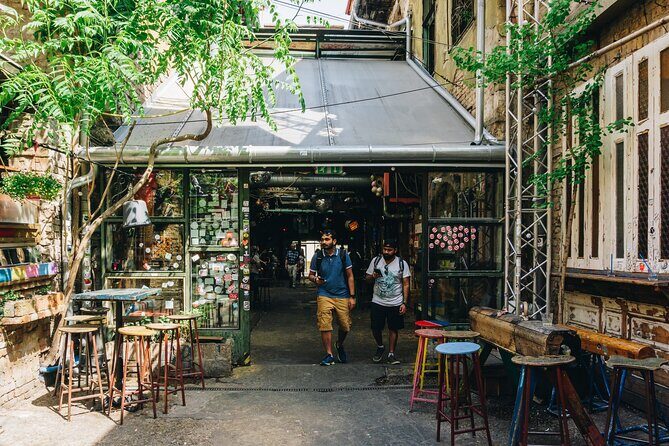
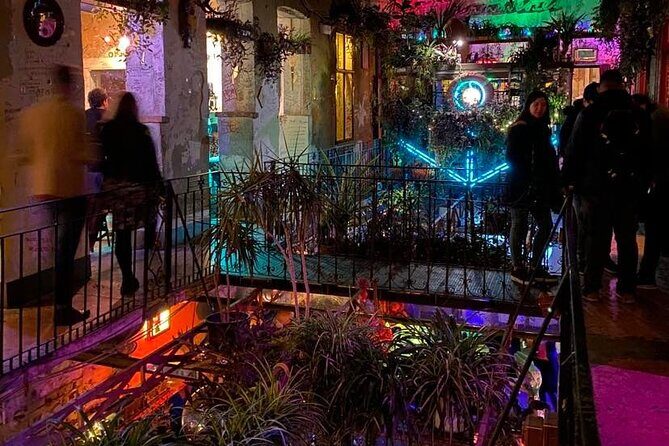
Now you pivot to Szimpla Kert, a famous example of Budapest’s ruin pub culture. This is one of those stops that can feel surprising if you expect every moment of the walk to be solemn. Here’s the point: the district’s survival includes repurposing. When buildings are reused for social life, that doesn’t erase the past—it shows how people keep living.
You’ll spend about 15 minutes here, and the experience is mostly about atmosphere and interpretation. You’ll walk into the space and understand why this kind of venue became a recognizable part of the city’s identity, especially in areas scarred by history. It can also work as a breathing space between heavier stops.
This stop is listed as free, so you’re not paying extra for entry. It’s a good moment to reset your attention and let the stories from earlier settle before you hit more street-level landmarks.
Stop 4: Wesselényi utca 21 and the feel of the historic quarter
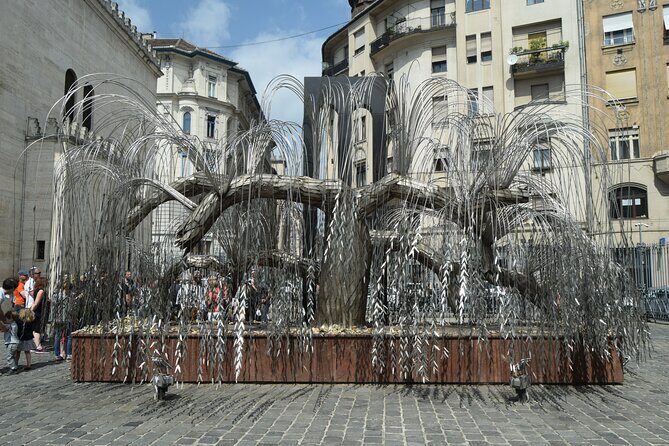
At Wesselényi utca 21, you’ll walk through the district’s historic Jewish quarter. This section is about the streets themselves. The guide uses these urban textures—facades, nearby corners, the “shape” of the area—to help you understand how a neighborhood functions as a community space.
Why this stop matters: history becomes easier to absorb when you can see how people actually moved through the area. You start to notice patterns: where the community gathered, how visibility works on a street, and how the district’s layout connects to the story you’ve been hearing about.
It’s a free stop (no admission needed), and the time is brief. That’s intentional. It keeps you moving without turning the walk into a long pause where your attention fades.
Stop 5: Kazinczy u. 55 and the mystery of a two-story façade

Next is Kazinczy u. 55, described as a two-story building with a long history and a lot of mystery inside. The emphasis here is on reading the exterior and letting the guide explain why the place matters.
This is one of those stops where you get the payoff of having a human guide. If you were just sightseeing on your own, you’d likely pass the building without a strong reason to stop. With the guide, the façade becomes a clue to broader themes: continuity, change over time, and how Jewish life has been shaped by forces far beyond the street.
Since this stop is free and about 15 minutes, it’s a quick but memorable marker. It also helps keep variety in the route so the tour doesn’t feel like seven versions of the same type of stop.
Stop 6: Kóser Piac (Kosher Market) for Shabbat essentials
At Kóser Piac / Kosher Market, you’ll get a practical look at what people actually buy for Jewish holidays and Shabbat. This isn’t just shopping as a tourist activity. It’s a snapshot of daily life logic: certain foods and staples connect directly to tradition, routine, and community.
The stop runs about 15 minutes and is free, which makes it easy to fit into the walk without adding expense. I like this part because it brings you out of symbolic history and into the habits that keep traditions alive.
If you’re the type who likes to understand how cultural identity shows up in everyday choices, this stop will hit home. Even if you don’t buy anything, you’ll see how the district still functions as a place of Jewish practice, not only remembrance.
Stop 7: District VII today, plus what you learn about Orthodox Judaism
The final segment is time within District VII / the Jewish Quarter. This is where the tour ties together what you saw earlier: the big monuments, the restored synagogue architecture, and the street-level businesses that serve today’s community.
The guide also covers the branches of Judaism and what it can be like to be Orthodox today. That’s valuable because it helps you avoid stereotypes. Instead of one “one-size-fits-all” idea of Judaism, you learn there are differences in practice and worldview, and those differences show up in real life.
This ending also works well emotionally. You start with major historical architecture and ideas, then you end with modern district context. That arc can feel more honest than ending with only memorial-type stops.
What you’ll hear: comic and tragic stories you can actually follow
One of the strongest promises of this tour is the mix of story types: heart-warming, comic, and tragic. That sounds like a lot, but it actually helps. Serious history can become heavy and hard to track. Humor and warmth can make the timeline feel human instead of like a textbook.
In at least some cases, the guide is a local who grew up in the area. For example, Benjamin is named as a guide associated with this tour, and Guy is mentioned as well. What matters for you is the effect: local knowledge tends to make explanations feel grounded, and it often makes it easier to ask questions.
You’ll likely get plenty of chances to clarify points along the way. I like tours that encourage questions because the district’s history has lots of moving parts. If something doesn’t click, you don’t have to wait for a later museum label. You can ask right then.
Who this tour suits best (and who might want something else)
This tour is a strong match if you want:
- A walk-first introduction to Budapest’s Jewish District
- Clear context on Zionism and Holocaust history tied to specific sites
- Modern-life perspective, including kosher shopping context and Orthodox Judaism explanations
- A private format where you can ask questions and set your own pace
It might be less ideal if you only want light sightseeing or if you’re expecting every stop to be purely exterior. Some synagogue access depends on what’s happening on-site, and tickets are an extra cost. If that’s a dealbreaker, you may prefer a version focused mainly on street exteriors and exterior storytelling.
Should you book this private Jewish District walking tour?
I’d book it if you’re planning a serious, respectful day in Budapest and you want a guide to connect the dots between major historical movements and the district’s present-day life. The private format plus an English-speaking guide makes it easier to ask questions and keep the pace comfortable.
Book it early if you can. This is described as averaging 30 days in advance, which suggests it’s popular and not something you want to leave to the last minute.
One final check before you confirm: budget for synagogue tickets on top of the $228.29 price. If you’re okay with that add-on, you’ll get a much smoother experience and feel more confident about the stops that require admission.
If that extra cost sounds annoying, you can still enjoy a lot of the walk, but you won’t get full value from the major indoor sights unless you pay those entries.
FAQ
How long is the Private Walking Tour in The Jewish District Budapest?
The tour is about 2 hours 30 minutes.
How much does the tour cost?
The price is $228.29 per person.
Is this tour private?
Yes. It is a private tour/activity, meaning only your group participates.
What language is the tour offered in?
It’s offered in English.
Where does the tour start?
The meeting point is Budapest, Dob u. 1, 1072 Hungary.
Where does the tour end?
The tour ends at Shoes on the Danube Bank, Budapest, 1054 Hungary.
Are synagogue tickets included in the price?
No. Tickets to Dohány Street Synagogue and other synagogues are not included. The listed admission range is €12–€45 per person.
Are there free stops during the tour?
Yes. Several stops are listed as free, including Szimpla Kert, Wesselényi utca 21, Kazinczy u. 55, and Kosher Market, plus time in the Jewish Quarter.
Can I cancel for free?
Yes. You can cancel for free up to 24 hours in advance for a full refund.
Will I receive confirmation and a ticket format?
You receive confirmation at the time of booking, and the tour includes a mobile ticket.