
REVIEW · BUDAPEST
Virtual Reality Walking Tour
Book on Viator →Operated by VR Tours · Bookable on Viator
Budapest at eye level, then history in 3D. This Virtual Reality Walking Tour focuses on Buda Castle, using 360/3D visuals and audio to help you place past scenes where they belong in the real world.
I really like that the experience includes the VR headset for you, so you don’t waste time figuring out gear. I also like the clear, step-by-step guidance from staff, which makes the whole tech part feel painless.
One thing to consider: it’s not recommended for people with epilepsy, and it also has an age limit (not for kids under 13). If you’re unsure, it’s worth reading the health guidance before you book.
In This Review
- Key Things to Know Before You Go
- Budapest’s Buda Castle, Explained With 360/3D VR
- Meeting at Lánchíd u. 23: Get Oriented and Start Smooth
- VR Headset Provided: The Value Is in Not Making It a Tech Project
- What You’ll See: 360/3D Scenes That Put Buda Castle in Context
- Audio Commentary and Friendly Help: What Makes It Feel Easy
- The Walking Part and Comfort Notes You Shouldn’t Ignore
- Group Size and Timing: Why the Max of 20 Matters
- Price Breakdown: Paying $48.37 for Story + Hardware + Guidance
- Weather Matters: A Short Tour Still Needs Good Conditions
- Who Should Book This VR Walking Tour of Buda Castle?
- Should You Book This Budapest Buda Castle VR Tour?
- FAQ
- How long is the Virtual Reality Walking Tour in Budapest?
- What does the tour cost?
- What language is the experience offered in?
- Is a VR headset provided?
- Where does the tour start?
- Is the tour suitable for children?
- Is it canceled for bad weather?
Key Things to Know Before You Go

- Buda Castle focus: You spend your time learning one landmark in a way that feels visual, not just spoken.
- 360/3D VR scenes: Past events are shown as 3D, helping you understand scale and setting.
- Headset provided: No equipment rental or extra hassle before you start.
- Audio commentary: The narration is built to explain what you’re seeing in the VR scenes.
- Small group size: Maximum 20 travelers, which keeps the vibe from turning into a rush job.
- English-only experience: Plan your comfort level with English for the narration and guidance.
Budapest’s Buda Castle, Explained With 360/3D VR
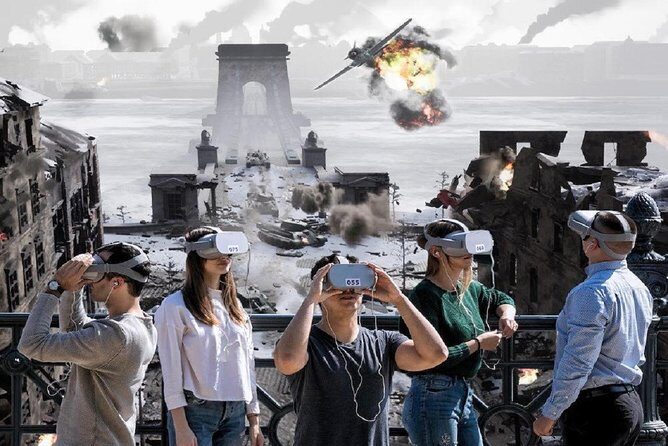
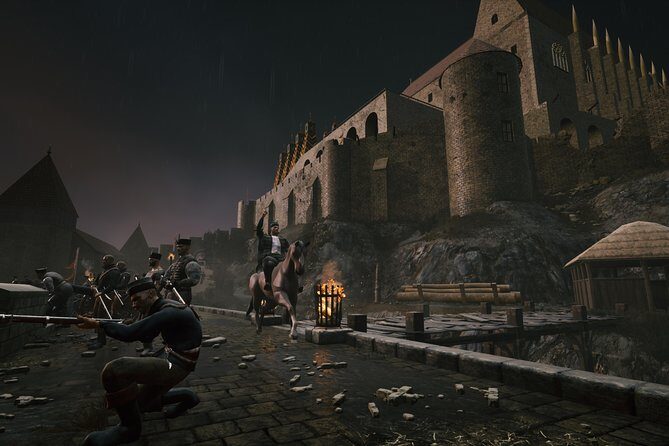
If you’ve ever stared at Buda Castle and thought, I get the wow factor, but where do the stories fit, this is the kind of tour that answers that question. The main draw here is that you’re not only looking at a landmark—you’re shown moments from the past in virtual reality visualizations, with a 360/3D feel that makes the space easier to understand.
You’ll learn about the history of the castle, but the best part is the method. Instead of relying only on dates and descriptions, the audio commentary ties the story to what you see in the VR scenes. That matters in Budapest, because Buda Castle is huge and layered. Even with good photos, it’s tough to “read” the place without help.
The program also leans action-forward. That’s useful because it keeps your brain engaged while the tour shifts between the real setting and what the VR is recreating.
You can also read our reviews of more walking tours in Budapest



Meeting at Lánchíd u. 23: Get Oriented and Start Smooth
The experience starts back at the meeting point and also ends there, which makes planning simpler than tours that scatter you across town. Your start location is Budapest, Lánchíd u. 23, 1013 Hungary.
Because it’s near public transportation, you can arrive without building an entire day around a complicated commute. That’s a real quality-of-life win, especially if you’re bouncing between Buda and Pest neighborhoods.
Plan for the fact that the tour runs about 1 hour 15 minutes to 1 hour 35 minutes. That’s long enough to feel complete, but short enough that you can still fit it into a sightseeing day without turning it into a half-day commitment.
VR Headset Provided: The Value Is in Not Making It a Tech Project
Many VR experiences fail the same way: you spend more time wrestling with equipment than learning. Here, the VR headset is provided, so you can focus on the content.
That affects value in a simple way. You’re paying for a guided experience, not for optional add-ons like rentals or troubleshooting. And because the tour is capped at 20 travelers, setup tends to feel faster and more controlled than in big crowds.
I also appreciate that the tour is designed with audio commentary. When the narration is aligned with what the VR is showing, you don’t have to guess what you’re looking at. You get the story explained in real time, which is exactly what makes VR useful for history.
What You’ll See: 360/3D Scenes That Put Buda Castle in Context

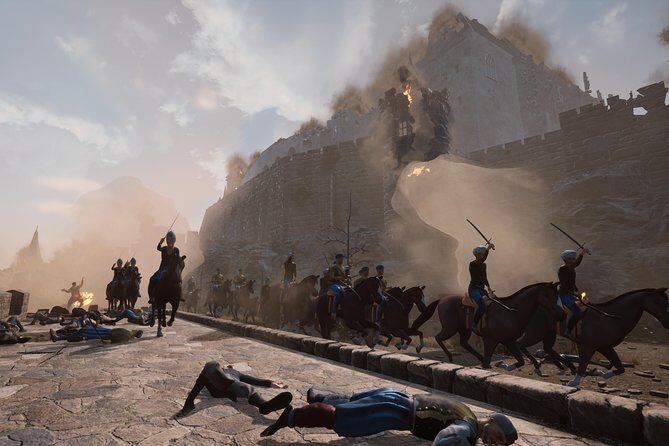
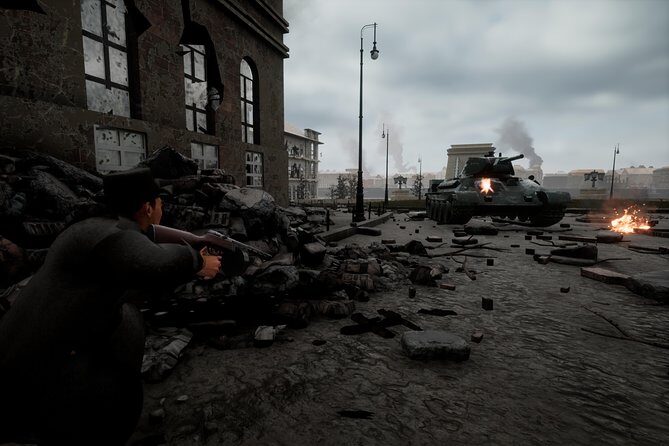
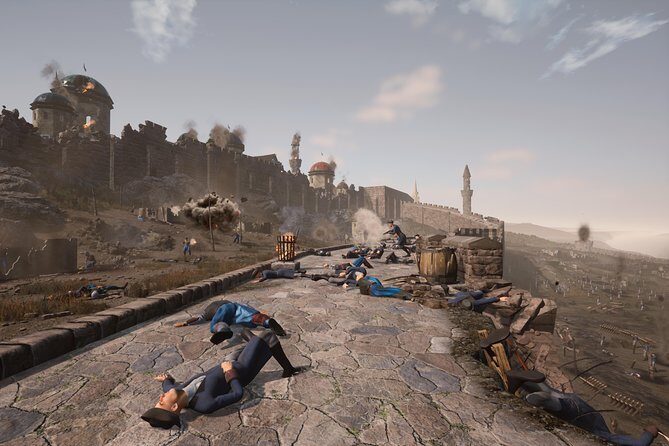
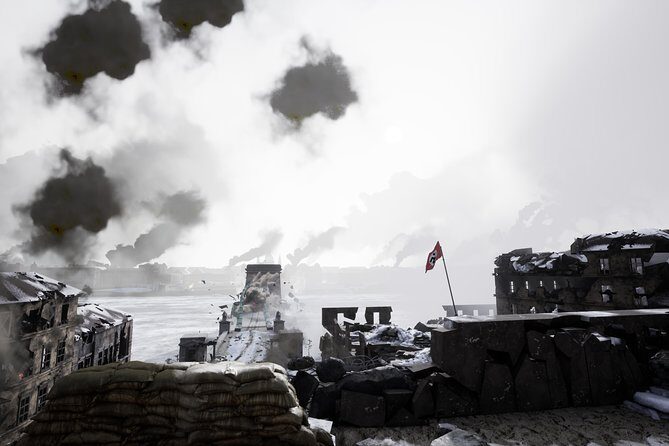
This is where the tour earns its keep. The focus is Buda Castle, and the VR scenes are meant to show events from the past in a visual way. The goal is understanding—not just watching something pretty.
Buda Castle can feel like an information overload from the outside. You see walls, courtyards, viewpoints, museums, and changing layers of architecture. But VR can do something that photos can’t: it can recreate spatial relationships. When you see scenes in 360/3D, you’re better able to imagine where people were and how areas connected.
The program is described as a mind-bending 360/3D experience with action and amazing visuals. Even if you’re not chasing thrills, that “action” angle helps you keep track of the storyline. You’re not standing still while history happens in a distant, abstract way.
Audio commentary is key here. It’s doing the explaining job that guides usually do—only now it’s attached to a visual reconstruction. That makes the castle’s story easier to hold onto after the headset comes off.
Audio Commentary and Friendly Help: What Makes It Feel Easy
One pattern in the experience descriptions is the emphasis on narration and guidance. The tour includes audio commentary that helps explain the VR scenes, and staff support is part of how the experience runs.
That matters because VR can be disorienting if you don’t know what to do. When staff are helpful and you can get quick answers while you’re getting set up, you spend less time stuck and more time seeing.
The narration style also seems built for clarity. It’s not just background sound—it’s there to connect the scenes to the bigger story of the castle. If you’re someone who gets lost in “and then this happened” histories, the audio-led structure is a practical fix.






The Walking Part and Comfort Notes You Shouldn’t Ignore
Despite the VR centerpiece, it’s still a walking tour. You should have a moderate physical fitness level, because moving around is part of the overall flow.
That doesn’t mean it’s extreme, but it does mean you should be comfortable with some walking and time on your feet. If your body is sensitive to uneven surfaces or longer stretches, plan accordingly and consider arriving with comfortable shoes.
There are also clear restrictions:
- Not recommended for travelers under 13 years of age
- Not recommended for travelers suffering from epilepsy
If you’re traveling with someone who falls under that “not recommended” guidance, don’t assume it’ll be fine because it’s only VR. The tour specifically flags it, so take that seriously.
Group Size and Timing: Why the Max of 20 Matters
The tour has a maximum of 20 travelers. That’s a big deal for two reasons.
First, smaller groups generally make the staff-to-guest ratio better, which means quicker help when something needs adjusting. Second, it reduces waiting time between the moment you arrive and the moment the VR experience starts.
The booking pace is also worth noting. This is usually booked about 14 days in advance. That tells me it’s popular enough that planning ahead is smart, especially if you’re visiting in peak season or on a tight itinerary.
In practical terms: if this is one of your “must-do” items, I’d reserve it earlier rather than hoping for last-minute availability.
Price Breakdown: Paying $48.37 for Story + Hardware + Guidance
At $48.37 per person, this isn’t the cheapest way to spend an hour-plus in Budapest. But it also isn’t just a guided lecture.
You’re paying for several bundled pieces:
- A guided experience tied to Buda Castle
- 360/3D VR scenes that recreate past events
- Audio commentary designed to explain what you’re seeing
- Staff support through the process
- A VR headset provided, so you don’t add a separate equipment rental cost
If you were to do this kind of VR experience on your own, the time and hassle usually go up fast. Here, the experience is organized so the tech supports the history instead of competing with it.
So I think the best way to judge the cost is like this: if VR helps you learn and you enjoy visual history, the price feels reasonable. If you dislike VR or know you’ll want more traditional walking + photo stops, you might prefer something more low-tech.
Weather Matters: A Short Tour Still Needs Good Conditions
This experience requires good weather. That’s common for walking-style tours, and it’s also a reminder that Budapest can shift quickly between bright and breezy conditions.
Because the tour depends on the outdoors element, you’ll want to plan for flexibility. If weather forces a cancellation, you’ll be offered either a different date or a full refund, so you’re not taking a total gamble.
My advice: if you’re choosing between two sightseeing days, place this tour on the day you expect the better weather. It’ll feel more comfortable, and you’ll waste less time second-guessing your schedule.
Who Should Book This VR Walking Tour of Buda Castle?
This is a strong match if:
- You want a hands-on way to learn Buda Castle’s story
- You like 360/3D visuals and audio narration that explain what you’re seeing
- You prefer small groups (maximum 20)
- You’d rather not deal with renting VR equipment
It’s likely not the best fit if:
- You need a fully traditional walking tour with no VR component
- You’re sensitive to VR experiences or fall into the health guidance category noted for epilepsy
- You’re traveling with kids under 13
If you’re visiting Budapest for the first time and you’re trying to make sense of Buda Castle’s scale and layers, this format can speed up your understanding in a way that pure sightseeing sometimes doesn’t.
Should You Book This Budapest Buda Castle VR Tour?
I’d book it if you’re the type of traveler who learns faster with visuals, and you want history to feel connected to place. The combination of headsets provided, audio commentary, and a clear focus on Buda Castle makes this feel like a designed learning experience rather than a gimmick.
But hold off if VR isn’t your thing, or if you’re traveling with anyone for whom the epilepsy guidance applies. In that case, there are plenty of other ways to experience Buda Castle without the tech element.
If you do decide to go, book ahead because it’s already scheduled about two weeks out on average. Then plan a comfortable pair of shoes, and give it space on a day with good weather.
FAQ
How long is the Virtual Reality Walking Tour in Budapest?
The tour lasts about 1 hour 15 minutes to 1 hour 35 minutes.
What does the tour cost?
It costs $48.37 per person.
What language is the experience offered in?
The tour is offered in English.
Is a VR headset provided?
Yes. A virtual reality headset is provided, so you don’t need to rent equipment.
Where does the tour start?
The meeting point is Budapest, Lánchíd u. 23, 1013 Hungary, and the tour ends back at the same location.
Is the tour suitable for children?
It is not recommended for travelers under 13 years of age.
Is it canceled for bad weather?
Yes, it requires good weather. If canceled due to poor weather, you’ll be offered a different date or a full refund.