REVIEW · BUDAPEST
Budapest Private 3-Hour Jewish Heritage Tour
Book on GetYourGuide →Operated by Cityrama Budapest Travel Agency · Bookable on GetYourGuide
A walk through Budapest’s Jewish landmarks hits different. In just three hours, you’ll connect the city’s past and present with key sites like the Dohány Street Synagogue and the Tree of Life area. It’s a tight route, but it still covers the big story beats you’ll want to know.
I like the way this tour balances powerful monuments with real explanations. Two big wins for me: you get inside the second-largest synagogue in the world, and you also tour the Jewish Museum rather than just seeing buildings from the street.
One possible drawback: the route is monument-heavy and time is limited, so if you’re hoping for a lot of detail on day-to-day life under the racial laws and Nazism, you may want to ask your guide to slow down on that theme.
In This Review
- Key highlights you’ll actually care about
- A smart 3 hours for Budapest’s Jewish Quarter
- Pickup, meeting point, and getting your bearings fast
- Former Jewish ghetto walk: where street names become history
- Dohány Street Synagogue inside: size, meaning, and etiquette
- Jewish Museum: context that turns monuments into a story
- Tree of Life, Temple of Heroes, and Jewish Garden cemetery stops
- The coffee and cake stop in the Jewish Quarter
- Price and value: is $150 per person worth it?
- What to expect from your guide (and how to get the most)
- Who this tour is best for
- Should you book this Budapest Private 3-Hour Jewish Heritage Tour?
- FAQ
- How long is the Budapest Private 3-Hour Jewish Heritage Tour?
- What’s included in the tour price?
- Does the tour include hotel pickup?
- Which sites are visited during the tour?
- Are entrance fees included?
- Is the tour private?
- What languages are available for the live guide?
Key highlights you’ll actually care about
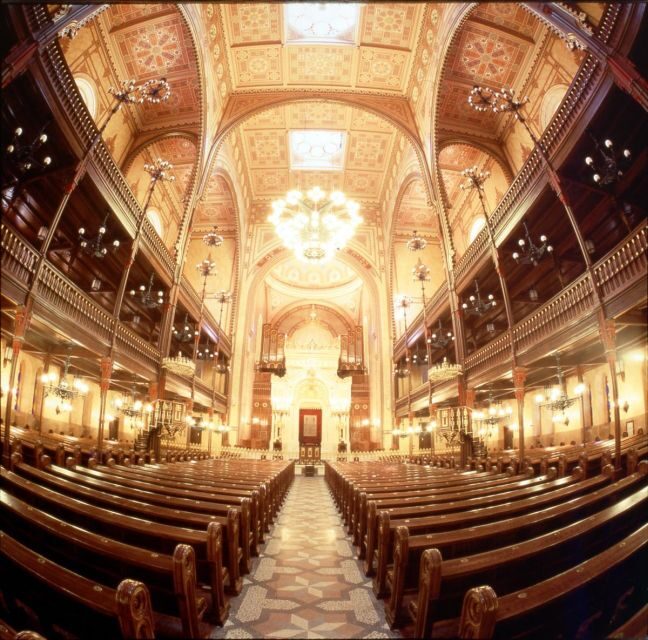
- Second-largest synagogue interior: you’re not stuck outside looking in.
- Former Jewish ghetto walk: you’ll connect locations to what happened there.
- Jewish Museum time: context helps the stones and street names make sense.
- Tree of Life + Temple of Heroes area: the walk continues beyond the synagogue.
- Coffee and cake stop in the Jewish Quarter: a practical reset before the finish.
- Private format: you can ask questions without getting rushed by a group.
A smart 3 hours for Budapest’s Jewish Quarter
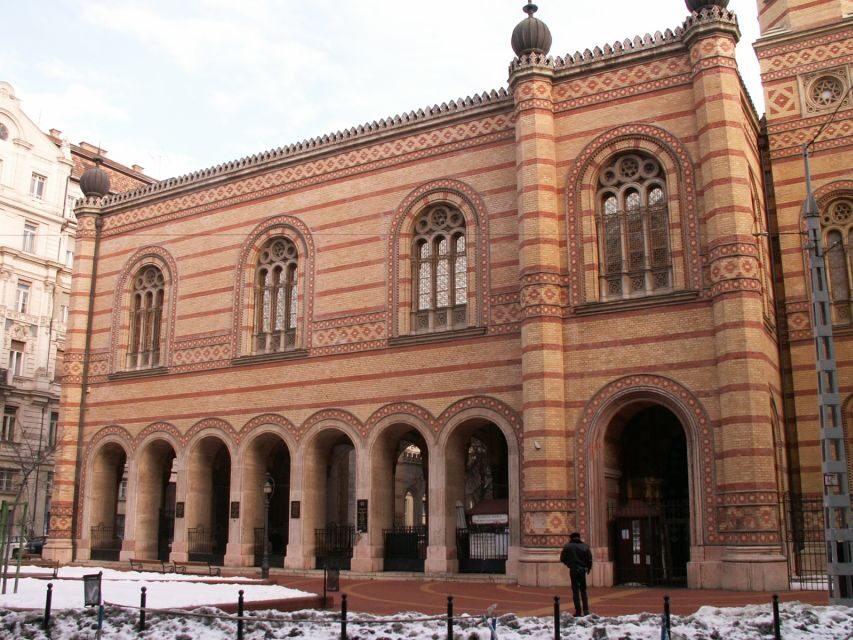
Budapest can feel like a city you either rush through or study deeply. This tour is a good middle path. In 3 hours, you cover the core landmarks of Jewish Budapest in a way that’s easier to remember than a self-guided sprint.
The “private” part matters. It’s not just comfort. It means your guide can adjust the pace—say, more historical detail if you ask, or more orientation if you’re not sure where things are.
And since you’re in the Jewish Quarter for the finish, you can keep exploring after the tour without having to re-orient yourself from scratch.
You can also read our reviews of more private tours in Budapest



Pickup, meeting point, and getting your bearings fast
Hotel pickup is included from accommodations anywhere in Budapest (hotels, apartments, Airbnbs, and private addresses). That’s genuinely useful here, because your route is built around clustered stops in central areas. Less time lost to trains or buses means you start seeing sites sooner.
Before you go, do one simple thing: confirm the exact pickup time and location when your booking is confirmed. Start-time confusion shows up in real-world tours often enough that a quick message to the operator saves stress. You want to spend your energy on the sights, not the sidewalk logistics.
This is also a good tour if you’re traveling solo, in a couple, or with friends and want a focused experience. You’ll be walking, so wear shoes you’d be happy to walk in for a few hours.
Former Jewish ghetto walk: where street names become history
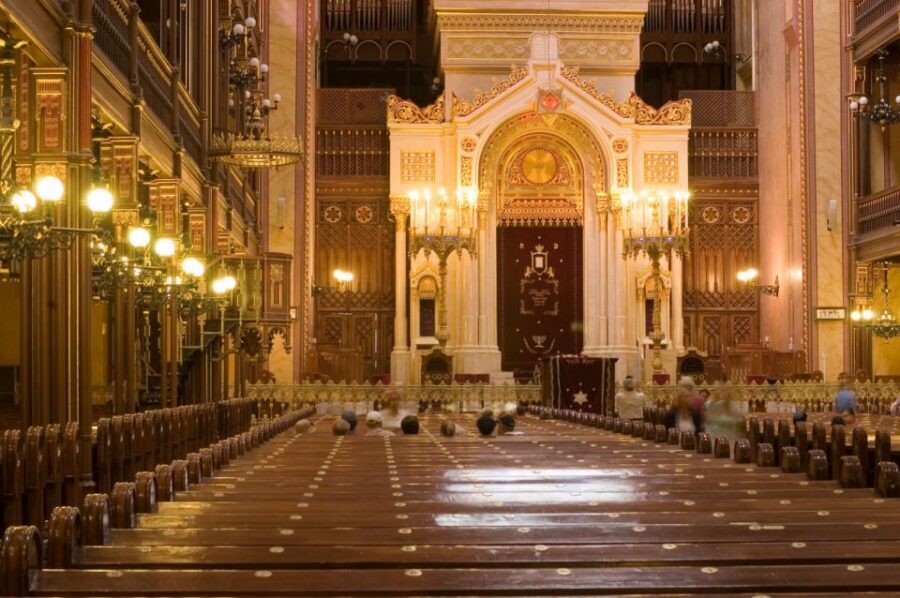
One of the strongest parts of this tour is the walk through Budapest’s former Jewish ghetto. A ghetto isn’t just an idea on a map. It’s streets, buildings, and neighbors—spaces that shaped daily life and choices.
As you go, the best thing you can do is watch for how your guide connects the physical setting to what they’re describing. Even when you’ve read about the period before, walking through the area makes it harder to treat the story like a distant chapter.
Practical tip: keep your questions ready. If there’s a specific period you care about—early communities, later restrictions, or the Holocaust era—ask your guide to point out what the area can teach you. With a private tour, you’re not stuck with the same script as everyone else.
A note on pacing: a couple of people who tried similar tours felt the focus leaned more toward monuments than everyday life. If you’re the type who wants the human story—how people lived, worked, and survived—tell your guide that up front.
Dohány Street Synagogue inside: size, meaning, and etiquette
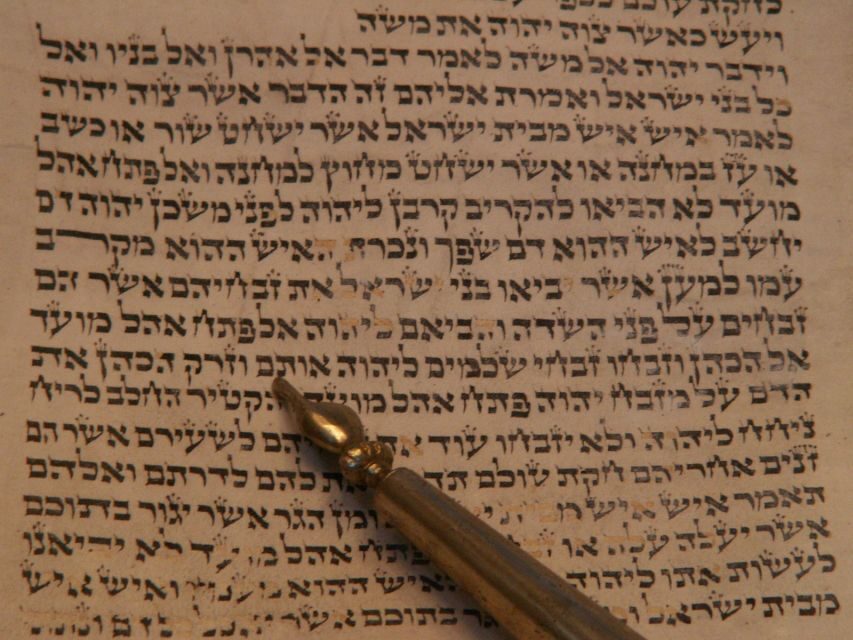
Now for the headliner: the Dohány Street Synagogue. This tour doesn’t just show you the exterior; it takes you to the interior of the world’s second-largest synagogue. That alone justifies a guided approach, because the meaning of the place is harder to grasp from photographs.
Inside, pay attention to scale. Big religious spaces often feel like architecture first, but your guide should help you read it as a symbol—community, resilience, and continuity. If your guide has a gift for clear storytelling (some guides, like Elisabeth, are described as both competent and humor-friendly), that tone can make an emotionally heavy subject easier to follow without becoming flat.
Etiquette basics still apply: behave respectfully, keep your voice low, and be ready to follow any on-site rules your guide mentions. When you enter sacred spaces, your best contribution is simple—slow down and let the guide’s explanations land.
If you’re sensitive to crowds, understand that the synagogue is a major site, even when this tour is private. Plan for short waits or practical movement, but the interior visit is the key payoff.
Jewish Museum: context that turns monuments into a story
After the synagogue, you’ll tour the interior of the Jewish Museum. This is where the tour becomes more than sightseeing.
Museums help you connect symbols and memorials to documented history. Without this stop, you’d see important buildings and landmarks but might struggle to place them in a bigger timeline. With the museum included, you have a built-in chance to fill in gaps: how Jewish life in Budapest developed, what changed over time, and why these landmarks matter today.
This is also a good moment to ask for clarification. If there’s a topic you want explained—how the community organized itself, major turning points, or how memory is preserved—this museum time is often the best place to ask, because the exhibits are already doing the heavy lifting for context.
One practical consideration: museum time can feel fast if you’re a slow reader or you want to linger. If you like to take your time, say so at the start and ask your guide to give you a bit more breathing room on the most relevant galleries.
You can also read our reviews of more historical tours in Budapest




Tree of Life, Temple of Heroes, and Jewish Garden cemetery stops
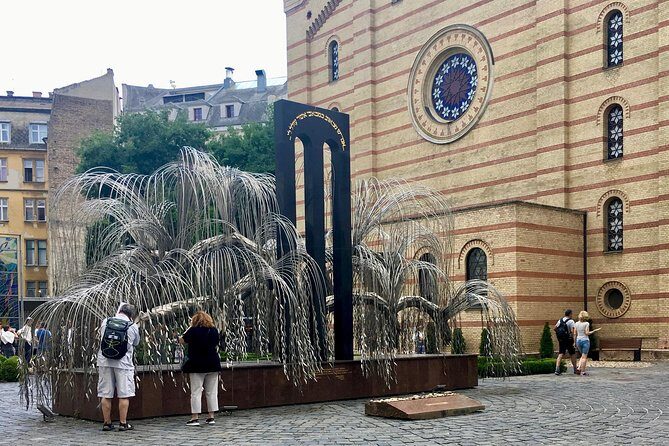
After the museum, you’ll shift to outdoor landmarks, including the famous Tree of Life, the Temple of Heroes, and the Cemetery in the Jewish Garden.
These stops are not random add-ons. They’re part of how Jewish heritage is remembered in Budapest—through memorial art, cemetery symbolism, and commemorative spaces. If you come in expecting only “buildings,” these are the places that teach you how remembrance becomes landscape.
Here’s what to do to get the most from these outdoor stops:
- Look for symbolic elements your guide points out, not just the overall view.
- Take a minute to pause in each area before rushing to the next.
- Ask one question about what the location is meant to convey—because these sites often carry layers of meaning.
If you’re the kind of traveler who likes to connect the dots, this sequence is satisfying: synagogue and museum for community and history, then garden spaces for memory and continuity.
The coffee and cake stop in the Jewish Quarter

At the end, you’ll stop to enjoy coffee and cake at a local pastry shop, before the tour ends in the Jewish Quarter.
This is a nice reset. After walking and reading the story in multiple formats, you get a chance to exhale and digest what you just learned—plus it’s a practical transition if you plan to keep exploring on your own.
One thing to know: meals and beverages are listed as not included. So treat this coffee and cake as a bonus stop, not a guarantee that it’s covered in the tour price.
Price and value: is $150 per person worth it?
The price is $150 per person for a private 3-hour tour with guide service included. Entrance fees are not included, and meals and beverages aren’t included.
So where does the value come from?
- Private guide time: three hours of live guidance is the core product. If you like asking questions and getting explanations tailored to you, private format pays off.
- High-impact sites: the Dohány Street Synagogue interior and the Jewish Museum are both key stops. Those aren’t just quick photo moments.
- Efficient route: pickup included helps. You spend more time at sites and less time navigating.
Is it the cheapest way to see the basics? No. But if you want to understand what you’re looking at—especially in a history-heavy area—this is the kind of cost that often makes sense.
If you’re budget-focused and happy with basic background, you might prefer a self-guided walk. But if you want the sites explained and you value a calm, private pace, $150 can be reasonable.
What to expect from your guide (and how to get the most)
The guide is live and available in Spanish, English, French, German, and Italian. Your guide’s role is to connect sites with meaning, not just to point and read.
From the range of real experiences people shared, two patterns show up:
- When the guide communicates clearly, the tour feels satisfying and easy to follow, even when the topic is heavy.
- When pacing is slow or the focus stays mostly on monuments, some people feel they want more on daily life during the most difficult periods.
You can fix that in advance. Start your tour with a simple request:
- Ask for extra emphasis on daily life and how restrictions changed the community over time.
- Ask what you should prioritize if you remember only a few things.
In a private setting, those requests actually matter.
Who this tour is best for
This is a good fit if you:
- Want Jewish heritage in Budapest in a compact time window.
- Value being inside the Dohány Street Synagogue and spending time in the Jewish Museum.
- Prefer a guided narrative over doing a monument checklist on your own.
- Travel with someone who likes history and would enjoy structured stops like the Tree of Life and Jewish Garden cemetery area.
It’s less ideal if you’re looking for a long, deep analysis that spreads over a full day, or if you want lots of free time at each location without a set route.
Should you book this Budapest Private 3-Hour Jewish Heritage Tour?
If you want a guided, high-yield introduction to Jewish Budapest, I think this is a solid booking. The best reasons are practical: the tour is private, it covers the biggest landmarks in about three hours, and it includes the synagogue interior plus Jewish Museum context, which is what turns photos into understanding.
I would book it if you’re comfortable with a structured walk and you want explanations while you’re there. I’d be cautious if you strongly want an extended focus on specific periods of daily life and survival, because the route is short and monument-driven—so go in prepared to ask your guide to lean into that topic.
FAQ
How long is the Budapest Private 3-Hour Jewish Heritage Tour?
It lasts 3 hours.
What’s included in the tour price?
The tour includes guide service. Entrance fees and meals or beverages are not included.
Does the tour include hotel pickup?
Yes. Pickup is provided from any accommodation (hotels, apartments, airbnbs, and private addresses within Budapest).
Which sites are visited during the tour?
You’ll visit the former Jewish ghetto area, the Dohány Street Synagogue interior, the Jewish Museum interior, and outdoor stops including the Tree of Life, Temple of Heroes, and the Cemetery in the Jewish Garden. The tour also ends in the Jewish Quarter.
Are entrance fees included?
No, entrance fees are not included.
Is the tour private?
Yes. It’s a private group.
What languages are available for the live guide?
The guide is available in Spanish, English, French, German, and Italian.