REVIEW · BUDAPEST
Historical and Cultural Walking Tour in Budapest
Book on Viator →Operated by György Rashad Salamon · Bookable on Viator
Budapest looks best when you’re walking, not riding. This private half-day tour connects the big monuments with the everyday stories that explain why they look the way they do. You’ll move between Pest and Buda on foot, with a guide who links architecture, politics, and daily life into one easy route.
I especially like having a real guide instead of trying to piece it together alone. You get personal stories as you go, plus the chance to tweak the itinerary to what you care about most. And since this is a private setup (up to 10 people), you can ask questions without shouting over a crowd.
The main thing to consider is that it’s still a walking tour. It’s about 4 hours with a moderate fitness level requirement, so wear comfortable shoes and plan to keep a steady pace.
In This Review
- Key things I’d plan around
- A private Budapest route that actually makes sense
- Meeting at Deák Ferenc tér and starting without stress
- Heroes’ Square: Hungarian roots in stone (and symbolism)
- City Park and Vajdahunyad Castle: 1000 years in one stroll
- Széchenyi bath culture: what thermal water means in Hungary
- Andrássy Avenue and the Opera House: Budapest’s Champs-Élysées
- St. Stephen’s Basilica and the Holy Right Hand
- Liberty Square to the Parliament: dictatorship, communism, democracy
- Buda Castle and the Chain Bridge: the big finish on the hill
- Price and what $277.64 per group really buys you
- Walking comfort: your best tools are shoes and a steady pace
- Who this Budapest history walk is best for
- Should you book this tour?
- FAQ
- FAQ
- How long is the Budapest walking tour?
- What time does the tour start, and where does it end?
- Where is the meeting point?
- Is hotel pickup included?
- How big is the group?
- Are tickets or entry fees included?
- Is food and drinks included?
- Is there a fitness requirement?
- Can I cancel for a full refund?
Key things I’d plan around
- On-foot hotel pickup included, so you start the walk without wrestling with directions
- Private guide with room to customize the route as your interests change
- Heroes’ Square to Buda Castle in one loop, covering both sides of the river efficiently
- City Park + Vajdahunyad Castle, with a focus on Hungarian architectural themes
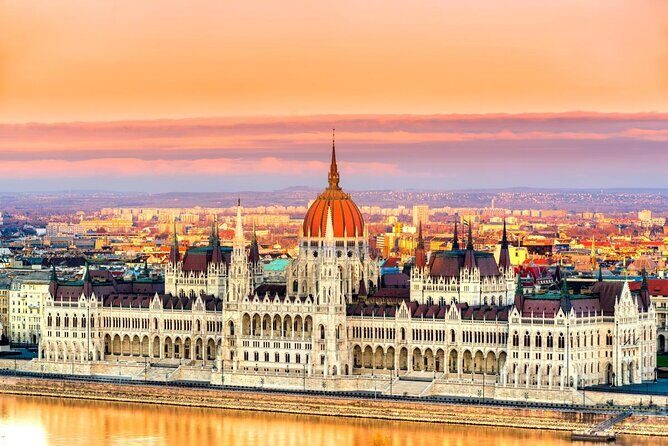
- Opera House and St. Stephen’s Basilica, plus the walk past Parliament to connect past to present
A private Budapest route that actually makes sense
Budapest can feel like two cities stitched together: the wide, structured streets of Pest and the layered, historic hilltop world of Buda. This tour is designed to help you see the connection without wasting time. The format is simple: a guided walking circuit that hits the major highlights, then adds context so you understand what you’re looking at.
You’ll also get a guide who can answer the questions that usually pop up on your own—who built this, why is that symbol here, what changed under different governments, and how did ordinary people live around these places. That context turns a list of famous sights into a story you can remember.
If you like a plan with flexibility, this is a strong fit. The itinerary can be adjusted around you, which matters in Budapest where weather and lighting can change your mood fast. And since admission at the stops listed is free, you’re not constantly juggling extra costs mid-walk.
You can also read our reviews of more walking tours in Budapest

Meeting at Deák Ferenc tér and starting without stress
The tour meets at Deák Ferenc tér, a central hub that’s close to public transportation. That’s handy because it gives you options if your hotel pickup is delayed or if you simply prefer to meet at the starting point.
If you choose the pickup, the tour includes hotel pickup (on foot). In real life, that can save your energy for the walk rather than spending your morning figuring out which street aligns with which entrance.
This is also a “start once, end where you started” style tour—the experience ends back at the meeting point. That matters if you have dinner reservations or you just want an easy way to get back to your plans afterward.
Heroes’ Square: Hungarian roots in stone (and symbolism)
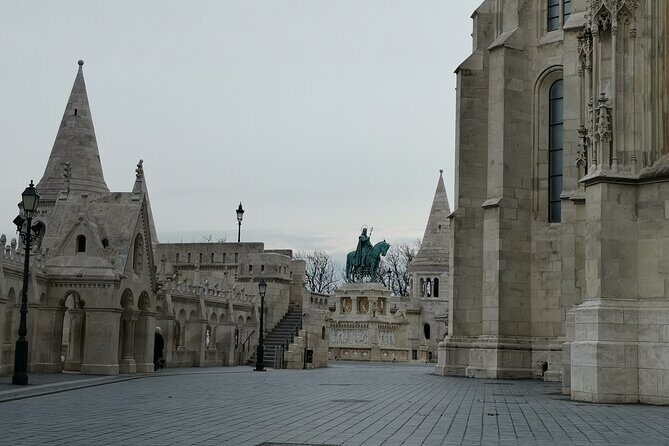
You kick things off at Heroes’ Square, one of the city’s most iconic memorial spaces. The focus here isn’t just taking photos—it’s learning what the statues represent and why they matter to Hungarian identity.
You’ll spend about 20 minutes here, long enough for the basics and for you to notice details you’d normally miss. If you’ve ever wondered why certain cities build these grand statue-and-arch setups, this stop gives the cultural reason behind the shape. It sets the tone for everything after, especially when you start seeing how later periods of history left visible marks in Budapest.
Consider this: if you’re jet-lagged, Heroes’ Square is a good place to reset mentally. It’s visually dramatic, but the guide’s job is to slow it down and explain what you’re actually looking at.
City Park and Vajdahunyad Castle: 1000 years in one stroll
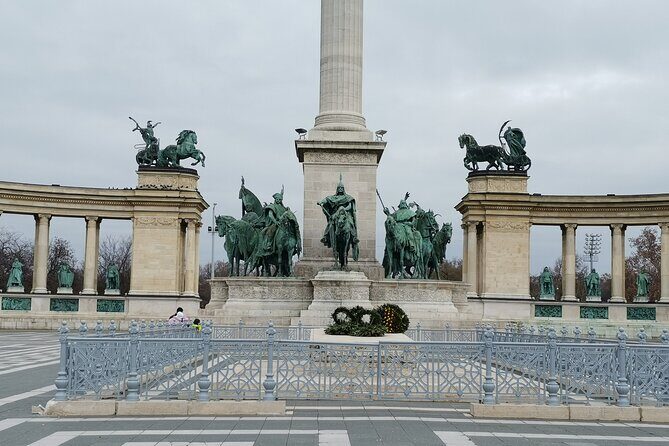
Next you head to City Park and Vajdahunyad Castle. The tour frames City Park as one of the first public parks in the world designed for people to relax—an idea that still shapes how locals use the space today.
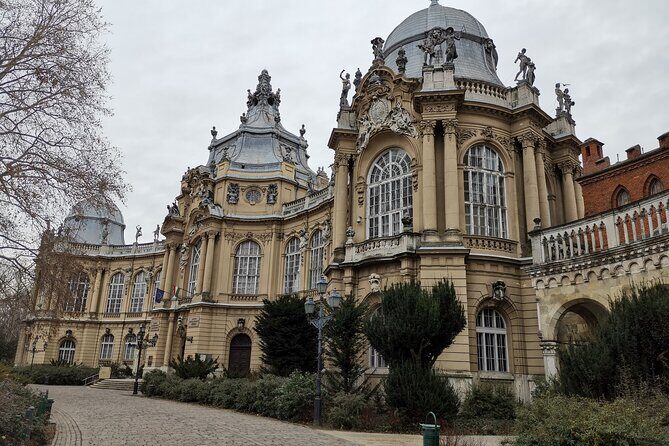
Vajdahunyad Castle is where the story gets architectural. The castle is designed to represent a full sweep of Hungarian architecture, with the guide connecting the look of the buildings to the idea of “1000 years” of national style. You’ll also get time to look inside, which is a big plus because it turns the exterior theme into something you can see more clearly.
You’ll spend about 45 minutes in this area. That’s enough time to absorb the themes without feeling like the tour is rushing through the park. It’s also a good moment to breathe—City Park is one of Budapest’s easiest places to take in a wide open view without climbing stairs immediately after.
Possible drawback: it’s park time, which can mean uneven surfaces depending on where you walk. Wear shoes that handle outdoor paths, not just polished sidewalks.
Széchenyi bath culture: what thermal water means in Hungary
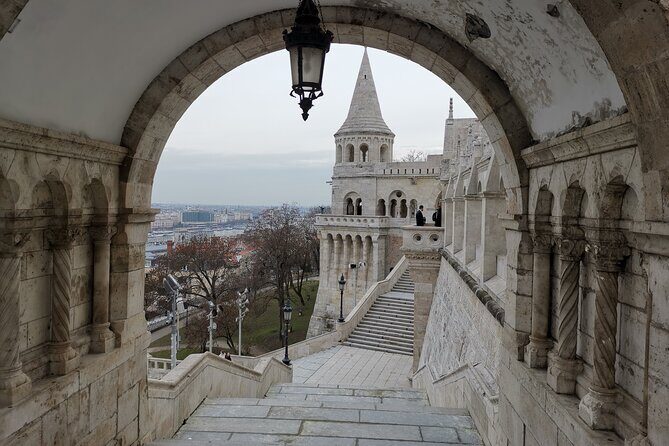
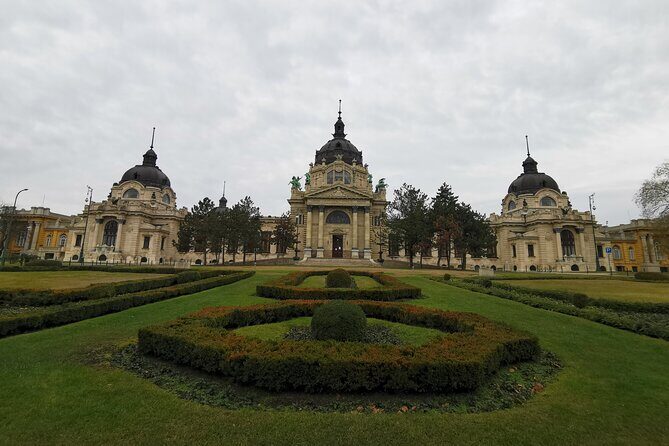
As you walk through City Park, you’ll talk about Széchenyi bath culture. Even if you don’t go inside the baths themselves, the guide explains how thermal water fits into Hungarian life and why the baths are more than a tourist activity.
This stop is short on formal “entry” details, but it adds a key cultural layer. Budapest isn’t only history—it’s also habits and rituals. Baths are a major part of the city’s rhythm, and hearing the cultural angle helps you understand why these places show up again and again in local conversation.
If you’re the type who likes to plan future day trips, this is also a gentle way to decide whether you’ll add a bath visit later. The tour’s timing won’t replace a full bath visit, but it can point you toward what to look for when you do.
You can also read our reviews of more historical tours in Budapest





Andrássy Avenue and the Opera House: Budapest’s Champs-Élysées
Then comes Andrássy Avenue, often compared to Paris’ famous boulevard style. Expect a long, elegant street lined with neo-renaissance mansions and townhouses, plus the kind of high-end shops and classic cafés you associate with a city center.
You’ll spend about 30 minutes here, which works well because it gives you time to notice the street’s “flow” instead of just hurrying past it. It’s also one of those stretches where you start to see the planned grandeur Budapest built during different eras.
Your next stop is the Hungarian State Opera House (Magyar Állami Operaház). The tour visits the building and shares its story, with about 25 minutes allotted. Even if you’re not an opera person, the building’s presence makes a point: Hungary’s cultural ambition wasn’t only political. It was also artistic, and you can see that in the way this architecture was designed and maintained.
Tip for you: take a second to look up as you walk. On Andrássy Avenue, the details in façades are where the street earns its reputation.
St. Stephen’s Basilica and the Holy Right Hand
After that, you head to St. Stephen’s Basilica (Szent Istvan Bazilika). The tour visit is about 15 minutes, and the highlight is the relic connected to Hungary’s first king: the Holy Right Hand, described as the mummified hand of St. Stephen.
This stop is short, but it’s meaningful because it connects the country’s early foundation stories to an object you can’t just treat as a decoration. It helps explain why certain buildings are considered national symbols, not only religious sites.
If you like moments that feel symbolic rather than just scenic, this is one of the strongest “meaning stops” on the route.
Liberty Square to the Parliament: dictatorship, communism, democracy
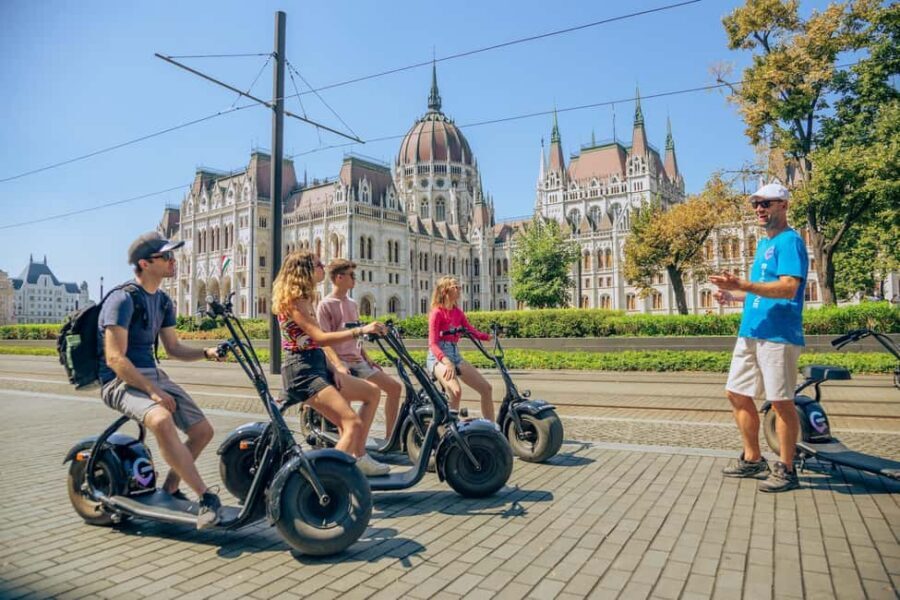
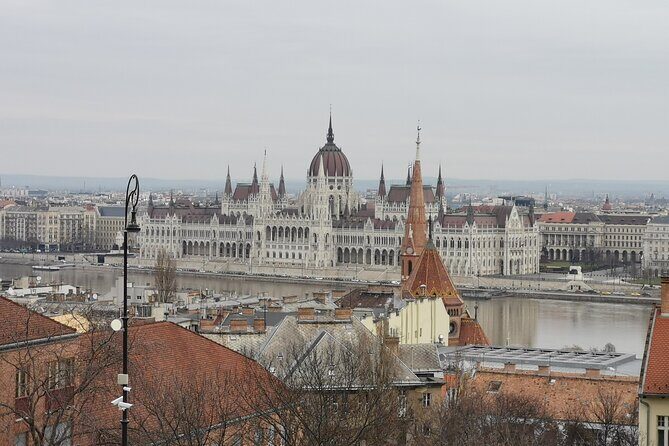
From the basilica, the tour crosses through Liberty Square toward the Hungarian Parliament. This is your transition from sacred relic to political landmark, and the guide connects what you see to the country’s shifting systems of power.
The tour describes the Parliament building as one of the most beautiful in the world and spends time talking about how political life evolved through dictatorship, communism, and into democracy. In other words: you’re not just staring at a landmark—you’re learning what changes in government look like in real architecture and public space.
What to watch for: on this part of the walk, look for how the street layout “frames” the building. Even if you don’t know the exact date of everything, you’ll start to understand the idea of Parliament as a national stage.
Buda Castle and the Chain Bridge: the big finish on the hill
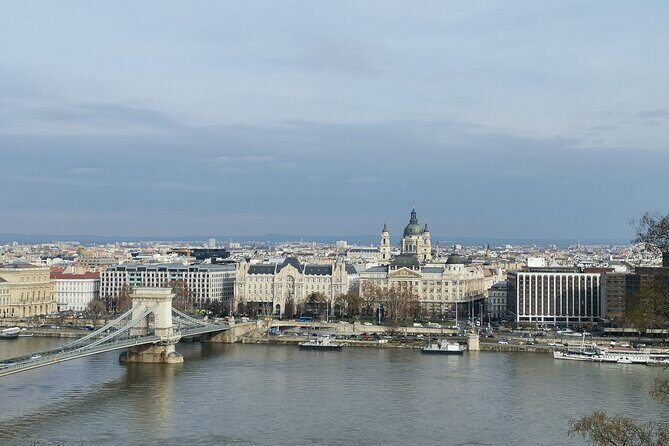
To close the tour, you head to Buda Castle, described as the medieval residence place of Hungarian kings from the 14th century. You’ll spend about 1 hour here, which is a smart amount of time—Buda Castle is expansive, and it takes time to shift from walking mode to sightseeing mode.
A key moment is crossing the Chain Bridge. This bridge isn’t only about getting from one side to the other. It’s part of the city’s visual story: a connection between the modern city and the older, high-ground history.
In Buda Castle, you get to see why Buda is often felt as the older soul of the city. Even if you’ve visited other European hilltop castles, this one has a Budapest-specific feel because it sits at the center of the city’s “two halves” identity.
Practical note: this final stretch can feel like the most physically demanding part. You’re on foot, and depending on your route through the castle area, you may encounter steps and uneven surfaces. Plan to slow down and enjoy it rather than power through.
Price and what $277.64 per group really buys you
The price is $277.64 per group (up to 15 people). That means your “value math” depends on how many people are in your booking.
Here’s how I think about it:
- If you’re traveling as a couple or a small group, you’ll likely appreciate the private guide and hotel pickup more than the sightseeing itself, because you’re paying for time and interpretation.
- If you can fill more seats, the cost spreads out, and the per-person value becomes much easier to justify.
It’s also notable that admission tickets for the listed stops are free, which helps protect your budget. The tour includes a professional guide and hotel pickup, so you’re not paying extra for basic services that many tours treat as add-ons.
What’s not included is food and drinks, and transportation tickets. That’s normal for a walking-based plan, but it matters if you’re the type who likes to hop into cafés mid-tour. You’ll want a simple plan: eat before or after, not during, unless you know you’ll be able to take quick stops that fit your pace.
Walking comfort: your best tools are shoes and a steady pace
This tour is about 4 hours long with a moderate physical fitness level. That doesn’t mean it’s extreme, but it does mean you should come ready to walk continuously for long stretches.
I recommend:
- Comfort-first shoes that handle uneven pavement and park paths
- A layer for weather changes—Budapest can shift fast in temperature and wind
- A light daypack with water (since food and drinks aren’t included)
Also pay attention to timing between stops. Each highlight is given a realistic window: 20 minutes at Heroes’ Square, 45 minutes at City Park/Vajdahunyad, then shorter visits at Opera House and St. Stephen’s Basilica, followed by an hour in Buda Castle. That pacing is built to keep the tour lively without dragging.
Who this Budapest history walk is best for
This tour is a great fit if you:
- Want the major landmarks of both Pest and Buda without spending your day piecing together logistics
- Like history told as stories tied to real places
- Prefer a private guide who can adjust the route to your interests
- Are okay with walking at a steady pace for about half a day
It’s also a good idea for first-time visitors who want a “see it all, understand it later” foundation. After this kind of tour, you’ll usually find it easier to choose which neighborhoods or sights deserve your extra time.
If you want a tour that’s almost fully indoors or mostly passive, this one may feel more active than you want—parks and castle areas involve walking and open-air exposure.
Should you book this tour?
I’d book it if you want a Budapest highlights tour with real context and you care about getting the meaning behind the monuments. The big win is the mix: Heroes’ Square, the architectural theme of Vajdahunyad Castle, culture talk around Széchenyi bath, and then the political storyline that lands at Parliament before finishing on the Buda Castle hill.
Skip it only if you have trouble with moderate walking or you want a very short, minimal-step outing. Otherwise, this is an efficient, thoughtful way to see Budapest in a single half-day while getting the stories that make the city click.
FAQ
FAQ
How long is the Budapest walking tour?
It’s about 4 hours.
What time does the tour start, and where does it end?
The tour starts at 9:00 am and ends back at the meeting point.
Where is the meeting point?
The meeting point is Budapest, Deák Ferenc tér, Hungary.
Is hotel pickup included?
Yes. Hotel pickup is included, and it’s described as on-foot hotel pickup.
How big is the group?
The group size is capped at a maximum of 10 people.
Are tickets or entry fees included?
Admission tickets for the listed stops are marked as free, but transportation tickets are not included.
Is food and drinks included?
No. Food and drinks are not included.
Is there a fitness requirement?
The tour requires moderate physical fitness level.
Can I cancel for a full refund?
Yes. Free cancellation is available if you cancel up to 24 hours in advance for a full refund.