REVIEW · BUDAPEST
3 Hours Budapest Segway Grand City Tour Buda, Margaret and Pest
Book on Viator →Operated by Segway BP · Bookable on Viator
A Segway tour turns Budapest into a quick highlight reel. You get the feel of three big areas of the city in one go—Danube bridges, the Castle District, and the river’s other-star, Margaret Island—without feeling like you’re stuck in traffic or slow sightseeing lines. Guides like Daniel (from one recent group) also keep the vibe calm and confidence-building right from the start.
I love how this tour is set up for first-timers: there’s Segway training time before you roll out. Then you’re given enough time at key viewpoints that you’re not just zip-past-and-snap; you can actually look, ask questions, and take in what’s around you.
One thing to plan for: several of the city’s biggest interiors cost extra. You’ll see places like Matthias Church, St. Stephen’s Basilica, and the Budapest Parliament area from outside (with some entry opportunities), so your total spending may rise if you want inside access, and the tour also depends on good weather.
In This Review
- Key highlights at a glance
- Where the tour starts: Haris köz and Segway confidence
- Bridge hopping on the Danube: Erzsébet to Széchenyi Chain Bridge
- Castle District without the over-walking: gardens, stairs, and viewpoints
- Pest highlights: Parliament area, Liberty Square, and basilica views
- Margaret Island: a park break, UNESCO stop, and fountain moments
- The “extra” memorials and small statues that make the city click
- Price and value: what $102.84 buys you in real time
- Who this tour suits best (and who should think twice)
- Should you book the 3-hour Budapest Segway tour?
- FAQ
- How long is the Segway tour?
- Do I need Segway experience before I go?
- Is the tour in English?
- Is this a private tour?
- What’s included in the price?
- Which major places have extra entrance fees?
- What happens if weather is bad?
Key highlights at a glance
- Training included before you start so you can get comfortable fast, even if you’ve never ridden one
- A smarter pace than walking or biking—you cover a lot of Budapest without feeling rushed
- Danube bridge views from multiple angles, including Erzsébet Bridge and the Széchenyi Chain Bridge
- Castle District stops with big-photo potential like Aussicht-style viewpoints and the Matthias Church area
- Margaret Island and the Musical Well for a change of mood from city streets to park-like calm
- Professional, attentive guiding with repeat praise for safety and smooth group control
Where the tour starts: Haris köz and Segway confidence
The whole experience begins at Segway BP (Haris köz 2, 1052 Hungary), where you’ll first do training and then start the real tour right after. This matters more than you might think. Budapest has hills and lots of “corner” moments—quick turns, tight spaces, and sudden viewpoints—so that practice time helps you get your balance before you’re mixed into the sightseeing flow.
You’re provided with a helmet and your own Segway, plus a tour leader who stays focused on keeping the group moving safely. In the reviews, names like Alec and Ahmed show up repeatedly in connection with beginner support and careful watchfulness. That’s a good sign if you’re the type who gets tense on scooters or you’re still figuring out steering and stopping.
You should also know the tour runs about 3 hours to 3 hours 20 minutes, which is a sweet spot: long enough to feel like you explored, short enough that you can still plan a strong evening afterward.
You can also read our reviews of more city tours in Budapest



Bridge hopping on the Danube: Erzsébet to Széchenyi Chain Bridge
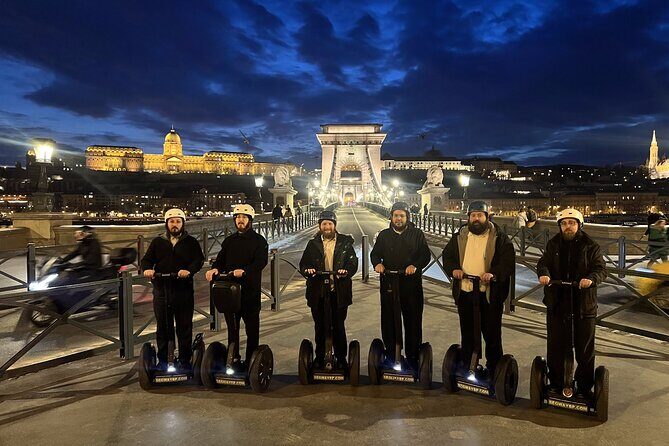
After training, you roll into some of Budapest’s most famous river moments. The first major photo stop is Erzsébet Bridge, a suspension bridge completed in 1964 that connects Buda and Pest. Even if you’ve only seen it in photos, being there in motion gives you a better sense of how the river splits the city—and why the bridges matter so much to how Budapest was built.
Next comes the Szent Gellért Monument area on a hill overlooking the Danube. It’s a colonnaded structure and home to the imposing statue of an 11th-century monk. This is one of those stops where the Segway helps you reach the viewpoint with far less effort than you’d spend on foot.
Then you pass the Statue of Queen Elizabeth (a quick stop, but it breaks up the bigger “bridge to church” rhythm). The pacing here is smart: short photo breaks keep your momentum, and they also give you time to recover before the bigger sights.
The tour’s bridge sequence continues at the Széchenyi Chain Bridge, described as the oldest and biggest bridge in the city. You’ll get a brief moment at this classic crossing—short enough to stay efficient, long enough to take photos and understand what you’re looking at.
If you’re sensitive to heights or you don’t love windy spots, note that bridge areas can feel exposed. Still, this is exactly where a Segway’s controlled speed helps: you’re not walking slow while traffic roars past.
Castle District without the over-walking: gardens, stairs, and viewpoints
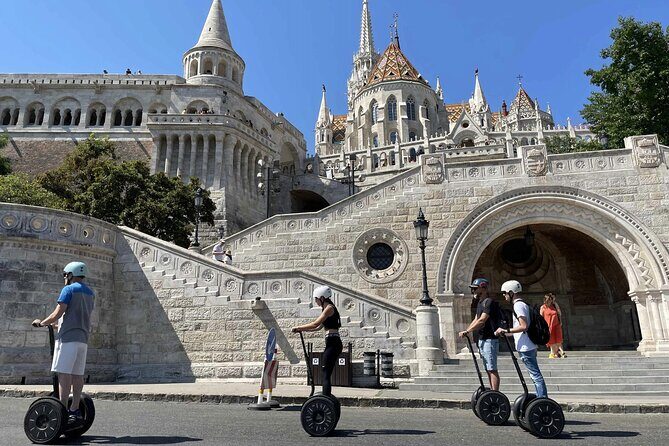
Once you reach the Castle District zone, the tour shifts into “Budapest at postcard depth.” You’ll stop at Castle Garden, described as a renovated 19th-century Neo-Renaissance complex with exhibition halls, theaters, gardens, and restaurants. Even if you don’t go inside any buildings, the area is worth it because it gives you a sense of the district’s layout and scale.
Next, you roll to Clark Ádám Square in front of the Chain Bridge area, named after the British architect who designed the bridge. This is the kind of stop that feels small, but it helps you connect what you’re seeing with why it exists. It’s the difference between viewing a landmark and understanding its function in the city’s geography.
Then comes Schulek Staircase, tied to Frigyes Schulek, the architect linked to restoring and redesigning the Church of Our Lady, known as the Church of St. Matthias. The staircase area is also a good “transition” point—your mind shifts from street-level navigation to the higher, more monumental thinking of the Castle Quarter.
You’ll then spend time around Matthias Church for about 30 minutes. The tour includes time at the church area, though entry is not included. The upside: you get enough time to slow down, take photos, and decide on-the-spot whether you want to pay to go in. If you do, it’s also the stop where you’ll likely want to dress for a church visit (shoulders and modesty matter in many European churches).
After that, you hit the Castle District Townhall viewpoint, where you get city and river views, including a strong view toward Parliament. This is one of the stops where you’ll be grateful you’re on wheels. You can reach the lookouts without spending the entire day climbing steps.
A practical note: the Castle District can be busy. Even so, the Segway format helps you avoid some of the crowd “stalling” you see when people are walking in lines and stopping every ten feet.
Pest highlights: Parliament area, Liberty Square, and basilica views
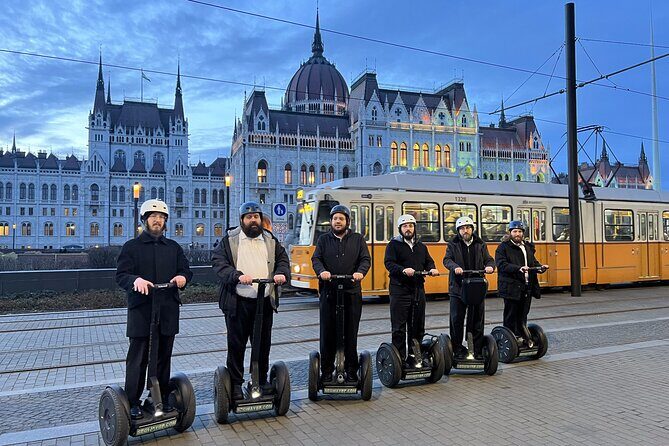
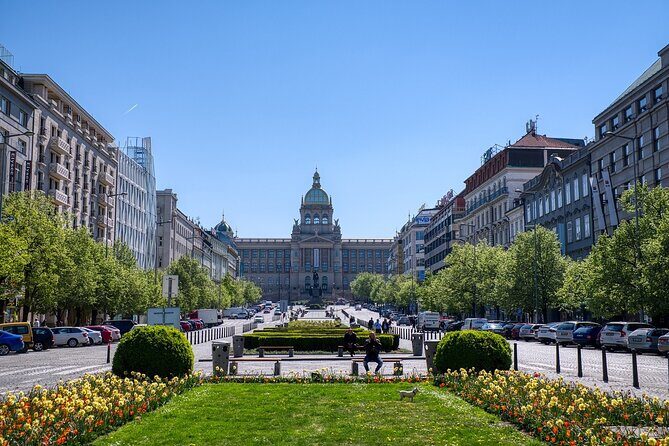
The tour doesn’t just treat Pest as the “other side.” It gives you recognizable anchors in a logical flow. You’ll head toward Kossuth Lajos Square for a short but strong look toward the riverside and Parliament area. Then it’s on to Budapest Parliament, noted as the third biggest parliament building in the world. Entry isn’t included, so plan on exterior viewing unless you decide to purchase tickets separately.
From there, you reach Shoes on the Danube Bank, the Holocaust memorial for victims. This is an emotionally heavy stop, and the brief time can feel quick if you want to read every plaque carefully. Still, even a short visit helps, because the monument’s placement on the riverbank hits differently than photos on a phone.
Next is Szabadság tér (Liberty Square), followed by the Fat Policeman Statue on Zrinyi utca. These stops may feel like “short breaks,” but that’s actually the point. You’re balancing monumental stops with quirky street-level details that make the city feel lived-in.
Then you reach St. Stephen’s Basilica (Szent István Bazilika). It’s the biggest church in the city, and it’s a stop where you’ll likely want to take a moment to just look up. Entry isn’t included, so treat it like a viewpoint first. If you do go inside, budgeting for an entrance fee will help you avoid last-minute surprises.
Finally, you glide past the shopping street area (you’ll get a chance to see the commercial side of central Pest), then end up at a Budapest Ferris Wheel stop for a quick moment. It’s not a long ride, but it adds a modern touch to a day that otherwise leans monumental.
Margaret Island: a park break, UNESCO stop, and fountain moments
Margaret Island changes the mood. After the city’s denser sights, you cross over to Margit-sziget, the natural island named after Hungarian princes from the 13th century. This segment gives you a break from the hard edges of streets and architecture.
You’ll spend about 10 minutes here, which is perfect for a quick reset: look around, soak up the green contrast, and remember you’re still in Budapest. It’s also a nice reminder that the Danube isn’t just a dividing line—it’s a playground and a pause button.
Then there’s the Musical Well, described as a heritage protected by UNESCO, with a musical and dancing fountain show. The time at this stop is around 10 minutes. If you’re there when it’s running, great. If not, you’ll still get the core reference point, but it’s smart to be aware that fountain show timing can affect what you actually see.
From the island back into the city rhythm, the tour keeps moving toward the riverfront memorial stops and central squares, so you end the day with a full-circle sense of place.
You can also read our reviews of more tours and experiences in Budapest






The “extra” memorials and small statues that make the city click

Some tours only chase big-ticket monuments. This one also includes smaller anchors that make Budapest feel specific. Two that stand out:
- Carl Lutz Memorial, including a memorial tree connected to Michael Jackson (as referenced by the tour info). Even though it’s unusual in a good way, it helps you understand that Budapest isn’t only about rulers and churches—it also reflects people and stories tied to the 20th century.
- The Fat Policeman Statue, which is the kind of landmark you might walk right past without a guide. A quick stop here gives you a memorable visual cue for later as you wander the area on your own.
These short moments are part of why the Segway feels satisfying. You’re not only collecting photos; you’re building a mental map.
Price and value: what $102.84 buys you in real time
At about $102.84 per person, this tour sits in the “worth it if you want efficiency” category. What you’re paying for isn’t just transportation; it’s the full package of time, equipment, and guided navigation.
Included items that drive the value:
- Training time
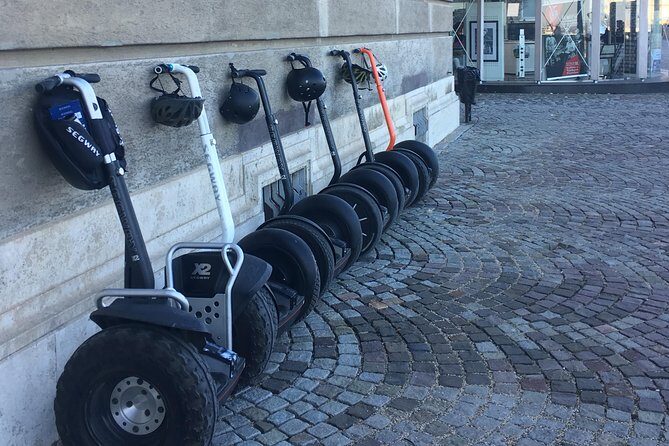
- Helmets and a personal Segway
- Tour leader
- Photo and video recording (so you don’t have to stop constantly to take shots)
- Mobile ticket format
Not included:
- Entry costs for Buda Castle buildings, Matthias Church, Budapest Parliament, St. Stephen’s Basilica, and Szent Gellért Monument (each listed as having separate entrance fees).
- Food and drinks.
In other words, the tour is priced for the experience and the route, while optional building entrances stay separate. For many people, that works well. You’ll still see the major exterior highlights, and you can choose one or two interiors based on time and interest.
If you’re traveling on a tight schedule and you want to cover both sides of the Danube, this price can feel reasonable because it replaces a lot of walking—plus it keeps the stops organized.
Who this tour suits best (and who should think twice)
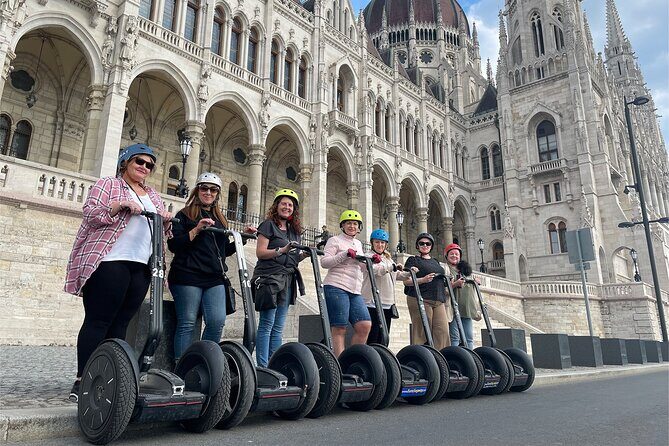
This is a good fit if you:
- Want a first-day or mid-trip “orientation tour” of Budapest.
- Like to see big landmarks without spending your vacation stamina on steep walking.
- Prefer a guide who keeps you safe and helps you feel comfortable on a new device.
It’s also a smart choice for solo travelers. The reviews include solo-female comfort signals, and private touring means you won’t get mixed into a massive group at the start. You still share public space with other pedestrians occasionally, but you’re not stuck in the chaos of a large bus.
You should think twice if:
- You don’t handle movement well on uneven sidewalks or curving paths (you’ll still get training, but a Segway is a mobility device).
- You’re strongly focused on interior museum time. Many key sites are exterior-view here unless you pay for entrances separately.
- Weather is questionable. This experience requires good weather, and poor conditions can change your plans.
Should you book the 3-hour Budapest Segway tour?
Book it if you want a practical hit of Budapest: bridges, Castle District viewpoints, Pest landmarks, and a real change of pace on Margaret Island. The best part is the structure—training first, then an organized route that doesn’t turn into a sprint. With guides like Daniel, Ernesto, Ahmed, Alec, and Alex referenced for safety and strong pacing, you’re likely to get a calm, well-run session rather than a frantic scavenger hunt.
Skip it (or plan a different day) if your priority is museum interiors and you hate the idea of paying extra for churches and major buildings. Also, if you’re visiting during an unstable weather window, it’s worth lining up a backup plan.
If your goal is to see Budapest efficiently, feel confident on the Segway, and walk away with a clear map in your head, this tour is a solid bet.
FAQ
How long is the Segway tour?
The tour lasts about 3 hours to 3 hours 20 minutes, depending on timing and the flow between stops.
Do I need Segway experience before I go?
No experience is required. Training time is included before the tour begins, and a tour leader helps you learn how to ride.
Is the tour in English?
Yes, the tour is offered in English.
Is this a private tour?
Yes. It’s listed as a private tour/activity, meaning only your group participates.
What’s included in the price?
Included items are helmets, a personal Segway, training time, a tour leader, and photo and video recording. You also receive a mobile ticket.
Which major places have extra entrance fees?
Entrance is not included for several major sites, including Buda Castle building areas, Matthias Church, Szent Gellért Monument, Budapest Parliament, and St. Stephen’s Basilica.
What happens if weather is bad?
This experience requires good weather. If it’s canceled due to poor weather, you’ll be offered a different date or a full refund.