REVIEW · BUDAPEST
Budapest: Buda Castle Private Walking Tour
Book on GetYourGuide →Operated by Budapest Private Walks · Bookable on GetYourGuide
Buda Castle tells its story in stone. This private walking tour through the UNESCO Castle District is built around big payoffs: you’ll see the medieval core and the 15th-century “golden period” unfold in real places, and you’ll earn some of Budapest’s most dramatic panoramic Danube views from the walls and viewpoints. My favorite part is having a guide like Attila, who brings the history down to human scale with a dry sense of humor and useful, trip-shaping tips.
One thing to consider: you’re walking on cobblestones and up hills for about three hours, and the tour isn’t suitable for people with mobility issues or wheelchair users. If your legs are great but your footwear isn’t, that’s the one problem you can fix fast.
In This Review
- Key Things I’d Prioritize on This Tour
- The Castle District Is the Best Way to Understand Budapest
- Starting Smooth: Pickup and a Private Guide Who Sets the Tone
- The 3-Hour Loop: How You’ll See 13th-Century to 15th-Century Budapest
- Matthias Church on Holy Trinity Square: A Landmark with a Personality
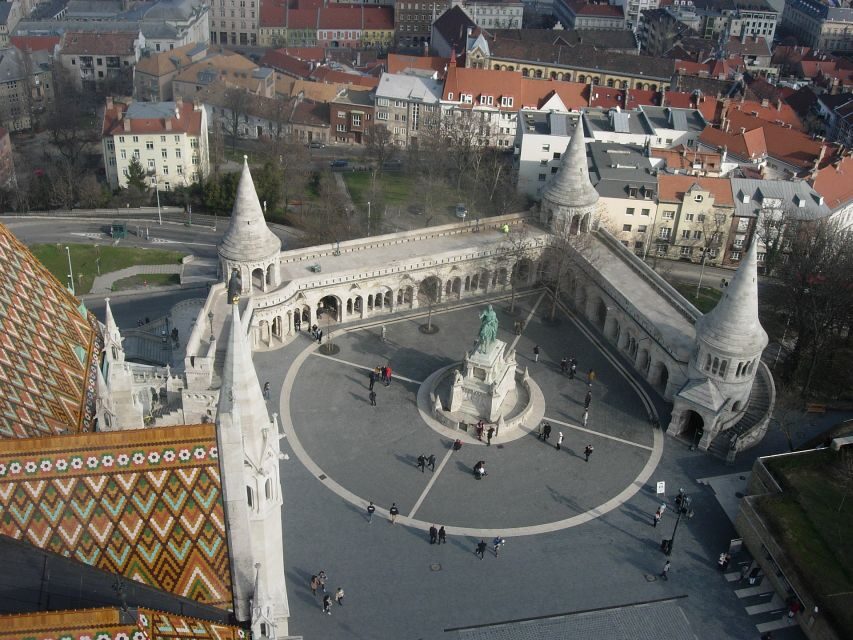
- Fisherman’s Bastion Viewpoints: Where Your Camera Earns Its Keep
- Inside the Castle Complex: Why Buda Castle’s Scale Changes Everything
- Optional Watertown: A Small-Time Extension with Big Atmosphere
- Price and Value: What $141 per Group Really Buys
- Getting the Most from the Walk: Shoes, Weather, and Pacing
- Who This Tour Fits Best
- Should You Book This Buda Castle Private Walking Tour?
- FAQ
- How long is the Budapest Buda Castle Private Walking Tour?
- What is the group size for this private walking tour?
- Is the guide available in English?
- Is pickup included?
- What main sights does the tour include?
- Are entrance fees included in the price?
- What should I bring for the tour?
- Is the tour suitable for wheelchair users?
- Can I extend the tour beyond the 3 hours?
- Is free cancellation available?
Key Things I’d Prioritize on This Tour
- Hotel pickup in Budapest means you skip the “getting started” hassle and start climbing on schedule.
- Attila-style storytelling connects Ottoman, Habsburg, and 1944–1945 changes to what you see in front of you.
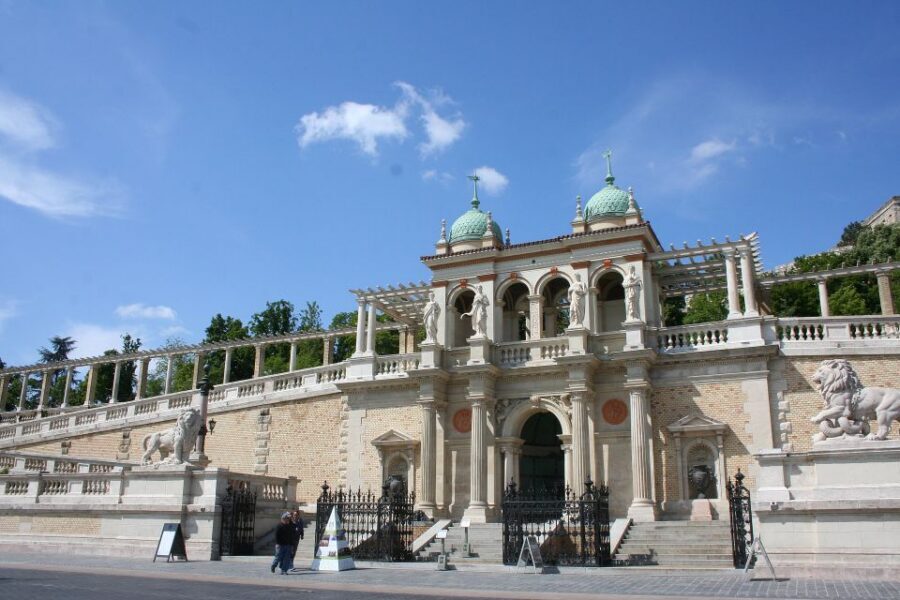
- Matthias Church + Fishermen’s Bastion cover both the religious landmark and the postcard viewpoint in one smooth loop.
- Castle walls views give you a strong sense of where Buda ends and Pest begins across the Danube.
- A private group up to 6 keeps the pacing comfortable and the questions actually get answered.
- Optional Watertown extension can add extra time in the narrow streets between the Danube and Castle Hill.
The Castle District Is the Best Way to Understand Budapest
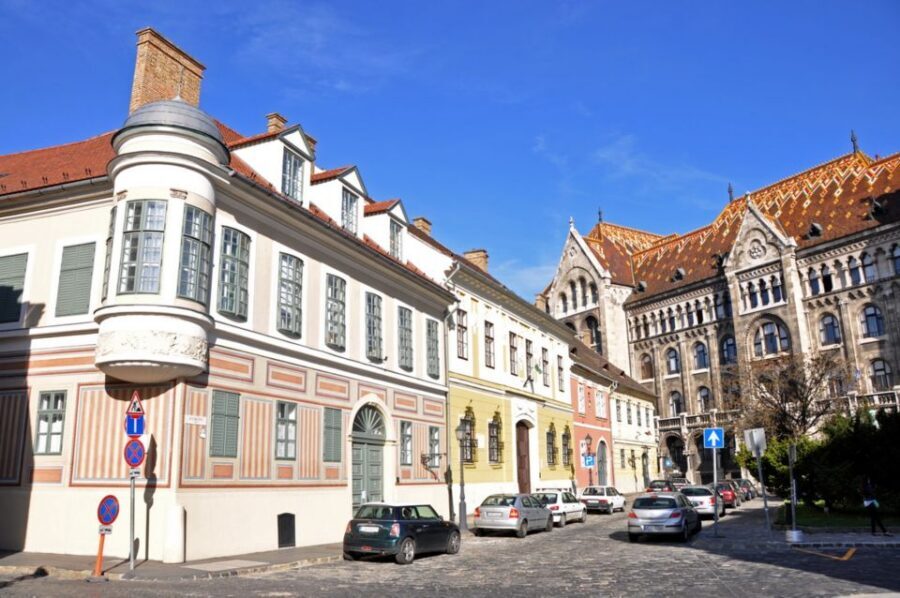
Budapest’s history is split across two big halves. Pest feels wide and grand; Buda feels older, hillier, and more “built on layers.” In the Castle District, you’re surrounded by architecture that shifts from medieval forms to baroque flourishes, all while the Danube keeps slicing the view in half.
What makes this tour work is that it doesn’t just point at buildings. It links the place to events that changed the city’s face. You’ll hear how the Ottoman invasion, the Habsburg period, and the battles of 1944–1945 left marks on the district’s look and structure. Even if you’ve read a bit about Budapest already, walking the ground makes the timeline click.
And yes, the views matter. From the walls and terraces you get a clear sense of the city’s geography: the Danube in the middle, Pest’s monumental buildings across the water, and the castle area rising behind you.
You can also read our reviews of more walking tours in Budapest



Starting Smooth: Pickup and a Private Guide Who Sets the Tone
You meet your guide in Budapest, with pickup from hotels included. That’s a real quality-of-life detail here, because Castle Hill can be annoying to reach if you’re juggling buses and walking uphill before you’ve even started your sightseeing.
Your guide is an English-speaking private guide, and the group is limited to up to 6 people. That small group size shows up in how the tour flows. You’re not waiting for 25 other people to catch up, and you can ask follow-up questions without feeling like you’re holding up the line.
One of the strongest signals from past guests is how the guiding style lands. Attila, in particular, gets praised for being friendly, funny in a dry way, and very good at explaining history while still keeping the walk moving. In at least one case, he even helped guests with transit tickets before the tour and later walked them toward their next stop near St. Stephen’s, instead of just ending things abruptly near the castle complex.
The 3-Hour Loop: How You’ll See 13th-Century to 15th-Century Budapest
This tour is planned for about three hours, and it’s paced like a guided walk, not a museum marathon. You start around Castle Hill, then you move through the complex and key landmarks in a logical circuit that keeps you from doubling back too much.
Along the way, you’ll cover two major “story eras” tied to the district’s identity. First is the journey back to the 13th century, when the castle area became a power center in the way cities do when they need defense and control. Then comes the 15th-century “golden period,” when wealth and ambition shaped what people built and how they wanted it to look.
The tour also explains why the architecture looks the way it does now. The castle district didn’t stand still. The Ottoman period and later Habsburg influence reshaped styles and priorities, and WWII-era battles in 1944–1945 changed the area dramatically. That kind of context turns “pretty buildings” into a timeline you can actually follow.
You’ll also get photo stops along the way and scenic viewing points that are timed so you’re not always stopping at random. The goal is to let you enjoy the moment without losing the thread of what you’re seeing.
Matthias Church on Holy Trinity Square: A Landmark with a Personality
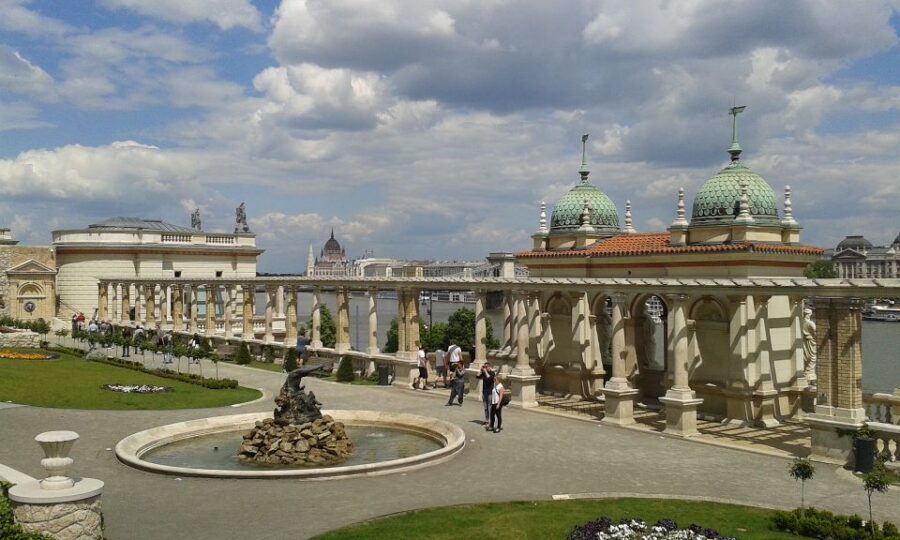
Matthias Church is the kind of stop that makes people lean in. It sits on Holy Trinity Square and instantly reads as important, not just decorative. When you visit, you’re seeing a religious landmark that anchors the wider castle area.
What I like about including Matthias Church in this walk is balance. Castle Hill can sometimes feel like it’s all walls, towers, and viewpoints. Matthias gives you a human scale: it’s a place of faith and ceremony, and your guide can connect it to the castle district’s role as a civic and power hub.
This is also where the tour’s storytelling tends to feel most rewarding. If you’re hearing about shifts between medieval origins, later empire influence, and the events that followed, Matthias becomes a “marker” you can remember. It helps you organize the history in your head instead of letting it blur.
Practical note: you’ll still be walking a lot afterward, so treat Matthias as a focused stop rather than a long sit-down.
Fisherman’s Bastion Viewpoints: Where Your Camera Earns Its Keep
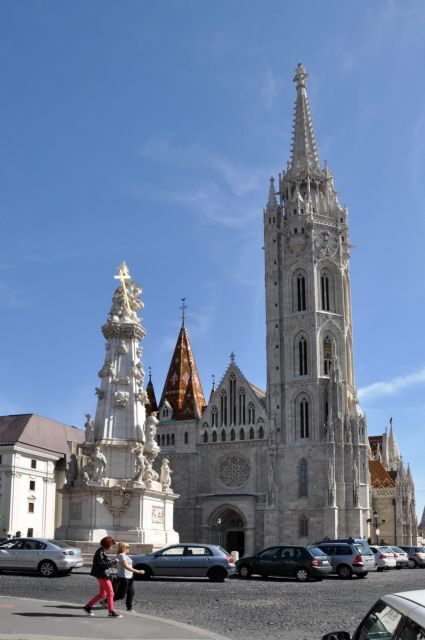
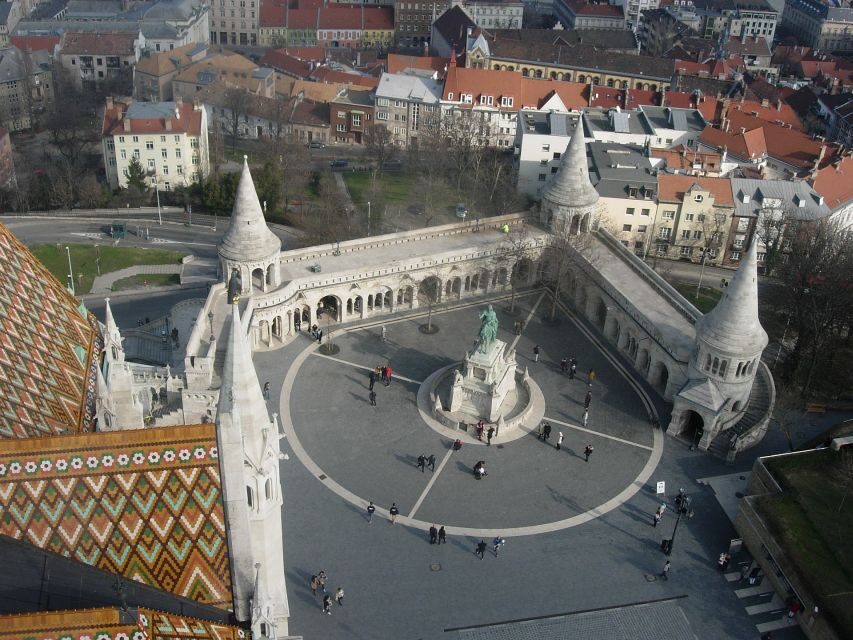
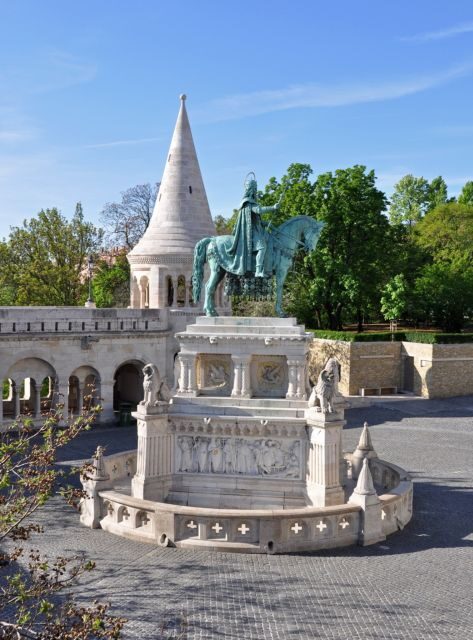
Fishermen’s Bastion is one of those places that looks instantly famous. It’s designed for seeing, and it delivers. You’ll arrive at viewpoint angles that show the Danube stretching out, with Pest’s grand buildings lined up across the water.
I recommend taking your photos, sure. But also take thirty seconds without the phone. This is one of the best spots on the loop to understand Budapest’s layout at a glance. The castle area feels like it’s perched above the action, because it is.
The tour’s value here is timing and explanation. Your guide can help you orient yourself—what you’re looking at, where the city’s major parts sit, and how the castle district’s defensive “strategic position” fits the geography. It turns a viewpoint from a background into a map.
Also, if you’re the type who enjoys “architecture spotting,” Fishermen’s Bastion is a good place to ask questions. You’ll see how structures can be built to project identity as much as to serve a functional purpose.
You can also read our reviews of more private tours in Budapest






Inside the Castle Complex: Why Buda Castle’s Scale Changes Everything
Buda Castle (Royal Palace) is the big centerpiece in a district where every street feels like it’s holding history. This is the most imposing building in Budapest, and it has that effect on you: even from the outside, it can feel heavy with significance.
The strongest part of this stop is how the guide links the castle’s existence to the city’s changing powers. You’re not just looking at a famous facade. You’re walking through the logic of why the castle grew, what it was built to represent, and how later conflicts and political shifts affected what stands today.
Because this tour is limited to about three hours, you won’t feel stuck doing everything. Instead, you get a concentrated route that focuses on the castle complex as a historical anchor, then balances it with Matthias and Fishermen’s Bastion so you’re not trapped in “palace only.”
One more detail: the castle walls are part of the experience, not an afterthought. If you remember only one aspect of the whole district, make it the sense of elevation and control you get from standing where guards once watched the city.
Optional Watertown: A Small-Time Extension with Big Atmosphere
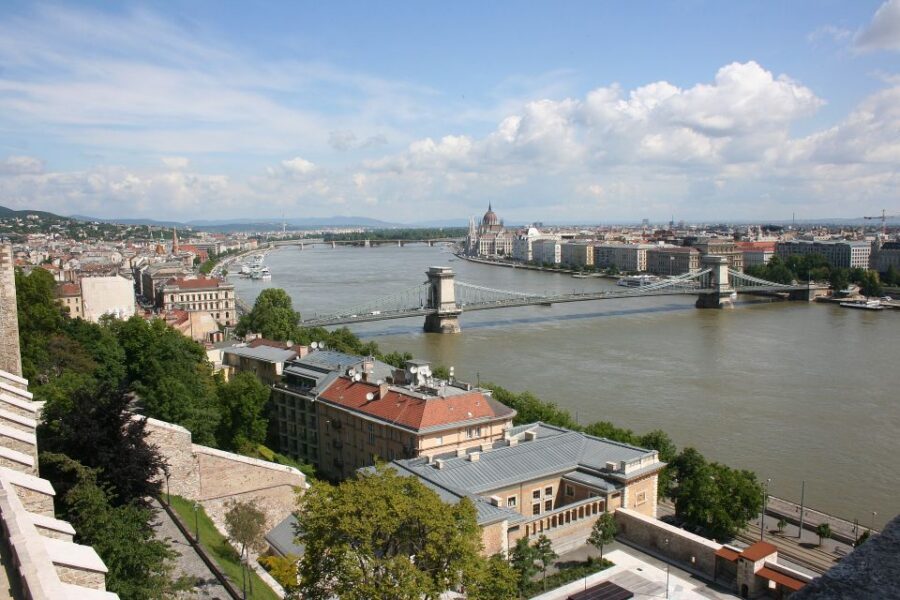
If you want a little more, you can extend the tour on request with a visit to Watertown, the narrow area of twisting streets between the Danube and Castle Hill.
This matters because it adds texture. After the big monuments—church, bastion, palace—Watertown can feel like the “in-between” life around them. The narrow lanes create a different pace and a more intimate feel, which is useful if your day is full of wide city views.
It also works well for people who enjoy walking without turning every minute into a checklist. If you’re already in the mood for photos and small street discoveries, this extension can make the tour feel more rounded.
Price and Value: What $141 per Group Really Buys
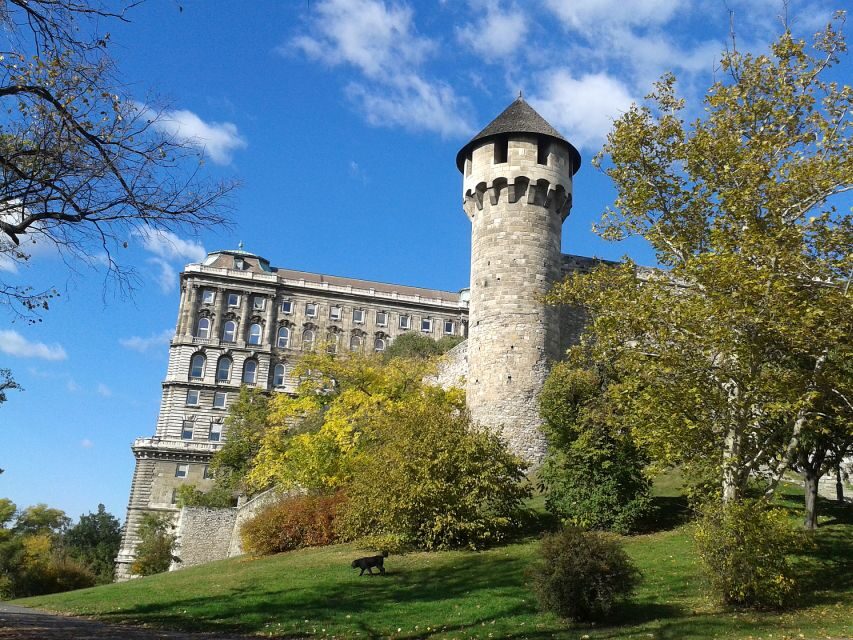
The price is $141 per group up to 6, with an English-speaking private guide and hotel pickup included. That’s the core value equation.
A common problem with paid sightseeing in Europe is paying for access or entrances. Here, entrances are not included, but the tour includes the guiding and the route design. In a private format, you’re not just buying time on-site—you’re buying someone who can explain what you’re seeing and help you avoid wasting time wandering without direction.
If you’re traveling as a couple, a small family, or two friends who like to talk while walking, the per-group pricing can make this feel like a good deal compared with booking separate tours or paying for a larger group experience that forces you to match other people’s pace.
My practical take: treat the cost as paying for a focused three-hour “Buda Castle decoder.” If you care about context—why the architecture changed and what to look for—the value tends to feel obvious quickly.
Getting the Most from the Walk: Shoes, Weather, and Pacing
This tour is not “light strolling.” Castle Hill means hills and uneven surfaces. You’ll want comfortable shoes with grip, because cobblestones and slopes can turn a nice afternoon into an awkward one.
Weather can also change how the route feels. I saw notes about unexpected rain affecting how the day went, but the guide still earned strong marks, which suggests the approach stays flexible. Still, assume you’ll be outside for stretches at a time.
The upside is that a private tour lets you adapt in a calmer way than with a crowd. If the weather shifts, your guide can help you keep moving and still hit the key sights.
Who This Tour Fits Best
This experience is a good match if:
- you want the Castle District story explained clearly, not just photographed
- you prefer a private pace with room for questions
- you care about viewpoints as part of learning, not just as scenery
- you’re okay walking for about three hours on hills and cobblestones
It’s not suitable for pregnant women, people with mobility impairments, wheelchair users, or babies under 1 year. That’s not negotiable here—the terrain is part of the route.
If you’re someone who likes history but hates feeling stuck in long indoor stops, this is a nice middle ground: you get major landmarks, the timeline makes sense, and the day stays active.
Should You Book This Buda Castle Private Walking Tour?
Book it if you want a three-hour, high-impact way to understand the Castle District. The best reason is the combination of guided storytelling plus the actual places where the story shows up—Matthias Church, Fishermen’s Bastion, and the Castle complex with its commanding views.
Skip it or rethink if walking hills and cobblestones will be a struggle for you, or if you mainly want a quick photo circuit with minimal explanation. This tour is built for people who like to learn while they walk, and who appreciate having a guide like Attila, with humor and smart context, keeping the whole loop connected.
If that sounds like you, this is one of those Budapest choices that pays off fast: you leave with better bearings, better photos, and a clearer sense of how Buda and Pest fit together across the Danube.
FAQ
How long is the Budapest Buda Castle Private Walking Tour?
The tour lasts 3 hours.
What is the group size for this private walking tour?
It is a private group with up to 6 people.
Is the guide available in English?
Yes, the guide is English-speaking.
Is pickup included?
Yes, pickup from hotels in Budapest is included.
What main sights does the tour include?
You’ll visit the Buda Castle area, go to Matthias Church, and see Fishermen’s Bastion. The tour also focuses on panoramic viewpoints around the castle district.
Are entrance fees included in the price?
No. Entrance fees are not included.
What should I bring for the tour?
Wear comfortable shoes.
Is the tour suitable for wheelchair users?
No. It is not suitable for wheelchair users or people with mobility impairments.
Can I extend the tour beyond the 3 hours?
Yes, you can extend it on request with a visit to Watertown.
Is free cancellation available?
Yes. You can cancel up to 24 hours in advance for a full refund.