REVIEW · BUDAPEST
Budapest: Buda Castle Walking Tour & Folk Music Performance
Book on GetYourGuide →Operated by Maggino - Magic in Hungary · Bookable on GetYourGuide
Castle Hill tells its story with music. This walking tour through the Buda Castle District pairs landmark views like Matthias Church with the kind of on-the-street storytelling that makes you see history in layers.
What I love most is how the guide brings key characters and turning points to life, from Hungary’s royal era to the look of the streets you pass every day. And I especially liked the ending: you don’t just hear about Hungarian folk traditions, you get a live folk music performance built into the tour.
One possible drawback to plan for: the monuments are mostly exterior visits, and entry tickets are not included—so if you want to go inside, you may need extra time and a separate ticket.
In This Review
- Quick hits
- The Buda Castle District: why this area is worth a guided pace
- Where the tour starts at Holy Trinity Square (Szentháromság-tér)
- Matthias Church and Fisherman’s Bastion: the showpiece stop with purpose
- Tárnok Street: the architectural mash-up you can actually read
- Government buildings and the Pest-side view: the moment the city opens
- Royal Buda Palace (Buda Castle): King Matthias as the story engine
- Pastries and Sisi’s sweet tooth: a smart break from monuments
- The end show: Hungarian folk music singing and dance steps
- How the guide approach changes the whole experience (Kristóf)
- Price and value: is $58 per person a fair deal?
- Who should book this walking tour, and who should skip
- Should you book it? My practical recommendation
- FAQ
- FAQ
- How long is the Budapest Buda Castle walking tour?
- How much does it cost?
- Where do we meet the guide?
- Is the tour in English?
- Are entrance tickets to monuments included?
- Does the tour run in bad weather?
Quick hits
- Matthias Church and Fisherman’s Bastion are treated as story stops, not just photo stops
- Tárnok Street is a walking lesson in changing architectural styles across centuries
- Pest-side panoramas come with a funicular angle you might not notice on your own
- King Matthias connections go beyond names, including Renaissance-court details
- Hungarian folk songs and dance are performed by the guide at the end
The Buda Castle District: why this area is worth a guided pace
Buda Castle District can feel like a maze if you wander without context. That’s the problem this tour solves fast. You’re not just moving between big monuments—you’re walking through a “why” story: who ruled here, what changed, and how Budapest’s two sides connect in your sightlines.
This is also a UNESCO World Heritage Site, so you’ll be surrounded by architecture that’s meant to be read carefully. A good guide helps you spot what’s easy to miss at street level—like which buildings suggest older styles and which details hint at later rebuilding.
You can also read our reviews of more walking tours in Budapest



Where the tour starts at Holy Trinity Square (Szentháromság-tér)
You’ll meet in front of the Holy Trinity Statue (Szentháromság-szobor) in Holy Trinity Square. It’s a clear landmark, and it’s close enough to the Castle Hill area that the start doesn’t feel like a long slog.
From there, expect a steady walking pace for about 2 to 2.5 hours total. Comfortable shoes matter here. Castle Hill is more about steps, slopes, and viewpoints than flat strolling—so plan for that, especially if the weather is slippery.
Matthias Church and Fisherman’s Bastion: the showpiece stop with purpose
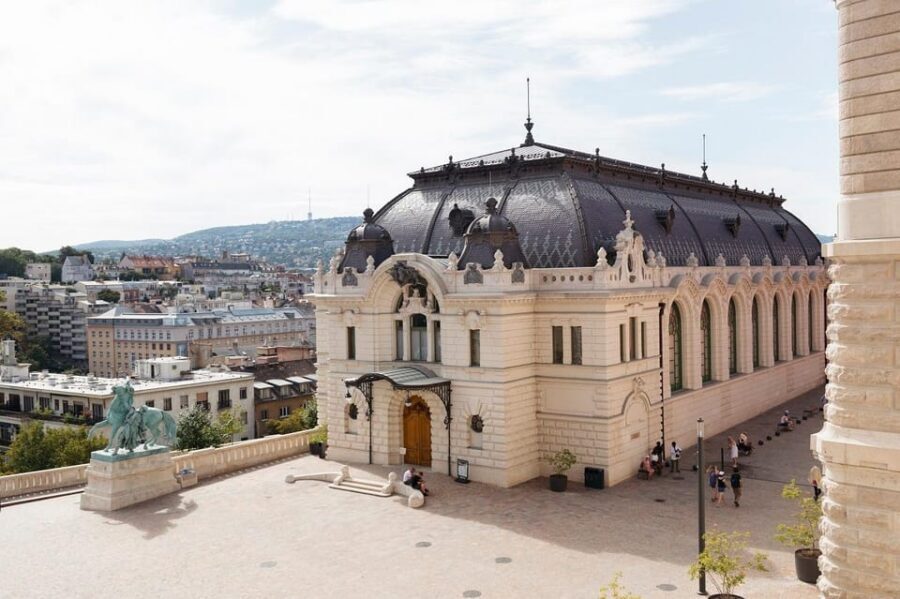
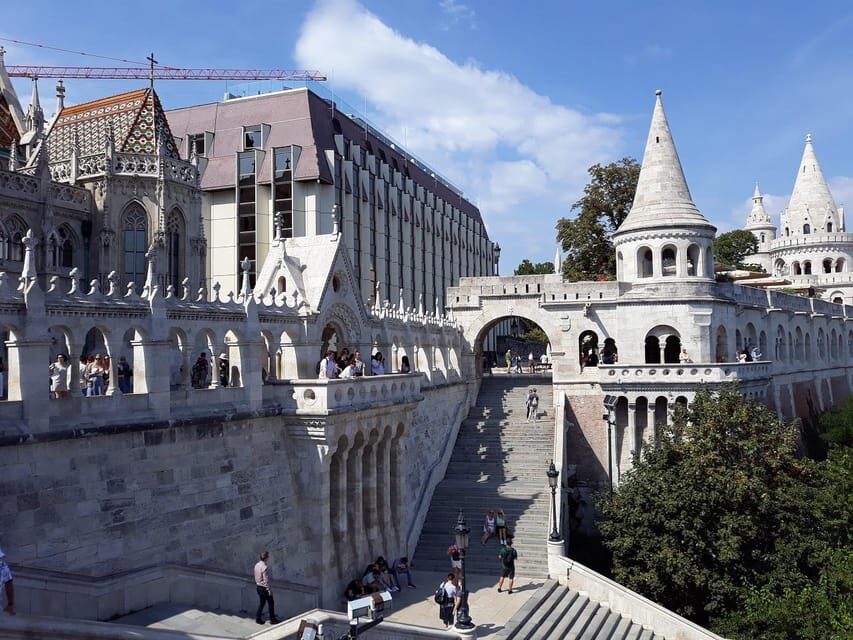
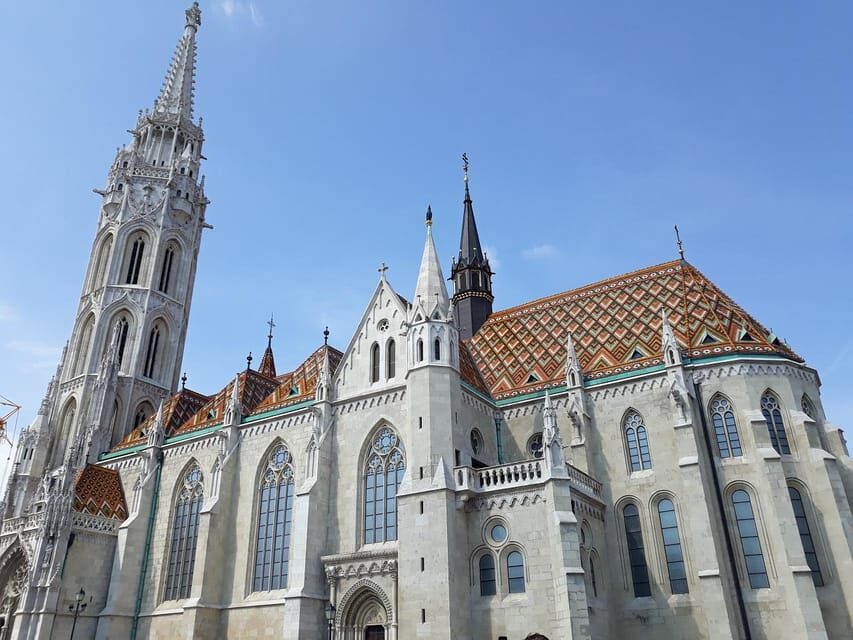
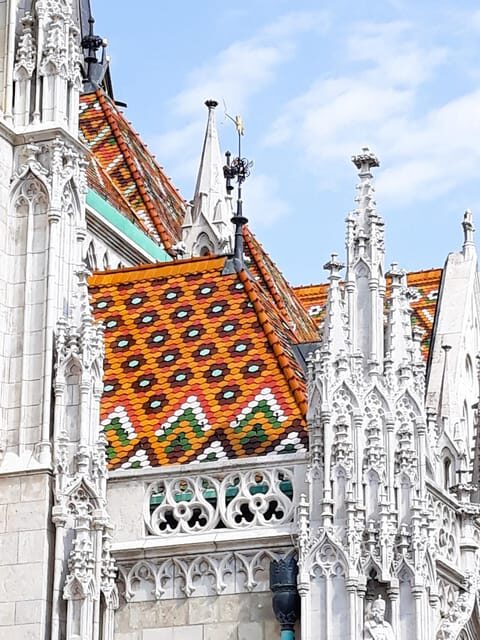
The first major monuments you’ll hit are Matthias Church and Fisherman’s Bastion. These are famous for a reason, but the value of the tour is how the guide connects the visuals to the people who shaped the place.
You’ll spend time walking between them and taking in the views. Matthias Church is presented as more than a pretty exterior—it’s part of the bigger royal-and-cultural story of the Castle District. Fisherman’s Bastion is similarly treated: you’ll look at the structure, sure, but you’ll also understand why this spot became so meaningful in Budapest’s identity.
Practical tip: even if you’re not going inside, treat this segment like a warm-up for the rest of the hill. Look closely—once you know what to notice, the whole area snaps into focus.
Tárnok Street: the architectural mash-up you can actually read
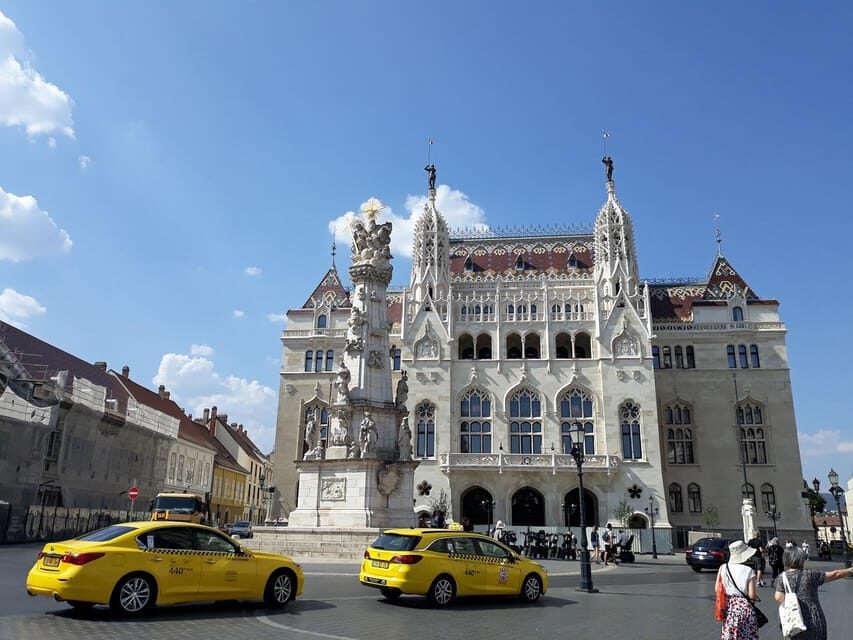
Next comes Tárnok Street, a segment the tour spotlights for one reason: it’s a place where multiple architectural styles sit side by side. You’ll walk through a stretch where older building parts are still visible—said to include parts that date back hundreds of years.
What I like about this stop is that it turns a random street into a history clue. You start to see Budapest not as one look, but as a timeline—different eras leaving their fingerprints on the same neighborhood.
If you enjoy street-level detail—corners, facades, rooflines—this is one of the most satisfying parts of the route. It’s also a relief after the big-name monuments, because you get to slow down and observe.
Government buildings and the Pest-side view: the moment the city opens
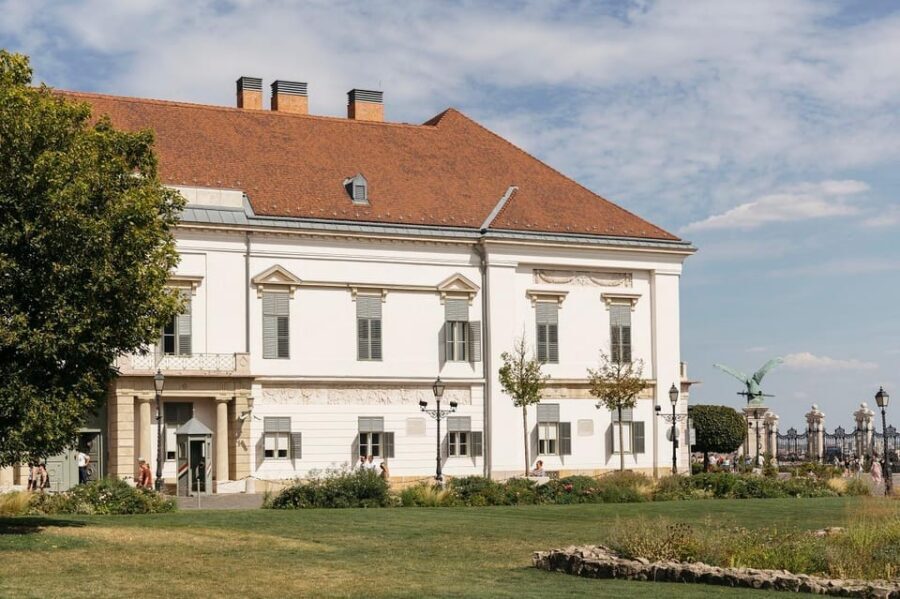
A standout piece of the tour is the viewpoint segment over toward Pest side. You’ll be guided to a spot with panoramas, and the explanation includes a specific detail about the second funicular built in Europe.
That matters because the Castle District isn’t just scenic—it’s functional. The funicular and the way the city rises between the river and the hills shaped how people moved and how Budapest grew. From a good angle, you get to understand the geography while also enjoying the view.
One small consideration: viewpoints can be breezy and sometimes crowded. If you’re sensitive to standing for photos, this is where you’ll want to keep your expectations realistic and pace yourself.






Royal Buda Palace (Buda Castle): King Matthias as the story engine
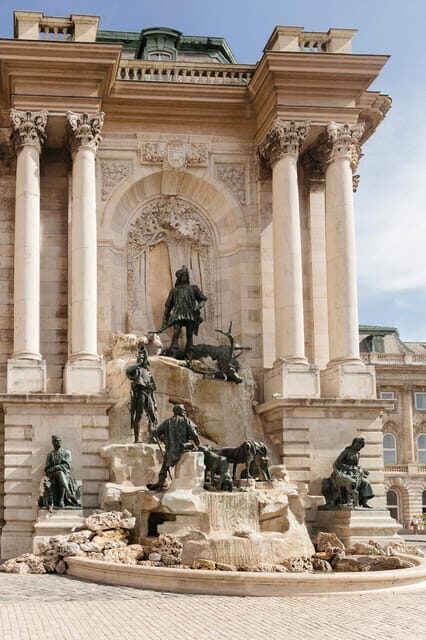
When you reach the Royal Buda Palace, also known as Buda Castle, the tour shifts into the big narrative. You’re talking about the royal seat of Hungarian rulers across centuries, and the guide uses that to explain why Renaissance culture mattered here.
The tour specifically highlights King Matthias, including details about how Buda Castle became a center for Renaissance culture in Europe. It also includes a memorable detail that locals love: granite fountains that supposedly bubbled with wine. Even if you treat that as more legend than blueprint, it signals the kind of court culture you’re looking at.
You’ll also get the feeling of scale without being trapped in lines or ticket barriers, since the tour is an exterior-focused experience at these stops. That’s a practical advantage if you’re short on time but still want a strong sense of place.
Pastries and Sisi’s sweet tooth: a smart break from monuments
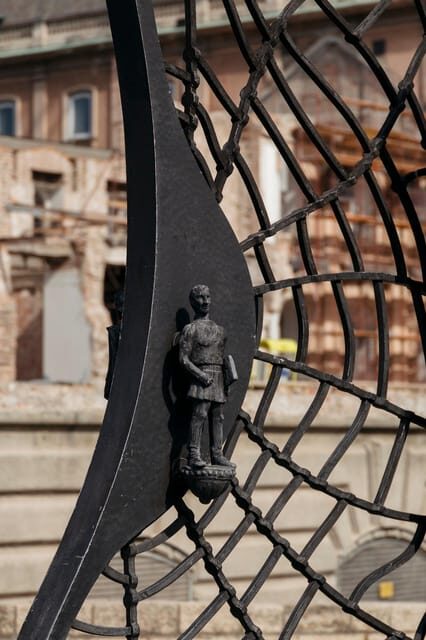
Yes, the tour includes sweets. You’ll see Budapest’s oldest confectioner, and the guide connects it to Queen Elisabeth, known as Sisi.
This is a surprisingly useful stop, because it reminds you that palace history isn’t only about power and war. It’s also about everyday luxury—what people ate, what they enjoyed, and what kinds of treats survived as part of the city’s identity.
Even if you’re not a huge dessert person, I think this works because it gives your brain a reset. After all the stone, you get a human-scale connection to the same historical era.
The end show: Hungarian folk music singing and dance steps
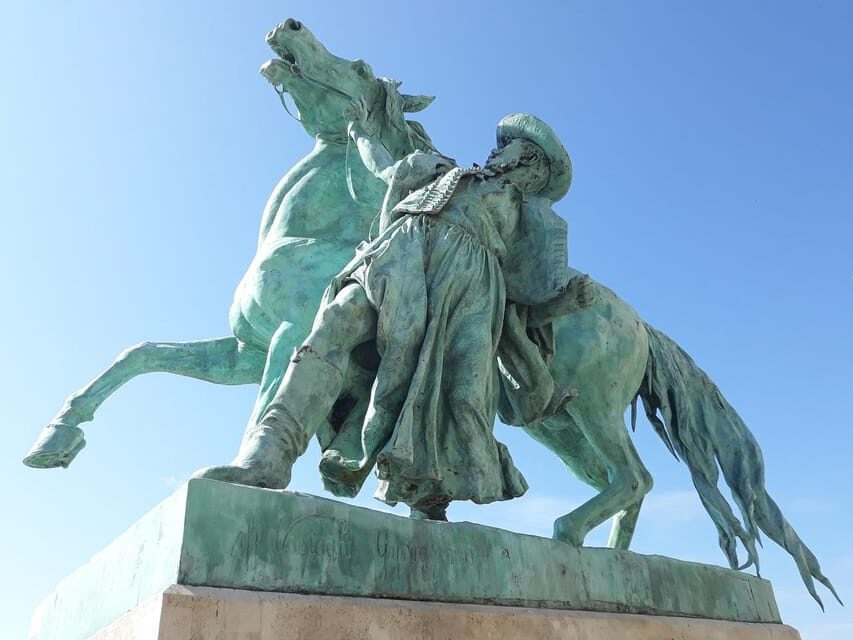
The finale is the real differentiator: a Hungarian folk music performance made by your guide. The guide sings Hungarian folk songs and demonstrates traditional dance steps as part of the experience.
What makes this ending feel good is that it’s not random entertainment. The guide typically explains what you’re hearing and then adds movement, so you don’t just watch—you understand the rhythm and the cultural idea behind it.
From the guide’s style, you also get the feeling that this isn’t pulled from a playlist. In past experiences, Kristóf has been praised for passion that comes through in how he shares songs and dances, including personal touches like family stories that make the culture feel lived-in rather than staged.
If you’d like a moment where the tour stops being educational-only and becomes memorable, this is the part.
How the guide approach changes the whole experience (Kristóf)
This tour is built around your guide, and the best version of it comes from a guide who invites questions and conversation. Kristóf has been described as warm, welcoming, and genuinely interactive—so if you like to ask why something matters, you’ll probably feel comfortable doing it.
In addition, some participants noted that the guide uses visual aids, including before-and-after style explanations that help you understand changes over time. That’s a big deal in a place like Buda Castle, where rebuilding and layering can confuse you fast.
I’d also plan for the tour to feel more personal than “walk and read a sign.” The folk portion at the end reinforces that tone: it’s a human performance, not a checklist.
Price and value: is $58 per person a fair deal?
At $58 per person for 2 to 2.5 hours, the value depends on what you want from Budapest tours.
If your goal is landmarks only, you might decide to self-walk. But if you want three things in one package—(1) a guided route through major Castle District sights, (2) context about King Matthias and architectural layers, and (3) a live folk performance at the end—this price starts to look reasonable.
Also, the tour includes a licensed Hungarian guide and delivers the most expensive-to-replicate part: the live music and dance. That’s not something you can easily copy with a podcast or a map.
Just remember the ticket reality: entries to monuments are not included. So if you’re the kind of traveler who wants to go inside multiple sites, budget for additional costs.
Who should book this walking tour, and who should skip
This tour is a great match if you:
- Want a guided, story-focused walk through the Buda Castle District
- Like when guides explain meaning, not only facts
- Appreciate ending moments that go beyond another photo stop—like music and dance
- Prefer small or private group energy (this tour offers private or small groups)
You might reconsider if you:
- Only care about entering monuments with tickets (since the tour is built around exterior views)
- Hate walking on hills and stairs for a couple hours
- Are expecting a silent, self-paced sightseeing style
Should you book it? My practical recommendation
If you’re doing Budapest for the first time and you want one Castle Hill experience that’s both structured and fun, I’d book this. It gives you a clean route through the top landmarks, adds useful context (especially around King Matthias and architectural layers), and finishes with a live folk performance that makes the day feel complete.
If you’re the type who wants strict inside-visits, pair this with your own ticket plans for the specific sites you care about most. For most people, though, this works well as the guided backbone for your Castle Hill time.
FAQ
FAQ
How long is the Budapest Buda Castle walking tour?
The tour lasts 2 to 2.5 hours.
How much does it cost?
The price is $58 per person.
Where do we meet the guide?
You meet in front of the Holy Trinity Statue (Szentháromság-szobor) at Holy Trinity Square (Szentháromság tér). The guide holds a board with the MAGGINO logo.
Is the tour in English?
Yes, the tour guide provides the tour in English.
Are entrance tickets to monuments included?
No. The monuments are visited from the exterior, and entry tickets are not included.
Does the tour run in bad weather?
Yes. The tour operates in all weather conditions, so you should dress appropriately. Comfortable shoes and weather-appropriate clothing are recommended.