REVIEW · BUDAPEST
Budapest: City Center Walking Tour
Book on GetYourGuide →Operated by Tourist Angel · Bookable on GetYourGuide
Budapest on foot is the fastest way to get oriented. This 2-hour central Pest walk skips the packed bus loops and takes you through landmark squares, 19th-century architecture, and dramatic monuments in a way that feels manageable and human. I especially liked the Danube river-promenade views and the guided context that links the buildings to real events.
Two things I really loved: the St Stephen’s Basilica stop, with its huge dome and colonnade up close, and the way the guide guides you through Liberty Square to Kossuth Square with stories about Nazi occupation, Communist oppression, and the 1956 revolution. Guides like Lena and Bea (and others, depending on your departure) earned praise for keeping the facts clear and answering questions without killing the fun.
One drawback to consider: entrance fees aren’t included, so you’ll mostly get exterior views and landmark explanations. If you want to go inside major sites, you’ll need to plan for extra time and tickets.
In This Review
- Key highlights to look for
- Why this $14 walk is a smart first move in Budapest
- From Marcius 15 Square to the Great Blessed Lady cathedral
- Duna Corso promenade: Danube bridges and Castle views without the fuss
- Pesti Vigadó and Vorosmarty Square: grand buildings plus a classic café stop
- Elizabeth Park, Budapest Eye, and the lighter side of the center
- St Stephen’s Basilica: the dome and colonnade that anchor the whole route
- Traditional pedestrian streets to Liberty Square: where the story gets heavy
- Kossuth Square and the Hungarian Parliament: dictatorship and 1956
- Shoes on the Danube Bank and extra river time after the tour
- Price, pacing, and how to choose this tour well
- Should you book this Budapest city-center walking tour?
- FAQ
- How long is the Budapest City Center Walking Tour?
- How much does the tour cost?
- Is the tour wheelchair accessible?
- What is included in the price?
- Are entrance fees included?
- Where is the meeting point?
- Does the tour run rain or shine?
Key highlights to look for
- Marcius 15 Square + the Great Blessed Lady (Gothic) cathedral to set the tone early
- Duna Corso promenade for Danube bridges and Castle of Buda views across the river
- Elizabeth Park + Budapest Eye for a modern contrast to historic streets
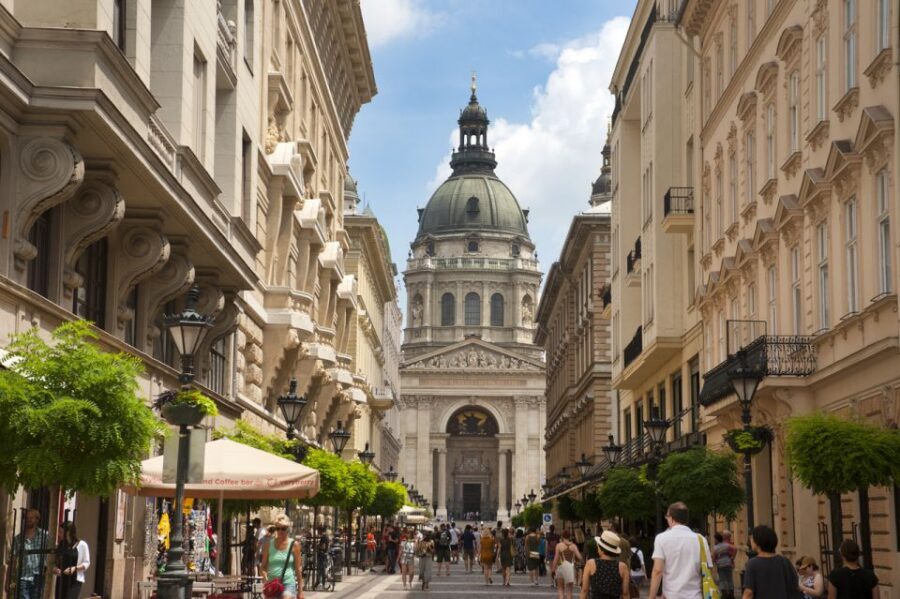
- St Stephen’s Basilica dome and colonnade as the tour’s big visual anchor
- Liberty Square to Kossuth Square for the 20th-century story behind the monuments
- Mr. Safe and pedestrian-street wandering for lighter moments between heavy history
Why this $14 walk is a smart first move in Budapest
For $14 and about two hours, this is the kind of tour that helps you stop guessing. Budapest is huge in feel, with hills, rivers, and two sides (Buda and Pest) that don’t always make sense on your first day. This walk keeps you in the center of Pest’s inner city, so you can learn the layout fast, then go back later on your own.
The other reason I’d pick this early: it gives you both beauty and context. You get architecture like you’d expect, but you also get the “why this matters” layer when you reach the Parliament-area. Guides often bring energy, humor, and flexibility. In recent experiences, people praised guides such as Dominic for engaging delivery and Flora for high energy and memorable storytelling. One group even noted a guide using a microphone so everyone could hear clearly, which is a big deal on longer city walks.
Expect a small group experience when offered, and it’s rain or shine. That’s great for planning, but it also means bring normal Budapest-walking gear: shoes you can trust on slick sidewalks, plus a light rain layer.
You can also read our reviews of more walking tours in Budapest



From Marcius 15 Square to the Great Blessed Lady cathedral
The walk starts at Marcius 15 Square, a fitting beginning because it’s a place where Budapest’s public life and political history intersect. From here, you’ll admire the Gothic Medieval cathedral of the Great Blessed Lady. Even if you’re not a church architecture fanatic, Gothic shapes do something simple and satisfying: they pull your eye upward and make the square feel more dramatic than it looks on a map.
What makes this stop work on a walking tour is timing. You’re fresh, and you’re still learning the city’s rhythm. The guide helps you connect what you’re seeing to how the city grew, so this isn’t just a photo stop. You’re also getting practice: how to orient yourself to the grand buildings and the streets that lead to them.
Photo tip: stand back just a bit so you capture the cathedral’s full mass, not just one corner.
Duna Corso promenade: Danube bridges and Castle views without the fuss
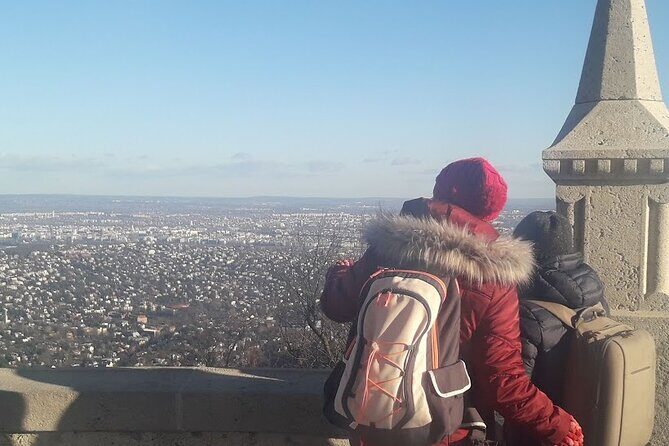
Next you move along the Duna Corso river promenade, where the Danube does its best work. You’ll enjoy views over the river, including bridges and the Castle of Buda across the water. This is one of those “Budapest moments” you see in postcards, but walking gives it something you can’t get from a bus: better angles, slower pacing, and the ability to stop when something looks especially photogenic.
Why this part matters: it helps you understand how Budapest is built on topography. You start realizing that the city isn’t just flat downtown streets. There are views and sight lines everywhere, and knowing that early makes later sightseeing easier. It also sets you up for understanding why the Parliament area feels so monumental when you reach it.
If you’re traveling with teens or a mix of ages, this section often works because it’s visual and relaxed. Several groups praised tour guides for pacing that kept everyone interested, with one note mentioning teenagers enjoying the stories along the way.
Pesti Vigadó and Vorosmarty Square: grand buildings plus a classic café stop
As you move through the city center, you’ll pass by Pesti Vigadó, a spectacular performance hall. You don’t need to enter to appreciate it. The building’s presence is the point here: it tells you Budapest values culture in public space, not only in museums.
Then you’ll arrive around Vörösmarty Square and see the historic Gerbeaud Café. This is a useful “city orientation” stop. Even if you don’t eat right then, you’re learning where the classic spots are so you can come back later without wasting time.
Practical idea: if you love sweets, Gerbeaud Café is the kind of place you’ll remember from the tour. If it’s not your thing, still use this moment to scout what’s nearby so you can plan an easy lunch after the walk.
Elizabeth Park, Budapest Eye, and the lighter side of the center
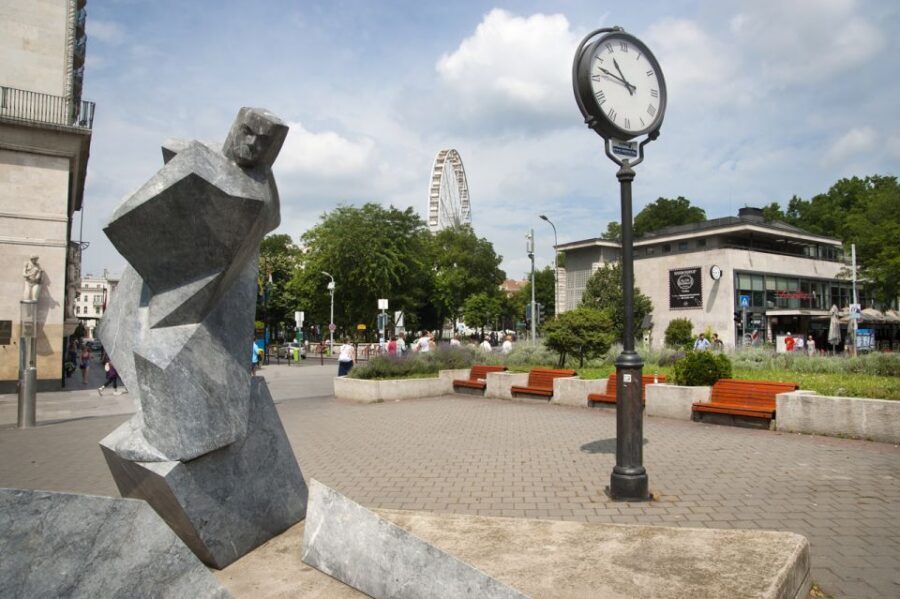
From the central streets you’ll head to Elizabeth Park, a calmer stretch that gives your feet a break. Here you’ll see the Budapest Eye, described as the largest Ferris wheel in Europe. Even if you don’t ride it, the structure acts like a visual landmark you can spot later while crossing the city.
Then there’s a fun palate cleanser: the tour includes the cute statue of Mr. Safe, which is exactly the kind of oddball city detail that makes a guided walk feel personal. It also helps break up the heavier stories later.
If you’re walking during peak sightseeing hours, this part can feel less crowded than the major monuments. It’s a good middle section when you want both city flavor and a bit of breathing room.
You can also read our reviews of more city tours in Budapest






St Stephen’s Basilica: the dome and colonnade that anchor the whole route
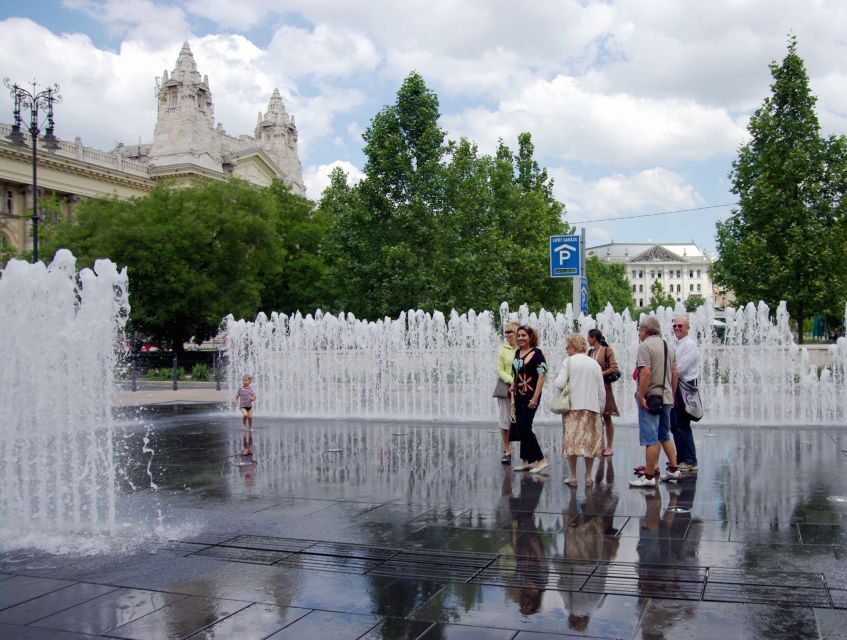
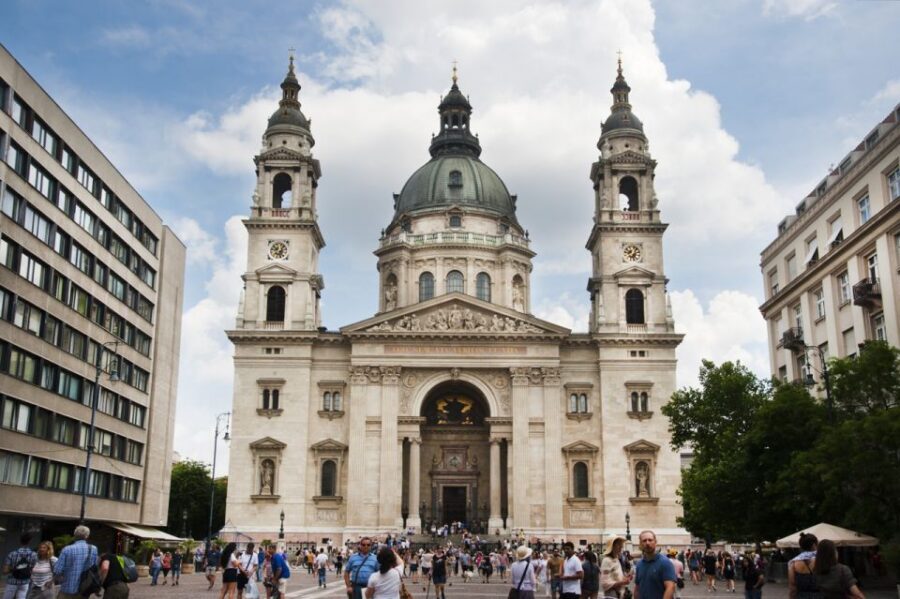
One of the tour’s big highlights is St Stephen’s Basilica. You’ll get to admire its monumental dome and colonnade, and it’s hard not to pause when a building like this dominates the skyline.
The guide’s job here is valuable: they help you look beyond the surface. Instead of treating the Basilica like a standalone attraction, the stories connect it to Hungarian identity and the long sweep of national history. Even people who aren’t into religious architecture often enjoy this stop because it’s more about meaning than decoration.
A key consideration: since entrance fees aren’t included, your experience here is about seeing and learning, not necessarily going inside. If you want the interior, plan for extra cost and time. The payoff is that you can still enjoy the big visual moment without needing to commit to tickets during the short tour window.
Traditional pedestrian streets to Liberty Square: where the story gets heavy
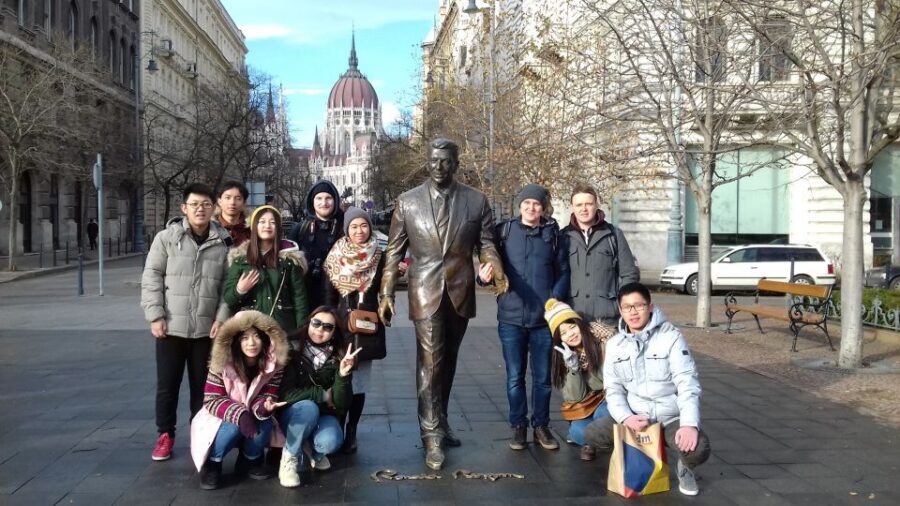
After the Basilica, the route shifts into traditional pedestrian streets. This matters because it changes the feel. Cars and buses fade into the background, and you can actually enjoy how the street edges frame the buildings.
You’ll then reach Liberty Square, and this is where the tour’s emotional weight arrives. The guide shares Budapest’s traumatic past as a center of Nazi occupation and Communist oppression. This isn’t delivered as a random history lecture. It’s tied to where you’re standing, so the square stops being abstract.
What makes this stop work for me is balance. The tour doesn’t pretend history is all triumph. It acknowledges the harm, but it keeps moving so you don’t feel trapped in one grim moment. That pacing is part of why many groups rate this walk highly.
If you’re sensitive to heavy history, you’ll still be able to handle it. The tour duration is short enough that you’re never stuck there for ages.
Kossuth Square and the Hungarian Parliament: dictatorship and 1956
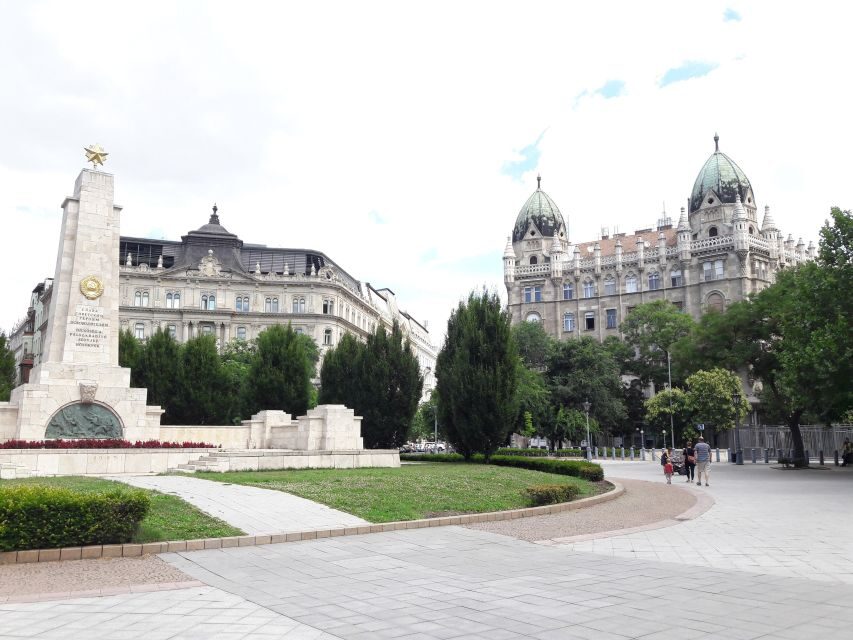
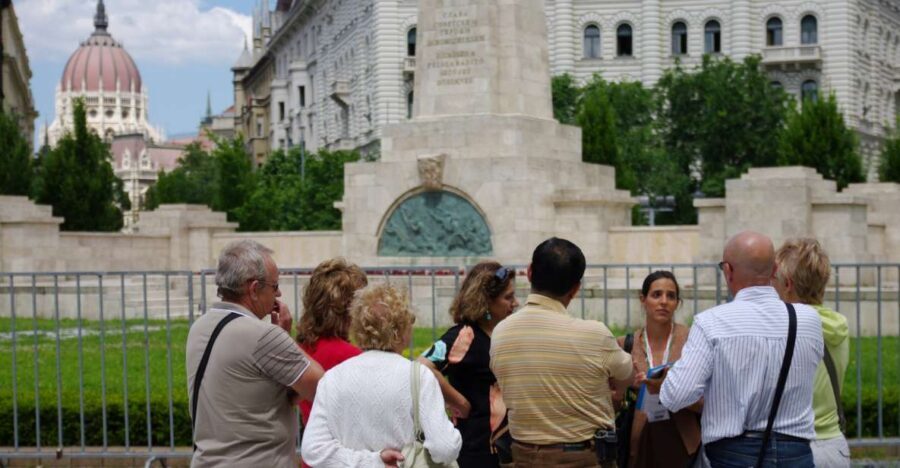
The tour finishes at Kossuth Square, where you’ll admire the sights surrounding the Hungarian Parliament building. This is the “wow” ending. The Parliament’s scale is obvious even from a distance, and having the context from earlier stops makes it land harder.
Then you’ll hear stories of dictatorship and the 1956 revolution. This sequence is smart: Liberty Square sets up the trauma; Kossuth Square gives you the political center point and the turning-point story of 1956. When you connect those, the buildings feel more than decorative. They become evidence of how power shaped daily life.
Practical note: this ending area can be busy, especially in good weather. The walk ends here, but if you want photos, give yourself a few extra minutes to position yourself before the crowd presses in.
Shoes on the Danube Bank and extra river time after the tour
After the Parliament-area finish, you have an easy add-on: you can pay a visit to the Shoes on the Danube Bank monument, or just stroll along the riverbanks. The monument is exactly the kind of place where you’ll appreciate having a guide’s framing, because you’ll know what the city wants you to remember.
If you’re staying just one or two days in Budapest, this is also a great way to round out your day without over-planning. The tour gets you oriented; the river walk lets you slow down and process what you saw.
Price, pacing, and how to choose this tour well
Let’s talk value, because $14 is suspiciously low for a guided city tour. Here’s why it can still be a good deal: you’re paying for a live guide to connect landmarks, history, and practical orientation in a tight timeline. The route covers major sights—Basilica, key squares, Parliament-area context, and Danube views—without you needing to figure out how to string them together yourself.
A couple pacing realities:
- It’s 2 hours, so the walk moves at a steady city pace.
- One recent group noted the tour ran about 30 minutes longer than expected. That suggests the guide will sometimes take extra time for questions or timing, which is nice, but it’s also a reason to keep your next plan flexible.
- Since it runs rain or shine, your time on slick ground can feel longer than you expect.
Wheelchair access is listed, but one review mentioned that the pace might need to be slower for disabled participants. If that’s your situation, it’s worth speaking up early so the guide can adjust.
Who this tour suits best:
- First-time visitors who want Pest’s inner-city overview
- People who like city history when it’s tied to specific places
- Families or groups with mixed ages, since guides often keep it friendly and engaging
- Anyone who wants a simple setup for the rest of the trip, including how to reach other sights
Who might not love it:
- If you want lots of inside-tickets and museum time in one go, you’ll be limited because entrance fees aren’t included
- If you hate walking, even two hours in central streets may feel like too much
- If you need long stops at every site, the short duration may feel quick
Should you book this Budapest city-center walking tour?
I think it’s a smart booking if you’re in Budapest for a short stay or if you want your first day to feel organized. The combination of Danube views, St Stephen’s Basilica, and the Parliament-area stories gives you a complete snapshot of why Pest matters—beauty plus meaning, in one tidy walk.
Book it if you want to get your bearings fast, then build the rest of your trip on top of that. Skip it only if you’re mainly chasing interior visits, or you need a super slow pace with lots of sit-down time.
If you do book, wear comfortable shoes and keep your schedule light for the rest of the day. Budapest has a way of making you keep walking after the tour ends.
FAQ
How long is the Budapest City Center Walking Tour?
The tour lasts 2 hours.
How much does the tour cost?
It costs $14 per person.
Is the tour wheelchair accessible?
Yes, the tour is listed as wheelchair accessible.
What is included in the price?
The price includes a live tour guide.
Are entrance fees included?
No. Entrance fees are not included.
Where is the meeting point?
The meeting point may vary depending on the option booked.
Does the tour run rain or shine?
Yes, it runs rain or shine.