REVIEW · BUDAPEST
Walking tour in the Buda Castle incl. Fisherman’s Bastion
Book on Viator →Operated by Luna Tours Budapest · Bookable on Viator
Buda Castle feels big, then becomes clear. This 2-hour to 2 hours 15 minutes English walk strings together key sights like Matthias Church and Fisherman’s Bastion with stories you can remember, not just photos you can forget. You’ll see statues, historic corners, and viewpoints in a tight route that helps you get your bearings fast.
I especially like the small group size (max 20). That matters here because the streets around the Castle District can be busy, and having a guide who keeps things moving makes it easier to ask questions. The other thing I like is the guide style: names you might hear include Bela, Claudia, Panna, and Paloma, and they’re known for being funny while still keeping the facts straight.
One consideration: not every stop includes entry. Matthias Church specifically needs an admission ticket on your own, so check your plans before you arrive.
In This Review
- Key takeaways before you walk
- Why this Buda Castle walk turns confusion into clarity
- Meet at Szentháromság tér: a smooth start for a small-group tour
- Matthias Church and St Stephen: the stories that set the tone
- Fisherman’s Bastion, Ruszwurm, and the joy of short photo pauses
- Hadik’s equestrian statue and Setany’s promenade views
- Uri Street: the Castle District’s shift from homes to royalty
- Labyrinth and Hospital in the Rock: underground stories without a time sink
- Karmelita Kolostor: Prime Minister offices and the White House comparison
- King Matthias Fountain and the final walk into Buda Castle
- Price and what $3.63 buys you (and what it doesn’t)
- What to do if you want the best experience
- Should you book this Buda Castle and Fisherman’s Bastion walking tour?
- FAQ
- FAQ
- How long is the Buda Castle walking tour?
- Where does the tour start and where does it end?
- What’s included in the price?
- Is Matthias Church admission included?
- What stops are part of the tour?
- Is the tour offered in English?
- What’s the group size?
- Do I get a mobile ticket?
- Is there free cancellation?
- Is breakfast included?
Key takeaways before you walk
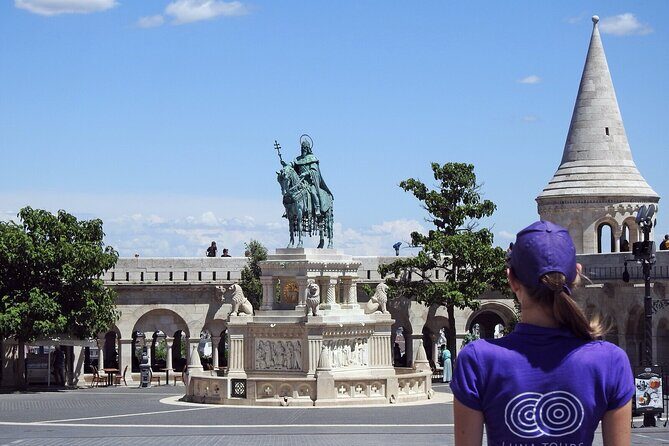
- Meet confidently at Szentháromság tér so you don’t waste the first 20 minutes hunting for your group
- Small group (up to 20) makes it realistic to hear the guide and ask questions
- Fisherman’s Bastion is the big view stop, with fairy-tale energy and easy photo moments
- Matthias Church admission is not included, so budget for the ticket if you want to go in
- The route mixes royals and everyday Budapest, including Ruszwurm and Karmelita Kolostor
- Great pacing for a first day in the city, since it finishes near Parliament
Why this Buda Castle walk turns confusion into clarity

Budapest’s Buda Castle District can overwhelm you fast. Streets twist, views tempt you to stop everywhere, and you can end up taking random pictures with no idea what you’re looking at. This tour solves that with a simple format: a guided walk that connects major landmarks with legends and context you can actually use later.
In about two hours, you’ll hit the “must-sees” and also the smaller stops that give the area personality. You start with Matthias Church, then move into St Stephen’s story, and soon you’re standing at Fisherman’s Bastion feeling that wow-factor everyone talks about. After that, the tour keeps momentum with statues, promenades, and a handful of quick cultural detours like Ruszwurm.
If you want a first-day overview without spending half your day in line, this is a smart fit. It also has a friendly rhythm: not a lecture, not a speedrun. You’ll get enough time at each point to look around, listen, and take photos before the group moves on.
You can also read our reviews of more walking tours in Budapest



Meet at Szentháromság tér: a smooth start for a small-group tour
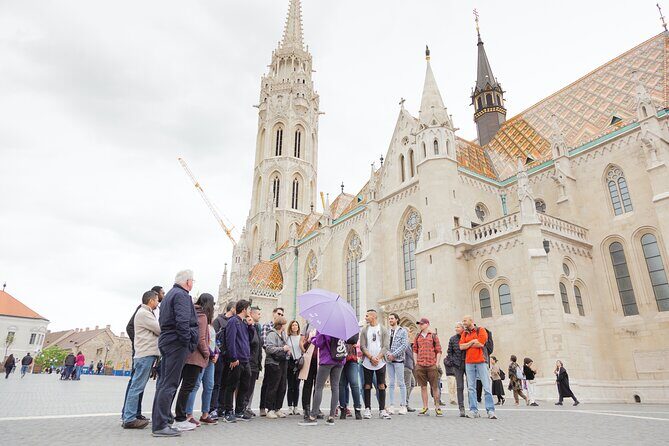
The starting point is Szentháromság tér, 1014 Hungary. That’s helpful because you don’t need to decode a complicated address. The tour is designed for easy meeting, and the group stays limited to 20 people, which makes the walk feel more personal than the big bus-style city tours.
You’ll also get a mobile ticket, which makes last-minute check-in less stressful. And since the tour is offered in English, the experience stays consistent from stop to stop. If you’re relying on a quiet moment to hear details, pick a spot close to the guide at the start.
One small practical point from real-world experience: guides sometimes use a microphone and speaker setup. That matters in outdoor settings, especially if you’re near other groups. You’ll still hear the story even if you’re not standing at the absolute front.
Matthias Church and St Stephen: the stories that set the tone
The tour starts at Matthias Church. Your guide meets you at the main entrance and explains the place with a mix of history and humor. The big value here is the framing: Matthias Church isn’t just a pretty building to glance at. It’s a starting point for understanding why this castle area matters.
Two things to watch for at this stop:
- Admission is not included, so decide in advance whether you want to go in.
- Even if you don’t, the guide’s setup helps you understand what you’re seeing outside.
Next comes the Statue of St Stephen. This is a fast stop—about 10 minutes—but it gives you the founder context you’ll keep seeing echoed around the city. It’s also a good reset before you move into the view-heavy part of the walk.
Fisherman’s Bastion, Ruszwurm, and the joy of short photo pauses
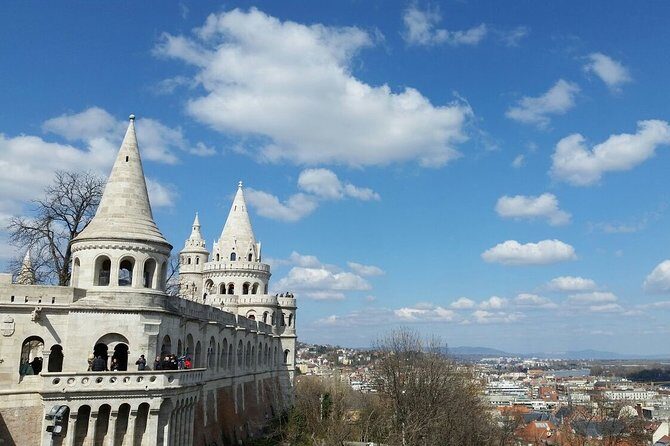
Then you get to the heart of the visual payoff: Fisherman’s Bastion. The guide sets the tone as you arrive—standing there gives you that immediate love-at-first-sight feeling. The stop is about 20 minutes, which is enough time to take photos without rushing, and still listen while you’re there.
After the view comes a totally different kind of Budapest charm: Ruszwurm Confectionery. This is the oldest coffee house and pastry shop of Budapest, and the stop is only 5 minutes. The point isn’t a full food mission. It’s the contrast. You get the historic grandeur of the castle area, then you land on a place where people have kept a tradition of coffee and pastries.
If you like travel that mixes iconic landmarks with everyday culture, this little stop works. If you’re only chasing checkmarks, it still helps you remember the district as a real place, not a museum set.
Hadik’s equestrian statue and Setany’s promenade views
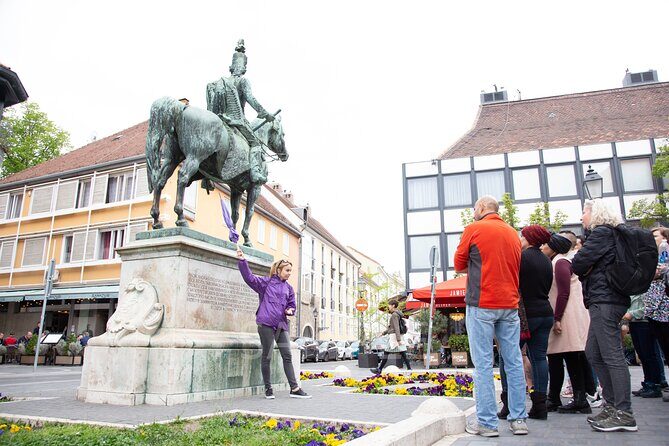
Next up is the Statue of Mounted Andras Hadik. The guide points out how people treat this statue for luck—your best move is simple: touch it if you want to join the tradition. The stop is about 5 minutes, so it’s quick and fun.
Then you move to the Arpad Toth Promenade (Setany), also described in the tour as the Hungarian Beverly Hills. This is where the storytelling continues, with local gossips, rumors, and history. The value isn’t just the names or dates. It’s learning how locals explain the area’s identity—why it’s seen as a place of status, and how that shows up in the area’s vibe.
The promenade stop lasts around 10 minutes. That’s a good length for two reasons: you get a view and a story, and you don’t get stuck lingering when the tour has more ground to cover.






Uri Street: the Castle District’s shift from homes to royalty

At Uri Street, the guide takes you through the Castle District split between residential and royal parts. The stop is about 10 minutes, and the strength here is perspective. You start to notice that this place is not only palaces and churches. People lived here too, and the architecture and streets carry that everyday layer alongside the grand monuments.
This is also a helpful moment for beginners. Once you understand that this is a living district, not just a backdrop, your future self-guided exploring becomes much easier. You’ll know what to look for and where to slow down.
Labyrinth and Hospital in the Rock: underground stories without a time sink
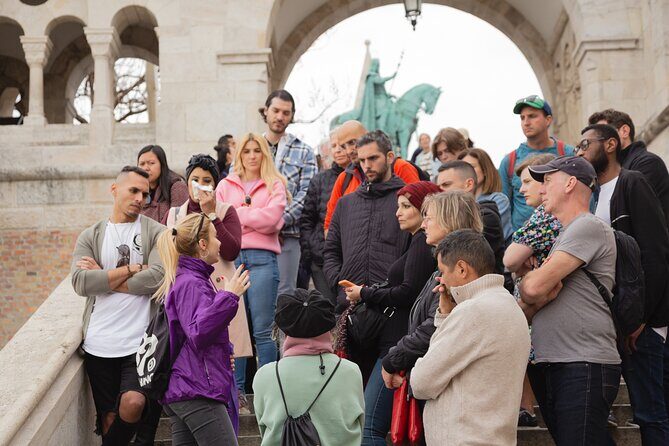
The tour includes Labirintus Budavari, which refers to the cave system under the Castle district and hidden museums connected to the area, including the Labyrinth and Hospital in the rock. The stop is about 10 minutes, and that’s exactly the right timing if you don’t want your tour day consumed by ticket lines.
Because the tour data doesn’t say these entries are included, treat this stop as a guided orientation. You’re getting the concept and the location in your mind. If you want to go deeper later, you’ll know what you’re looking for when you return.
This stop also helps break up the pacing. After statues, views, and promenades, moving to the idea of underground spaces feels like a gear change.
Karmelita Kolostor: Prime Minister offices and the White House comparison
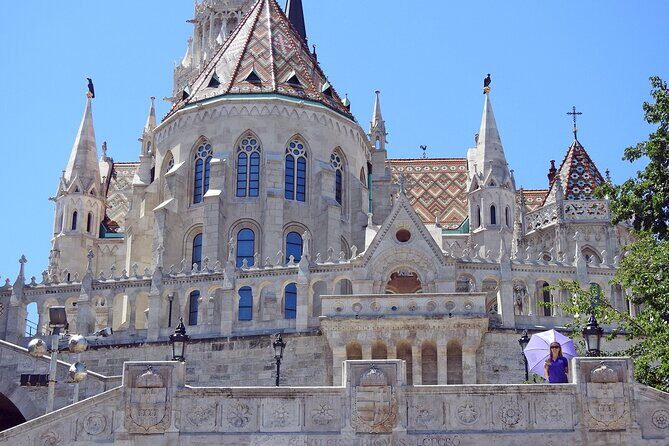
Next is Karmelita Kolostor. The guide doesn’t only cover dates. The stories are about everyday-life connections and how the area connects to major political spaces, including references to Prime Minister offices and the Hungarian White House comparison.
That kind of framing is useful because it links the physical buildings to how people use them. You stop seeing the architecture as frozen in time, and start seeing it as part of how a country functions.
This stop is about 10 minutes, so don’t expect a full museum-style walkthrough. Do expect an angle on why the place matters, and how to interpret it the next time you’re passing by.
King Matthias Fountain and the final walk into Buda Castle
The tour highlights the Fountain of King Matthias with legend and a small ritual. The guide suggests dropping a coin and, according to the legend, you may return to Budapest again. The stop is about 5 minutes, so keep it light: look, listen, then move.
Finally, you reach Buda Castle, described with medieval ruins and the royal palace area. The last stop is about 20 minutes. This is where your earlier context pays off. If you kept listening at Matthias Church and St Stephen, you’ll understand why this area feels like the core of the city’s identity.
The tour ends at Budapest, Szent György tér 2, 1014 Hungary, and the itinerary notes that it finishes by the Hungarian Parliament building. Practically, that’s a nice end point for planning your next move, since it helps you transition away from the Castle District without doubling back.
Price and what $3.63 buys you (and what it doesn’t)
The price is listed at $3.63 per person, which is strikingly low. That doesn’t mean you’re getting less value in the story part; it means the tour is set up as a guided route with minimal included entrances.
Here’s what to expect financially:
- Included: the local guides (described as funny, local, and capable of giving directions)
- Not included: Matthias Church admission ticket
- Many other stops are free to look at, since they’re statues, promenades, fountains, and exterior viewpoints.
So the real budgeting question isn’t the base price. It’s whether you want to pay for Matthias Church entry. If you do, you’re building a more complete experience. If you don’t, you can still get plenty from the exterior context and the guided storytelling.
Also, the tour encourages tipping. Your guide is the reason this route works, not just the walking. Tip whatever feels right to you based on how helpful and engaging the guide is.
What to do if you want the best experience
This tour works best as a first anchor in Budapest. I’d book it early in your trip so you can recognize references later while you wander.
A few practical tips that match how the tour is structured:
- Arrive a bit early at Szentháromság tér so you start with the whole group.
- Keep your phone charged for Fisherman’s Bastion and photo moments at the promenades.
- If you’re unsure about Matthias Church, decide before the tour so you don’t spend that moment figuring it out in place.
Also, this is a walking tour with a route that’s often described as easy. One review notes an easy walk of less than a mile perhaps, which suggests it’s not a punishing hike. Still, the Castle District streets can be uneven, so comfortable shoes matter.
Should you book this Buda Castle and Fisherman’s Bastion walking tour?
If you want a guided intro to the Castle District without getting stuck in long museum sessions, I think this tour is a strong choice. The route hits the top iconic stops—Matthias Church, Fisherman’s Bastion, and Buda Castle—and then adds quick cultural layers like Ruszwurm and Karmelita Kolostor. You’ll leave with a story map of the area, not just a list of landmarks.
I’d book it especially if:
- You like history mixed with humor
- You want a small group format (max 20)
- You need help understanding what you’re seeing on your own after the tour
I’d hesitate if you strongly prefer self-paced exploring with no guide. Also, if you don’t want to pay for Matthias Church admission separately, this tour may feel a little incomplete—since that one entrance is clearly not included.
FAQ
FAQ
How long is the Buda Castle walking tour?
It runs about 2 hours to 2 hours 15 minutes.
Where does the tour start and where does it end?
The tour starts at Budapest, Szentháromság tér, 1014 Hungary and ends at Budapest, Szent György tér 2, 1014 Hungary. The tour also notes that it finishes by the Hungarian Parliament building.
What’s included in the price?
The tour includes local guides.
Is Matthias Church admission included?
No. Matthias Church admission ticket is not included.
What stops are part of the tour?
Key stops include Matthias Church, the Statue of St Stephen, Fisherman’s Bastion, Ruszwurm Confectionery, the Statue of Mounted Andras Hadik, Arpad Toth Promenade (Setany), Uri Street, Labirintus Budavari, Karmelita Kolostor, the Fountain of King Matthias, and Buda Castle.
Is the tour offered in English?
Yes. It’s offered in English.
What’s the group size?
There’s a maximum of 20 travelers.
Do I get a mobile ticket?
Yes, you’ll receive a mobile ticket.
Is there free cancellation?
Yes. You can cancel for a full refund up to 24 hours before the experience start time.
Is breakfast included?
No. Breakfast is not included.