REVIEW · BUDAPEST
Budapest Walking Tour with a Professional Local Guide
Book on GetYourGuide →Operated by Tourist Angel · Bookable on GetYourGuide
Budapest history comes fast on foot. This 3-hour walk across Pest and Buda pairs landmark exteriors like St. Stephen’s Basilica with human stories about life under the Communist dictatorship. I like that the pacing is relaxed and you get the big-picture context, not just a checklist. One catch: you’ll cross the river using public transport, so you must budget for tickets.
The guides can really shape the experience. I’m drawn to how Dominik, Alexandra, and Dalia kept questions flowing and made tough 20th-century events feel understandable, not heavy-handed. Z also came through with humor and energy, which helps when you’re walking and learning for hours.
At $41 per person, it’s one of those tours that works when you want maximum city orientation for limited time. If you prefer deep, slow museum time, you’ll likely want extra hours before or after this one.
In This Review
- Key Highlights You’ll Actually Feel
- Starting at St. Stephen’s Basilica (and Getting Your Bearings Fast)
- Pest and Buda: Why One Tour Is the Practical Choice
- Parliament Exterior: Seeing Power Without Waiting for Hours
- The Tough Part: Dictatorships, Revolutions, and Real Human Stories
- Matthias Church and Buda Castle: Architecture as Storytelling
- The Arts-and-Architecture Angle (and the Paris of the East Mental Shift)
- How the Walking Works: Comfort, Shoes, and Weather Reality
- Price and Value: What $41 Buys (and What It Doesn’t)
- Who This Tour Suits Best (and Who Might Want Something Else)
- Making the Most of It: Practical Tips Before You Go
- Should You Book This Budapest Walking Tour?
- FAQ
- How long is the Budapest Walking Tour with a Professional Local Guide?
- How much does the tour cost?
- What’s included in the price?
- What is the meeting point?
- Is the tour available in English?
- Do I need public transport tickets?
- Which major sights will I see?
- Is the group private or small?
- What are the cancellation and payment options?
Key Highlights You’ll Actually Feel
- St. Stephen’s Basilica start near California Coffee Company keeps things easy to find
- Pest-to-Buda route with a short walking segment plus public transport across the river
- 20th-century reality check on Nazi and Communist dictatorships and revolutions
- Matthias Church + Buda Castle viewpoints that match the city’s big architectural mood
- Exterior focus on the Hungarian Parliament so you still spend time learning and walking
- Small-group or private options that make it easier to ask questions and keep pace
Starting at St. Stephen’s Basilica (and Getting Your Bearings Fast)
If Budapest feels split down the middle, it’s because it is. This tour is built around that idea: one side has its own rhythm, the other side has its own views, and the story of the city changes depending on where you’re standing.
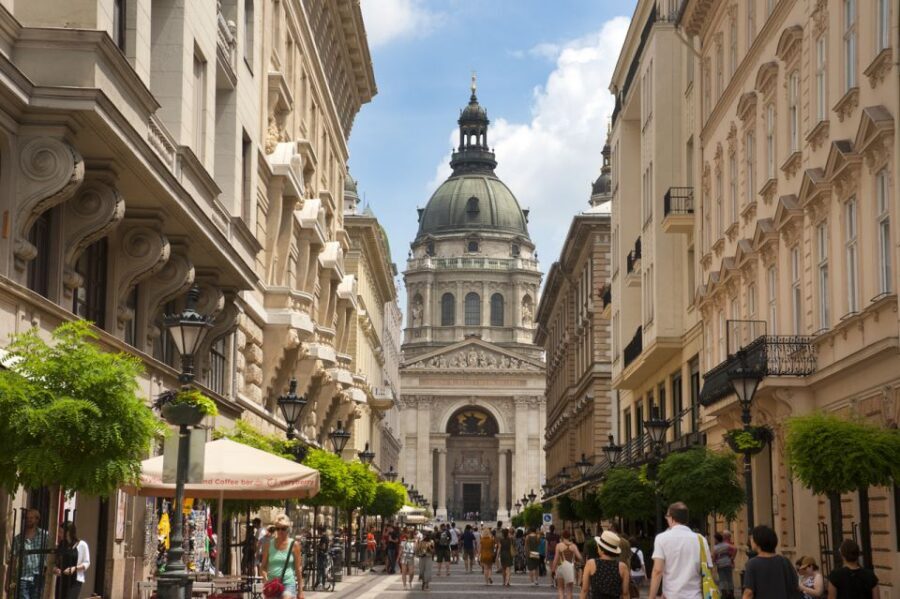
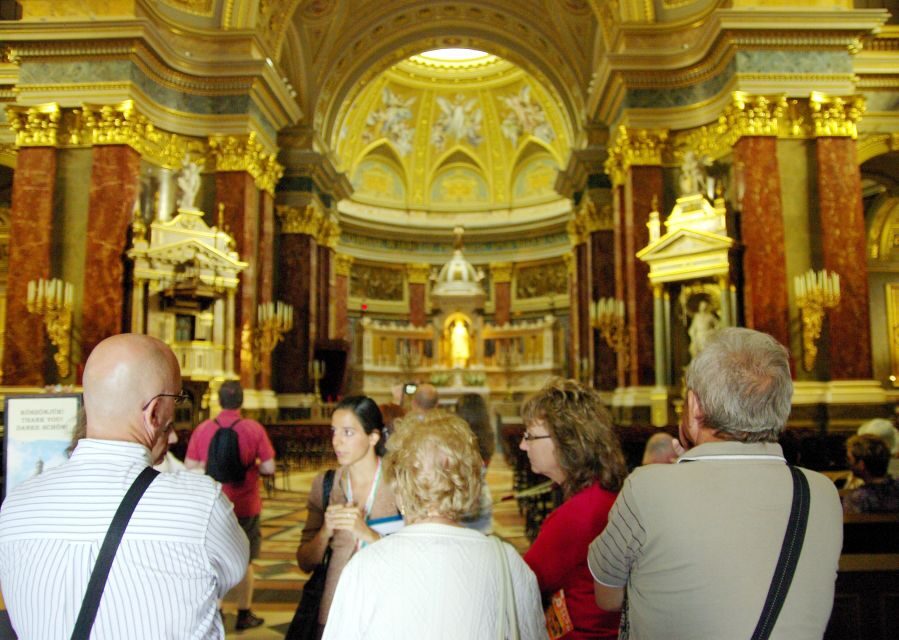
You’ll meet next to St. Stephen’s Basilica, in front of the California Coffee Company. That’s a smart meeting point for first-timers because it anchors you in the heart of the action right away, instead of sending you to a far-off square where you’re still trying to find your phone signal and your feet.
The walk begins with a classic “Budapest opener”: religious architecture that instantly tells you the city has long been shaped by faith, power, and public life. St. Stephen’s Basilica is monumental without being fussy, and it sets a tone that fits the rest of the route. You’re not just seeing stone—you’re learning why certain buildings matter to how people understand the country.
You can also read our reviews of more walking tours in Budapest



Pest and Buda: Why One Tour Is the Practical Choice
Budapest is famous for its views, but the real value here is getting the map in your head early. The tour is designed for people who don’t have weeks (or the money) for a long, layered itinerary. You get a strong overview of how Hungary’s capital moved from medieval importance to 19th-century growth, and then through the shocks of 20th-century dictatorship and revolution.
This matters because Budapest can feel like separate eras stacked on top of each other. One street can look historic, then the next turn feels modern, and suddenly you’re wondering what connected it all. A good guide stitches those eras together, and that’s the whole point of this tour’s structure.
Also, the pacing is built to keep you comfortable. You’ll walk roughly 1.5 kilometers / 1 mile, then use public transport to cross the river. That mix is ideal when you want to see a lot without turning your day into a marathon.
Parliament Exterior: Seeing Power Without Waiting for Hours
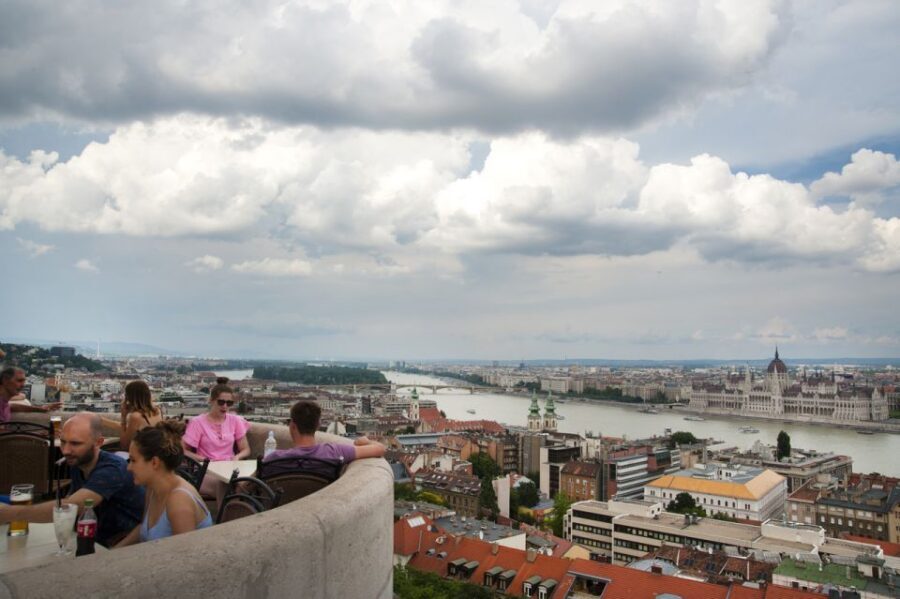
The Hungarian Parliament building is one of those sights that people photograph even if they know nothing about it yet. On this tour, you see the exterior, which is a sensible way to get the dramatic presence without locking yourself into a long ticket line.
What I like about this approach is that it keeps your time flexible. Even if you later decide to do a parliament visit, you’ll already understand where it sits in the city’s story. And if you skip the inside later, you still leave with a clearer sense of how the building represents government, national identity, and public life.
Guides on this route also tend to connect the “look” of the Parliament to the political story the city went through—Nazi pressure, Communist control, and the later turn toward democracy. That context makes the building feel less like scenery and more like a symbol with consequences.
The Tough Part: Dictatorships, Revolutions, and Real Human Stories
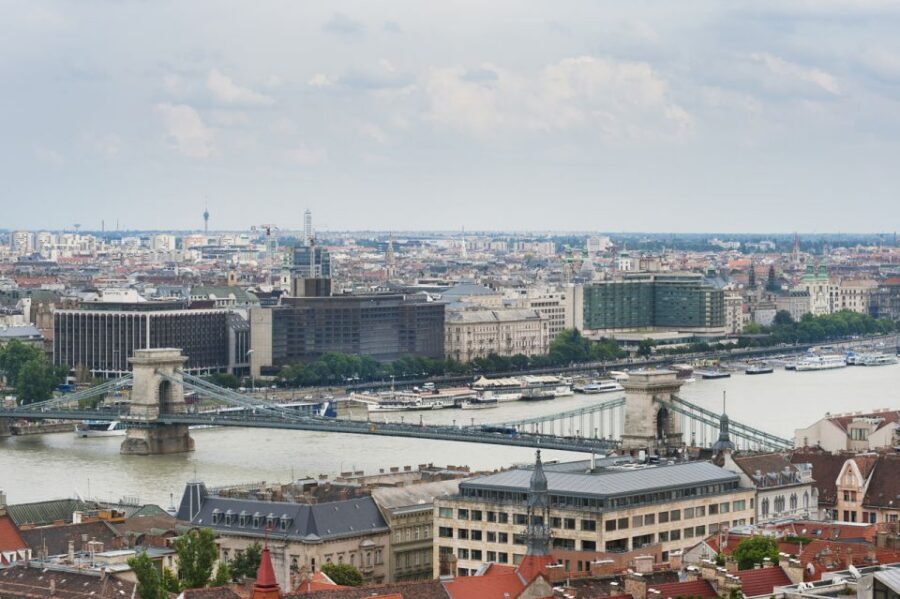
Not every walking tour wants to talk about the darkest chapters of history. This one does, and the best guides handle it with care. You’ll hear personal stories about life under Hungary’s Communist dictatorship, and you’ll also get the wider frame: Nazi and Communist eras, revolutions, and the shift to a democratic future.
What makes this worthwhile is that it’s not just dates and slogans. The tour is meant to explain how power shows up in daily life—how people adapt, what gets restricted, what gets remembered, and why certain places and symbols matter so much.
Dominik’s approach made a strong impression on people who care about Central European history beyond Hungary. If you’re from Poland or you’ve been studying the region, the connections feel especially relevant because the stories sit in the same wider European struggle. You come away understanding that Budapest history isn’t isolated—it’s threaded into what happened across the continent.
If you want a trip that’s more than sightseeing—if you want a city you can read—this is the part that turns the monuments into meaning.
Matthias Church and Buda Castle: Architecture as Storytelling
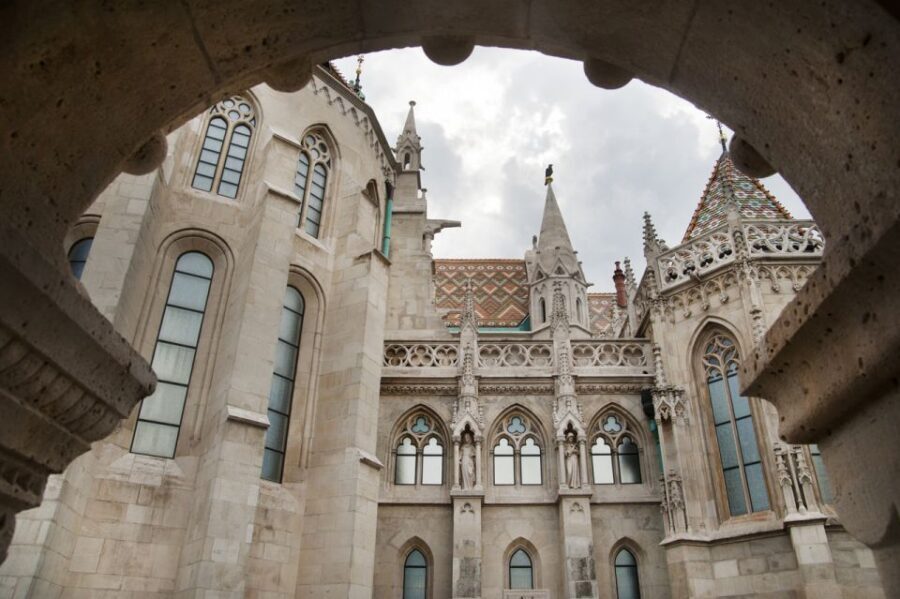
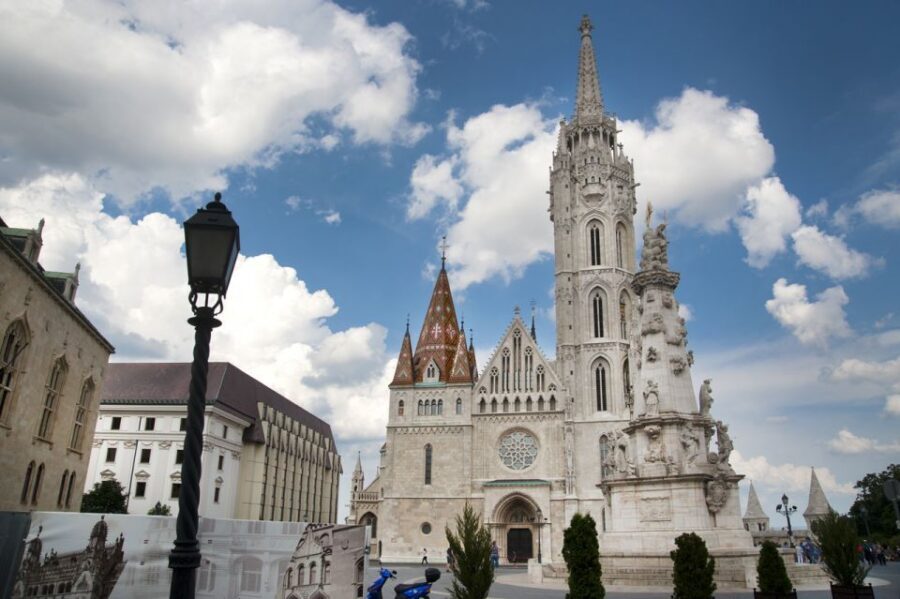
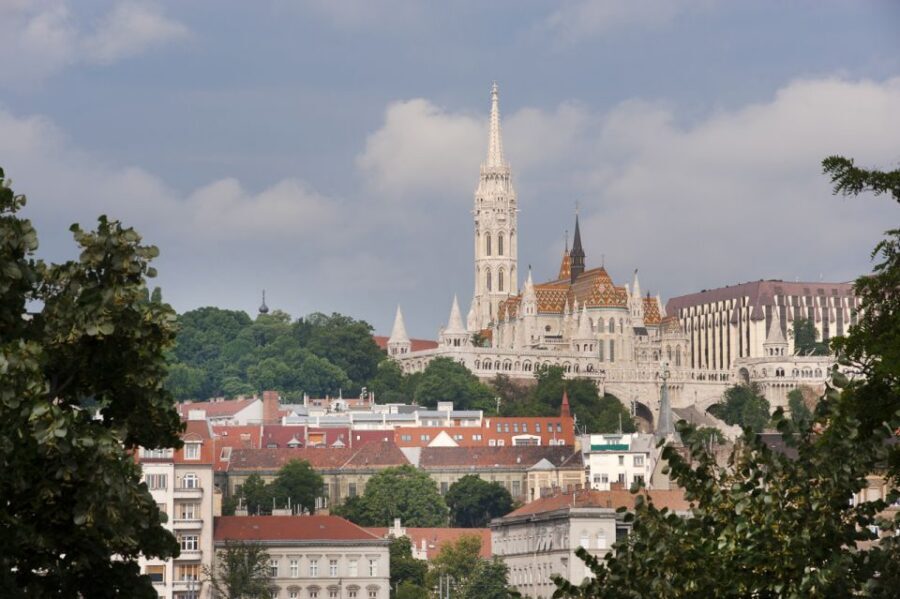
On the Buda side, the tour focuses on two big visual anchors: Matthias Church and Buda Castle. These aren’t random stops. They represent the city’s “royal residence” era and the way Budapest shaped itself as it grew.
Matthias Church brings the Gothic splendor, and it’s also a reminder that religious buildings weren’t just places for prayer. They were landmarks of authority and identity. When you pair that with castle views, you start to see how the physical setting reinforced the political story of who ruled, who claimed legitimacy, and how the city presented itself.
Buda Castle is the other half of that picture. Even when you’re viewing it externally, you understand the scale and intention. It’s the kind of place where your brain naturally starts asking questions: Why here? Why these walls? Why this prominence? A strong guide answers those questions with history tied to what you can see.
You can also read our reviews of more guided tours in Budapest






The Arts-and-Architecture Angle (and the Paris of the East Mental Shift)
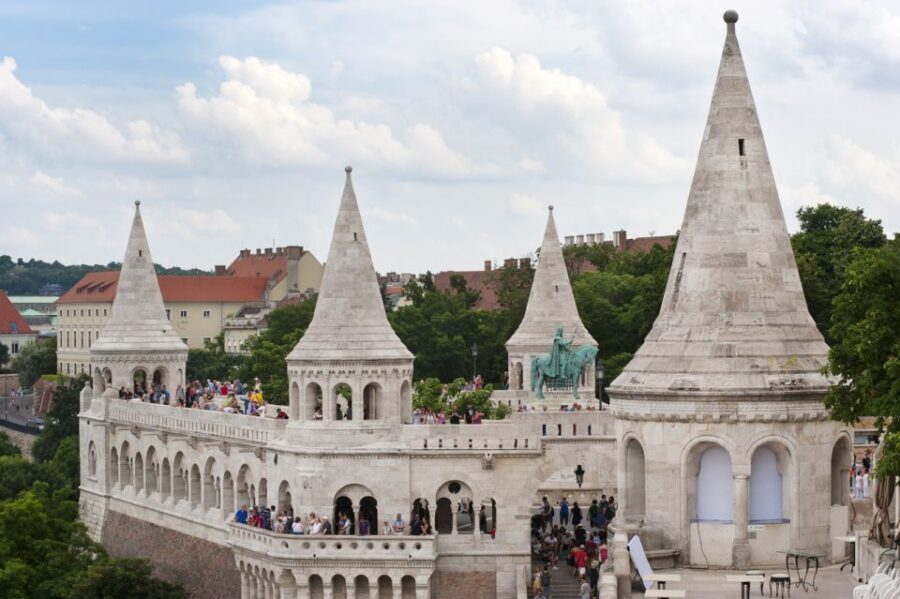
Budapest has a nickname: Paris of the East. The tour uses that idea in a smart way. It’s not about making the city sound French for marketing points. It’s about helping you recognize Budapest’s taste: its architecture, its public spaces, and the way art and design reflect identity.
When the guide explains the buildings in plain language—how styles evolved, why certain structures were built, how the city changed—you start noticing details you’d otherwise miss. That’s the kind of value that keeps paying off after the tour ends, because you’ll see the next church, bridge, or facade and understand it faster.
The best part is that you’re not required to be an architecture expert. You just need curiosity and a willingness to walk.
How the Walking Works: Comfort, Shoes, and Weather Reality
This tour is set up for a comfortable pace. You’ll cover around 1.5 kilometers / 1 mile walking, which keeps the day from getting too physically demanding. Still, you’re in Budapest, so you’ll want shoes that handle uneven sidewalks and old stone.
Rain is also a real factor here. One of the guides handled a pouring-rain day without drama, which tells you the tour is built to continue through typical weather. If you’re visiting in shoulder season, pack a light rain layer. You’ll be glad you did.
Small group or private options can also help. With fewer people, it’s easier to pause for questions and for the guide to adjust pace if someone needs a breather.
Price and Value: What $41 Buys (and What It Doesn’t)
The price is $41 per person for a 3-hour guided experience. The guide is included, and that’s the key cost driver here. Instead of paying only for attractions, you’re paying for interpretation: the political context, the architectural explanations, and the personal storytelling.
Not included is public transport. You’ll need 4 tickets per person totaling 1400 HUF. Since the tour uses transit to cross the river, it’s worth budgeting this upfront. On a practical level, that small added cost keeps the tour from becoming a long uphill slog while still covering both sides of the city.
If you’re trying to decide between doing this and spending that time on your own, ask yourself what you want most:
- If you want a quick, coherent Budapest orientation, this offers strong value.
- If you’d rather spend money only on ticketed attractions, you might feel this is more about learning than about entering venues.
Given the high satisfaction rating (4.9 with 50 reviews), the guide component seems to be the main reason people feel it was worth it.
Who This Tour Suits Best (and Who Might Want Something Else)
This is a great match if you:
- Want one route that covers major sights on both sides of the Danube
- Need context for Hungary’s fractured history—medieval roots, 19th-century growth, and the 20th-century dictatorships
- Enjoy questions and a human guide who connects buildings to real stories
- Prefer a walking tour with just enough movement rather than a full-day hike
You might look for a different style of tour if you:
- Want lots of interior visits, museum time, or long photo stops with minimal explanation
- Hate public transport on vacation and would rather walk the entire distance
Making the Most of It: Practical Tips Before You Go
A few small choices will make your day smoother:
- Arrive early enough to feel settled at California Coffee Company by the Basilica area.
- Bring a bottle of water and wear layers; weather around the river can change quickly.
- Come with one curiosity question. The guides often answer lots of questions, and your specific interests will help the tour click faster.
- If you feel the guide does great work, a tip is a nice way to show support. One guide was described as living off tips/donations, and that’s common for independent local guiding.
Should You Book This Budapest Walking Tour?
Book it if you want a smart, efficient introduction to Budapest that connects major monuments to the country’s political and cultural story. At $41 for 3 hours, you get a guided route that balances big landmarks with the kind of context that makes Budapest feel less confusing.
Skip it (or pair it with extra time elsewhere) if you’re looking for a slow, interior-heavy day. This tour is about getting your bearings, understanding what you’re seeing, and leaving with a clearer sense of why Budapest is the way it is.
If your first goal is orientation—and your second goal is understanding the city beyond photos—this one is a strong choice.
FAQ
How long is the Budapest Walking Tour with a Professional Local Guide?
The tour lasts 3 hours.
How much does the tour cost?
The price is $41 per person.
What’s included in the price?
What’s included is a knowledgeable tour guide.
What is the meeting point?
Meet next to Saint Stephen’s Basilica, in front of California Coffee Company.
Is the tour available in English?
Yes, the live tour guide is English.
Do I need public transport tickets?
Yes. Public transport tickets are not included. The tour notes 4 tickets per person, totaling 1400 HUF.
Which major sights will I see?
You’ll see St. Stephen’s Basilica, Matthias Church, Buda Castle, and the exterior of the Hungarian Parliament building, along with more central sites.
Is the group private or small?
You can choose private or small groups available.
What are the cancellation and payment options?
There is free cancellation up to 24 hours in advance for a full refund, and you can reserve now & pay later (pay nothing today).