REVIEW · BUDAPEST
A Journey through Jewish Budapest – Private Walking Tour
Book on Viator →Operated by Insight Cities · Bookable on Viator
Budapest tells its Jewish story on foot. This private walking tour pairs a historian guide with the big-name sights—the enormous Dohány Street Synagogue and the Shoes on the Danube Bank memorial—plus the quieter streets that explain how real community life worked. I love the small, private group feel, and I love that the guide ties landmarks to people and events, so the place makes sense fast.
One thing to plan for: synagogue entry fees aren’t included, and interior access depends on what’s open to the public (you may see some buildings from the outside).
In This Review
- Key highlights to look for
- The Best Way to Read Budapest’s Jewish Quarter
- What value you’re actually buying
- Meeting Point, Pickup, and How the Walk Really Flows
- Stop 1: Dohány Street Synagogue and the Hero Temple Complex
- The practical drawback here: dress code and tickets
- Stop 2: Kazinczy Street Synagogue, the Ghetto Wall Memorial, and the Mikve
- Why this stop is more than pretty buildings
- Stop 3: Rumbach Street Synagogue and the Status Quo Ante Thread
- The Route Up Toward Castle Hill Ruins
- Stop 4: Shoes on the Danube Bank Memorial
- How Long It Really Takes, and How to Make It Work for Your Day
- Who This Tour Suits Best
- Price and Logistics: What You Should Expect to Pay Extra For
- Should You Book A Journey Through Jewish Budapest?
- Quick decision guide
- FAQ
- What is the duration of the private walking tour?
- How much does the tour cost?
- Is hotel pickup included?
- Where do I meet if I don’t want pickup?
- What sites are visited during the tour?
- Are synagogue admission tickets included?
- What should I wear inside synagogues?
- What time do tours depart?
Key highlights to look for
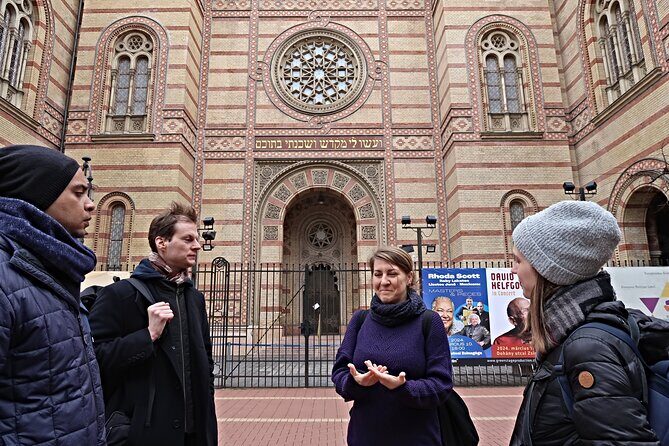
- Private historian guide for just you and your party (a real upgrade from group wandering)
- Dohány Street Synagogue complex, including the Temple of Heroes and memorial areas
- Ghetto Wall Memorial and Mikve area on the route, with stops that explain daily religious life
- Castle Hill ghetto-area ruins and older synagogue remains that add time depth
- Shoes on the Danube Bank memorial, short but heavy, with no entry fee
The Best Way to Read Budapest’s Jewish Quarter
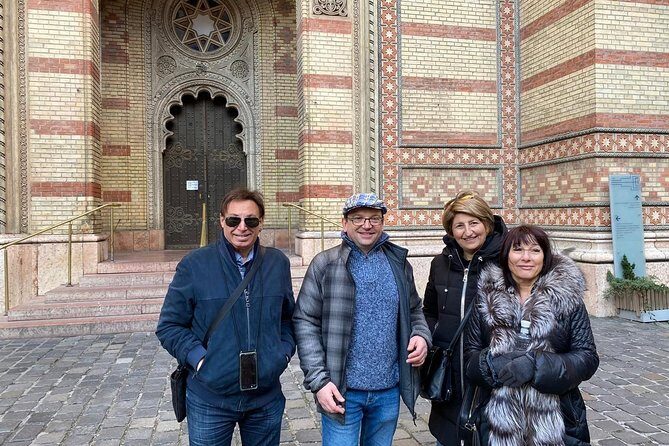
If you want Budapest to feel more than a list of landmarks, this is the right kind of tour. You cover famous sites like the Dohány Street Synagogue and then you move through District VII and the ghetto-area streets where everyday Jewish life happened—work, prayer, community, and survival.
The private format matters here. With a guide like Andrew (an enthusiast for Jewish culture and history) or Kata (who made the district easy to understand for a group of ten), you don’t just hear facts. You get answers to the questions that pop up when you’re standing in front of real buildings and real memorials.
You can also read our reviews of more walking tours in Budapest


What value you’re actually buying
The price is $396.52 per group, up to 10 people, for about 3 hours. That’s not a “cheap add-on,” but it’s also not a boutique-only extravagance. At a full group, it can work out to roughly $40 per person—less if you split with friends, more if it’s just two of you. The core value is time and expertise: a historian guide and a route that’s designed to connect dots, not just tick boxes.
Meeting Point, Pickup, and How the Walk Really Flows
This tour runs about 3 hours, usually with a morning start at 10:00am year-round, and afternoon options in certain seasons. It’s built for walking, with moderate distance and the practical reminder to wear comfortable shoes. You’re on foot for neighborhoods where the street scenes do the teaching—so good footwear isn’t optional.
You can choose hotel pickup, or if you prefer meeting centrally, the default meeting point is Cafe Synago Kavehaz (Cafe Zenit), Dohany utca 1/A. The guide meets you, then leads your group using metro, tram, or foot depending on how close the next stops are. That mix is useful in Budapest because some stretches are best on foot, while others are faster by transit.
You’ll also receive a mobile ticket. Entry tickets for certain synagogues aren’t included in the tour price, so you’ll want to plan for that cost. The good news is that the tour provides help with tickets if you don’t already have a pass.
Stop 1: Dohány Street Synagogue and the Hero Temple Complex
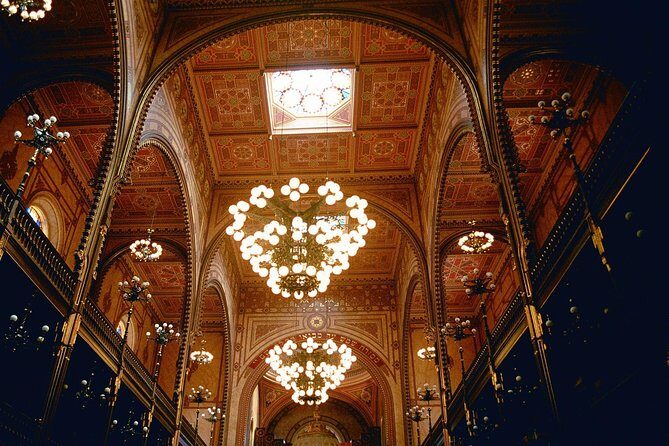
The tour’s first major moment is the Great/Central Synagogue (Nagy Zsinagóga) at Dohány Street. This isn’t just a synagogue you glance at. It’s a Moorish Revival-style monument that dominates the skyline, and the visit sets the tone for everything else you’ll see.
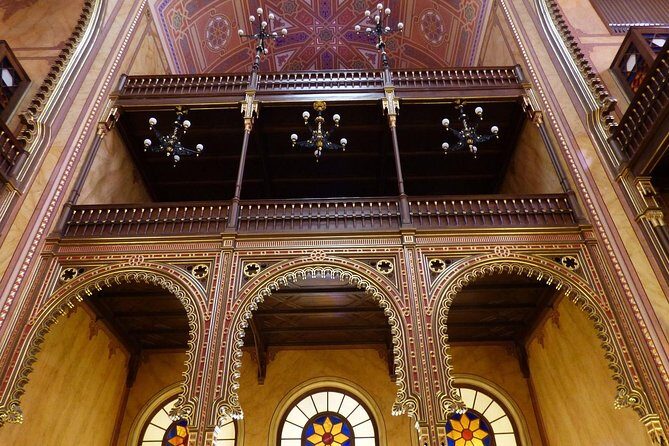
Inside (when you have your entry sorted), you’ll get guided time in the temple complex, including the Temple of Heroes, the Jewish Museum, and the Memorial Park areas. Even if you’re not a museum person, the layout helps you understand how this site carries multiple jobs at once: worship, education, remembrance, and identity.
A helpful detail: the tour includes help from a Jewish Studies Scholar for this stop, and that’s a smart match for the building’s symbolism. You’re not just learning what it looks like; you’re learning why the design matters and how the space has been used over time.
The practical drawback here: dress code and tickets
Dohány Synagogue asks visitors to cover shoulders and knees. It’s one of those rules that can turn into stress if you forget. Bring a light layer you can wear without sweating through the day.
Also, admission is not included, so expect a separate ticket for entry.
You can also read our reviews of more private tours in Budapest






Stop 2: Kazinczy Street Synagogue, the Ghetto Wall Memorial, and the Mikve
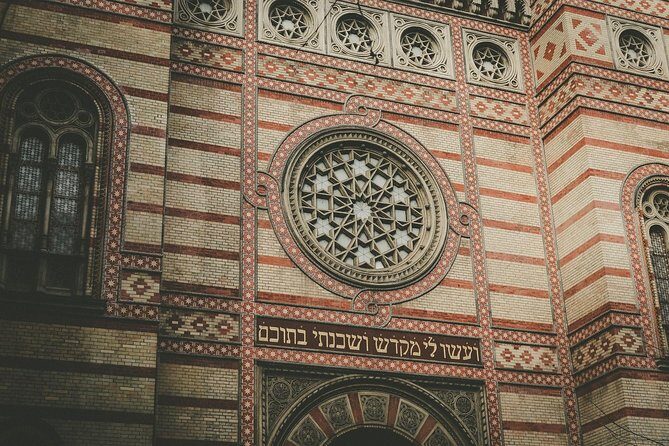
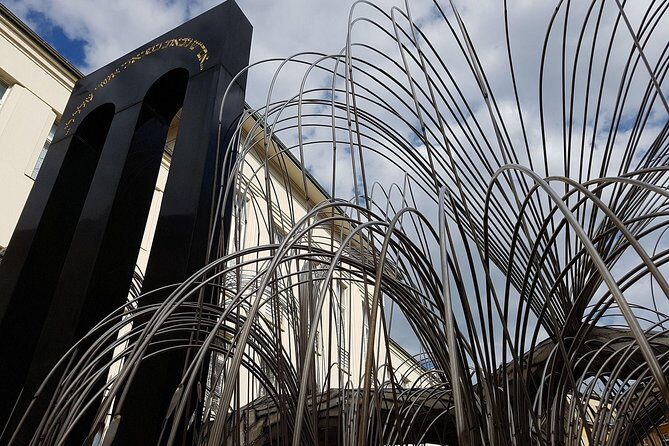
After the grand first stop, the tour shifts into a more grounded, street-level story. You walk toward the ghetto-area memorial context, including the Ghetto Wall Memorial, erected in 2014. It gives you a hard visual boundary for what Jews in the ghetto faced—lines that were enforced, not suggestions.
From there, you pass a luxurious Mikve, the ritual bath that connects architecture to daily religious practice. Seeing this on a walking route is especially effective because it turns religious life into something physical and local, not an abstract idea.
You then continue toward the Kazinczy Street Synagogue area. You’ll see exteriors of an Art Nouveau orthodox synagogue and—when the synagogue is open—visit the interior. That “open to the public” note matters. Budapest schedules and opening hours can be changeable, so you may see more inside on some days than others.
Why this stop is more than pretty buildings
The key value at Kazinczy Street is how it connects. You’re not only looking at one synagogue; you’re reading the neighborhood as a system: ritual spaces, community institutions, and the pressure of the ghetto lines all in one corridor of time.
Just like at Dohány, tickets for entry here aren’t included. Plan for the extra cost so your afternoon stays calm.
Stop 3: Rumbach Street Synagogue and the Status Quo Ante Thread
Next comes Rumbach Street Synagogue, where the tour focuses on a specific stream of Judaism: the Status Quo Ante tradition. That might sound like a footnote, but it helps explain why different communities organized themselves the way they did—especially when groups had competing claims about religious practice and authority.
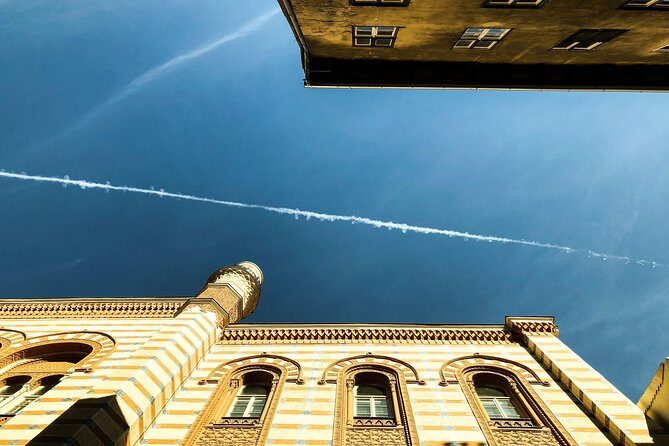
You’ll spend time observing the impressive facade, and then, if the synagogue is open, you’ll get a chance to see the interior. When interiors are closed, you’ll still get the context for what you’re seeing outside, but you’ll miss some of the spatial feeling that makes religious architecture hit differently.
This is also a stop that tends to work well for mixed-interest groups. If your day includes kids or teens, the subject matter can stay engaging because the guide can explain how religion, identity, and community politics played out in real places.
The Route Up Toward Castle Hill Ruins
Between major synagogue stops, you get time in the broader geography of the Jewish quarter. You’ll walk through the historically Jewish working-class neighborhoods in District VII, and you’ll also reach Castle Hill area ruins tied to older synagogues dating back to medieval times.
Even without getting a big-ticket museum experience, ruins can do a lot of emotional work. They show continuity—how long these communities were present, how deeply the city layers itself, and how rebuilding and memory overlap.
If you like your tours grounded in places you can touch (or in this case, stand near), this routing choice makes the whole walk feel more authentic than a straight hit-list.
Stop 4: Shoes on the Danube Bank Memorial
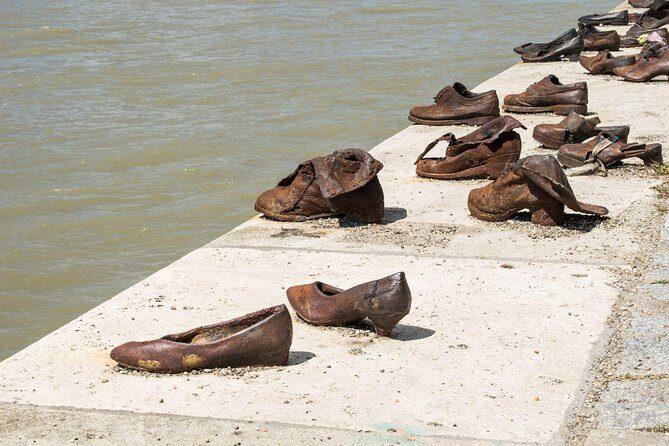
The tour ends at Shoes on the Danube Bank, one of the most direct Holocaust-era memorials in Budapest. The memorial was erected on April 16, 2005, and it honors Jews who were massacred here during World War II.
The story is heavy and specific: people were ordered to remove their shoes, were shot at the water’s edge, and their bodies were carried away into the river. The memorial’s design—shoes left behind on the bank—makes the idea personal fast. You can read it in a minute, but it sticks longer than you expect.
This stop is free, and that’s a big plus. You don’t need to add another ticket cost to reach one of the emotional anchors of the day.
How Long It Really Takes, and How to Make It Work for Your Day
This is a 3-hour walking tour, but the time doesn’t feel like “just walking.” Each synagogue stop is timed—around 30 to 35 minutes for the major and second stops, then about 25 minutes at Rumbach Street, then roughly 20 minutes at Shoes on the Danube Bank.
Because you’re moving through active parts of the city, the timing can feel tighter on busy days. I recommend planning a slower schedule around this tour. If you try to cram a second major museum right afterward, your feet and attention will likely disagree.
When you finish, you’re placed near the Danube and the memorial area, which makes it easy to keep exploring on your own. This works well if you want a quiet follow-up walk by the river.
Who This Tour Suits Best
This tour fits best if you want more than surface-level sightseeing. It’s ideal for couples, small groups, and families who appreciate a structured route but still want room for the guide’s flexibility.
It’s also a strong match if you care about the why behind Jewish sites: not only how they look, but how they served community life—prayer spaces, ritual practices, memory, and identity.
From the experience feedback, it’s a real win with younger travelers too. Andrew handled a group with teen and pre-teen boys and kept their attention throughout. Guides like Oshi and Kati are praised for linking history to what you’re actually seeing.
Price and Logistics: What You Should Expect to Pay Extra For
Here’s the honest math: the tour cost covers the guide and hotel pickup, but not synagogue admissions at Dohány, Kazinczy, and Rumbach. Shoes on the Danube Bank is free.
So your final spend depends on which interiors you enter and how ticketing works that day. The tour provides tickets if you do not have a pass, which helps, but the extra cost is still real.
If you want the smoothest experience, budget for synagogue entry fees and bring clothing that meets the shoulders and knees requirement. Do that, and you’ll spend your time learning, not troubleshooting.
Should You Book A Journey Through Jewish Budapest?
I’d book this tour if you want a focused, private route through Budapest’s Jewish landmarks with context that makes the sites click. The strongest reason is the pairing of private historian guidance with a carefully chosen sequence: Dohány Street Synagogue, Kazinczy Street’s memorial and ritual-bath context, Rumbach Street’s denominational angle, then the Danube memorial that lands the day with meaning.
If you’re on a tight budget and hate extra ticket fees, you might feel the “not included” part more than you’d like. Also, interior access at synagogues depends on opening hours, so plan for a bit of variability.
Quick decision guide
- Book it if you want context, not just photos.
- Book it if you like walking routes through neighborhoods.
- Skip it only if you strongly prefer museum-style indoor time or you’re avoiding any extra ticket spending.
FAQ
What is the duration of the private walking tour?
It lasts about 3 hours.
How much does the tour cost?
The price is $396.52 per group, up to 10 people.
Is hotel pickup included?
Yes. Hotel pickup is included, and the guide will meet you at your central hotel or flat.
Where do I meet if I don’t want pickup?
If you don’t want pickup or don’t respond with your address, meet 10 minutes early at Cafe Synago Kavehaz (Cafe Zenit), Dohany utca 1/A.
What sites are visited during the tour?
You’ll visit the Dohány Street Synagogue complex, the Kazinczy Street Synagogue area, the Rumbach Street Synagogue area, and the Shoes on the Danube Bank memorial.
Are synagogue admission tickets included?
No. Tickets for Dohány Synagogue and Kazinczy and Rumbach Street Synagogues are not included, though tickets are provided if you do not have a pass.
What should I wear inside synagogues?
Visitors to the Dohány and Kazinczy Synagogues are requested to have shoulders and knees covered.
What time do tours depart?
Morning tours depart at 10am year-round, and afternoon departures are available in certain seasons.