REVIEW · BUDAPEST
Budapest: Cooking School – Hungarian Menu & Local Market
Book on GetYourGuide →Operated by Chefparade cooking school · Bookable on GetYourGuide
A market tour turns cooking into real life. This Budapest hands-on class pairs a local market visit with a participating 3-course meal you make yourself, then finishes with a shared lunch and recipes you’ll use later.
I especially love the way you start with food on the move, not just a lecture. The Central Market Hall stops you right in front of Hungarian ingredients like kolbász and körözött, and the short tastings plus fruity Palinka and Unicum get you in the mood fast.
One thing to plan for: the meeting point needs a careful look. One review mentioned confusion about which market to use, so I recommend you double-check you’re meeting at the Central Market Hall by Burger King before you head out.
In This Review
- Key Highlights That Make This Cooking Class Worth Your Time
- Central Market Hall First: Getting Your Bearings with Hungarian Ingredients
- Market stops that matter for cooking
- From Market to Kitchen: Why the Transfer Is Part of the Value
- The Hands-On Cooking School Setup: Aprons, Techniques, and Real Participation
- English instruction that supports questions
- Small group advantage (the practical kind)
- The Drinks Moment: Palinka, Unicum, and Setting the Tone for Lunch
- The Menu You’ll Cook: Typical Hungarian Dishes and What You’ll Learn
- Why this set of dishes is useful at home
- Expect a shared, not rushed, rhythm
- Lunch Like a Local: Wine, Soft Drinks, Coffee, and Sitting Down Together
- Recipes to take home
- Price and Logistics: Does $170 Deliver Real Value?
- Who This Cooking Class Suits Best
- Should You Book This Budapest Cooking School?
- FAQ
- Where do I meet for the cooking school experience?
- How long is the class?
- Is the cooking class offered in English?
- Is it a small group?
- What’s included in the price?
- Do you drink alcohol during the experience?
- What food will I cook and eat?
- What if I have dietary restrictions?
Key Highlights That Make This Cooking Class Worth Your Time
- Central Market Hall tastings that give you a feel for ingredients like paprika-based staples and market favorites
- Small group size (up to 10) so you can actually ask questions while you cook
- A real hands-on 3-course menu, not a watch-and-wait experience
- Hungarian drinks included around the meal, including Palinka and Unicum
- English instruction and a side-by-side chef style, designed for discussion as you work
- Take-home recipes so your Budapest meal doesn’t disappear when you unpack
Central Market Hall First: Getting Your Bearings with Hungarian Ingredients
You’ll begin at the Central Market Hall, the kind of place where food feels like the main event. The meeting point is in front of the hall at Burger King, which is useful because it gives you a clear landmark instead of a vague address.
From the start, the tour isn’t just about looking. You get a guided market walk with your chef and group, plus snacks along the way. One reason I like this format: you’re learning what you’re about to cook, right when those ingredients are easiest to picture.
Inside the market portion, your guide will also explain the market’s background as you go. That might sound “extra” until you realize it makes shopping and cooking make more sense. In other words, it helps you connect the food to the place, instead of collecting random dishes with no context.
You can also read our reviews of more shopping tours in Budapest

Market stops that matter for cooking
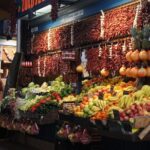
You’ll sample Hungarian appetizers while you walk, including items like kolbász and körözött. That’s a practical advantage: even if you don’t know the terms, you’ll taste the flavors and textures firsthand. Then, when the kitchen steps start and ingredients show up again, you’ll recognize them quickly.
Also, you’re not rushing through. The pace here is built for questions and attention, which becomes important when you get to the more technique-focused parts in the cooking school.
From Market to Kitchen: Why the Transfer Is Part of the Value
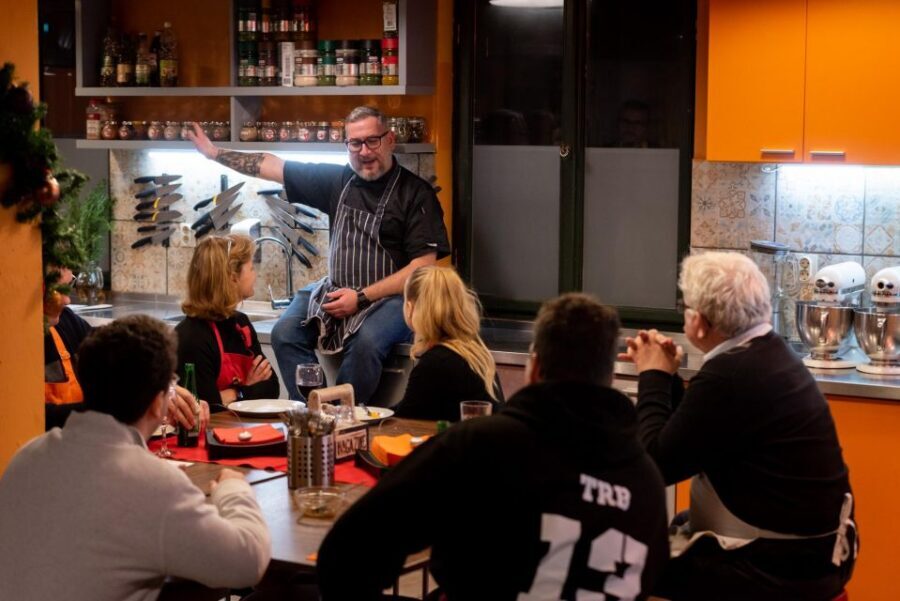
After the market, you’re transferred to the cooking school. I appreciate this detail because it removes the “how do we get there” stress right when you’re already hungry and keyed up.
It’s also a smooth transition in energy. One minute you’re sampling market food, the next you’re in a well-equipped cooking studio where you can focus on chopping, stirring, and learning technique. That flow matters for first-timers. You won’t feel like you need to be organized in the middle.
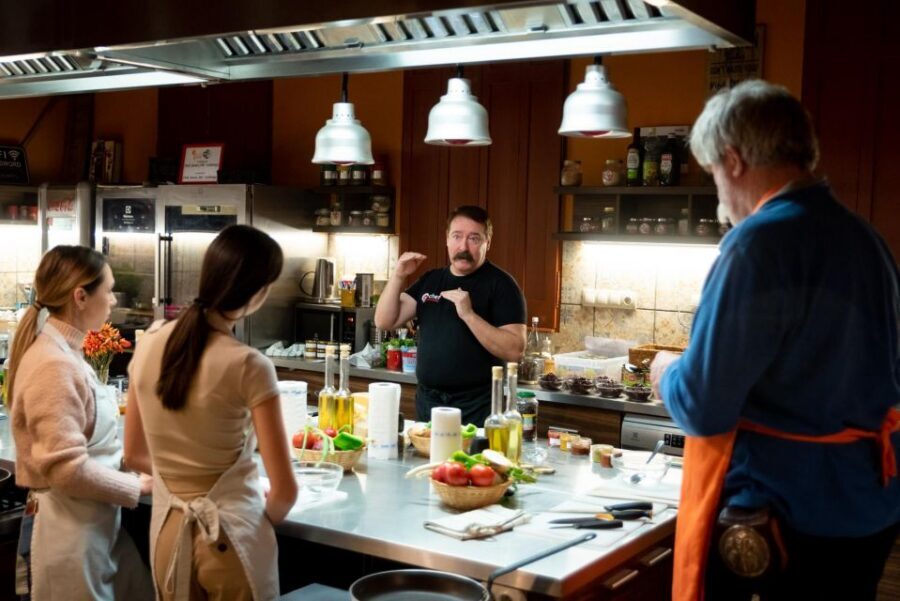
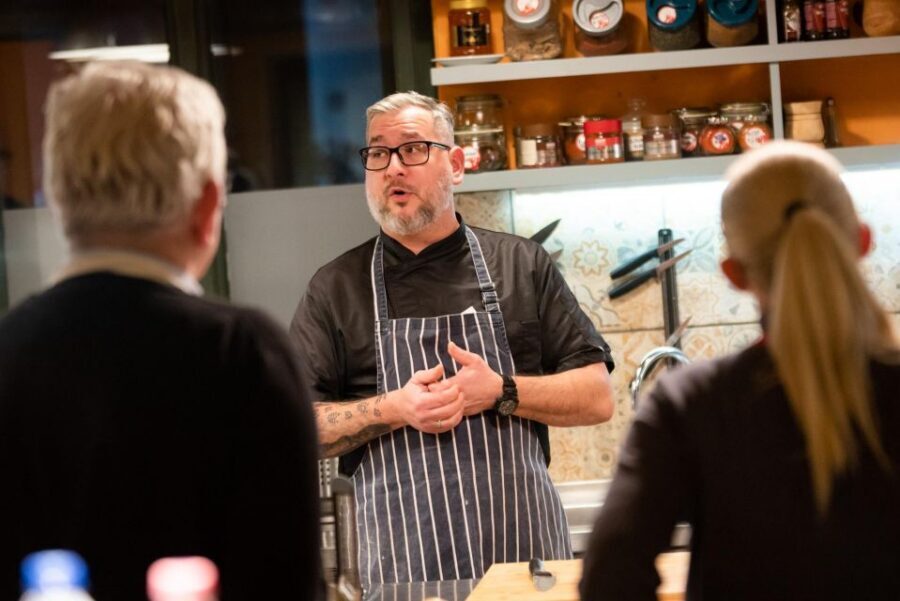
And when you arrive, you’re not left standing around. The course is set up as an interactive studio experience, with local chefs beside you. You can ask questions while you cook, instead of saving them for the end.
In at least one class, the vibe was described as clean and well-stocked, with good organization and no feeling of being rushed. That’s what you want from a paid class: calm execution, not chaos.
The Hands-On Cooking School Setup: Aprons, Techniques, and Real Participation
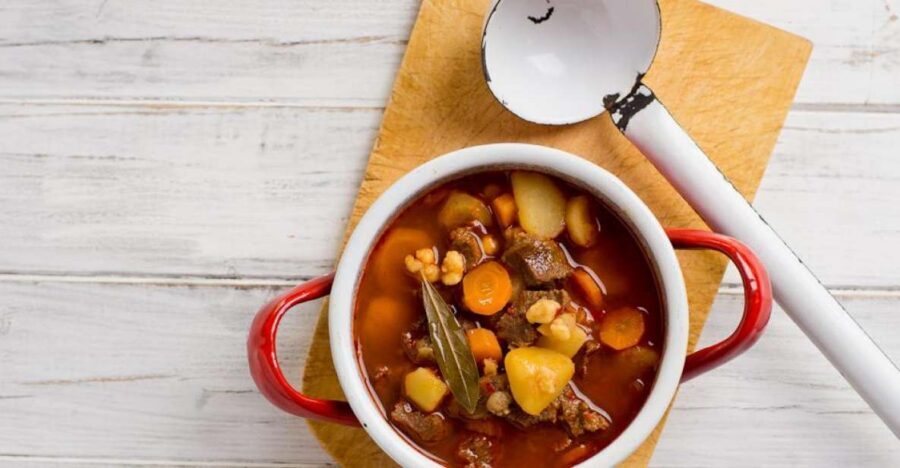
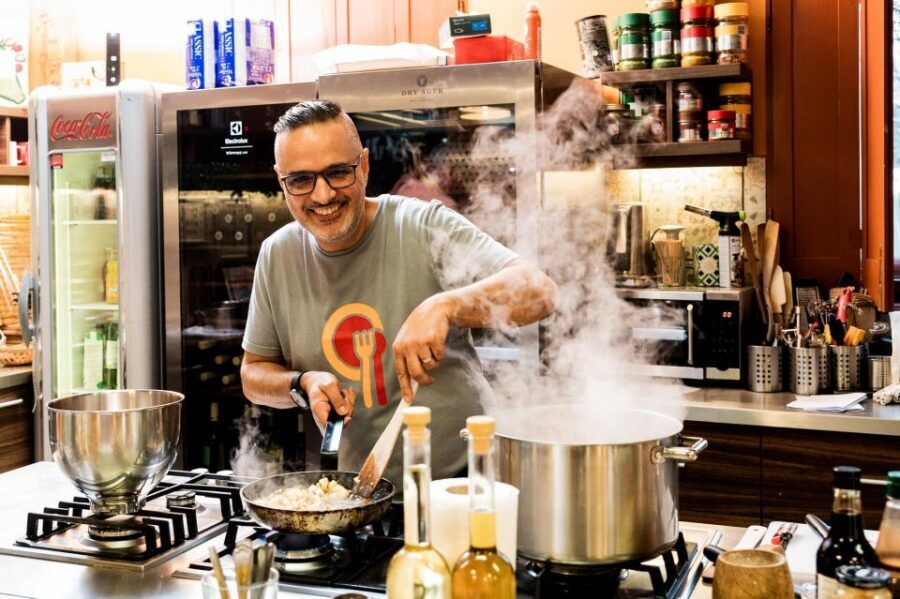
Once you’re in the kitchen, the class style is simple: participate. You’ll be cooking a traditional 3-course Hungarian lunch with the chef, in an atmosphere that’s designed for hands-on learning.
You’ll use aprons, and you’ll get time to understand ingredients and basic spices. The class specifically highlights staples like paprika powder, and you’ll learn how these flavors show up in actual cooking, not just in a recipe card.
English instruction that supports questions
The instructor is English-speaking, which means you can ask real questions as they come up. That helps most when you run into something unfamiliar, like ingredient names, spice balance, or how the texture should look at each stage.
I’ve found that cooking classes succeed or fail based on whether questions get swallowed. Here, the format is designed so you can ask side-by-side while you work, which is the best possible setup for a first Hungarian meal.
You can also read our reviews of more tours and experiences in Budapest


Small group advantage (the practical kind)
The group is limited to 10 participants. That’s small enough for your chef to notice if you’re confused, but big enough that you’re still part of a lively shared table.
This group size also makes it easier to learn in a practical way. If someone next to you asks about timing, you’ll benefit too. If a technique needs extra clarification, it can happen without turning into a long monologue.
The Drinks Moment: Palinka, Unicum, and Setting the Tone for Lunch
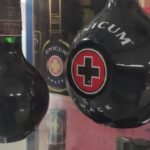
Hungarian food culture doesn’t separate the meal from the mood. Before you sit down, you’ll taste a fruity Palinka on arrival, and you’ll have Unicum before your lunch.
I like including these details because they’re not random extras. They make the experience feel like a true meal, not a cooking demo. Also, they give you a chance to experience local flavors in context, right as you’re about to cook and eat.
Just keep your expectations sensible: this is food-and-learning time. So if you’re sensitive to strong spirits, you’ll want to pace yourself while still enjoying the experience.
The Menu You’ll Cook: Typical Hungarian Dishes and What You’ll Learn
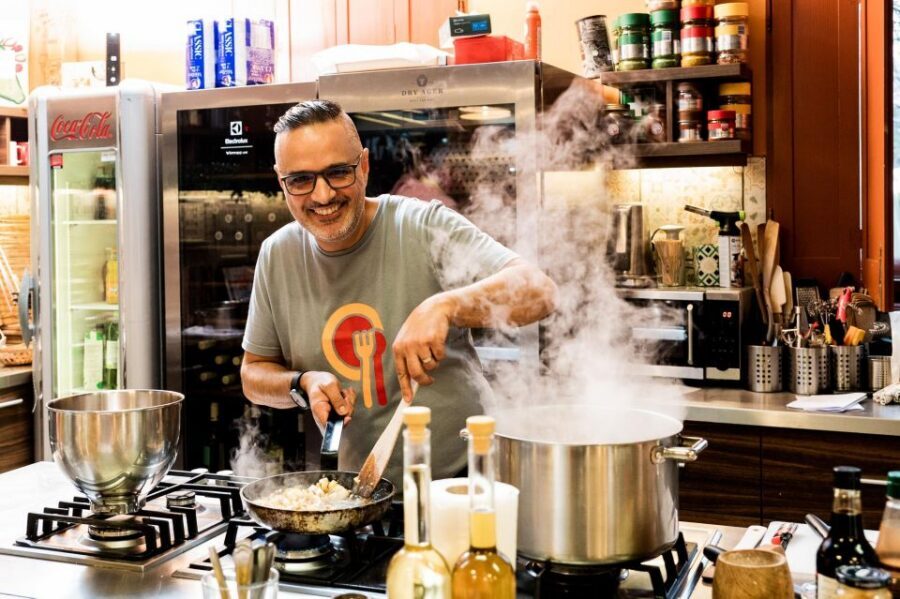
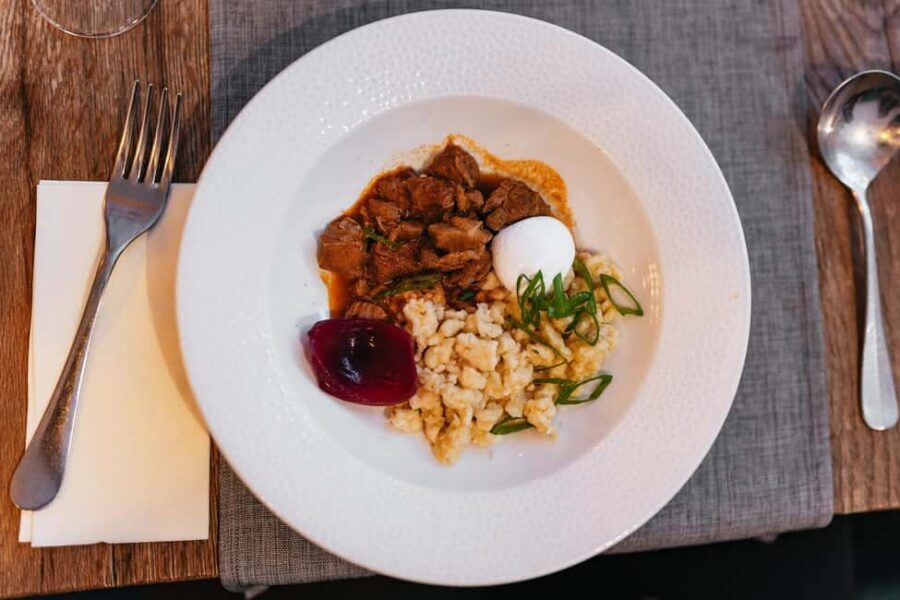
The course centers on a traditional three-course Hungarian meal. The exact menu can vary, but you should expect classic comfort-food dishes with clear ingredient logic.
In one recent class, the menu included:
- Tejfölös krumplileves (creamy potato soup)
- Csirkepaprikas (chicken paprikash)
- Meggyes pite (sour cherry pie)
If those names feel like a foreign language, that’s normal. That’s exactly why this class helps. You’ll connect the spelling to what you’re making, tasting, and eating. And the learning sticks because you do the work with your hands.
Why this set of dishes is useful at home
The biggest value isn’t just eating well in Budapest. It’s that you’ll cook dishes with repeatable methods: soup-building, saucing and simmering, and finishing with a dessert that’s easier to make than it sounds once you’re guided.
For example, chicken paprikash is a great “skills” dish because paprika and cooking rhythm matter. Creamy potato soup is a good technique check because texture matters. And sour cherry pie is a rewarding finish that makes your lunch feel special, not routine.
Expect a shared, not rushed, rhythm
One review highlighted that the class wasn’t rushed and that the kitchen execution was well organized. I agree with that kind of pacing: when you aren’t being shoved through steps, you actually absorb what the chef is doing and why.
You’ll also get a platter of Hungarian appetizers during the market visit, plus a lunch you make together. That combination is a practical way to keep energy up through the morning.
Lunch Like a Local: Wine, Soft Drinks, Coffee, and Sitting Down Together
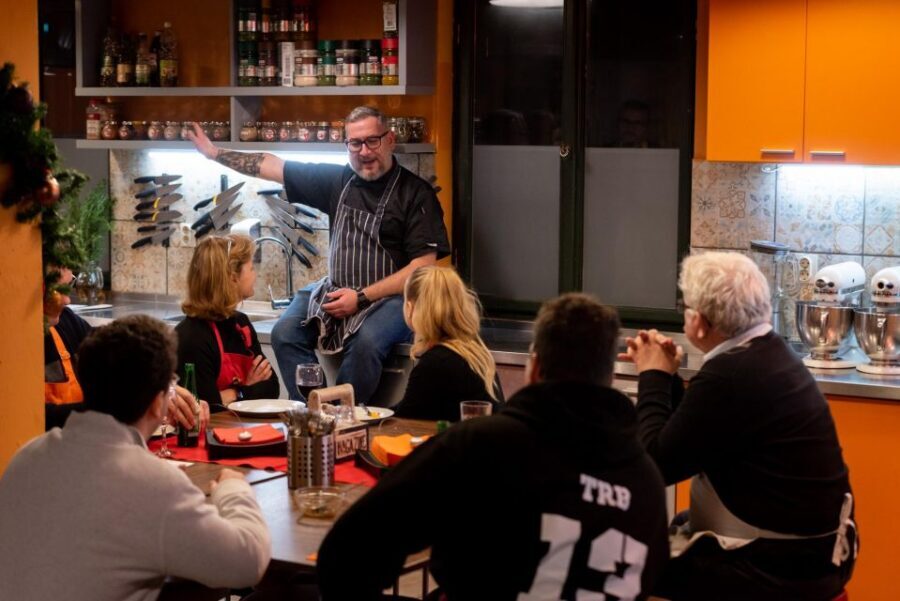
When your cooking is done, you’ll eat the meal you prepared. Lunch includes a glass of wine, and you’ll have unlimited soft drinks, coffee, and tea during the class.
This part is important. A lot of classes end with you eating alone. Here, the format supports a relaxed group lunch, so you can talk with your chef and others after you cook.
In one experience, even a birthday was celebrated as part of the shared meal. I can’t guarantee that happens every time, but it’s a good sign: the studio clearly knows how to make the meal feel like a moment, not just a transaction.
Recipes to take home
You’ll receive recipes to take home. For me, that’s the make-or-break detail. Eating a great meal is fun, but recipes are what turn the class into something you can repeat at home.
If you want souvenirs that aren’t clutter, this beats a fridge magnet every time.
Price and Logistics: Does $170 Deliver Real Value?
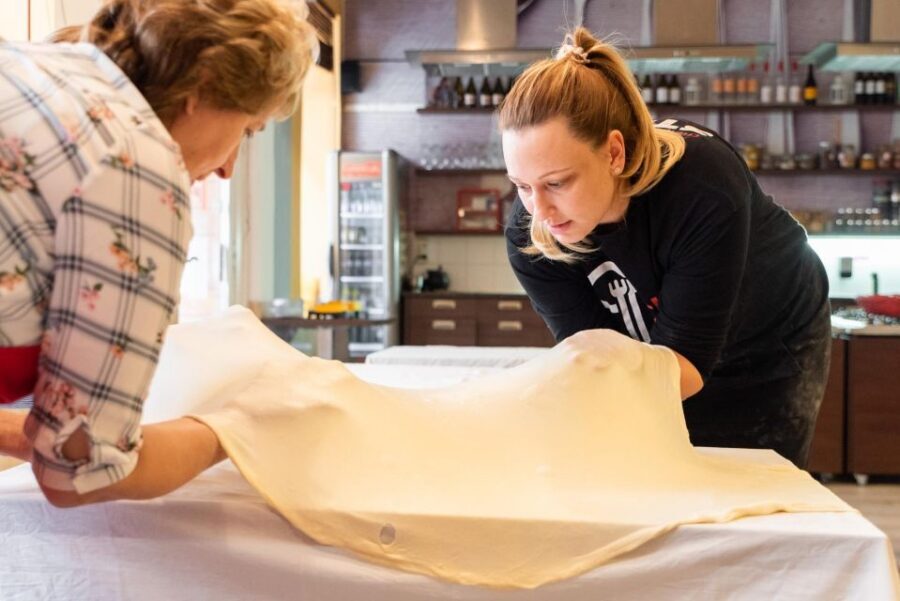
At $170 per person for about 4 hours, you’re paying for three things: market guidance, a structured hands-on cooking session, and a full lunch with drinks.
To judge value, look at what’s included:
- Market tour and tastings (including kolbász and körözött)
- Transfer to the cooking school
- 3-course lunch you make yourself
- Unlimited soft drinks, coffee, tea
- A glass of wine
- Recipes to take home
- Use of aprons
- English instruction
- Small group limit (up to 10)
That’s a lot for a half-day. The price makes more sense when you treat it as a guided food workshop rather than a simple meal. You’re not just buying lunch. You’re buying time, ingredient education, technique practice, and usable recipes.
The only “logistics” caution I’d repeat: confirm the meeting point. The class meets in front of the Central Market Hall at Burger King, and one person reported a mix-up between market locations before getting sorted out quickly. You’ll avoid stress by checking carefully.
Who This Cooking Class Suits Best
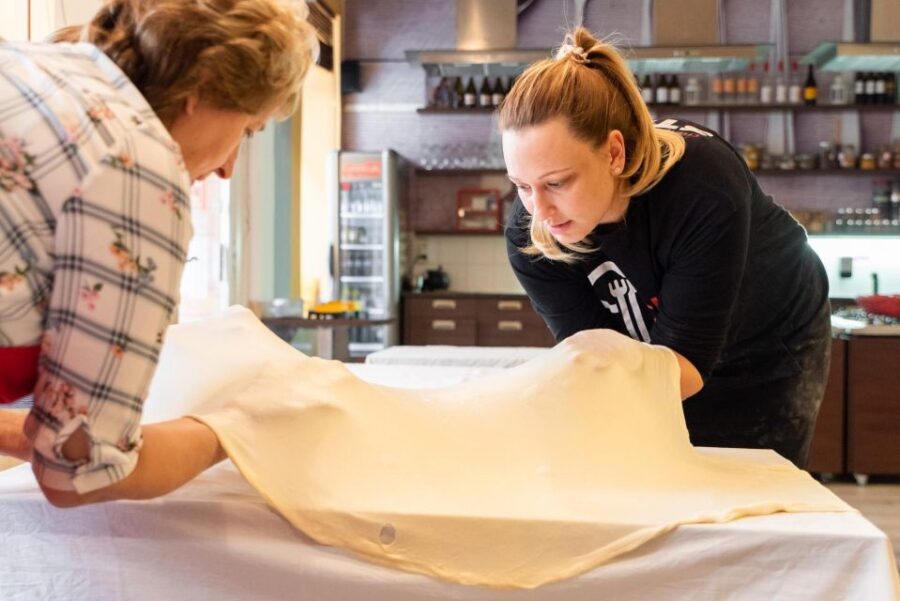
I think this tour is ideal if you want:
- A morning activity that ends with a satisfying meal
- A class where you cook alongside the chef and can ask questions
- An experience that focuses on Hungarian ingredients and flavors rather than generic cooking
- A small group setting where the experience doesn’t feel rushed
It’s also a strong pick for food lovers who want a practical Budapest souvenir. Recipes matter here, and the format is designed to help you remember what you made, not just how it tasted.
If you’re traveling with dietary restrictions, the operator says you should contact them so they can prepare a menu that fits. That’s a real advantage versus classes that treat restrictions as an afterthought.
Should You Book This Budapest Cooking School?
Yes, if you want a hands-on Hungarian experience that combines Central Market tastings with cooking you actually do. The small group size, English instruction, and recipe handoff make it more than a one-time meal.
Skip it only if you dislike structured classes or you’re hoping for a purely sightseeing tour. This is a cooking workshop first, and the market visit is built to feed into the meal, not to replace it.
If your goal is a memorable Hungarian lunch plus skills you can use later, this one is a smart booking.
FAQ
Where do I meet for the cooking school experience?
You meet in front of the Central Market Hall at Burger King.
How long is the class?
The experience lasts 4 hours.
Is the cooking class offered in English?
Yes, the instructor speaks English.
Is it a small group?
Yes. The group is limited to 10 participants.
What’s included in the price?
It includes a guided market tour, Hungarian appetizer tastings, transfer to the cooking school, a 3-course lunch, unlimited soft drinks coffee and tea, use of aprons, a glass of wine with lunch, and recipes to take home.
Do you drink alcohol during the experience?
You’ll taste Palinka on arrival and have Unicum before your lunch, and lunch includes a glass of wine.
What food will I cook and eat?
You cook a traditional 3-course Hungarian meal. In prior classes, dishes included Tejfölös krumplileves, Csirkepaprikas, and Meggyes pite.
What if I have dietary restrictions?
Contact the tour operator with your needs and they will work out a menu that suits your diet.