REVIEW · BUDAPEST
Budapest: 3-Hour Walking Tour About Communism (Small Group)
Book on GetYourGuide →Operated by Budapest Explorers · Bookable on GetYourGuide
Communism in Budapest feels close-up, not academic. This 3-hour walk, led by a historian guide, pairs family stories with what you can actually spot on the street near Deák tér. You’ll be encouraged to ask questions as you connect the dots between ideologies, government power, and ordinary routines that people remember.
I also love the practical texture: you ride the red subway (M2) with a ticket included, then end with a drink in a retro café that has barely changed since its early-60s opening. One possible drawback: if you’re hunting for a tightly chronological, big-picture political overview of every shift in Hungary, the format here is more street-and-story focused than a structured lecture.
In This Review
- Key Highlights to Look Forward To
- Budapest Communism Walk in 3 Hours: What You Get for $57
- Where the Tour Starts: Kempinski Corvinus and the Ferris Wheel View
- Pest’s Communist-Era Remnants: Seeing the Era Without a Museum Ticket
- How the Guide Frames Communism: Arrival, Rule, Legacy
- The “Small Group” Advantage: Why 10 People Makes It Better
- Red Subway (M2) Ride: A City Shortcut with Meaning
- Retro Café Stop: 1961 Charm, with Communist-Era Context in the Background
- The Best Part: Family Stories That Make the Topic Feel Tangible
- Price and Value: When a 3-Hour Walk Actually Pays Off
- Who This Tour Fits Best (and Who Might Want Something Different)
- Should You Book This Budapest Communism Walking Tour?
- FAQ
- How long is the Budapest 3-hour walking tour about Communism?
- Where is the meeting point for the tour?
- How big is the group?
- Is the tour offered in English?
- What’s included in the price?
- Does the tour include a subway ride?
- Can I cancel for a refund?
Key Highlights to Look Forward To
- Small group capped at 10 keeps the questions flowing
- Historian-led commentary turns street sights into real historical context
- Family stories from the Communist period add hardship and humor side by side
- Red subway (M2) ride with a transport ticket gives you a lived-in feel for the city
- A retro café drink in a place that’s stayed true to its early-era look since 1961
- Q&A welcome throughout so you can follow what you’re genuinely curious about
Budapest Communism Walk in 3 Hours: What You Get for $57
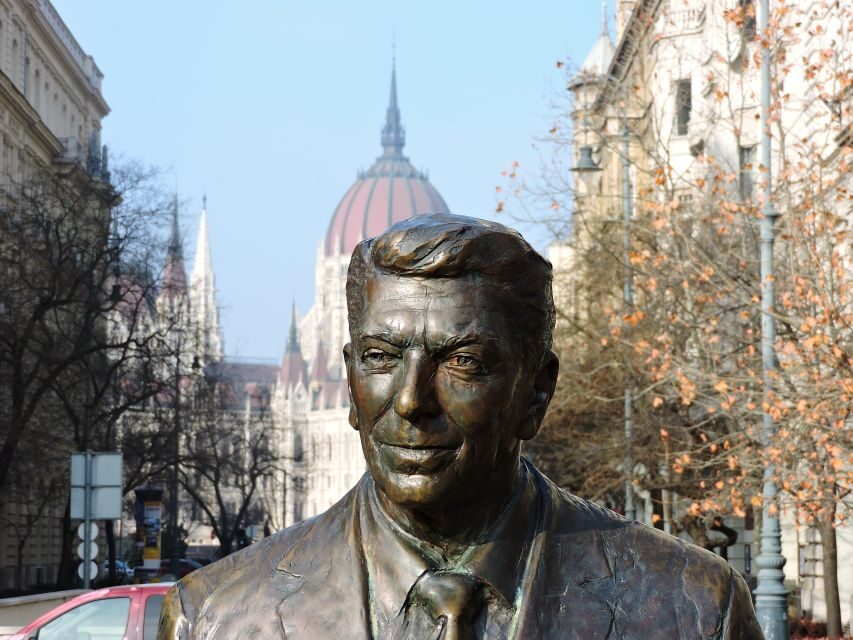
This tour is built for people who want more than plaques and postcard facts. For $57 per person and a 3-hour pace, you’re paying for a historian guide plus story-driven context tied to real locations in central Budapest. That price makes sense if you value interpretation—someone explaining what you’re looking at—rather than just walking from one monument to the next.
What you’ll feel most is the “street-level” approach. You’re not treated to a distant timeline. Instead, you move through parts of Pest where the Communist era isn’t hidden away in a museum. You see remnants, you hear how people experienced them, and you carry that understanding with you onto the next stop.
You can also read our reviews of more walking tours in Budapest



Where the Tour Starts: Kempinski Corvinus and the Ferris Wheel View

The meeting point is practical and easy to find: in front of Kempinski Hotel Corvinus Budapest, facing the Ferris wheel on Erzsébet square. It’s a solid landmark if you’re arriving by subway or tram.
From there, you’ll get oriented before the walk truly begins through the Pest side. The tour’s first walk starts after meeting on the main square of Pest at Deák tér, which matters because this area is where the city’s daily rhythm is obvious. You’re not stepping into history in a vacuum; you’re stepping into it right where Budapest still functions like Budapest.
If you like meeting points that don’t require guesswork, you’ll probably appreciate this one. It’s right on Erzsébet square, and it’s easy to reach via M1, M2, or M3 to Deák Ferenc tér, plus buses and trams.
Pest’s Communist-Era Remnants: Seeing the Era Without a Museum Ticket
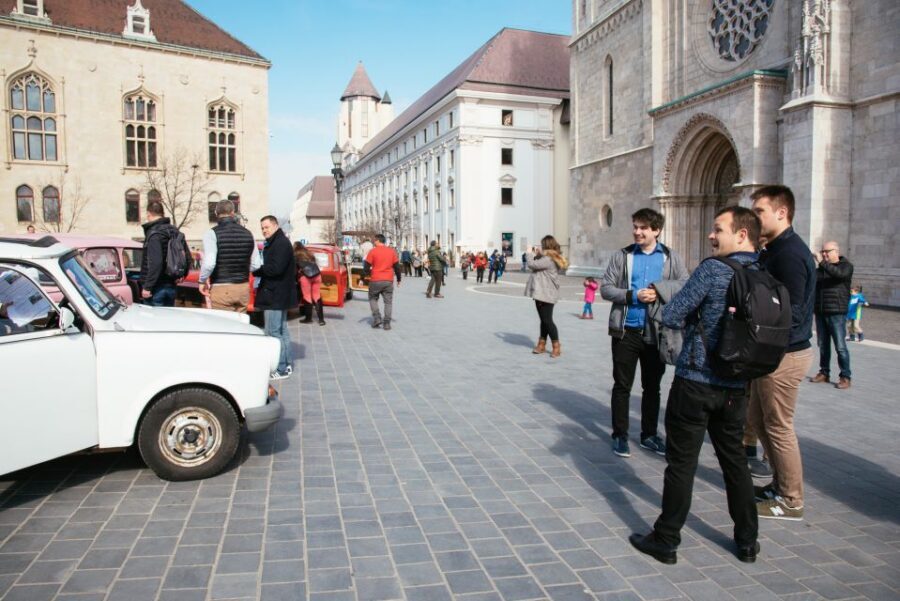
Once the walk gets going, you head through a very pleasant part of the city dotted with Communist-era traces. That contrast is part of the point. Budapest can look lovely and normal, and then—there it is—evidence of another time showing through the stone and street life.
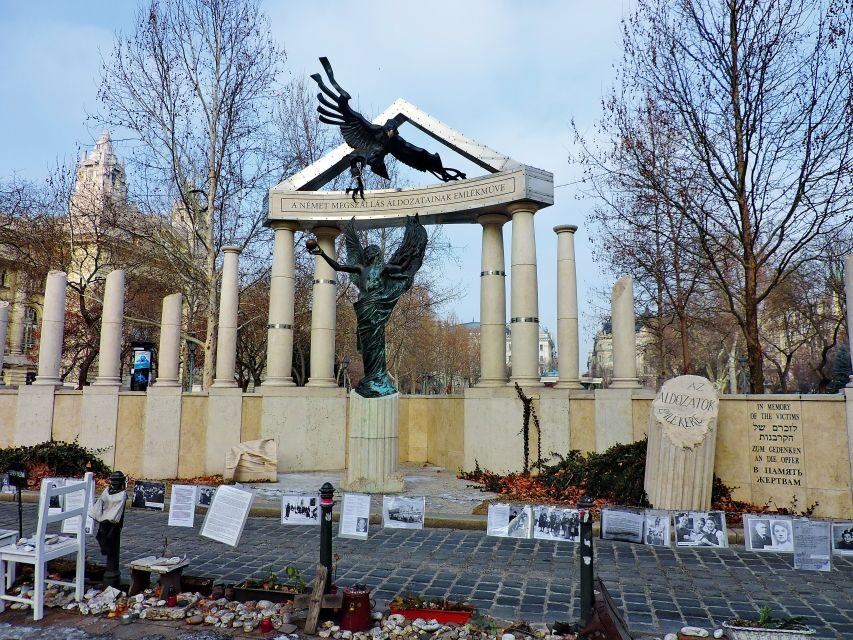
A standout detail: the area includes reminders like bullet holes. That’s not “nice history.” It’s history you can’t ignore, and that makes the guide’s role crucial. You’re hearing what these details mean, and you’re hearing them as part of a larger story: from WW2 through the 1956 revolution, and then forward to 1989 / the early 90s.
I like tours that treat the city like a document you can read. This one does that. You’re not only looking at big landmarks; you’re also picking up small signals and patterns that help you understand how power shapes public space.
How the Guide Frames Communism: Arrival, Rule, Legacy
The tour’s goal is not just to label a period as Communist. It aims to understand Communist ideology—its arrival, rule, and legacy in Hungary. That framing gives the walk a purpose beyond sightseeing.
In practical terms, you’ll be told how ideology plays out in daily life and public reality, and you’ll connect it to the visible remnants around you. The guide also shares personal family stories—including stories with hardship, and yes, stories with comic moments too. That balance is important. It prevents the topic from turning into pure gloom, while still keeping it real.
One reason this works well is that the tour is story-led but still anchored by expert historical commentary. You get both: the facts you need, and the human angle that makes them stick.
The “Small Group” Advantage: Why 10 People Makes It Better
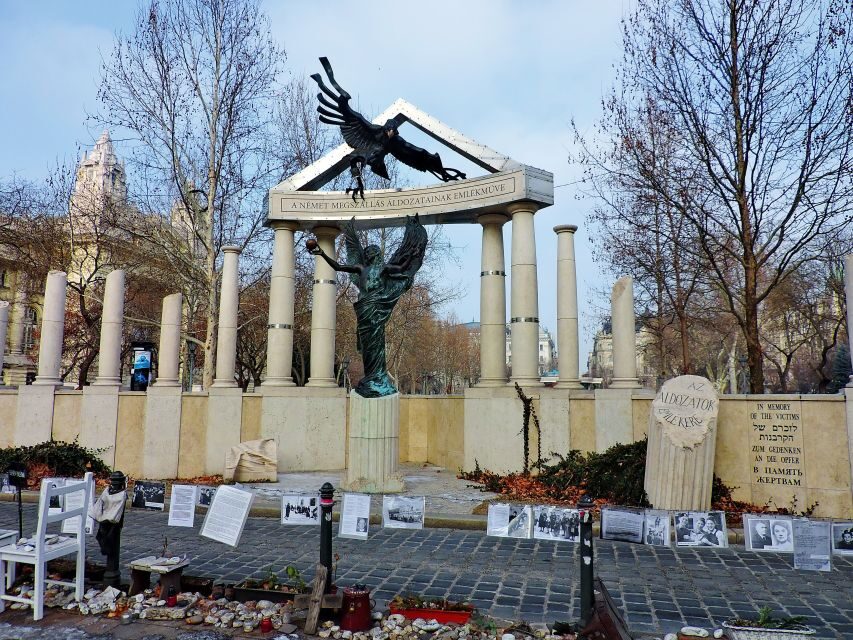
With small group size limited to 10 participants, you’re not stuck listening while trying to ask questions into a crowd. The guide can actually respond, and the conversation can follow your interests.
The best moments in the reviews point to this back-and-forth energy. Guides like Judit/Judith, Zsuzsanna, Monica, Greg/Gergely, Virág, and Dániel/Daniel are described as engaging and willing to answer questions. Even when a guide is teaching, it doesn’t feel like a lecture. It feels like a guided discussion with a clear historical backbone.
If you like tours where you can ask, challenge, and clarify, you’ll probably find this one satisfying.
You can also read our reviews of more tours and experiences in Budapest






Red Subway (M2) Ride: A City Shortcut with Meaning
This isn’t just a transportation break. The tour includes a ride on the red subway (M2), and you receive a transportation ticket as part of the experience.
Why it’s worth doing: taking the subway during a history tour helps you feel how a city actually moves. You’re not only standing still and looking. You’re traveling through Budapest the way locals do—so the story stays connected to the place.
Also, the M2 ride gives a change of pace. After the walking portion with its heavier subject matter, the subway segment helps reset your brain without taking you away from the theme. It’s practical, it’s included, and it makes the tour feel like it’s covering more than one “moment” in time.
Retro Café Stop: 1961 Charm, with Communist-Era Context in the Background
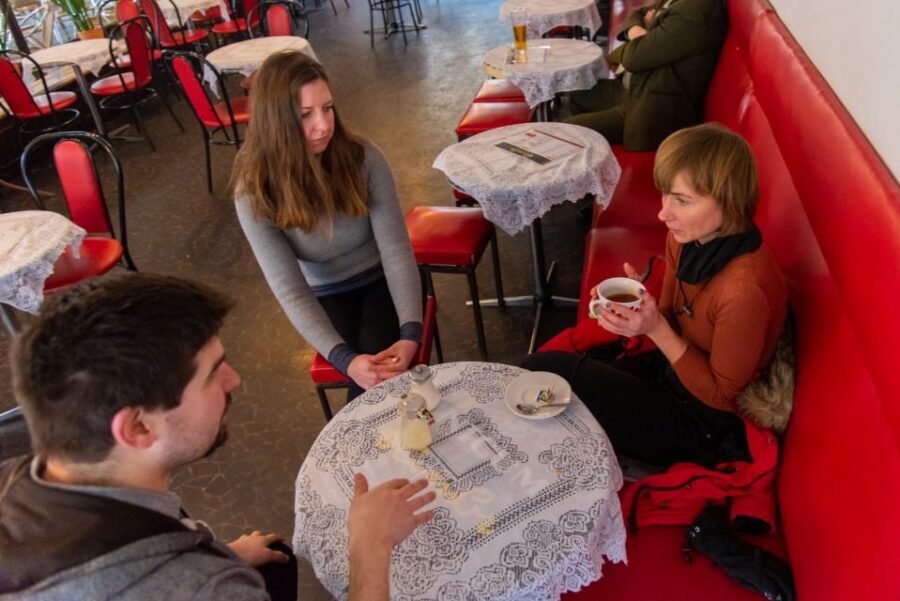
The tour ends (or at least includes) a drink in a retro café that has changed very little since its opening in 1961. The vibe is described as something that hasn’t drifted far from its earlier look, with references to the feel of the 1970s as well.
This is one of those stops that turns information into something you can talk about. You’ll have time to sit, chat, and ask extra questions in a more relaxed setting. And because the guide has spent the last hours stitching history to street-level details, the conversation doesn’t go off into randomness.
It’s also a clever way to balance tone. The tour addresses hardship and political pressure, but the café moment adds a human pause. You get to process what you just learned while enjoying something simple: a drink and a conversation.
The Best Part: Family Stories That Make the Topic Feel Tangible
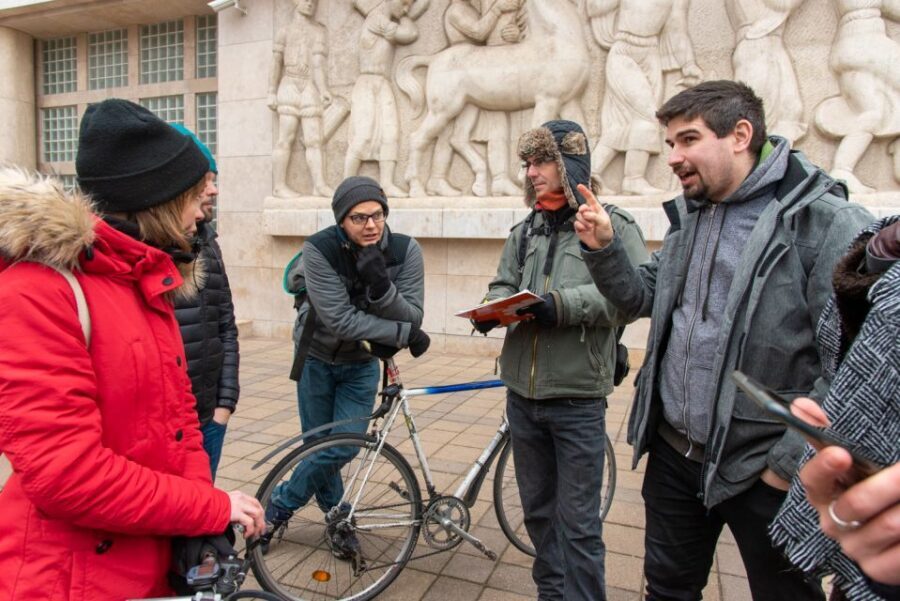
Across the strong reviews, the most praised ingredient is how the guide uses family stories alongside expert historical commentary. That combination matters.
Facts alone can slide off your brain after a long day of sightseeing. But when you hear how people experienced the Communist era—what it meant in daily life, what it cost, and what it did to routines—you get a clearer picture of why the era still echoes in the city today.
I also appreciate how the tour invites questions. Communist history can touch sensitive topics, and you don’t want a guide who shuts down discussion. This one is set up for dialogue.
Price and Value: When a 3-Hour Walk Actually Pays Off
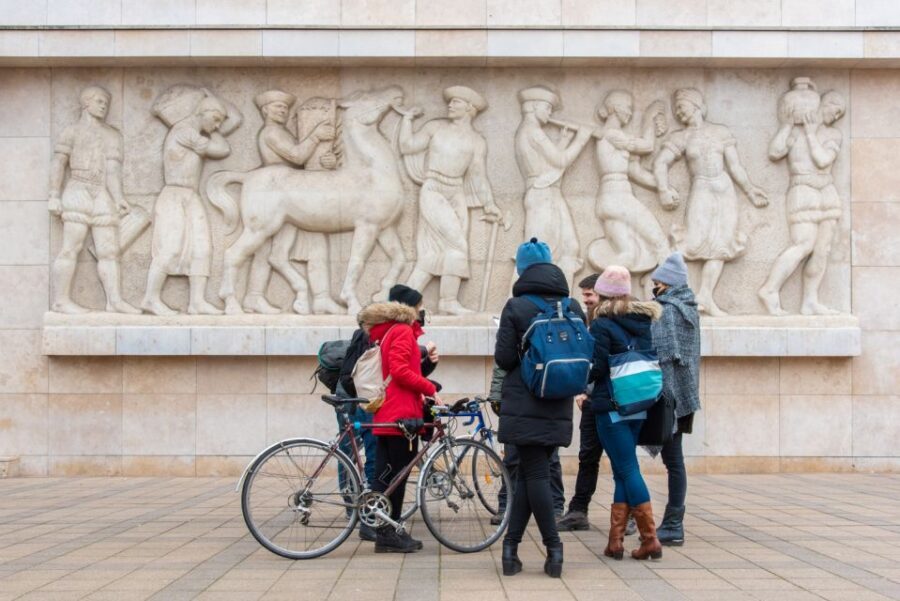
Let’s talk value plainly.
You’re paying $57 for:
- a live English-language guide
- expert commentary from a historian guide
- a drink in a retro café
- a subway ticket (M2)
In other words, you’re paying for interpretation plus included transit and a real stop with atmosphere. If you usually skip guided tours, this price can feel steep for a short walk. But if you want to understand what you’re seeing in Budapest—especially when the subject is politics and everyday reality—this format can be money well spent.
The “small group” factor helps too. Ten people means you’re more likely to get personal follow-ups instead of just absorbing.
Who This Tour Fits Best (and Who Might Want Something Different)
This is a strong fit if you:
- care about modern Hungarian history and want the Communist era explained in human terms
- prefer street-level storytelling over museum-only approaches
- like asking questions and getting clear answers
- want a Budapest experience tied to how the city still carries meaning in public space
You might consider a different tour if you:
- want a very chronological, sweeping lecture covering every step in a structured national timeline
- prefer lighter themes and don’t want history that includes harsh reminders like bullet holes
Should You Book This Budapest Communism Walking Tour?
If you’re curious about why Budapest looks the way it does—and how twentieth-century power shaped ordinary life—this tour is a smart bet. The 3-hour length is long enough to build context, but short enough that you won’t feel drained. The included M2 ride and the retro café drink add real variety, not filler.
Book it especially if you like guides who can connect ideology to the street and to real memories. If you want a strict textbook timeline, you may feel the focus is a bit more story-led than structured. For most people visiting Budapest and trying to make sense of the Communist era, though, this hits the right balance of facts, locations, and lived-in perspective.
FAQ
How long is the Budapest 3-hour walking tour about Communism?
The tour lasts 3 hours.
Where is the meeting point for the tour?
You meet in front of Kempinski Hotel Corvinus Budapest, facing the Ferris wheel on Erzsébet square (Erzsébet tér 7, 1051).
How big is the group?
The tour is a small group limited to 10 participants.
Is the tour offered in English?
Yes, the tour is English.
What’s included in the price?
The tour includes an expert guide, a drink in a retro café, and a transportation ticket for the subway.
Does the tour include a subway ride?
Yes. It includes a ride on the red subway (M2), with a transportation ticket provided.
Can I cancel for a refund?
Yes. You can cancel up to 24 hours in advance for a full refund.